What Is Tesla Software Update 2025.26.200?
Tesla's over-the-air (OTA) update 2025.26.200 is one of the most anticipated firmware releases for the Tesla fleet in mid-2025. Unlike minor patch updates that tweak minor UI elements, point releases ending in ".200" typically carry substantial feature bundles — new driver-assistance tuning, infotainment upgrades, and occasionally powertrain efficiency optimizations that can subtly shift real-world range and charging behavior.
This article breaks down exactly what 2025.26.200 delivers, how it interacts with the current Model 3, Model Y, Model S, and Model X lineup, and what owners should expect in terms of range, charging speed, and daily usability after installing it. We'll also contextualize the update against the 2025 and 2026 Tesla hardware platforms and the current federal tax credit landscape.
Which Tesla Models Receive 2025.26.200?
Tesla rolls out OTA updates in waves based on hardware generation. Update 2025.26.200 targets vehicles equipped with Hardware 4.0 (HW4) — the current-generation Autopilot computer introduced across the fleet starting with the refreshed Model S/X in 2023 and the updated Model 3 "Highland" and Model Y "Juniper" platforms.
- Model 3 (2024–2026 Highland and subsequent refresh) — HW4 standard
- Model Y (2025–2026 Juniper refresh) — HW4 standard
- Model S / Model X (2023–2026) — HW4 standard on refreshed trims
- Cybertruck (2024–2026) — HW4, included in rollout
Older vehicles running Hardware 3.0 (HW3) — primarily pre-2023 Model S/X and pre-2024 Model 3/Y — are not eligible for the full 2025.26.200 feature set. Tesla has historically provided stripped-down variants for HW3 vehicles, but certain vision-processing and FSD Supervised features require the upgraded sensor suite and compute of HW4.
New Features and Changes in 2025.26.200
Based on Tesla's release notes and owner community documentation, the 2025.26.200 update bundles several categories of improvements:
FSD (Supervised) Enhancements
Tesla's Full Self-Driving (Supervised) system continues to iterate on its end-to-end neural network architecture. The 2025.26.200 branch includes:
- Improved intersection handling — more confident unprotected left turns and better gap acceptance in moderate traffic
- Refined speed-limit detection — faster adaptation when transitioning between speed zones, reducing the over-braking behavior noted in earlier 2025.x branches
- Smoother lane-change decisions — reduced hesitation on highway merges and lane-change suggestions
Important: FSD (Supervised) remains an SAE Level 2 driver-assistance system. The driver must maintain full attention, keep hands on the wheel (or demonstrate engagement via the cabin camera), and be prepared to take over at any moment. This is not autonomous driving. Tesla's naming convention — "Supervised" — reflects this regulatory and technical reality.
Infotainment and UI Updates
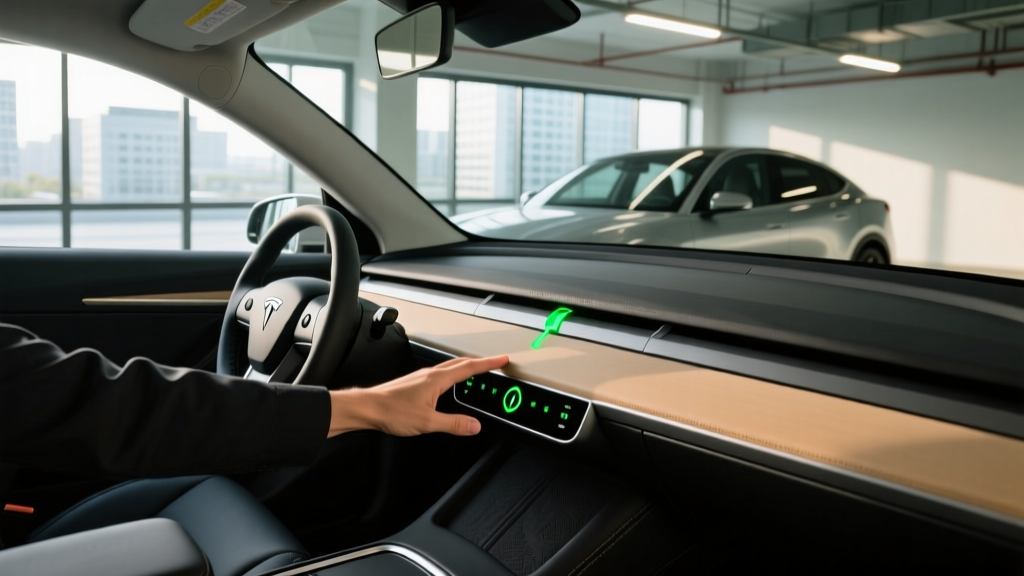
- Redesigned climate controls — the bottom-of-screen climate bar now supports swipe gestures for fan speed and a long-press for seat heater/ventilation toggles
- Theater mode improvements — streaming apps (Netflix, YouTube, Disney+) now support picture-in-picture while navigating in Park
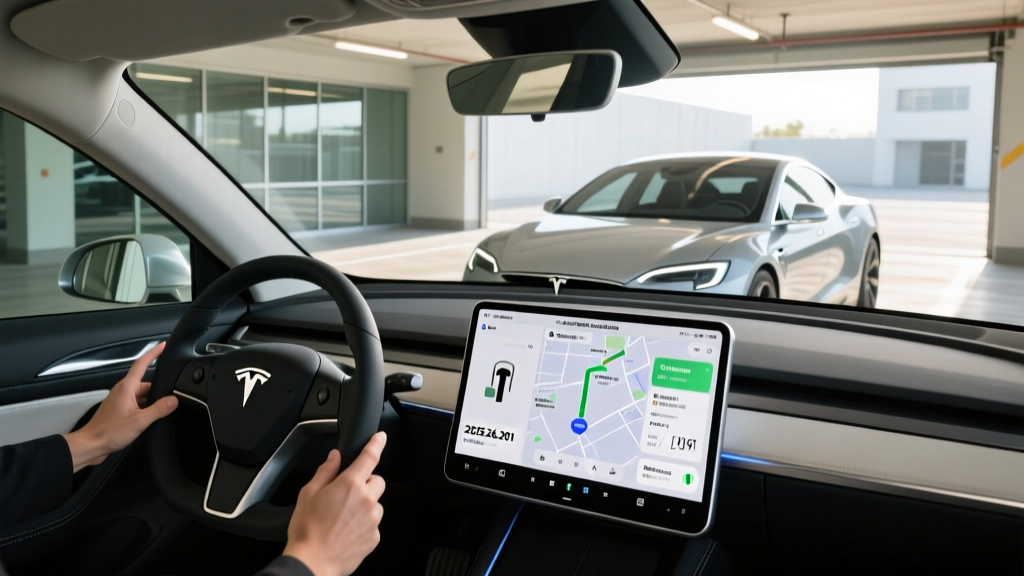
- Trip planner refinements — more accurate Supercharger arrival-state-of-charge estimates, factoring in elevation, wind, and recent driving efficiency
- Dashcam and Sentry clip management — new thumbnail previews and easier USB export
Powertrain and Charging Behavior
While Tesla rarely publishes explicit powertrain changes in OTA notes, owner telemetry communities have documented subtle shifts in:
- Regenerative braking curve — slightly smoother regen engagement at low speeds, reducing the "lurch" some owners reported in 2025.2.x
- Thermal management preconditioning — the battery preconditioning algorithm for Supercharger approach appears to begin earlier (~15–20 miles out vs. ~10 miles), which can improve peak charge rate on arrival, especially in cold weather
- Energy display calibration — minor adjustments to the projected range estimate algorithm, improving accuracy in mixed driving conditions
How 2025.26.200 Affects Range and Charging
Software updates don't change a vehicle's physical battery capacity, but they can meaningfully influence how efficiently that energy is used and how quickly it can be replenished. Here's how the current Tesla fleet stands on paper — and in practice — with the latest software.
| Model (2025–2026) | Battery (kWh usable) | Chemistry | EPA Range | MPGe (combined) | kWh/100mi |
|---|---|---|---|---|---|
| Model 3 RWD | 57.5 | LFP | 272 mi | 132 MPGe | 25 |
| Model 3 Long Range AWD | 75.0 | NMC | 341 mi | 130 MPGe | 26 |
| Model 3 Performance | 75.0 | NMC | 315 mi | 119 MPGe | 28 |
| Model Y Long Range AWD | 75.0 | NMC | 320 mi | 122 MPGe | 27 |
| Model Y Performance | 75.0 | NMC | 298 mi | 115 MPGe | 29 |
| Model S Long Range | 95.0 | NMC | 402 mi | 120 MPGe | 28 |
| Model X Long Range | 95.0 | NMC | 348 mi | 109 MPGe | 31 |
Source: fueleconomy.gov (EPA). Exact figures vary by model year, wheel size, and trim. Always confirm on the window sticker.
Real-World Range Reality Check: EPA estimates are measured on standardized city/highway cycles with moderate temperatures. In real-world use:
- Highway driving at 75+ mph: Expect 10–15% below EPA (e.g., a Model 3 LR rated at 341 mi may deliver ~290–305 mi on a flat, temperate interstate run)
- Cold weather (below 32°F / 0°C): Range can drop 20–30% due to cabin heating demand and reduced battery chemistry efficiency. A Model Y LR at 320 mi EPA might yield ~225–255 mi in sub-freezing conditions without preconditioning
- City / stop-and-go with regen: Often matches or slightly exceeds EPA thanks to regenerative braking recapturing energy
- Impact of 2025.26.200: The updated preconditioning algorithm may recover 5–10 miles of cold-weather range by optimizing battery warm-up before Supercharger arrival, but does not fundamentally change the vehicle's energy consumption profile
Charging Speed: What to Expect After the Update
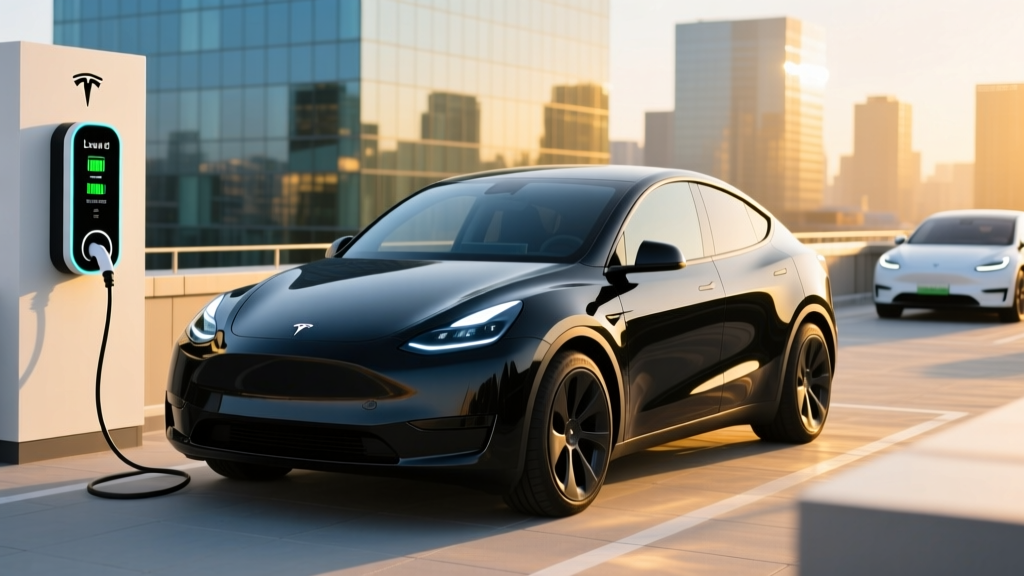
Tesla's charging hardware hasn't changed with this software update, but the improved thermal preconditioning can help owners hit peak charge rates more consistently — particularly in cooler weather.
| Charging Method | Power | Typical Speed | Notes |
|---|---|---|---|
| Level 1 (120V household) | ~1.4 kW | 3–5 mi/hr | Emergency/trickle only; overnight adds ~30–40 mi |
| Level 2 (240V home, 48A) | 11.5 kW | ~44 mi/hr | Full charge in 7–10 hours; recommended daily charging |
| Level 2 (240V home, 32A) | 7.7 kW | ~30 mi/hr | Common for NEMA 14-50 outlets with Mobile Connector |
| DC Fast (Tesla V3 Supercharger) | Peak 250 kW | 10–80% in ~25–30 min | Sustained rate tapers above 60% SoC |
| DC Fast (Tesla V4 Supercharger) | Peak 250–350 kW | 10–80% in ~20–25 min | Model 3 Highland and Juniper Model Y can sustain higher rates longer |
Understanding the Charge Curve
A common misconception is that a "250 kW" charger delivers that rate for the entire session. In reality, DC fast charging follows a taper curve:
- 10–40% SoC: Near-peak power (200–250 kW on a compatible vehicle at a V3/V4 stall)
- 40–60% SoC: Power begins stepping down (~150–180 kW)
- 60–80% SoC: Significant taper (~80–120 kW)
- Above 80% SoC: Sharp reduction to protect battery longevity (~30–50 kW); charging above 80% should be reserved for when you need the extra range
The 2025.26.200 preconditioning update helps the battery reach its optimal temperature window sooner, which can improve the sustained charge rate in the 10–60% window — especially when ambient temperatures are below 50°F. In warm weather, the difference is negligible.
LFP vs. NMC: Charging Implications by Battery Chemistry
Tesla's Model 3 RWD uses LFP (lithium iron phosphate) chemistry, while Long Range and Performance variants use NMC (nickel manganese cobalt). This matters for charging habits:
- LFP: Tesla recommends charging to 100% regularly (at least once per week) for accurate state-of-charge calibration. LFP is more tolerant of high-SoC storage.
- NMC: Daily charging to 80% is recommended for longevity. Set to 100% only for road trips. The 2025.26.200 trip planner now better reminds NMC owners to adjust charge limits before long drives.
Performance Specs Across the Fleet
Software updates don't alter peak horsepower or 0–60 times — those are hardware-defined. But 2025.26.200's refinements to torque delivery smoothing and traction control calibration can make real-world launches feel marginally more consistent, particularly on wet or low-grip surfaces.
| Model | Drivetrain | 0–60 mph | Peak HP | Top Speed |
|---|---|---|---|---|
| Model 3 RWD | RWD (single motor) | 5.8 sec | 283 | 125 mph |
| Model 3 LR AWD | Dual-motor AWD | 4.2 sec | 384 | 125 mph |
| Model 3 Performance | Dual-motor AWD | 2.9 sec | 510 | 163 mph |
| Model Y LR AWD | Dual-motor AWD | 4.8 sec | 384 | 130 mph |
| Model Y Performance | Dual-motor AWD | 3.5 sec | 456 | 155 mph |
| Model S LR | Dual-motor AWD | 3.1 sec | 670 | 155 mph |
| Model S Plaid | Tri-motor AWD | 1.99 sec | 1,020 | 200 mph |
Source: Tesla official specifications. Times measured by manufacturer with rollout subtraction; real-world times vary by surface, temperature, and tire condition.
Pricing, Tax Credits, and Ownership Costs
Tesla's pricing shifts periodically — sometimes weekly. As of mid-2025, here are the approximate MSRP figures before any incentives. Note that Tesla's direct-sales model means there is no dealer negotiation; the listed price is the price you pay.
| Model / Trim | Base MSRP (approx.) | Federal §30D Credit | Effective Price (if eligible) |
|---|---|---|---|
| Model 3 RWD | $38,990 | Up to $7,500 | ~$31,490 |
| Model 3 LR AWD | $45,490 | Up to $7,500 | ~$37,990 |
| Model 3 Performance | $52,990 | Up to $7,500 | ~$45,490 |
| Model Y LR AWD | $44,990 | Up to $7,500 | ~$37,490 |
| Model Y Performance | $48,990 | Up to $7,500 | ~$41,490 |
| Model S LR | $79,990 | $0 (over MSRP cap) | $79,990 |
| Model X LR | $79,990 | $0 (over MSRP cap) | $79,990 |
IRS §30D Federal EV Tax Credit — Key Eligibility Rules (2025):
- MSRP cap: Sedans (Model 3) must be ≤$55,000; SUVs/trucks (Model Y, Cybertruck) must be ≤$80,000
- Buyer income cap (MAGI): $150,000 single / $225,000 head of household / $300,000 married filing jointly
- Battery sourcing: Increasing percentages of critical minerals and battery components must be sourced from the US or FTA-partner nations — this determines whether you receive the full $7,500 or a partial $3,750
- Point-of-sale transfer: Eligible buyers can now transfer the credit to the dealer (Tesla) at purchase, reducing the purchase price directly rather than waiting for a tax refund
- Model S and Model X: These exceed the $55,000 sedan MSRP cap and do not qualify for the federal credit regardless of buyer income
Source: IRS.gov §30D Clean Vehicle Credit. Rules are subject to change; consult a tax professional for your specific situation.
Cargo and Passenger Space
Tesla's skateboard architecture yields generous interior volume relative to exterior footprint:
- Model 3: 23 cu ft trunk + rear cargo; 42.3 in front legroom / 35.3 in rear legroom
- Model Y: 30 cu ft behind second row; 76 cu ft with rear seats folded; 41.8 in front / 41.6 in rear legroom
- Model S: 28 cu ft rear cargo + 5.3 cu ft frunk; 42.4 in front / 35.4 in rear legroom
- Model X: Up to 88 cu ft with both rear rows folded (5-seat config); falcon-wing doors ease child-seat installation
Warranty Coverage
Tesla's warranty structure has remained consistent across recent model years:
- New vehicle limited warranty: 4 years / 50,000 miles, whichever comes first
- Battery and drive unit warranty:
- Model 3 RWD (LFP): 8 years / 100,000 miles, minimum 70% capacity retention
- Model 3 LR / Performance, Model Y: 8 years / 120,000 miles, minimum 70% retention
- Model S / Model X: 8 years / 150,000 miles, minimum 70% retention
The 70% retention threshold is the trigger for a warranty claim — meaning if your battery degrades below 70% of its original capacity within the warranty period, Tesla will repair or replace it. In practice, Tesla batteries have shown strong longevity: Tesla's 2023 Impact Report claims average degradation of approximately 12–15% after 200,000 miles, well within the warranty threshold.
Pros, Cons, and the Verdict
Pros
- Supercharger network remains the most reliable DC fast-charging infrastructure in North America
- OTA updates like 2025.26.200 continuously add features without service-center visits
- Class-leading efficiency (kWh/100mi) translates to lower per-mile charging costs
- FSD (Supervised) is among the most capable SAE Level 2 systems available, with regular neural-network improvements
- Strong resale value relative to many EV competitors
- LFP chemistry in base Model 3 offers excellent cycle life and tolerance for 100% daily charging
Cons
- No traditional instrument cluster — all information funnels through the center screen, which some drivers find distracting
- FSD (Supervised) at $8,000 (or $99/month) remains a Level 2 system; the value proposition depends on your commute and tolerance for supervision
- Model S/X no longer qualify for the federal tax credit due to MSRP caps
- Build-quality consistency has improved but still generates occasional panel-gap and trim complaints
- Rear-seat comfort in Model 3 is tighter than competitors like the Hyundai Ioniq 6 or BMW i4
- Turn-signal stalks removed on refreshed Model 3/Y — steering-wheel buttons take adjustment
Who Should Buy a Tesla Running 2025.26.200?
- Choose Model 3 RWD if: You want the most affordable entry into the Tesla ecosystem, mostly commute in urban/suburban areas, and value LFP battery longevity over maximum range
- Choose Model 3 LR or Model Y LR if: You take regular road trips, need AWD for snow-belt climates, and want the 300+ mile EPA range buffer
- Choose Model 3 Performance if: Track capability and sub-3-second acceleration matter to you, and you accept the range trade-off (~315 mi EPA)
- Choose Model Y if: You need crossover cargo space, child-seat room, and the most practical family EV in Tesla's lineup
- Look at competitors (Hyundai Ioniq 5, BMW i4, Chevrolet Blazer EV) if: You prefer a traditional instrument cluster, want CCS/NACS charging flexibility without adapters, or need a more premium interior at the Model 3 price point
Is Tesla Still Worth It vs. the Competition in 2025?
The competitive landscape has shifted dramatically. The Hyundai Ioniq 5 N and Kia EV6 GT offer thrilling performance with 800V charging architectures. The BMW i4 and iX deliver interior luxury Tesla doesn't attempt. The Ford Mustang Mach-E and Chevrolet Blazer EV provide competitive range with more traditional ergonomics.
Tesla's advantages remain structural: the Supercharger network (now opening to NACS-equipped competitors, but still most seamless for Tesla vehicles), the OTA update cadence (2025.26.200 is the 26th major branch of 2025 alone), and vertical integration of hardware and software that allows rapid iteration. The disadvantages are equally real: minimalist interior, no instrument cluster, and the ongoing question of whether FSD's Level 2 capabilities justify its cost.
For buyers who prioritize software sophistication, charging convenience, and efficiency-per-dollar, Tesla remains the benchmark. For those who value interior refinement, traditional controls, or want to hedge on a single ecosystem, the growing field of NACS-equipped competitors is worth test-driving.
Frequently Asked Questions
How do I check if my Tesla has received update 2025.26.200?
Navigate to Controls → Software on your touchscreen. The current version number is displayed prominently. You can also check the Tesla mobile app under the Software tab. If an update is available, you'll see a download prompt — Tesla staggers rollouts, so not all vehicles receive it simultaneously.
Does 2025.26.200 improve my EPA range?
No. Software updates cannot change a vehicle's EPA-rated range, which is determined by standardized testing. However, the updated preconditioning and energy-display calibration in this release may help you achieve closer to your EPA estimate in real-world conditions, particularly in cold weather.
Will installing 2025.26.200 void my warranty?
No. OTA updates are an integral part of Tesla ownership and are covered under your vehicle warranty. Tesla does not offer the option to decline updates indefinitely — critical safety and functionality patches are eventually required.
Does this update affect FSD subscription pricing?
No. FSD (Supervised) remains available as a one-time $8,000 purchase or a $99/month subscription. Update 2025.26.200 improves FSD performance but does not change pricing. Tesla has indicated that FSD pricing may adjust as capability increases, but no changes are currently announced.
Can I roll back to a previous software version?
No. Tesla does not provide a rollback mechanism for OTA updates. Once installed, the firmware is permanent until the next update arrives. If you experience issues, contact Tesla Service — they can sometimes push a targeted patch, but downgrading is not an option.
Is FSD (Supervised) in 2025.26.200 actually self-driving?
No. FSD (Supervised) is classified as SAE Level 2 automation. This means the system can manage steering, acceleration, and braking under certain conditions, but the driver must remain fully engaged and prepared to intervene. Only Level 4 services like Waymo operate without a human driver — and those are limited to geofenced areas in select cities.