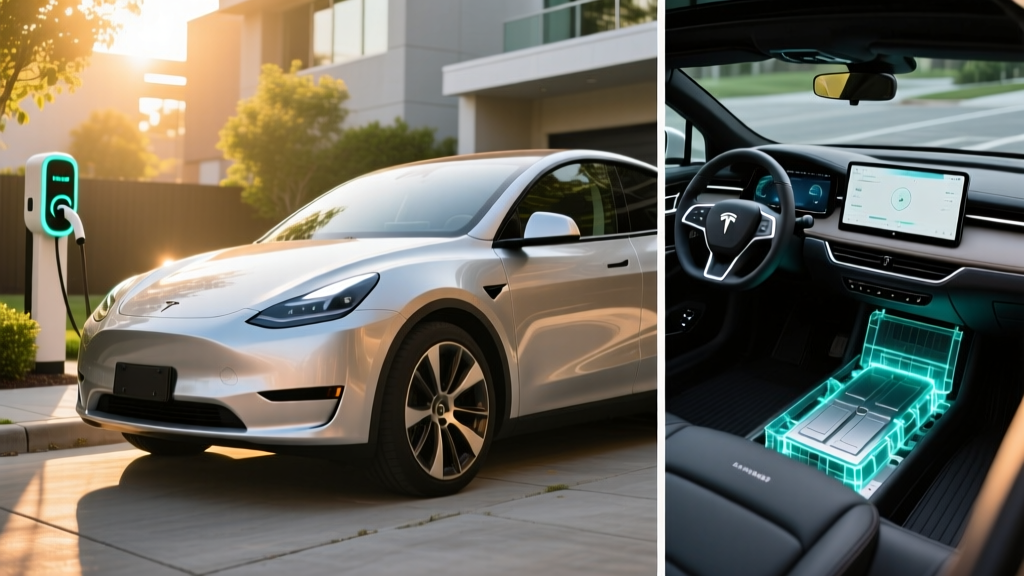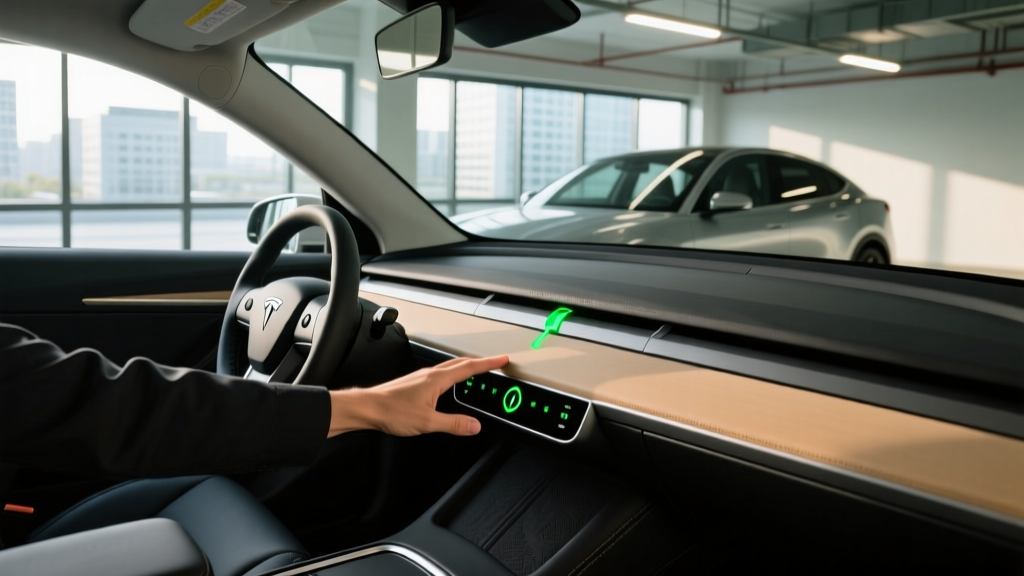
If you've searched "Tesla air conditioning smells bad" and landed here, you're not alone. A musty, vinegar-like, or "dirty socks" odor from the HVAC system is one of the most widely reported comfort complaints across Model Y, Model 3, Model S, and Model X owners. The good news: the cause is well-understood, the fix is inexpensive, and it doesn't reflect a defect in Tesla's powertrain or battery engineering.
In this guide, we'll walk through exactly why Tesla AC systems develop odors, how to fix and prevent the smell, and then deliver a full 2026 Tesla Model Y profile — range, charging, pricing, tax credit eligibility, and ownership realities — so you can evaluate the vehicle on its actual merits.
Why Your Tesla Air Conditioning Smells Bad
The odor almost always originates from microbial growth — mold, mildew, and bacteria — on the evaporator coil inside the HVAC housing. Here's why Teslas are particularly prone to it:
- No cabin air filter pre-drying cycle: Unlike some legacy automakers that run the blower after shutdown to dry the evaporator, Teslas shut the HVAC system off completely when you exit. Moisture from condensation sits on the coil in a dark, warm enclosure — an ideal breeding ground.
- High-efficiency HEPA filter trapping organic matter: Teslas equipped with HEPA filtration (standard on Model S/X, optional on Model Y/3) capture pollen, spores, and particulates effectively — but those trapped organics can decompose and feed microbial growth on the downstream evaporator.
- Recirculation mode dominance: Tesla's climate system defaults to recirculation frequently, which keeps humidity high inside the HVAC housing rather than pulling drier outside air across the coil.
- Warm-climate parking: Vehicles parked outdoors in humid, warm climates (Southeast US, Gulf Coast, tropical regions) experience accelerated growth cycles.
The smell is most noticeable when you first turn on the AC or switch from cooling to fan-only mode — that's when accumulated volatile organic compounds (VOCs) from the biofilm on the evaporator are blown directly into the cabin.
How to Fix and Prevent Tesla AC Odor
Step 1: Replace the Cabin Air Filter
Tesla recommends cabin air filter replacement every 2 years for standard filters and every 3 years for HEPA filters under normal conditions. In humid climates or heavy-use scenarios, many owners find annual replacement necessary. The Model Y/3 cabin filter is located behind the glovebox and can be replaced DIY in about 20 minutes, or at a Tesla Service Center for roughly $50–$80 including parts.
Step 2: Clean the Evaporator Coil
An HVAC evaporator foam cleaner (such as Kool-It or LubroPro) applied through the condensate drain tube or the cabin filter access port kills existing microbial growth. This is a $15–$25 DIY fix. Run the cleaner, let it dwell for 10–15 minutes, then run the fan on high with fresh-air mode (not recirculation) for 15 minutes to flush the system.
Step 3: Preventative Habits
- Switch to fresh-air mode 2–3 minutes before arrival: This dries the evaporator before shutdown. Tesla's climate controls let you toggle recirculation off manually.
- Run the fan on high with heat for 5 minutes monthly: Heat kills surface microbes and dries the housing.
- Use Tesla's Cabin Overheat Protection wisely: While it protects the interior, it also keeps the HVAC system cycling, which can help or hinder depending on ambient humidity.
- Consider an ozone generator treatment (professional): A 30-minute ozone shock treatment ($75–$150 at a detailer) neutralizes entrenched odors that surface cleaning can't reach.
2026 Tesla Model Y: Full EV Review
With the AC odor issue addressed, let's evaluate the 2026 Tesla Model Y on the metrics that matter for EV buyers. The refreshed "Juniper" Model Y continues as Tesla's volume leader and one of the best-selling vehicles globally.
| Spec | Long Range RWD | Long Range AWD | Performance |
|---|---|---|---|
| EPA Range | 320 mi | 300 mi | 280 mi |
| Battery (usable) | ~75 kWh (NMC) | ~75 kWh (NMC) | ~75 kWh (NMC) |
| MPGe (combined) | 123 MPGe | 117 MPGe | 111 MPGe |
| kWh/100 mi | 27 | 29 | 30 |
| 0–60 mph | 5.8 sec | 4.8 sec | 3.5 sec |
| Horsepower | 295 hp | 384 hp | 456 hp |
| Drivetrain | RWD | Dual-Motor AWD | Dual-Motor AWD |
| Base MSRP | $44,990 | $47,990 | $52,490 |
| Battery Warranty | 8 yr / 120,000 mi | 8 yr / 120,000 mi | 8 yr / 120,000 mi |
Real-World Range: What to Actually Expect
The EPA sticker says 320 miles for the Long Range RWD, but real-world conditions tell a more nuanced story — as they do for every EV on the market.
• Mild weather, mixed driving: ~290–310 mi (within 5% of EPA)
• Highway-only at 75 mph: ~255–275 mi (15–20% reduction from sustained high speed)
• Cold weather (below 32°F): ~220–260 mi (20–30% reduction from cabin heating and battery resistance)
• Worst case (cold + highway + headwind): ~200–230 mi
Tesla's NMC battery chemistry delivers strong energy density but is more sensitive to cold-weather range loss than LFP (lithium iron phosphate) alternatives. The Model Y's heat pump — standard across all trims — mitigates cold-weather HVAC energy draw significantly compared to resistive heating, but it doesn't eliminate the physics of reduced battery efficiency in freezing temperatures.
For daily commuting under 80 miles round-trip, the Model Y's real-world range is more than adequate with nightly home charging. For road trips, plan charging stops at roughly 200-mile intervals in winter or 250-mile intervals in summer to maintain a comfortable 15–20% buffer.
Charging Speed: DC Fast, Level 2, and Level 1
Charging speed remains one of Tesla's strongest competitive advantages, thanks to the Supercharger network and the vehicle's capable onboard charging architecture.
| Level | Max Rate | Speed (mi/hr) | Notes |
|---|---|---|---|
| Level 1 (120V) | 1.4 kW | ~4 mi/hr | Emergency/trickle only |
| Level 2 (240V, 48A) | 11.5 kW | ~37 mi/hr | Home Wall Connector; full charge ~8 hr |
| DC Fast (Supercharger V3/V4) | 250 kW peak | ~162 mi in 15 min | 10–80% in ~22 min; tapers above 80% |
Charging curve reality check: The 250 kW peak rate is sustained only between roughly 10–40% state of charge (SoC). Above 60%, the rate drops progressively — by 80% SoC, you're typically seeing 60–80 kW. This is normal lithium-ion charge-curve behavior and is why we quote 10–80% time (~22 minutes) rather than peak kW alone.
The Model Y now ships with the NACS (North American Charging Standard) connector natively, giving direct access to Tesla's Supercharger network (17,000+ stalls in North America) and, increasingly, to non-Tesla DC fast chargers from Electrify America, EVgo, and others that have adopted NACS. No adapter is needed for Superchargers.
For home charging, Tesla's Wall Connector ($420) on a 60-amp circuit delivers the full 11.5 kW (48 amps). A typical Level 2 home installation runs $800–$2,000 depending on panel proximity and local permitting — a worthwhile investment that makes daily EV ownership effortless.
Pricing, Trims, and Federal Tax Credit Eligibility
The 2026 Model Y lineup starts at $44,990 before destination and incentives. Here's how the pricing and federal tax credit landscape breaks down:
| Trim | MSRP | §30D Credit | Effective Price |
|---|---|---|---|
| Long Range RWD | $44,990 | Up to $7,500* | ~$37,490* |
| Long Range AWD | $47,990 | Up to $7,500* | ~$40,490* |
| Performance | $52,490 | Up to $7,500* | ~$44,990* |
*§30D Federal Tax Credit — Key Caveats (2026 rules):
- MSRP cap: SUVs/crossovers must have an MSRP at or below $80,000. All Model Y trims qualify.
- Buyer income cap: Adjusted gross income must not exceed $150,000 (single), $225,000 (head of household), or $300,000 (joint filers).
- Battery sourcing requirements: The credit splits into two halves — $3,750 for critical minerals and $3,750 for battery component manufacturing. Eligible amounts depend on North American sourcing percentages, which have tightened annually. Check the IRS qualified vehicles list for the current credit amount at time of purchase.
- Point-of-sale transfer: You can transfer the credit to the dealer at purchase for an immediate price reduction rather than waiting to claim it on your tax return.
Always verify eligibility with a tax professional and the IRS clean vehicle credit page before finalizing your purchase — rules and eligible vehicle lists update periodically.
Interior, Tech, and Cargo
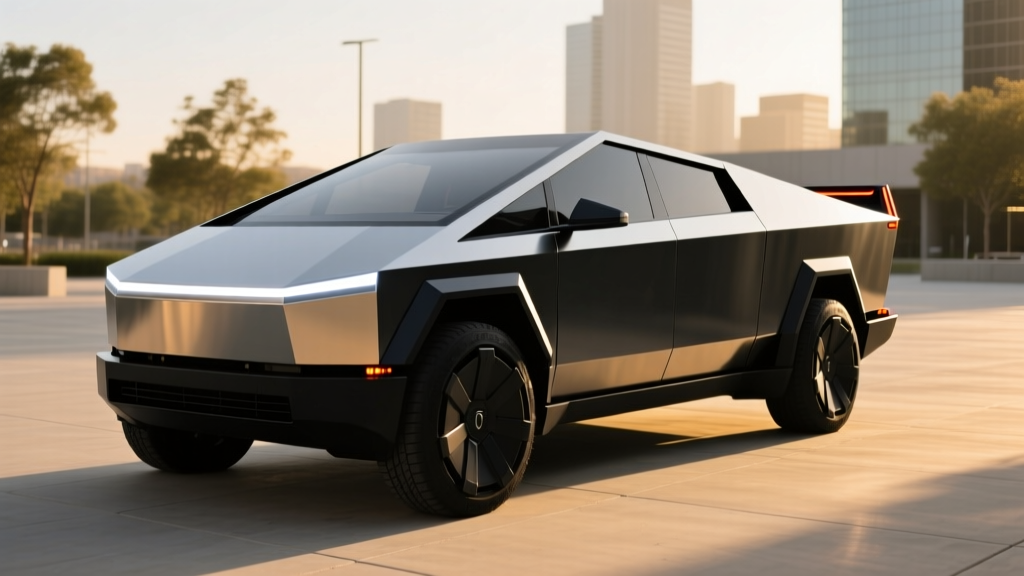
The Juniper-refreshed Model Y interior is a meaningful step up from pre-2025 models, with ventilated front seats, ambient lighting, a rear-seat touchscreen, and improved sound insulation. The minimalist design remains polarizing — there are no physical buttons, no instrument cluster, and all controls route through the 15.4-inch center touchscreen.
Cargo capacity: 30.2 cu ft behind the second row, expanding to 72.1 cu ft with the rear seats folded. The front trunk (frunk) adds 4.1 cu ft of secure, weatherproof storage — useful for charging cables, groceries, or a laptop bag.
Passenger space: Front legroom is generous at 41.8 inches; rear legroom measures 37.3 inches — adequate for adults on shorter trips but tighter than a Hyundai Ioniq 5 or Kia EV6 for tall rear-seat passengers on long drives.
Standout tech:
- Tesla Autopilot (SAE Level 2) — adaptive cruise, lane centering, automatic emergency braking
- Full Self-Driving (Supervised) — $8,000 option or $99/month; adds automated lane changes, traffic light/stop sign recognition, and navigate-on-autopilot. This is still Level 2 — you must remain fully engaged and supervise at all times.
- Over-the-air updates that continuously add features
- Sentry Mode dashcam recording, Dog Mode climate control, and Tesla app remote preconditioning
Is the 2026 Model Y Worth Buying vs. Competitors?
✅ Pros
- Class-leading Supercharger network access (17,000+ stalls, highest reliability in public charging)
- 250 kW DC fast charging with NACS native connector
- Strong real-world efficiency (27 kWh/100 mi)
- Excellent OTA update track record
- Spacious cargo area with frunk
- Strong resale value relative to EV segment
❌ Cons
- AC evaporator odor issue requires periodic maintenance
- Minimalist interior not for everyone; no physical controls
- Rear-seat legroom tighter than Hyundai Ioniq 5 / Kia EV6
- FSD (Supervised) is expensive ($8,000) and still Level 2
- No Apple CarPlay or Android Auto
- Insurance premiums run 15–30% higher than comparable gas crossovers
Choose the Model Y if: You prioritize charging infrastructure reliability, want the longest proven Supercharger network, value OTA software updates, and are comfortable with a touchscreen-centric interface.
Consider the Hyundai Ioniq 5 or Kia EV6 if: You want more rear-seat space, physical climate controls, Apple CarPlay/Android Auto, 800V architecture (faster 10–80% charging on compatible CCS chargers), and a more conventional interior layout.
Consider the Ford Mustang Mach-E if: You prefer a more traditional crossover driving feel, BlueCruise hands-free highway driving (on approved roads), and a lower starting price with similar range.
Frequently Asked Questions
Is the Tesla AC smell a sign of a serious mechanical problem?
No. The musty or vinegar-like odor is caused by microbial growth on the evaporator coil — a maintenance issue, not a mechanical defect. It does not indicate battery, powertrain, or electrical system problems. A cabin filter replacement and evaporator cleaning resolve it in nearly all cases.
Does the 2026 Model Y qualify for the full $7,500 federal tax credit?
The Model Y qualifies for up to $7,500 under §30D, but the actual amount depends on current battery-sourcing compliance percentages (which tighten annually), your income level, and the vehicle's position on the IRS qualified vehicles list at the time of purchase. Some buyers may qualify for the full amount; others may receive $3,750 or $0 depending on sourcing rules. Always check before purchasing.
How often should I replace the cabin air filter to prevent AC odor?
Tesla recommends every 2 years for standard filters and 3 years for HEPA. In practice, many owners in humid climates benefit from annual replacement. If the odor returns within months of a filter change, the evaporator coil itself likely needs cleaning with a foam treatment.
What is the real-world highway range of the Model Y Long Range?
Expect approximately 255–275 miles at sustained 75 mph highway speeds in mild weather (60–80°F). In cold weather (below 32°F), highway range drops to approximately 200–240 miles due to increased aerodynamic drag, cabin heating demand, and battery chemistry limitations.
Can I use non-Tesla chargers with the 2026 Model Y?
Yes. The Model Y's native NACS connector works at all Tesla Superchargers without an adapter. A growing number of Electrify America, EVgo, and other network stations now offer NACS cables. For legacy CCS1 stations, a NACS-to-CCS adapter (sold by Tesla and third parties for ~$150–$250) enables compatibility.
What is the battery warranty on the 2026 Model Y?
Tesla covers the battery and drive unit for 8 years or 120,000 miles (whichever comes first), with a minimum 70% capacity retention guarantee. If the battery degrades below 70% of its original capacity within the warranty period, Tesla will repair or replace it at no cost.
Sources: EPA Fuel Economy (fueleconomy.gov), IRS §30D Qualified Vehicles, Tesla Inc. specifications. Pricing and credit eligibility reflect 2026 model year data and are subject to change.