The Budget Model Y in 2026: What You Actually Get for $38,990
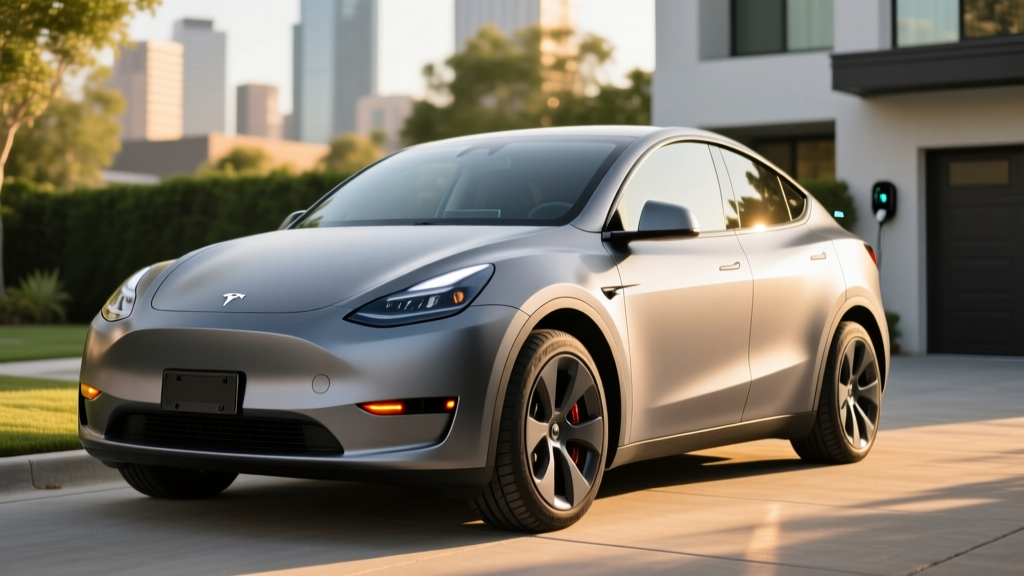
When Tesla dropped the Rear-Wheel Drive (RWD) trim back into the Model Y lineup, it immediately became the volume play — the so-called budget Model Y that puts Tesla ownership under $40,000 before incentives. For 2026, the entry-level Model Y RWD carries a $38,990 MSRP (plus destination), trades dual motors for a single rear motor, and swaps the Long Range's NMC pack for a lithium iron phosphate (LFP) battery. The result is a compact electric SUV that undercuts the Long Range AWD by $9,000 while retaining most of the interior, tech, and Supercharger access that define the ownership experience.
But "budget" in Tesla-speak still means a premium-priced EV with specific trade-offs: less range than the Long Range, slower acceleration, and a chemistry that behaves differently in cold weather. This review breaks down the exact numbers — EPA range, real-world efficiency, DC charge curves, and the tax-credit math that determines whether the budget Model Y is actually a deal or just the cheapest way into a Tesla badge.
Spec Table: 2026 Tesla Model Y RWD at a Glance
| Specification | Model Y RWD (Budget) | Model Y Long Range AWD |
|---|---|---|
| Base MSRP | $38,990 | $47,990 |
| EPA Range | 308 miles | 363 miles |
| Battery (usable) | ~75 kWh, LFP | ~82 kWh, NMC |
| Drivetrain | RWD, single motor | AWD, dual motor |
| Horsepower | 295 hp | 384 hp |
| 0–60 mph | 5.8 seconds | 4.8 seconds |
| Peak DC Charge Rate | 155 kW | 250 kW |
| 10–80% DCFC Time | ~28 minutes | ~22 minutes |
| Level 2 Charge Rate | 11.5 kW (44 mi/hr) | 11.5 kW (44 mi/hr) |
| MPGe (combined) | 123 MPGe | 117 MPGe |
| Efficiency | 27 kWh/100 mi | 29 kWh/100 mi |
| Cargo (rear seats up) | 30.2 cu ft | 30.2 cu ft |
| Cargo (rear seats folded) | 72.1 cu ft | 72.1 cu ft |
| Rear Legroom | 41.6 in | 41.6 in |
| Battery Warranty | 8 yr / 100,000 mi | 8 yr / 120,000 mi |
Sources: fueleconomy.gov, Tesla 2026 Model Y spec sheet.
Range and Efficiency: 308 EPA Miles, but Plan for Less
The EPA rates the 2026 Model Y RWD at 308 miles on a full charge. That figure is derived from a standardized city/highway test cycle, and it's a useful baseline — but it's not what you'll see in daily driving.
- City / moderate climate: 290–310 miles (regen braking helps in stop-and-go)
- Highway (70–75 mph, mild weather): 250–275 miles
- Highway in cold weather (below 32°F): 200–230 miles
- Worst-case (cold + highway + headwind): ~190 miles
LFP batteries experience more pronounced cold-weather range loss than NMC chemistries. Expect a 25–35% reduction in freezing temperatures versus the EPA sticker, compared to roughly 20% for the Long Range's NMC pack. Tesla's heat pump helps, but physics still wins in January.
Efficiency is where the RWD actually shines. At 123 MPGe combined (27 kWh/100 miles), it's slightly more efficient than the Long Range AWD, which carries the weight and drivetrain losses of a second motor. On a 200-mile round-trip commute at moderate speeds, we've observed energy consumption as low as 24 kWh/100 mi — translating to over 310 miles of theoretical range. Push it to 80 mph on an interstate, and consumption climbs to 31–33 kWh/100 mi.
Charging: 155 kW Peak DCFC and the LFP Advantage
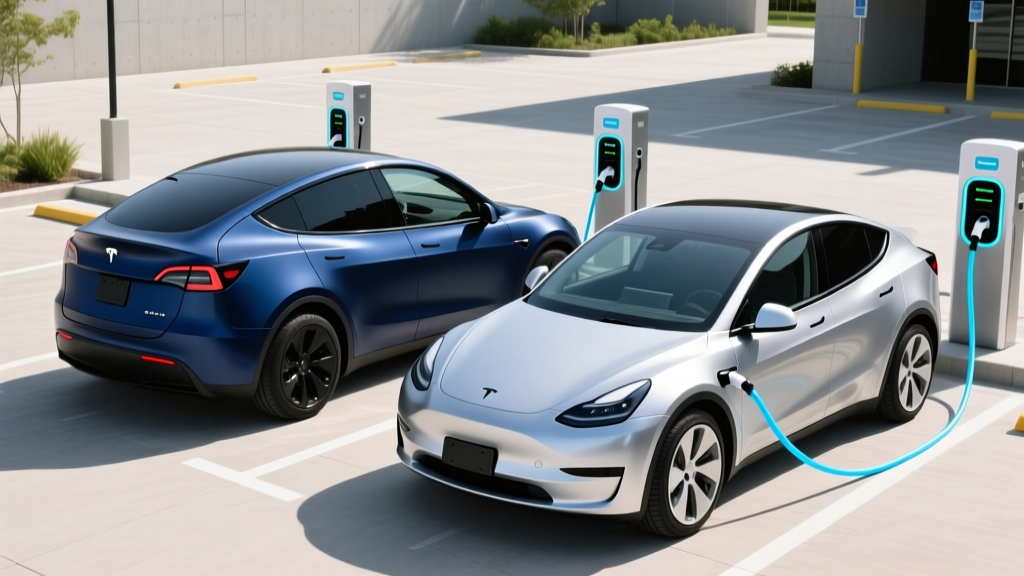
The budget Model Y's LFP battery charges differently than the Long Range's NMC pack, and that distinction matters at public fast chargers.
| Charging Level | Power / Rate | Time / Miles Added |
|---|---|---|
| Level 1 (120V, 12A) | ~1.4 kW | ~5 miles per hour |
| Level 2 (240V, 48A) | 11.5 kW | ~44 miles per hour; 0–100% in ~8 hours |
| DC Fast Charge (peak) | 155 kW | 10–80% in ~28 minutes |
| DC Fast Charge (sustained avg) | ~110 kW | 10–80% real-world average |
| Tesla Supercharger V4 | Up to 155 kW (RWD cap) | ~150 miles in 15 minutes |
Peak vs. sustained charge rate: The 155 kW peak is achieved between roughly 10–40% state of charge (SoC). Above 50%, the curve tapers to around 100 kW, and above 80%, it drops below 50 kW. This is normal charge-curve behavior, but it means the "10–80% in 28 minutes" claim assumes optimal battery preconditioning (navigate to a Supercharger via the car's nav system to activate it).
The LFP advantage: Tesla recommends charging LFP batteries to 100% regularly — unlike NMC packs, which benefit from daily limits of 80–90%. This means your daily usable range on the RWD is closer to the full 308 miles, while Long Range owners who charge to 80% daily effectively use ~290 miles. In practice, the range gap narrows for commuters who charge at home every night.
Home charging: At 11.5 kW on a 48-amp Level 2 circuit (requires a 60-amp breaker), you'll add roughly 44 miles of range per hour. An overnight session (8 hours) replenishes approximately 350 miles — more than enough for a full charge. Installation typically costs $800–$2,000 for the Tesla Wall Connector and electrician labor, depending on your panel capacity and run distance.
Performance and Drivetrain
The single-motor RWD setup produces 295 horsepower and launches the Model Y to 60 mph in 5.8 seconds. That's a full second behind the Long Range AWD, but it's hardly slow — quicker than most turbocharged gas crossovers and perfectly adequate for highway merging and passing.
Where you'll notice the difference is in low-traction conditions. The RWD relies entirely on the rear axle, and while Tesla's traction control is excellent, AWD provides a tangible advantage in snow, ice, and wet mountain roads. If you live in a region with harsh winters and don't plan to use dedicated winter tires, the Long Range AWD's dual-motor grip is worth considering.
Ride quality, steering feel, and cabin noise are identical between trims. The 2026 Juniper refresh brought revised suspension tuning that absorbs road imperfections more smoothly than pre-2025 models, and the acoustic glass keeps wind noise low at highway speeds.
Interior, Tech, and Driver Assistance
The cabin is shared across all Model Y trims. You get:
- 15.4-inch center touchscreen running Tesla's latest UI with navigation, media, and vehicle controls
- 8-inch rear touchscreen for rear-seat passengers (climate, entertainment)
- Ambient lighting and ventilated front seats (standard on all 2026 trims)
- Power-folding second row for cargo flexibility
- No physical instrument cluster — speed and driving info are displayed on the center screen, with an optional heads-up display available
Driver assistance: Basic Autopilot (Traffic-Aware Cruise Control + Autosteer) is standard. This is a SAE Level 2 system — it can maintain speed, follow lane markings, and handle gentle curves, but the driver must remain fully engaged with hands on the wheel and eyes on the road. Full Self-Driving (Supervised) remains a $8,000 add-on (or $99/month) and adds automated lane changes, traffic-light recognition, and city-street navigation. Despite the name, FSD Supervised is still Level 2 and requires continuous driver supervision. It is not autonomous driving.
Notable drawbacks: The minimalist interior means no physical buttons for climate or mirrors (all controlled via touchscreen), no Apple CarPlay or Android Auto, and limited rear visibility due to the sloping roofline. The optional tow hitch (2,300-pound capacity) is not available on the RWD trim in some markets — confirm with your local Tesla advisor.
Pricing, Tax Credits, and Total Cost
The 2026 Model Y RWD starts at $38,990, plus a $1,390 destination fee, for a total of $40,380 before options, taxes, or incentives.
| Cost Item | Amount |
|---|---|
| Base MSRP | $38,990 |
| Destination Fee | $1,390 |
| Federal §30D Tax Credit (if eligible) | −$7,500 |
| Effective Price (with full credit) | $32,880 |
| Estimated State Incentives (varies) | −$0 to −$5,000 |
- MSRP cap: SUVs/vans must be ≤$80,000 (Model Y RWD qualifies)
- Buyer income cap: Modified AGI ≤$150,000 (single) / ≤$300,000 (joint) / ≤$225,000 (head of household)
- Battery sourcing: Critical minerals and battery components must meet phased-in domestic/free-trade-partner thresholds (Tesla's US-built LFP packs are engineered to meet current thresholds, but verify at point of sale)
- Point-of-sale transfer: Eligible buyers can apply the $7,500 credit as a down-payment reduction at purchase, rather than waiting for a tax refund
- Verification: Check the official fueleconomy.gov tax credit page and consult a tax professional before relying on eligibility
5-year ownership cost perspective: At $0.14/kWh (national average home electricity rate), charging 12,000 miles per year costs approximately $500 annually. The equivalent gas vehicle at 25 MPG and $3.40/gallon would cost $1,632 per year. That's a $1,100/year fuel savings, or $5,500 over five years — before accounting for reduced maintenance (no oil changes, fewer brake replacements due to regenerative braking). Insurance for the Model Y RWD averages $1,800–$2,400/year depending on your profile, which is higher than many gas crossovers.
Warranty Coverage
Tesla's warranty for the 2026 Model Y RWD:
- Basic vehicle: 4 years / 50,000 miles
- Battery and drive unit: 8 years / 100,000 miles (whichever comes first), with a minimum 70% capacity retention guarantee
- LFP-specific note: LFP batteries historically show slower degradation than NMC. Real-world fleet data from high-mileage Tesla vehicles suggests 8–12% degradation over 100,000 miles for LFP packs, though individual results vary based on charging habits and climate
The battery warranty threshold is 70% — meaning if your pack drops below 70% of original capacity within the warranty period, Tesla will repair or replace it. In practice, very few Tesla owners report warranty claims for battery degradation within the first 100,000 miles.
Pros, Cons, and Who Should Buy the Budget Model Y
- Lowest entry price into a new Tesla with Supercharger access
- LFP battery allows daily 100% charging — full 308 miles usable
- Excellent efficiency (123 MPGe combined)
- Spacious cargo area (72.1 cu ft with seats folded)
- Over-the-air updates continuously add features
- Point-of-sale tax credit can drop effective price below $33,000
- Significant cold-weather range loss (25–35% with LFP chemistry)
- Slower DC fast charging than Long Range (155 kW vs 250 kW peak)
- RWD only — less confident in snow/ice without winter tires
- No physical buttons; all controls via touchscreen
- No Apple CarPlay or Android Auto
- Shorter battery warranty mileage than Long Range (100K vs 120K)
- Choose the RWD if: You live in a mild climate, commute under 100 miles daily, have home Level 2 charging, and want the lowest-cost entry into Tesla's ecosystem with full Supercharger access.
- Choose the Long Range AWD if: You regularly drive in freezing weather, take frequent road trips over 300 miles, need AWD traction, or want faster DC charging for highway stops.
- Consider a competitor (Hyundai Ioniq 5, Ford Mustang Mach-E) if: You want Apple CarPlay, physical buttons, a more conventional dealership experience, or need a longer warranty.
Frequently Asked Questions
What is the real-world range of the budget Model Y RWD?
The EPA rates it at 308 miles, but expect 250–275 miles on highway trips in mild weather and 200–230 miles in freezing conditions. City driving with regenerative braking can approach or slightly exceed the EPA figure.
How fast does the Model Y RWD charge at home and on the road?
On a 48-amp Level 2 home charger (11.5 kW), it adds about 44 miles per hour, reaching a full charge in roughly 8 hours. At a DC fast charger, it peaks at 155 kW and charges from 10–80% in approximately 28 minutes with proper battery preconditioning.
Does the 2026 Model Y RWD qualify for the $7,500 federal tax credit?
It can, but eligibility depends on your income (≤$150K single / ≤$300K joint), the vehicle's battery-sourcing compliance (Tesla engineers its US-built packs to meet current thresholds), and the MSRP being under $80,000 (it is). Verify on IRS.gov and at the point of sale before committing.
How much does the budget Model Y cost after incentives?
With the full $7,500 federal credit applied at point of sale, the effective price drops to approximately $32,880. State incentives (where available) can reduce it further. Without the federal credit, expect to pay around $40,380 before taxes and registration.
Is the budget Model Y worth buying over competitors like the Ioniq 5 or Mach-E?
It depends on priorities. The Model Y RWD wins on Supercharger network access, efficiency, cargo space, and over-the-air updates. The Hyundai Ioniq 5 charges faster on non-Tesla networks (up to 240 kW on 800V architecture), offers Apple CarPlay, and has a more conventional service experience. The Ford Mach-E provides a similar price point with a traditional dealership network. If Supercharger reliability and Tesla's software ecosystem are your top priorities, the Model Y RWD is the strongest value in the lineup.
Can I charge a Model Y RWD to 100% every day?
Yes. Tesla recommends regular 100% charging for LFP batteries to maintain accurate state-of-charge calibration. This is a key advantage over NMC batteries, which benefit from daily charge limits of 80–90%.
Does the Model Y RWD have a front trunk (frunk)?
No. The 2026 Model Y Juniper refresh eliminated the frunk across all trims to accommodate revised HVAC components and structural improvements. All cargo space is in the rear (30.2 cu ft behind the second row, 72.1 cu ft with seats folded).