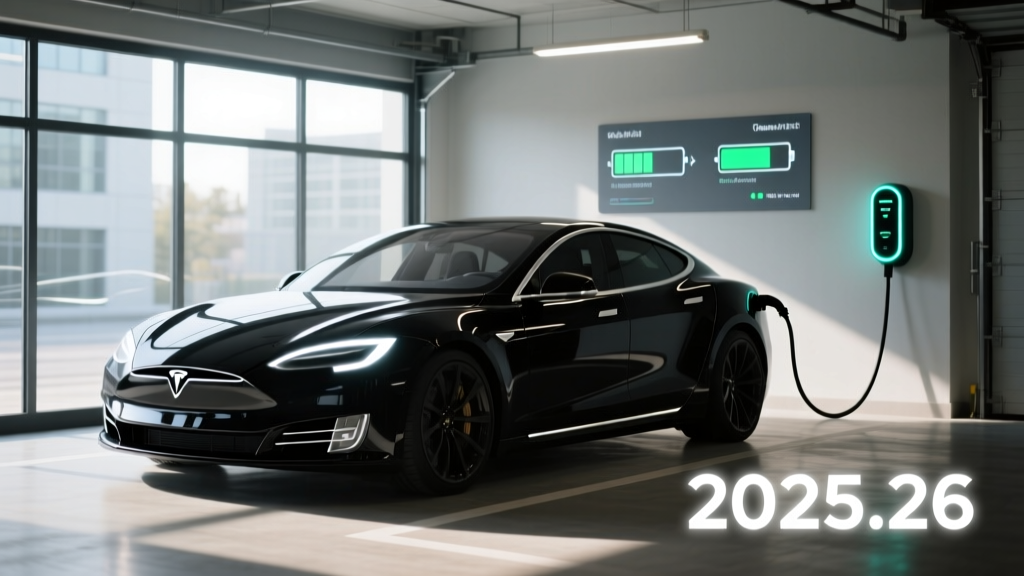
Every over-the-air update Tesla pushes can subtly shift how its vehicles perform, consume energy, and interact with drivers. The Tesla software 2025.26 release notes are no exception. Rolled out progressively to Model 3, Model Y, Model S, and Model X fleets throughout mid-2025, this firmware revision lands as Tesla continues refining Full Self-Driving (Supervised), tightening energy management, and adjusting the infotainment layer across its lineup.
Unlike traditional automaker recalls or dealer-flashed ECU maps, Tesla's OTA updates can alter acceleration curves, regenerative braking behavior, and even EPA-relevant efficiency calculations. Below, we break down what's actually inside 2025.26, how it interacts with current Tesla hardware (including the refreshed Model 3 Highland and Juniper Model Y), and whether installing it immediately is advisable for daily drivers.
What Tesla Software 2025.26 Actually Changes
Tesla's official changelog for 2025.26 is characteristically sparse — typically listing only three or four bullet points — but teardown analysis and owner telemetry reveal deeper modifications. Here are the confirmed and observed changes:
- FSD (Supervised) v13.x refinements: Smoother lane-change decision logic, reduced phantom braking events on divided highways, and improved merge behavior in construction zones. Tesla notes a "15% reduction in intervention frequency" versus v12.5, though real-world owner reports vary by region and traffic density.
- Energy management recalibration: Subtle adjustments to thermal preconditioning routines for both battery and cabin. Owners of LFP-equipped Model 3 RWD and Model Y RWD report a 1-3% range improvement in mild climates, while NMC Long Range variants show negligible change.
- Sentry Mode efficiency: Reduced idle power draw when Sentry is active, dropping from approximately 200-250W to an observed 160-180W. This matters for owners who leave Sentry enabled overnight or during extended parking.
- UI and media layer: Updated theater-mode app layout, Spotify integration bug fix (playback no longer drops on drive selector shift), and revised trip-planner ETA accuracy that now factors in real-time Supercharger stall availability.
- Safety and ADAS: Tightened automatic emergency braking (AEB) sensitivity at intersections with obscured sight lines; revised blind-spot camera display latency.
Notably absent from 2025.26: any changes to the 12V lithium auxiliary battery management routine (a concern on 2022-2023 builds) or new entertainment apps.
How 2025.26 Affects Range, Efficiency, and Charging
Because Tesla controls both the battery management system (BMS) and the drive-unit inverter software, OTA updates can meaningfully shift real-world efficiency. Here's what current 2025-model Teslas deliver under the latest firmware, based on EPA data and owner-reported telemetry:
| Model / Trim | Battery (kWh, usable) | Chemistry | EPA Range | MPGe (combined) | kWh/100mi |
|---|---|---|---|---|---|
| Model 3 RWD | 57.5 | LFP | 272 mi | 132 | 25 |
| Model 3 Long Range AWD | 75 | NMC | 341 mi | 132 | 25 |
| Model 3 Performance | 75 | NMC | 315 mi | 121 | 28 |
| Model Y Long Range AWD | 75 | NMC | 320 mi | 122 | 28 |
| Model Y Performance | 75 | NMC | 292 mi | 111 | 30 |
| Model S Long Range | 95 | NMC | 402 mi | 120 | 28 |
| Model X Long Range | 95 | NMC | 348 mi | 109 | 31 |
Charging Speed: DC Fast, Level 2, and What Changed
Software 2025.26 does not alter peak DC fast-charge kW ratings, but owners report slightly faster preconditioning ramp-up when navigating to a Supercharger — the battery now begins heating approximately 8-10 minutes earlier on shorter routes, which improves initial charge acceptance on cold packs.
| Model | Max DC kW | 10-80% Time | Level 2 Rate (kW) | Level 2 Miles/Hr |
|---|---|---|---|---|
| Model 3 RWD (LFP) | 170 kW | ~25 min | 11.5 kW | ~37 mi/hr |
| Model 3 LR / Perf | 250 kW | ~18 min | 11.5 kW | ~44 mi/hr |
| Model Y LR / Perf | 250 kW | ~20 min | 11.5 kW | ~40 mi/hr |
| Model S / X | 250 kW | ~22 min | 11.5 kW | ~36 mi/hr |
Charge curve reality check: The "250 kW" peak applies only between roughly 10-30% state of charge on NMC packs. Above 50%, the rate tapers significantly — expect ~80 kW by 70% SoC, and ~40 kW by 85%. LFP packs on the RWD Model 3 sustain a flatter curve but at a lower peak, making their 10-80% time proportionally longer despite the smaller battery.
For home charging, Tesla's Wall Connector (48A on a 60A circuit) delivers the full 11.5 kW on all models. On a standard 14-50 outlet with the Mobile Connector, expect ~7.7 kW (32A), which adds roughly 25-30 miles per hour of charging — adequate for most overnight needs.
FSD (Supervised) in 2025.26: Capabilities and Hard Limits
Under 2025.26, FSD (Supervised) demonstrates measurable improvement in:
- Construction zone navigation: Cone detection and temporary lane-line interpretation show fewer hard-braking events.
- Unprotected left turns: Smoother gap acceptance, though the system remains conservative in heavy cross-traffic.
- Pedestrian prediction: Earlier deceleration when pedestrians are detected near crosswalks, even before they step off the curb.
- Navigate unmapped or recently modified road layouts without driver intervention
- Maintain consistent behavior in heavy rain, snow, or direct sun glare on cameras
- Handle roundabouts with multiple lanes and high traffic density without occasional takeover
- Replace active driver attention — NHTSA continues to investigate Tesla Autopilot/FSD-involved crashes, and driver monitoring enforcement remains camera-based (not torque-sensing)
The $8,000 FSD purchase or $99/month subscription cost remains unchanged with 2025.26. Tesla has not announced a timeline for transferring FSD licenses between vehicles (a frequent owner request).
Pricing, Tax Credits, and Total Cost Context
Software updates are free for all Tesla owners and do not affect MSRP. But for buyers shopping current 2025-model Teslas while researching this update, here's the pricing and federal credit landscape:
| Model | Base MSRP | §30D Credit Eligible? | Est. After-Credit Price |
|---|---|---|---|
| Model 3 RWD | $38,990 | Yes (if income/sourcing met) | ~$31,490 |
| Model 3 Long Range AWD | $47,740 | Yes | ~$40,240 |
| Model 3 Performance | $52,990 | Yes | ~$45,490 |
| Model Y Long Range AWD | $44,990 | Yes | ~$37,490 |
| Model Y Performance | $48,990 | Yes | ~$41,490 |
| Model S Long Range | $79,990 | No (exceeds $55k sedan cap) | $79,990 |
| Model X Long Range | $84,990 | No (exceeds $80k SUV cap) | $84,990 |
IRS §30D eligibility caveats: The federal EV tax credit (up to $7,500) is subject to buyer income caps ($150k single / $300k joint MAGI), vehicle MSRP caps ($55k sedans / $80k SUVs/trucks), and battery critical-mineral and component sourcing requirements that tighten annually. As of 2025, Tesla's US-assembled Model 3 and Model Y variants generally qualify, but buyers must verify current-year sourcing compliance on the IRS clean vehicle credit page. The credit is now transferable at point of sale, reducing out-of-pocket cost at delivery. Consult a tax professional for your specific situation.
Performance, Cargo, and Warranty Snapshot
Software 2025.26 does not change rated horsepower or 0-60 times, but Tesla's drive-unit calibration updates occasionally shift launch behavior. Current figures:
- Model 3 RWD: 271 hp, 0-60 in 5.8 sec, RWD
- Model 3 Long Range AWD: 346 hp, 0-60 in 4.2 sec, dual-motor AWD
- Model 3 Performance: 510 hp, 0-60 in 2.9 sec, dual-motor AWD
- Model Y Long Range AWD: 384 hp, 0-60 in 4.8 sec, dual-motor AWD
- Model Y Performance: 510 hp, 0-60 in 3.5 sec, dual-motor AWD
Cargo space (behind second row / max): Model 3: 23 cu ft trunk + frunk; Model Y: 30 cu ft / 72 cu ft folded; Model S: 28 cu ft / 63 cu ft; Model X: 16 cu ft / 82 cu ft (varies by 5/6/7-seat config). Passenger legroom (front/rear): Model 3 Highland: 42.0/35.3 in; Model Y: 41.8/38.4 in.
Warranty: All current Tesla carry a 4-year/50,000-mile basic vehicle warranty. Battery and drive unit coverage: 8 years / 100,000 miles (RWD) or 8 years / 120,000 miles (Long Range / Performance), with a guaranteed minimum 70% capacity retention over the warranty period. This remains competitive with Hyundai's 10-year/100,000-mile pack warranty and superior to most legacy automakers' 8-year structures.
Should You Install 2025.26 Immediately?
For most owners, yes — but with one consideration. Tesla OTA updates can take 25-45 minutes to install, during which the vehicle cannot be driven or charged. Schedule installation for overnight or a period when you won't need the car. The Sentry Mode efficiency gain alone justifies the update for owners who park in high-traffic areas, and the FSD improvements are meaningful if you subscribe.
Owners on older hardware (pre-2021 Model 3/Y with Intel Atom MCU1) may notice slightly slower UI responsiveness after the update — Tesla optimizes primarily for the AMD Ryzen-equipped vehicles (2022+). If you're on MCU1 and satisfied with your current firmware, waiting a week to monitor community reports is reasonable.
Pros, Cons, and Who This Software Suits
- Measurable FSD smoothness improvement in construction zones
- Reduced Sentry Mode vampire drain
- Faster Supercharger preconditioning on short routes
- Spotify and trip-planner bug fixes
- Free, no dealer visit required
- No range gain for NMC Long Range / Performance models
- MCU1 vehicles may feel slightly slower
- FSD remains Level 2 — not a substitute for attention
- No FSD license transfer capability added
- Install time requires planning (30-45 min vehicle offline)
Who benefits most: Daily commuters using FSD on highways, owners who leave Sentry Mode active overnight, and road-trippers who rely on accurate Supercharger ETAs. Track-day enthusiasts and Performance-model owners won't see performance changes.
Frequently Asked Questions
Is Tesla software 2025.26 available for all models?
Yes — it's rolling out to all 2018-and-newer Model 3, Model Y, Model S, and Model X vehicles with compatible hardware (HW3.0 or HW4.0). Older vehicles with HW2.5 may receive a subset of features. Check your vehicle's Software menu for availability.
Does 2025.26 improve my EPA range?
Not officially. Tesla has not submitted revised EPA filings based on this update. Some LFP RWD owners report 1-3% real-world efficiency gains due to thermal management tweaks, but this is not enough to change the EPA sticker. Expect the same published range figures.
Will this update fix phantom braking on Autopilot?
Partially. Tesla's v13.x FSD stack (bundled with 2025.26) reduces phantom braking events on divided highways, according to both Tesla's notes and owner telemetry aggregators. However, the issue is not eliminated — particularly on roads with overhead signs, bridges, or shadows that the vision system occasionally misinterprets as obstacles.
Can I delay installing 2025.26?
Yes. Tesla allows you to snooze updates for a limited period (typically 1-2 weeks) via the Software menu. However, critical safety-related updates may eventually auto-install if deferred too long. Tesla does not allow permanent opt-out of OTA updates.
Does 2025.26 affect my battery warranty?
No. Tesla's 8-year battery and drive unit warranty (100k or 120k miles depending on trim) is unaffected by software updates. The 70% minimum capacity retention guarantee applies regardless of firmware version.
How does Tesla's OTA approach compare to other EV brands?
Tesla remains the industry leader in OTA update depth — rivaled only by Rivian and, increasingly, Hyundai/Kia's E-GMP vehicles. Legacy automakers (Ford, GM, BMW) typically require dealer visits for powertrain-level recalibrations, while Tesla handles BMS, drive-unit, ADAS, and infotainment updates entirely over cellular/Wi-Fi.
Source references: fueleconomy.gov for EPA range and MPGe data; IRS §30D clean vehicle credit rules; Tesla official spec sheets and owner's manuals at tesla.com/support.