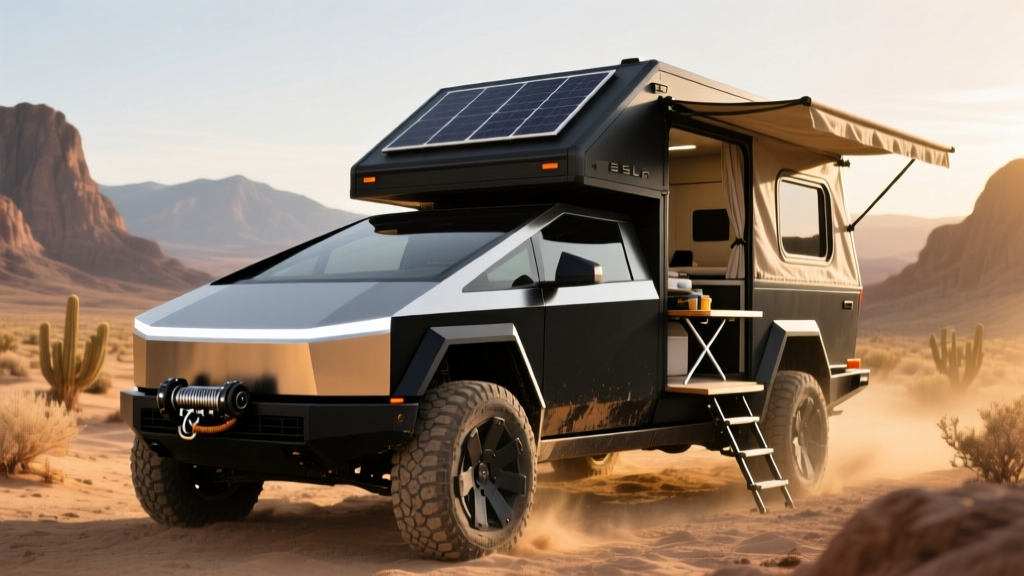
The Tesla Cybertruck has polarized the truck world since its late-2023 launch, but one question keeps surfacing in forums, YouTube channels, and overlanding communities: can you actually build a viable Cybertruck camper out of this angular, stainless-steel EV? The short answer is yes — but with significant caveats that every prospective overlander or truck-camper buyer needs to understand before committing nearly $80,000 (or more) to the platform.
This review examines the Cybertruck's specs through the lens of camper conversion viability — range under load, towing capacity, charging infrastructure compatibility, bed dimensions, and the practical realities of adding weight and aerodynamic drag to an electric pickup. We're looking at the 2025/2026 model-year lineup as currently sold, including the AWD and Cyberbeast trims.
Cybertruck Specs at a Glance: Camper-Build Baseline
| Spec | AWD (Dual Motor) | Cyberbeast (Tri-Motor) |
|---|---|---|
| EPA Range | 340 miles | 320 miles |
| Real-World Range (loaded camper) | ~180–230 miles | ~170–210 miles |
| Battery Capacity | ~123 kWh usable (NMC) | ~123 kWh usable (NMC) |
| Horsepower | 600 hp | 845 hp |
| 0–60 mph | 3.9 seconds | 2.6 seconds |
| Max Towing Capacity | 11,000 lbs | 11,000 lbs |
| Payload Capacity | 2,500 lbs | 2,500 lbs |
| Bed Length | 6 ft (72 in) | 6 ft (72 in) |
| Bed Width (between wheel wells) | ~49 in | ~49 in |
| Max DC Fast Charge | 250 kW (CCS/NACS) | 250 kW (CCS/NACS) |
| 10–80% DC Charge Time | ~22 minutes (est.) | ~22 minutes (est.) |
| Level 2 Home Charge Rate | 11.5 kW (~34 mi/hr) | 11.5 kW (~34 mi/hr) |
| Efficiency (EPA) | ~54 MPGe / 58 kWh/100mi | ~50 MPGe / 63 kWh/100mi |
| Base MSRP (2025) | $79,990 | $99,990 |
| Federal Tax Credit (§30D) | Not eligible (MSRP cap) | Not eligible (MSRP cap) |
| Battery/Drive Unit Warranty | 8 yr / 120,000 mi | 8 yr / 120,000 mi |
Real-World Range: The Camper Penalty
Real-World with Camper Build: Expect 180–230 miles depending on camper weight, aerodynamics, terrain, and temperature. Cold weather (below 32°F) can reduce this further by 15–25%, bringing effective range down to 140–190 miles in winter conditions.
Here's the physics that no marketing slide will show you: adding a camper to any EV truck creates a triple efficiency penalty. First, weight — a typical slide-in truck camper runs 1,500–3,000 lbs dry, which eats directly into the Cybertruck's 2,500-lb payload capacity and forces you into lightweight pop-up or custom wedge-camper territory. Second, aerodynamic drag — the Cybertruck's angular shape already creates more drag than a streamlined sedan, and adding a camper shell or roof-top tent increases the frontal area and turbulence substantially. Third, rolling resistance — heavier loads mean more tire deformation and energy loss.
According to fueleconomy.gov, the Cybertruck AWD achieves roughly 54 MPGe combined, translating to about 58 kWh per 100 miles under EPA test conditions. In real-world highway driving at 70 mph without a camper, owners report efficiency closer to 55–65 kWh/100mi. Add a 1,500-lb camper and you're looking at 75–90 kWh/100mi, which with the ~123 kWh usable battery yields 135–165 miles of practical range before you need to find a charger.
The Cyberbeast's tri-motor setup, while delivering 845 hp, actually sees slightly worse efficiency at baseline (~63 kWh/100mi EPA), meaning the performance trim is the wrong choice for range-maximized overlanding.
Charging the Cybertruck on the Trail and at Home
| Charging Level | Power | Speed (approx.) | Use Case |
|---|---|---|---|
| Level 1 (120V) | 1.4 kW | ~4 mi/hr | Emergency / trickle only |
| Level 2 (240V home) | 11.5 kW | ~34 mi/hr | Overnight campsite / home |
| DC Fast (V4 Supercharger) | 250 kW peak | 10–80% in ~22 min | Road-trip corridor stops |
| DC Fast (3rd-party CCS) | Up to 350 kW* | 10–80% in ~20 min* | Electrify America, etc. |
*The Cybertruck's onboard charge acceptance peaks around 250 kW. Even at a 350 kW CCS station, you'll see ~250 kW maximum, tapering significantly above 80% SoC. Expect 80–100% to add another 12–15 minutes.
For camper builds, charging logistics are the make-or-break factor. The Cybertruck uses the NACS (Tesla) connector natively, giving you full access to the Tesla Supercharger network — over 6,000 stations and 60,000+ connectors across North America as of early 2026. This is a genuine advantage for overlanders who stick to highway corridors.
However, the charging curve matters enormously when you're range-planning in remote areas. The Cybertruck's ~123 kWh NMC battery charges aggressively from 10–50% SoC (near peak 250 kW), then tapers to roughly 100–120 kW from 50–80%, and drops further to 40–60 kW from 80–100%. This means the commonly cited "22 minutes to 80%" is useful for trip planning, but if you're in a charging desert and need a full battery, budget 45–50 minutes total.
For off-grid camping, Level 2 charging at campgrounds is increasingly available but far from universal. A 50-amp RV pedestal (12 kW) can add roughly 34 miles of range per hour to the Cybertruck — adequate for topping off overnight if you're stationary for 12+ hours. Some overlanders carry portable solar generators (1–2 kW output), but at that rate you're adding only 3–6 miles per hour of sunlight — useful for trickle maintenance, not meaningful range recovery.
Camper Build Options: What Actually Fits the Cybertruck Bed
The Cybertruck's 6-foot bed (72 inches long) and roughly 49-inch width between the wheel wells create a tighter envelope than a full-size F-150 or Silverado bed. This rules out most traditional slide-in truck campers, which typically require an 8-foot bed and wider wheel-well spacing. Here's what does work:
- Wedge camper shells (e.g., AT Overland Habitat, Four Wheel Campers Project M): 400–800 lbs, low-profile, pop-up roof. Best match for the Cybertruck's payload limit.
- Custom flat-bed campers: Fabricated aluminum or composite boxes, 800–1,500 lbs. Requires custom fabrication to match the Cybertruck's angular bed geometry.
- Roof-top tents: 120–200 lbs on a bed rack. Lightest option, but no standing room or kitchen facilities.
- Trailer-based campers: Tow a 2,000–5,000 lb travel trailer. The Cybertruck's 11,000-lb tow rating handles this easily, but towing cuts range by 30–50%.
The payload math is critical: the Cybertruck's 2,500-lb payload must cover the camper, passengers, gear, water, and any aftermarket accessories. A 1,200-lb wedge camper with two passengers (350 lbs), 50 gallons of water (417 lbs), and 200 lbs of gear puts you at 2,167 lbs — close to the limit with little margin. Overloading an EV affects not just range but regenerative braking performance, tire wear, and suspension longevity.
Pricing, Tax Credits, and Total Cost of Ownership
| Trim | Base MSRP | Federal §30D Credit | Effective Price | Estimated Camper Build | Total Investment |
|---|---|---|---|---|---|
| AWD (Dual Motor) | $79,990 | $0 (exceeds MSRP cap) | $79,990 | $8,000–$25,000 | $88,000–$105,000 |
| Cyberbeast (Tri-Motor) | $99,990 | $0 (exceeds MSRP cap) | $99,990 | $8,000–$25,000 | $108,000–$125,000 |
The IRS §30D clean vehicle credit caps eligibility for pickup trucks at an MSRP of $80,000. The Cybertruck AWD starts at $79,990 — technically under the cap — but Tesla's destination fees and mandatory options typically push the as-delivered price above $80,000, which can disqualify it depending on how the VIN is coded at sale. The Cyberbeast at $99,990 is unambiguously over the cap.
Additionally, §30D has buyer income limits ($300,000 joint / $150,000 single for new vehicles) and battery-component/critical-mineral sourcing requirements that change annually. As of 2026, Tesla's battery supply chain has shifted significantly, and buyers should verify current-year eligibility on the IRS website or with a tax professional before counting on any credit. In practice, most Cybertruck camper builds will be a full-price purchase.
On the operating-cost side, the Cybertruck's electricity cost runs roughly $0.06–$0.15 per mile depending on your local utility rate and charging mix (home vs. public DC fast charging). Compare this to a gas truck getting 15 mpg at $3.50/gallon ($0.23/mile), and the per-mile fuel savings are real — but the upfront premium and camper-build costs mean the payback period stretches to 8–12 years for most owners.
Tech, Driver Assists, and Overlanding-Specific Features
The Cybertruck comes standard with Tesla's 18.5-inch center touchscreen running the latest Tesla OS, which includes built-in route planning with Supercharger stops, state-of-charge prediction, and elevation-aware range estimates — genuinely useful for overland trip planning. The air suspension provides up to 16 inches of ground clearance in Extract Mode, competitive with purpose-built off-road trucks.
Tesla's Autopilot and available Full Self-Driving (Supervised) are SAE Level 2 driver-assistance systems — not autonomous driving. The driver must remain attentive, hands on the wheel (or providing torque input), and ready to take over at any moment. On highway stretches between trailheads, Autopilot reduces fatigue significantly. On unpaved or poorly marked roads common in overlanding areas, these systems disengage frequently and should not be relied upon.
Notable features for camper builds include the Cybertruck's 240V bed outlet (up to 9.6 kW output via Powershare), which can run camp appliances, power tools, or even charge another EV in a pinch. The stainless-steel exoskeleton resists dents from trail-side branches, though it shows fingerprints and scratches differently than painted steel. The adaptive air suspension can level the truck on uneven campsites, a genuine advantage over leaf-sprung competitors.
Cybertruck Camper vs. Key Competitors
How does a Cybertruck camper stack up against other EV and hybrid truck-camper platforms available in 2026?
- Ford F-150 Lightning + camper: Larger bed (6.5 or 8 ft), 2,235-lb payload (Extended Range), 320-mile EPA range, MSRP from ~$55,000. Better camper compatibility and lower cost, but less off-road capability and slower DC charging (~150 kW peak on most trims).
- Rivian R1T + camper: 4.5-foot bed (shorter than Cybertruck), 1,760-lb payload, 352-mile EPA range (Max Pack), MSRP from ~$75,000. Excellent off-road chops, NACS charging, but the short bed limits camper options severely.
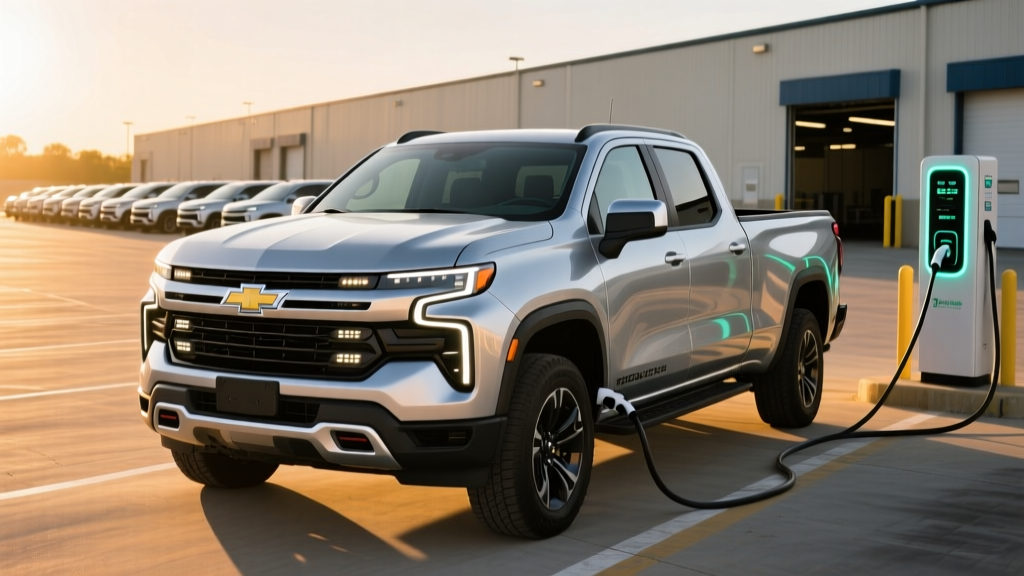
- Chevrolet Silverado EV + camper: Available with 4WT (four-wheel steer), up to 400+ mile range (max battery), 1,800-lb payload, 350 kW DC charging capability. Largest bed options, but heavier and pricier in high-range trims.
The Cybertruck's combination of 11,000-lb towing, air suspension, Powershare 240V output, and Supercharger network access is unique. But its payload ceiling, tight bed dimensions, and ineligibility for the federal tax credit make it a premium, niche choice for camper builds rather than the default recommendation.
Pros and Cons: The Honest Assessment
Pros
- Supercharger network access — best public charging reliability in North America
- Air suspension with Extract Mode (16" ground clearance) for off-road access
- 9.6 kW Powershare 240V bed outlet — run camp appliances without a generator
- 11,000-lb tow rating handles most travel trailers and toy haulers
- Stainless-steel body resists trail scratches and dents
- Strong regenerative braking reduces brake wear on mountain descents
Cons
- Real-world camper range drops to 140–230 miles — serious route planning required
- 2,500-lb payload is tight for truck campers with passengers and gear
- 6-foot bed and 49-inch wheel-well width limits off-the-shelf camper options
- No federal tax credit — effective price starts near $80,000+
- NACS-only connector limits some remote-area CCS-only chargers
- Stainless-steel body is difficult to modify or drill for camper tie-downs
- Insurance costs run 20–40% higher than comparable gas trucks
Who Should Build a Cybertruck Camper?
- You prioritize Supercharger network access and can plan routes around DC fast charging
- You want air-suspension leveling and 16" ground clearance for dispersed camping
- You'll use a lightweight wedge camper (under 1,200 lbs) or tow a trailer
- You value the 9.6 kW Powershare for off-grid power without a generator
- Budget is not your primary constraint ($88K–$125K+ total investment)
- You need a full-size slide-in camper (requires 8-ft bed and higher payload)
- You want federal tax credit eligibility to reduce upfront cost
- Your overlanding involves multi-day stretches without DC fast-charger access
- You prefer a proven, serviceable platform with widespread dealer support in rural areas
Frequently Asked Questions
What is the real-world range of the Cybertruck with a camper?
With a 1,000–1,500 lb camper build, expect 180–230 miles in mild weather at moderate speeds (55–65 mph). Highway driving at 75+ mph, mountain terrain, or cold weather below 32°F will reduce this to 140–190 miles. The EPA-rated 340 miles (AWD) assumes no additional load and mixed driving conditions.
How fast does the Cybertruck charge at home and on the road?
At home on a Level 2 (240V/48A) charger, the Cybertruck adds roughly 34 miles of range per hour — a full overnight session (10 hours) recovers about 340 miles. On a V4 Supercharger at 250 kW peak, 10–80% takes approximately 22 minutes, though the charge curve tapers significantly above 80%.
Does the Cybertruck qualify for the $7,500 federal EV tax credit?
Generally, no. The IRS §30D credit caps truck eligibility at $80,000 MSRP. The Cybertruck AWD's $79,990 base MSRP technically qualifies, but destination charges and options typically push it over the cap. The Cyberbeast at $99,990 is ineligible. Income limits ($300K joint/$150K single) and battery-sourcing rules add further restrictions. Always verify on irs.gov before purchasing.
Can I put a slide-in truck camper on a Cybertruck?
Traditional slide-in campers designed for full-size 8-foot beds will not fit the Cybertruck's 6-foot bed or its 49-inch wheel-well width. Lightweight wedge campers (400–1,200 lbs) and custom-fabricated units are the viable options. Always stay within the 2,500-lb payload rating including passengers and gear.
Is the Cybertruck camper setup worth it vs. a gas truck?
For owners who primarily camp within Supercharger-network range and value off-grid electrical power (Powershare), the Cybertruck offers a unique experience with zero tailpipe emissions and lower per-mile fuel costs. For remote boondocking where no charging exists within 150 miles, a gas or diesel truck remains the pragmatic choice. The Cybertruck camper is a premium, lifestyle-driven build — not a budget or maximum-range solution.
What's the battery warranty on the Cybertruck?
Tesla covers the Cybertruck's battery and drive units for 8 years or 120,000 miles (whichever comes first), with a minimum 70% capacity retention threshold over that period. This is competitive with other EV trucks. The NMC chemistry in the Cybertruck has shown typical degradation of 5–10% over the first 50,000 miles based on early-owner data.
Building a Cybertruck camper in 2026 is achievable and produces a striking, capable overlanding rig — but it demands honest math about range, payload, and cost. If your camping style aligns with the Supercharger network, lightweight camper builds, and a willingness to plan charging stops carefully, the Cybertruck delivers an experience no gas truck can match. If you need maximum range in remote areas or want to run a full-size slide-in camper, the F-150 Lightning or a hybrid truck remains the smarter tool for the job.