Quick Verdict: The Tesla Small SUV Benchmark Still Holds
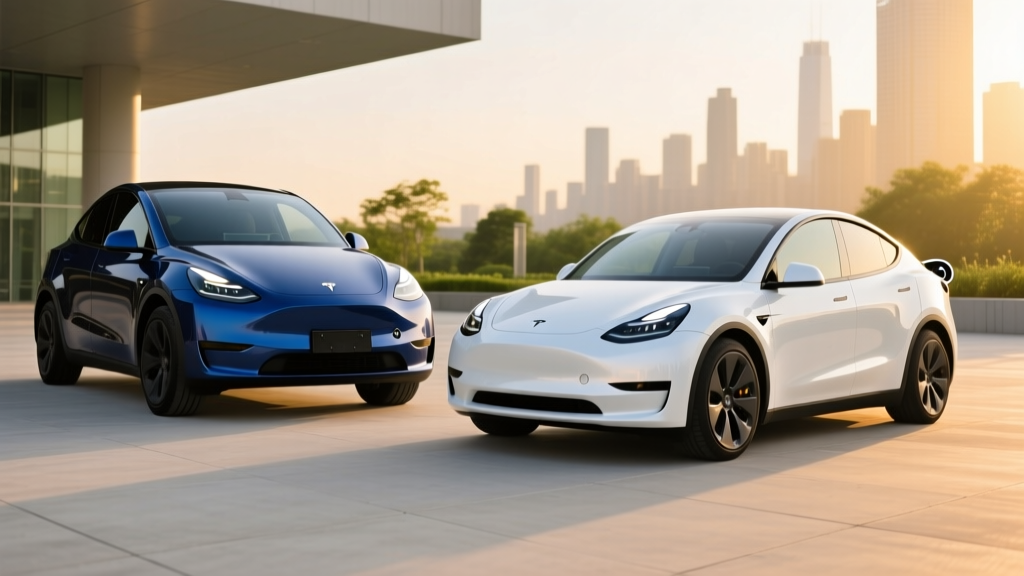
If you're searching for a Tesla small SUV, you're almost certainly looking at the 2026 Tesla Model Y. Despite a wave of competitors from Hyundai, Ford, and BMW, the refreshed Model Y (internally dubbed "Juniper") remains the segment's sales leader for good reason: class-leading efficiency, access to the most reliable DC fast-charging network in North America, and a starting price that undercuts many rivals. But it isn't the only Tesla that fits the brief. The Model 3 sedan shares the same platform, costs less, and delivers more range — making it a compelling alternative if cargo space isn't a priority. This review covers both, with exact numbers you need to decide.
EPA Estimate: 320 miles (Long Range AWD) / 295 miles (RWD)
Expect in practice: ~270–290 miles on mixed highway driving at 70 mph; ~220–240 miles in sub-freezing winter conditions with cabin heat. The Model Y's heat pump minimizes cold-weather loss compared to older EVs, but physics still applies — plan for 15–25% range reduction in winter.
Spec Table: 2026 Tesla Model Y vs Model 3 at a Glance
| Spec | Model Y Long Range AWD | Model Y RWD | Model 3 Long Range AWD |
|---|---|---|---|
| EPA Range | 320 mi | 295 mi | 363 mi |
| Battery (usable) | ~75 kWh (NMC) | ~60 kWh (LFP) | ~75 kWh (NMC) |
| MPGe (combined) | 111 MPGe | 115 MPGe | 132 MPGe |
| Efficiency | 28 kWh/100mi | 26 kWh/100mi | 24 kWh/100mi |
| 0–60 mph | 4.8 sec | 6.5 sec | 4.2 sec |
| Horsepower | 384 hp | 295 hp | 384 hp |
| Drivetrain | Dual-motor AWD | Rear-wheel drive | Dual-motor AWD |
| Peak DC Fast Charge | 250 kW | 170 kW | 250 kW |
| 10–80% DC Time | ~25 min | ~30 min | ~25 min |
| Level 2 Home Rate | 11.5 kW (~44 mi/hr) | 11.5 kW (~44 mi/hr) | 11.5 kW (~44 mi/hr) |
| Cargo (rear seats up) | 30.2 cu ft | 30.2 cu ft | 23 cu ft (trunk) |
| Cargo (seats folded) | 72.1 cu ft | 72.1 cu ft | N/A (sedan) |
| Base MSRP | $48,990 | $44,990 | $47,740 |
| Battery Warranty | 8 yr / 120,000 mi | 8 yr / 100,000 mi | 8 yr / 120,000 mi |
Sources: fueleconomy.gov, Tesla specifications. Prices reflect 2026 model year; destination charge additional.
Charging Speed: What You'll Actually Experience
Charging speed is where Tesla's vertical integration pays dividends. The Model Y Long Range and Model 3 Long Range both peak at 250 kW on V3 Superchargers, though sustained rates depend on battery temperature and state of charge. Here's the realistic breakdown:
| Charging Level | Power | Speed (Model Y LR) | Notes |
|---|---|---|---|
| Level 1 (120V) | ~1.4 kW | ~4 mi/hr | Emergency/trickle only |
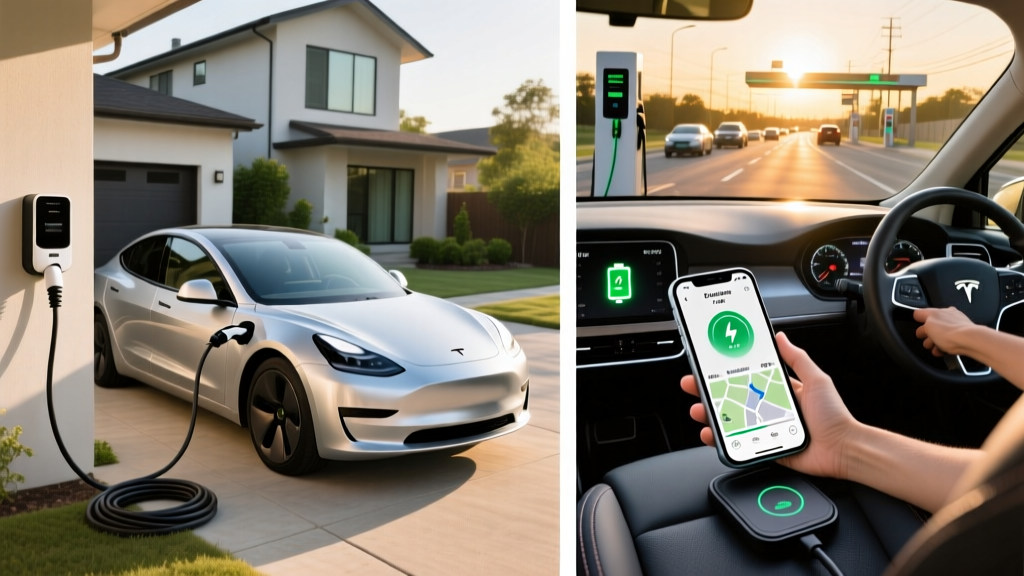
| Level 2 (240V, 48A) | 11.5 kW | ~44 mi/hr | Full overnight charge in ~7 hr |
| DC Fast (V3 Supercharger) | Peak 250 kW | 10–80% in ~25 min | Tapers sharply above 80% |
| DC Fast (V4 Supercharger) | Peak 250 kW | 10–80% in ~25 min | Same peak; improved cable handling |
Charge-curve reality: That 250 kW peak only holds from roughly 10–30% state of charge. By 60%, you're closer to 120 kW, and above 80% the rate drops to ~50 kW to protect the battery. Plan your road-trip stops around the 10–80% window for maximum efficiency. Tesla's navigation-based battery preconditioning warms the pack en route to a Supercharger, which is essential for hitting peak rates in cold weather.
The RWD Model Y uses an LFP (lithium iron phosphate) battery, which charges slightly slower at 170 kW peak but offers a key advantage: Tesla recommends charging LFP to 100% daily, effectively giving you the full 295 miles every day. NMC batteries (Long Range) are best kept at 80% for daily use, reserving 100% for road trips.
Pricing, Trims, and Federal Tax Credit Eligibility
Tesla's pricing shifts frequently, but as of early 2026, here's where the Model Y lineup stands:
| Trim | MSRP | Est. After §30D Credit* |
|---|---|---|
| Model Y RWD | $44,990 | $37,490 |
| Model Y Long Range AWD | $48,990 | $41,490 |
| Model Y Performance | $53,990 | $46,490 |
*Assumes full $7,500 federal credit eligibility. Point-of-sale transfer available per IRS §30D rules.
- MSRP Cap: SUVs/vans/pickups must be ≤$80,000; sedans ≤$55,000. All Model Y trims qualify. Model 3 qualifies under sedan cap.
- Buyer Income Cap: AGI ≤$150,000 (single), ≤$225,000 (head of household), ≤$300,000 (joint). Exceed this and you get $0.
- Battery Sourcing: Critical minerals and battery components must meet escalating domestic-content thresholds. Tesla's US-built batteries currently satisfy these requirements, but verify at purchase — rules tighten annually.
- Point-of-Sale Transfer: You can transfer the credit to the dealer for an immediate price reduction rather than claiming it on your tax return.
- Consult a tax professional to confirm your specific eligibility before relying on the credit.
Interior, Cargo, and Daily Livability
The Juniper-refreshed Model Y interior is a significant step up from the pre-2025 model. Ventilated front seats, ambient lighting, a rear-seat touchscreen, and improved sound deadening close the gap with luxury competitors. The minimalist cabin still polarizes — no physical stalks (turn signals are steering-wheel buttons), no instrument cluster — but the 15.4-inch center display handles everything competently.
Cargo and passenger space:
- Rear legroom: 41.6 inches (competitive with midsize SUVs)
- Cargo behind rear seats: 30.2 cu ft (vs. Hyundai Ioniq 5's 27.2 cu ft)
- Cargo with seats folded: 72.1 cu ft — enough for a full sheet of plywood flat
- Front trunk (frunk): 4.1 cu ft — useful for charging cables or a small bag
The Model 3 sedan sacrifices cargo versatility (23 cu ft trunk, no hatchback) but wins on efficiency and price. If your typical load is groceries and luggage rather than furniture or bikes, the $2,000 savings and 43 extra miles of range make the Model 3 the smarter buy.
Driver Assistance: Autopilot and FSD (Supervised)
Tesla Autopilot and Full Self-Driving (Supervised) are Level 2 driver-assist systems, not self-driving. You must keep your hands on the wheel and eyes on the road at all times. The system can steer, accelerate, and brake within its lane, and FSD adds navigation-guided lane changes, traffic-light recognition, and city-street autosteering. But it does not replace an attentive driver. Only Level 4 services like Waymo operate without a human driver in defined areas.
Autopilot comes standard and handles highway lane-keeping and adaptive cruise well. FSD (Supervised) costs $8,000 upfront or $99/month and is impressive on mapped highways but inconsistent on complex urban streets. For most buyers, standard Autopilot is sufficient — FSD remains a convenience upgrade, not a necessity.
- Drive you anywhere without supervision
- Handle all construction zones, unmapped roads, or severe weather reliably
- Eliminate your legal responsibility as the driver
- Qualify as "self-driving" under any SAE or NHTSA definition
How It Stacks Up Against Competitors
The Tesla small SUV doesn't exist in a vacuum. Here's how the Model Y Long Range compares to its closest rivals:
| Spec | Tesla Model Y LR | Hyundai Ioniq 5 LR AWD | Ford Mustang Mach-E ER AWD |
|---|---|---|---|
| EPA Range | 320 mi | 290 mi | 305 mi |
| Peak DC Charge | 250 kW | 350 kW (800V) | 150 kW |
| 10–80% Time | ~25 min | ~18 min | ~38 min |
| Base MSRP | $48,990 | $50,200 | $49,995 |
| Cargo (seats up) | 30.2 cu ft | 27.2 cu ft | 29.7 cu ft |
| Charging Network | Supercharger (native) | NACS adapter required | NACS adapter required |
Where Tesla wins: Supercharger network reliability (no adapters, no broken chargers), efficiency (more miles per kWh), software ecosystem, and cargo space.
Where competitors win: Hyundai's 800V architecture charges faster at compatible stations. Both Hyundai and Ford offer more conventional interiors with physical controls and instrument clusters. The Ioniq 5's ride quality is notably more compliant over rough pavement.
Pros and Cons
- Best-in-class efficiency (28 kWh/100mi LR AWD)
- Supercharger network: 6,000+ US stations, highest uptime
- 320 miles EPA range covers most road-trip days with one stop
- 72 cu ft cargo with seats folded beats most compact SUVs
- OTA updates continuously add features post-purchase
- Strong resale value relative to EV segment average
- Turn-signal buttons on steering wheel frustrate some drivers
- Ride quality is firm; rivals like Ioniq 5 are more compliant
- No Apple CarPlay or Android Auto (Tesla-native only)
- Panel gaps and paint quality still inconsistent vs. luxury brands
- FSD ($8,000) is optional and not truly autonomous
- Service center wait times can stretch weeks in some markets
Who Should Buy This Tesla Small SUV?
- You need AWD for snow or mountain driving
- You road-trip regularly and want Supercharger convenience
- Cargo versatility (hatchback + 72 cu ft) is a priority
- You value efficiency and range over ride comfort
- You live in a mild climate and don't need AWD
- You want the lowest entry price ($44,990) and can charge LFP to 100% daily
- Your commute is under 60 miles round-trip
- You rarely haul bulky cargo and prefer 363 miles of range
- You want to save ~$1,250 and gain efficiency (24 kWh/100mi)
- Sedan styling and a lower center of gravity appeal to you
- You want physical buttons, a traditional instrument cluster, or Apple CarPlay
- Plush ride quality matters more than efficiency
- You want 800V ultra-fast charging (Hyundai/Kia/Genesis)
Frequently Asked Questions
What is the real-world range of the Tesla Model Y?
The EPA rates the Long Range AWD at 320 miles and the RWD at 295 miles. In real-world highway driving at 70 mph, expect 270–290 miles (LR) and 250–270 miles (RWD). In sub-freezing temperatures, plan for 15–25% less — roughly 220–240 miles for the LR. Preconditioning and seat heaters help minimize the hit.
How fast does the Model Y charge at home and on the road?
At home on a 240V/48A Level 2 charger, the Model Y adds ~44 miles per hour, fully charging overnight in about 7 hours. On a V3 or V4 Supercharger, the Long Range peaks at 250 kW and charges from 10–80% in roughly 25 minutes. The RWD model peaks at 170 kW and takes ~30 minutes for the same window.
How much does a Tesla Model Y cost after tax credits?
The Model Y RWD starts at $44,990 and drops to approximately $37,490 if you qualify for the full $7,500 federal §30D credit (income ≤$150K single / $300K joint, and battery-sourcing requirements met). The Long Range AWD goes from $48,990 to ~$41,490. Always confirm eligibility with a tax professional before purchasing.
Does the Tesla Model Y qualify for the $7,500 federal EV tax credit?
Yes — all 2026 Model Y trims fall under the $80,000 SUV MSRP cap, and Tesla's US-assembled batteries currently meet critical-mineral and component-sourcing thresholds. However, your personal eligibility depends on adjusted gross income limits. Verify on IRS.gov and with your tax advisor.
Is the Tesla Model Y worth buying over the Hyundai Ioniq 5 or Ford Mach-E?
The Model Y wins on range, efficiency, cargo space, and charging-network reliability. The Ioniq 5 charges faster at 800V stations (18 min vs. 25 min, 10–80%) and offers a more comfortable ride with conventional controls. The Mach-E is competitive but charges slower. If Supercharger access and efficiency are your top priorities, the Model Y is the strongest choice. If you prefer a traditional interior or faster peak charging, test-drive the Ioniq 5.
How long will the Model Y battery last?
Tesla warranties the Long Range NMC battery for 8 years or 120,000 miles (whichever comes first) with a minimum 70% capacity retention. Real-world data from high-mileage owners shows typical degradation of 8–12% over 100,000 miles, meaning most packs retain 88–92% capacity well beyond the warranty period. LFP batteries (RWD model) show even slower degradation and tolerate daily 100% charges, making them excellent for high-mileage commuters.
Can I tow with the Tesla Model Y?
Yes. The Model Y is rated to tow up to 3,500 pounds when equipped with the factory tow package ($1,000). Expect range to drop 30–50% while towing a loaded trailer at highway speeds — a 320-mile EPA rating becomes roughly 160–220 miles towing. Plan charging stops accordingly.