Quick Verdict: The Original Mass-Market EV, Aged but Affordable
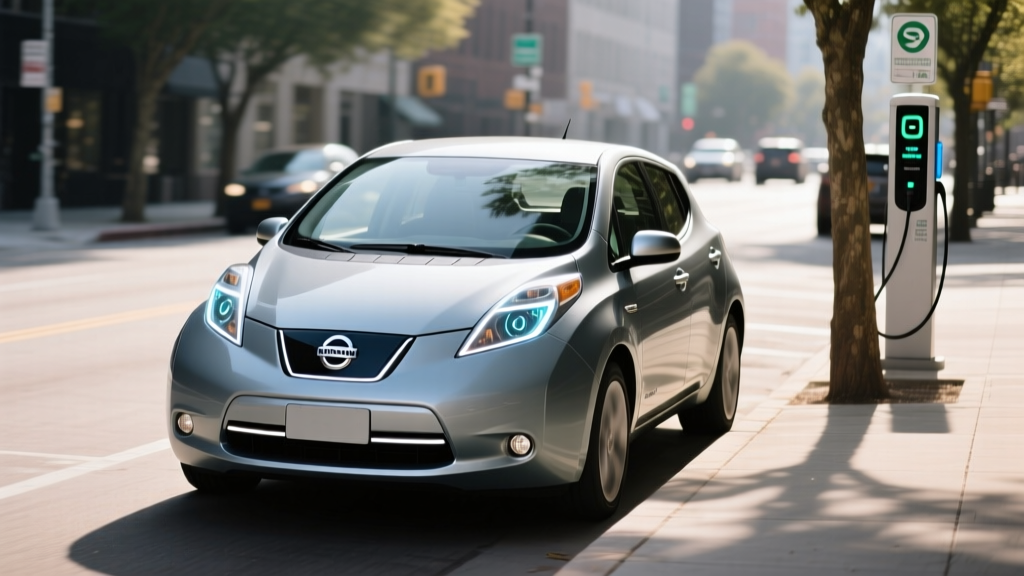
The 2013 Nissan Leaf hatchback holds a permanent place in electric-vehicle history as the car that proved battery-electric daily driving could work at scale. More than a decade later, it remains one of the cheapest ways to get into a used EV — with examples routinely selling between $5,000 and $9,000 on the private-party market. But buying a 13-year-old battery-electric vehicle in 2026 requires clear-eyed expectations about degraded range, obsolete fast-charging hardware, and a connector standard (CHAdeMO) that has lost the format war to NACS and CCS.
If you're a budget-conscious commuter with reliable Level 2 home charging access and a round-trip commute under 40 miles, a well-preserved 2013 Leaf can still serve as an ultra-low-cost daily driver. If you need highway capability, road-trip flexibility, or modern DC fast-charging speeds, look elsewhere.
Range & Battery: What 24 kWh Looks Like in 2026
The 2013 Leaf shipped with a 24 kWh lithium-ion battery pack (approximately 21.3 kWh usable) using laminated lithium manganese oxide (LMO) chemistry — not the NMC or LFP chemistries common in modern EVs. Nissan's LMO cells were pioneering at the time but proved more susceptible to heat-related degradation than later chemistries, particularly in hot climates like Arizona, Texas, and Southern California.
Real-World Expectation in 2026: 45–65 miles typical, depending on battery State of Health (SoH). Some well-maintained, cool-climate examples may still deliver 60–70 miles. Hot-climate cars with heavy degradation may drop below 40 miles in summer heat.
Cold-Weather Impact: Expect 25–40% range loss in freezing temperatures due to cabin heating demands and reduced battery efficiency — putting effective winter range at 30–50 miles for many examples.
Nissan's battery-health monitoring system displays capacity bars on the dashboard (12 bars when new). By 2026, most original batteries show between 8 and 10 bars, representing roughly 65–83% State of Health. Cars sitting below 9 bars will struggle to exceed 50 miles of practical range.
| Specification | Value |
|---|---|
| Battery Capacity (Original) | 24 kWh total / ~21.3 kWh usable |
| Battery Chemistry | Lithium Manganese Oxide (LMO) |
| EPA Range (When New) | 75 miles |
| Expected Range (2026, Typical) | 45–65 miles |
| EPA Efficiency | 115 MPGe combined / 29 kWh/100 mi |
| Motor Output | 80 kW (107 hp), 187 lb-ft torque |
| 0–60 mph | ~9.9 seconds |
| Drivetrain | FWD, single-speed reduction gear |
| DC Fast Charge (Max) | ~44 kW peak (CHAdeMO) |
| Level 2 Charge Rate | 3.3 kW (6.6 kW with optional upgrade) |
| Cargo Volume | 24.0 cu ft (rear seats up) / 30.0 cu ft (folded) |
| Rear Legroom | 33.3 inches |
| Original MSRP (Base S) | $28,800 (before incentives) |
| Used Price Range (2026) | $5,000–$9,000 private party |
Charging: CHAdeMO in a NACS World
The 2013 Leaf charges through two ports located in the nose of the vehicle: a standard J1772 inlet for Level 1/Level 2 AC charging, and an optional CHAdeMO inlet for DC fast charging. Not all 2013 Leafs were equipped with the CHAdeMO port — it was a $700 option on the SV trim and standard on the top SL trim. Verify the presence of the CHAdeMO port before purchasing; without it, you're limited to AC charging only.
| Level | Power | Connector | Charge Time / Rate |
|---|---|---|---|
| Level 1 (120V household) | ~1.2 kW | J1772 | ~4–5 miles per hour of charging; full charge in ~20 hours |
| Level 2 (240V, base) | 3.3 kW | J1772 | ~12–14 miles per hour; full charge in ~7 hours |
| Level 2 (240V, optional) | 6.6 kW | J1772 | ~24–26 miles per hour; full charge in ~3.5 hours |
| DC Fast Charge | ~44 kW peak | CHAdeMO | 0–80% in approximately 30 minutes (under ideal conditions) |
A critical caveat on DC fast charging: The 2013 Leaf lacks active battery thermal management (liquid cooling). Instead, it relies on passive air cooling, which means repeated fast-charge sessions — especially in warm weather — cause the battery to heat up and the car to throttle charge speed aggressively. This "Rapidgate" issue was well-documented by early Leaf owners. On a road trip, your second or third DC fast charge of the day may take significantly longer than the first as the battery management system limits current to protect the cells.
Additionally, the CHAdeMO network has contracted substantially as Electrify America, Tesla, and most newer public networks standardized on CCS and NACS. While CHAdeMO chargers still exist, their availability varies significantly by region. Check PlugShare for CHAdeMO coverage in your area before relying on DC fast charging.
Performance & Driving Dynamics
The 2013 Leaf's 80 kW (107 horsepower) AC synchronous motor delivers 187 lb-ft of torque to the front wheels. The instant torque characteristic of all EVs makes the Leaf feel peppier than its 9.9-second 0–60 time suggests, particularly in city driving where most acceleration happens between 0 and 40 mph. Highway passing power, however, is modest — the car feels strained above 70 mph and the top speed is electronically limited to approximately 90 mph.
Ride quality is comfortable and compliant around town, with the heavy battery pack mounted under the floor providing a low center of gravity. The 2,150-pound curb weight (remarkably light by modern EV standards) means less tire wear and more nimble handling in urban environments. Regenerative braking offers moderate one-pedal driving capability, though the Leaf's "B mode" (enhanced regen) doesn't come close to the strong deceleration of modern EVs like the Chevrolet Bolt or Tesla Model 3.
Interior, Tech & Safety
The 2013 Leaf's interior reflects its early-2010s origins. The center stack features a 7-inch touchscreen with navigation (on SV and SL trims), Bluetooth connectivity, and a basic infotainment system that lacks Apple CarPlay, Android Auto, or any modern smartphone integration. The digital instrument cluster provides real-time energy consumption, remaining range (the "Guess-O-Meter," as Leaf owners call it, due to its fluctuating accuracy), and the all-important battery capacity bar display.
Standard safety equipment includes six airbags, stability control, and anti-lock brakes. The Leaf earned a Top Safety Pick designation from the IIHS and a 4-star overall rating from NHTSA. However, it lacks any advanced driver-assistance systems — no adaptive cruise control, no lane-keeping assist, no automatic emergency braking. These features were rare across all vehicles in 2013 and are now standard on most new EVs.
Cargo space is practical at 24.0 cubic feet behind the rear seats, expanding to 30.0 cubic feet with the 60/40 split rear seats folded. The hatchback design makes loading bulky items easy. Rear-seat legroom (33.3 inches) is adequate for adults on shorter trips but tight for taller passengers.
Pricing & Tax Credit Reality for Used Buyers
The 2013 Nissan Leaf originally started at $28,800 for the base S trim, $31,800 for the SV, and $34,800 for the SL (all before the $7,500 federal tax credit that was available at the time). In the 2026 used market, prices have settled dramatically:
| Factor | Detail |
|---|---|
| Private-Party Price Range | $5,000–$9,000 depending on mileage, condition, and battery SoH |
| Dealer Price Range | $6,500–$11,000 |
| Federal Used EV Credit (§25E) | Up to $4,000 or 30% of sale price (whichever is lower) |
| Credit Eligibility — Vehicle | Must be purchased from a dealer (not private party); sale price must be $25,000 or less; model year must be at least 2 years old (2013 qualifies) |
| Credit Eligibility — Buyer | AGI limits: $75,000 single / $112,500 head of household / $150,000 joint filers |
| Effective Best-Case Price | As low as ~$2,500–$5,000 after credit (dealer purchase at $6,500 with $4,000 credit) |
The IRS §25E used EV credit is the relevant incentive here — not the §30D new-vehicle credit. Key restrictions: the car must be purchased from a licensed dealer (private-party sales don't qualify), the sale price cannot exceed $25,000, and buyer income caps apply. The credit is non-refundable (you need tax liability to benefit) unless transferred at point of sale under current IRS rules. Consult a tax professional to confirm your eligibility.
Battery Warranty & Replacement Considerations
Nissan originally warranted the 2013 Leaf's battery for 8 years/100,000 miles against defects and for capacity loss below 9 bars (of 12) within 5 years/60,000 miles. By 2026, virtually every 2013 Leaf has aged out of its factory battery warranty regardless of mileage.
If the battery has degraded to unusable levels (below 7–8 bars), replacement options are limited and expensive. A refurbished 24 kWh pack from a Nissan dealer typically costs $5,000–$7,000 installed — which often exceeds the value of the entire vehicle. Some independent EV shops offer aftermarket battery refurbishment or cell-level repair for $2,500–$4,000, but availability varies. For most buyers, the rational approach is to purchase a Leaf with the highest remaining battery capacity bars you can find, rather than budgeting for a replacement.
Pros
- Extremely low purchase price ($5K–$9K) — one of the cheapest EVs available
- Eligible for up to $4,000 federal used EV tax credit (§25E)
- Ultra-low operating cost: ~$0.04–$0.06 per mile on home electricity
- Lightweight, easy to park, comfortable city ride
- Practical hatchback cargo space (24 cu ft)
- Simple, proven drivetrain with minimal maintenance needs
- Strong owner community and aftermarket knowledge base
Cons
- Severely degraded range — expect 45–65 miles, not the original 75
- No active battery thermal management — rapid degradation in hot climates
- CHAdeMO DC fast-charging standard is increasingly unsupported
- No Apple CarPlay, Android Auto, or modern infotainment
- Zero driver-assistance features (no AEB, no lane-keeping)
- Battery replacement cost can exceed vehicle value
- Not viable for road trips or highway-heavy commutes
Who Should Buy a 2013 Leaf in 2026?
The 2013 Nissan Leaf hatchback makes sense for a narrow but real set of buyers:
- Budget-first commuters with a sub-40-mile round trip and reliable Level 2 home charging who want the absolute lowest cost of electrified transportation.
- Second-car households that need a cheap, efficient runabout for errands and school drop-offs while a longer-range vehicle handles road trips.
- EV-curious skeptics who want to try electric driving with minimal financial risk before committing to a new $35,000+ EV.
It does not make sense for anyone who needs highway range, lives in a hot climate without garage parking, lacks home charging access, or wants modern tech and safety features. In those cases, a used 2017+ Chevrolet Bolt (238-mile range, CCS charging, CarPlay) or a 2018+ Nissan Leaf with the 40 or 62 kWh pack is a meaningfully better investment despite the higher price.
Frequently Asked Questions
What is the real-world range of a 2013 Nissan Leaf in 2026?
Most examples deliver between 45 and 65 miles on a full charge, depending on battery degradation (check the capacity bars on the dash), ambient temperature, and driving style. Highway speeds and cold weather reduce range further. A few well-preserved, cool-climate cars may still approach 70 miles.
How fast does the 2013 Leaf charge at home and on DC fast chargers?
On a standard 240V Level 2 charger, the base 3.3 kW onboard charger adds about 12–14 miles of range per hour (full charge in ~7 hours). The optional 6.6 kW charger cuts that to ~3.5 hours. DC fast charging via CHAdeMO peaks around 44 kW and can reach 80% in about 30 minutes, but throttles heavily if the battery is warm.
Does the 2013 Nissan Leaf qualify for any federal tax credit?
Not the new-vehicle §30D credit. However, it may qualify for the IRS §25E used clean vehicle credit — up to $4,000 or 30% of the sale price — if purchased from a dealer for $25,000 or less and the buyer meets income caps ($75K single / $150K joint). Private-party purchases do not qualify.
Is the 2013 Leaf worth buying vs. competitors?
Against other used EVs in its price range, the 2013 Leaf wins on pure affordability but loses on range, charging speed, and battery longevity. A used 2017+ Chevy Bolt EV offers 238 miles of range and CCS fast charging for roughly $10,000–$14,000. If your budget is strictly under $8,000, the Leaf is one of the only options — but go in with realistic range expectations.
What should I check before buying a used 2013 Leaf?
Three things are critical: (1) Check the battery capacity bars on the dash — 10+ bars out of 12 is ideal; below 9 bars signals significant degradation. (2) Verify whether the CHAdeMO DC fast-charge port is present (not all cars have it). (3) Use a tool like Leaf Spy (an OBD-II app specific to Nissan Leafs) to read the actual battery State of Health percentage, which gives a more precise picture than the dash bars alone.