Quick Verdict: What "Tesla Signature Series" Actually Means in 2026
If you've been searching for the Tesla Signature Series, you're likely encountering one of the most misunderstood trim designations in the EV market. Unlike legacy automakers that use "Signature" as a fixed top-tier badge, Tesla has historically used "Signature" as a launch-edition or fully-optioned package — most prominently during the Model S and Model X early years, and periodically revived for special configurations of the Model 3 and Model Y.
As of the 2026 model year, the Signature moniker applies to Tesla's most comprehensively equipped configurations across its lineup. These vehicles bundle the Long Range or Performance powertrain with every available option: premium interior, FSD (Supervised) capability, accelerated performance upgrades, and exclusive cosmetic touches. The result is the most expensive, most feature-complete version of each model Tesla sells.
Here's the reality check: the Signature-level Tesla you configure today isn't a distinct model — it's a build configuration. And understanding exactly what you're paying for (and what you're not) is essential before you drop $50,000 to $110,000+ on one.
2026 Tesla Signature-Equivalent Specs at a Glance
| Spec | Model S (Fully Optioned) | Model 3 LR AWD (Fully Optioned) | Model X (Fully Optioned) | Model Y LR AWD (Fully Optioned) |
|---|---|---|---|---|
| EPA Range | 402 mi | 363 mi | 335 mi | 320 mi |
| Battery (usable) | ~100 kWh (NMC) | ~75 kWh (NMC) | ~100 kWh (NMC) | ~75 kWh (NMC) |
| Drivetrain | Dual Motor AWD | Dual Motor AWD | Dual Motor AWD | Dual Motor AWD |
| 0-60 mph | 3.1 sec | 4.2 sec | 3.8 sec | 4.8 sec |
| Horsepower | 670 hp | 366 hp | 670 hp | 384 hp |
| Max DC Charge Rate | 250 kW | 250 kW | 250 kW | 250 kW |
| 10-80% DCFC Time | ~27 min | ~25 min | ~29 min | ~25 min |
| Level 2 Home Rate | 11.5 kW (~44 mi/hr) | 11.5 kW (~44 mi/hr) | 11.5 kW (~44 mi/hr) | 11.5 kW (~44 mi/hr) |
| MPGe (combined) | 120 MPGe | 132 MPGe | 109 MPGe | 122 MPGe |
| Cargo Volume | 28 cu ft (rear) + frunk | 23 cu ft + frunk | 88 cu ft (seats folded) + frunk | 76 cu ft (seats folded) + frunk |
| Fully Optioned MSRP | ~$108,490 | ~$57,990 | ~$113,490 | ~$58,490 |
Sources: fueleconomy.gov, Tesla Model S configurator. Pricing reflects estimated 2026 MSRP including destination, FSD, and premium options. Plaid variants priced separately and excluded here.
Real-World Range: What the EPA Number Doesn't Tell You
Model S Long Range: EPA 402 mi → Expect 320-350 mi highway (75-80 mph), 280-310 mi in freezing temps
Model 3 LR AWD: EPA 363 mi → Expect 290-320 mi highway, 250-280 mi in freezing temps
Model X Long Range: EPA 335 mi → Expect 265-295 mi highway, 230-260 mi in freezing temps
Model Y LR AWD: EPA 320 mi → Expect 255-285 mi highway, 220-250 mi in freezing temps
Cold-weather range loss of 20-30% is typical for NMC batteries without consistent preconditioning. Tesla's heat pump (standard on all 2026 models) mitigates but does not eliminate this loss.
Tesla's EPA range estimates remain among the most optimistic in the industry relative to real-world highway driving. In independent testing, Tesla vehicles consistently deliver 80-88% of their EPA range at sustained highway speeds of 70-80 mph. The Model S Long Range, with its 100 kWh NMC pack and relatively low drag coefficient of 0.208, comes closest to its sticker number in mixed driving.
For Signature-level buyers who opt for larger wheels (21" on Model S/X, 20" on Model 3/Y), subtract another 3-5% from these real-world figures. Larger wheels look aggressive but measurably reduce efficiency — a trade-off worth understanding before you configure.
Charging Speed: Supercharger Network and Home Setup
All 2026 Tesla models share the same fundamental charging architecture: a 250 kW peak DC fast-charge rate on V3 and V4 Superchargers, and an 11.5 kW onboard charger for Level 2 home charging.
| Charging Level | Power | Miles Added/Hour | Typical Use Case |
|---|---|---|---|
| Level 1 (120V) | ~1.4 kW | ~3-5 mi/hr | Emergency/trickle only |
| Level 2 (240V, 48A) | 11.5 kW | ~44 mi/hr | Daily home charging |
| DC Fast (Supercharger V3/V4) | Up to 250 kW peak | ~1,000+ mi/hr (peak) | Road trips, rapid top-ups |
The charging curve reality: Tesla's 250 kW peak rate is just that — a peak. On a Model 3 Long Range, you'll see 250 kW briefly between roughly 10-20% State of Charge, then the rate tapers progressively. By 50% SoC, you're typically at 120-150 kW. By 80%, expect 50-60 kW. This is why the 10-80% time (~25-29 minutes depending on model) is the meaningful metric, not the peak number.
Preconditioning matters enormously. Navigate to a Supercharger using the Tesla's built-in navigation, and the car will automatically warm the battery to optimal charging temperature before arrival. Without preconditioning — especially in cold weather — your peak charge rate may be capped at 50-100 kW for the first several minutes, adding significant time to your stop.
For home charging, Tesla's Wall Connector ($420) on a 60A circuit delivers the full 48A/11.5 kW. A typical overnight charge (8 hours) adds roughly 350 miles of range — more than enough for any daily driving scenario. Budget $800-$1,500 for professional installation depending on your electrical panel's proximity to the charging location.
Performance and Driving Dynamics
The fully optioned Tesla lineup delivers performance that ranges from genuinely quick (Model Y at 4.8 seconds to 60 mph) to supercar-adjacent (Model S at 3.1 seconds). The dual-motor AWD system provides instant torque distribution, and Tesla's traction control remains among the best in the industry for all-weather confidence.
Signature-equivalent configurations with the Performance upgrade (available on Model S and Model X) unlock Track Mode, adaptive damping, and higher top-speed limiters. The Model S Plaid, while not technically a "Signature" trim, represents the true performance apex at 1,020 hp and a 1.99-second 0-60 time — though at $108,490+, it occupies a different conversation entirely.
For the fully optioned Long Range builds that most closely match the Signature concept, the driving experience is defined by smooth, effortless acceleration, precise one-pedal driving via regenerative braking, and a ride quality that's firm but compliant. The Model S and Model X benefit from adaptive air suspension (standard), while the Model 3 and Model Y use conventional coil springs — a meaningful difference in ride refinement over broken pavement.
FSD (Supervised), Tech, and Interior
Tesla's FSD (Supervised) and Autopilot are SAE Level 2 driver-assistance systems. You must keep your hands on the wheel and eyes on the road at all times. The car does not drive itself. Full self-driving capability (SAE Level 4+) is not available on any consumer Tesla as of 2026.
The FSD (Supervised) package — an $8,000 add-on that Signature-level builds typically include — enables Navigate on Autopilot, Auto Lane Change, Autosteer on city streets, and Smart Summon. Its capabilities are impressive in well-marked highway scenarios and increasingly competent on surface streets, but it still requires active supervision and occasional intervention. Treat it as an advanced cruise control system, not a chauffeur.
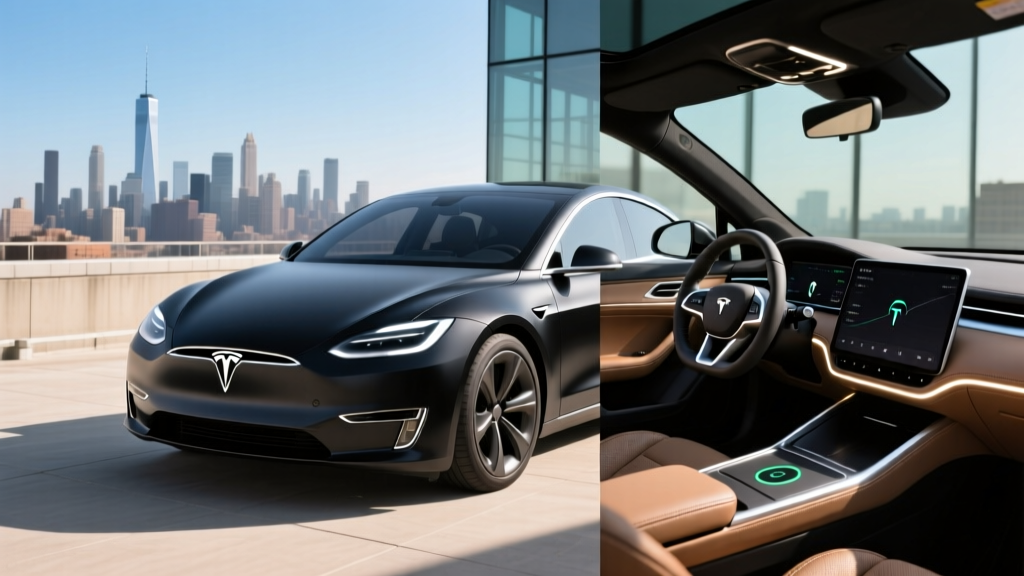
Inside, the 2026 Tesla lineup centers around the familiar minimalist aesthetic: a single central touchscreen (15.4" on Model S/X, 15.4" on Model 3/Y) handles virtually all vehicle functions. The Model 3 "Highland" refresh and Model Y "Juniper" update brought meaningful interior upgrades — ventilated front seats, ambient lighting, rear-seat entertainment screen, improved sound deadening, and a more refined materials palette. The Model S and Model X continue with their yoke-or-wheel option, premium 22-speaker audio, and rear-seat touchscreen.
Notable drawbacks: The lack of physical buttons for climate and media controls remains polarizing. Turn signals on the yoke (if equipped) are genuinely awkward in parking lots and roundabouts. And while Tesla's build quality has improved substantially since the early Fremont days, panel gap consistency still trails German and Korean competitors at this price point.
Pricing, Tax Credits, and Total Cost
| Model | Base MSRP | Fully Optioned (Signature-Equiv.) | Est. Federal Credit (§30D) | Effective Price |
|---|---|---|---|---|
| Model 3 LR AWD | $47,740 | ~$57,990 | Up to $7,500* | ~$50,490 |
| Model Y LR AWD | $48,990 | ~$58,490 | Up to $7,500* | ~$50,990 |
| Model S LR | $79,990 | ~$108,490 | $0** | ~$108,490 |
| Model X LR | $84,990 | ~$113,490 | $0** | ~$113,490 |
*Federal §30D tax credit eligibility requires meeting ALL criteria: buyer AGI below $150K (single) / $300K (joint), vehicle MSRP under $55K (sedans) or $80K (SUVs/trucks), and battery critical-mineral + component sourcing thresholds. As of 2026, Model 3 and Model Y built at Giga Texas with qualifying battery sourcing may be eligible. Confirm current eligibility at IRS.gov and with a tax professional.
**Model S and Model X exceed the MSRP cap and are ineligible for the federal credit regardless of buyer income.
The point-of-sale transfer option allows qualifying buyers to apply the $7,500 credit directly at purchase, reducing the out-of-pocket cost immediately rather than waiting for tax filing. This is available through registered Tesla dealerships and direct sales channels.
Ownership economics: At the national average electricity rate of ~$0.17/kWh, charging a Model 3 LR costs roughly $0.045/mile — about one-third the fuel cost of a comparable 30 MPG gas sedan at $3.50/gallon. Over 5 years and 75,000 miles, that's approximately $6,000-$8,000 in fuel savings. Factor in reduced maintenance (no oil changes, minimal brake wear due to regen) and Tesla's 8-year/120,000-mile battery and drive unit warranty, and the total-cost-of-ownership case strengthens considerably for the Model 3 and Model Y.
Who Should Buy a Signature-Equivalent Tesla?
- You want access to the Supercharger network — still the most reliable and extensive DC fast-charging ecosystem in North America
- You value over-the-air updates that meaningfully improve the car over time
- You want best-in-class EV efficiency (kWh/100mi) and real-world range
- You're a tech-forward buyer who appreciates minimalism and software integration
- You need a premium EV with strong resale value and brand recognition
- You want traditional luxury build quality (BMW i5, Mercedes EQE)
- You need physical controls and a conventional instrument cluster
- Third-row seating is essential (Model X is the only option, and it's expensive)
- You want the latest 800V charging architecture (Hyundai/Kia/Porsche charge faster)
- You're uncomfortable with Tesla's brand controversies or service-center availability in your area
How It Stacks Up Against Key Competitors
At the Signature-equivalent price point, the competitive landscape is fierce:
- Model 3 ($58K fully optioned) vs. BMW i4 eDrive40 (~$57K): The Tesla wins on range (363 vs 307 mi), charging network access, and software. The BMW wins on interior quality, ride refinement, and physical controls.
- Model Y ($58K fully optioned) vs. Hyundai Ioniq 5 Limited (~$57K): The Tesla offers more range and cargo space. The Hyundai charges significantly faster (800V architecture: 10-80% in ~18 min vs Tesla's ~25 min) and offers V2L capability.
- Model S ($108K fully optioned) vs. BMW i7 xDrive60 (~$120K): Different philosophies entirely. The Tesla is a performance-oriented tech sedan; the BMW is a traditional luxury flagship. The i7 offers a vastly superior rear-seat experience and build quality.
Frequently Asked Questions
Is there an official "Signature Series" Tesla trim in 2026?
Not as a distinct, standalone trim badge. Tesla uses "Signature" intermittently for launch editions or fully loaded configurations. In 2026, the closest equivalent is building any Tesla model with the Long Range or Performance powertrain, FSD, premium interior, and all available options. Some Tesla stores and the online configurator may reference "Signature" packages during promotional periods.
Does a fully optioned Model 3 or Model Y qualify for the $7,500 federal tax credit?
Possibly — but it depends on your income, the specific vehicle's battery sourcing, and current IRS rules. The MSRP of a fully optioned Model 3 (~$57,990) exceeds the $55,000 sedan cap, which may disqualify it. A Model Y (~$58,490) falls under the $80,000 SUV cap. Critical-mineral and battery-component sourcing requirements also apply and change periodically. Always verify at IRS.gov before purchasing.
How long will the battery last on a Signature-equivalent Tesla?
Tesla warranties its NMC battery packs for 8 years or 120,000 miles (whichever comes first), with a guaranteed minimum 70% capacity retention. Real-world data from high-mileage Tesla owners suggests NMC packs typically retain 85-90% capacity at 100,000 miles when charged primarily to 80-90% daily and not regularly DC fast-charged. Replacement costs, should you need one out of warranty, range from $12,000-$20,000 depending on the model.
Is FSD (Supervised) worth $8,000?
For most buyers, no — not at the current price. Basic Autopilot (included standard) handles highway lane-keeping and adaptive cruise control competently. FSD adds city-street autosteer and Navigate on Autopilot, which are impressive but still require constant supervision. Tesla also offers FSD as a $99/month subscription, which is a more financially rational choice for most drivers who want to try it without the upfront commitment.
What's the biggest drawback of buying a fully loaded Tesla?
Beyond the subjective interior-quality debate, the most concrete drawback is charging speed relative to 800V competitors. Tesla's 250 kW peak (on a 400V architecture) is outpaced by Hyundai/Kia's E-GMP platform (up to 350 kW on 800V) and Porsche/Audi's 800V systems. On a road trip, that translates to 5-10 extra minutes per charging stop — a meaningful difference if you regularly drive 400+ mile routes.