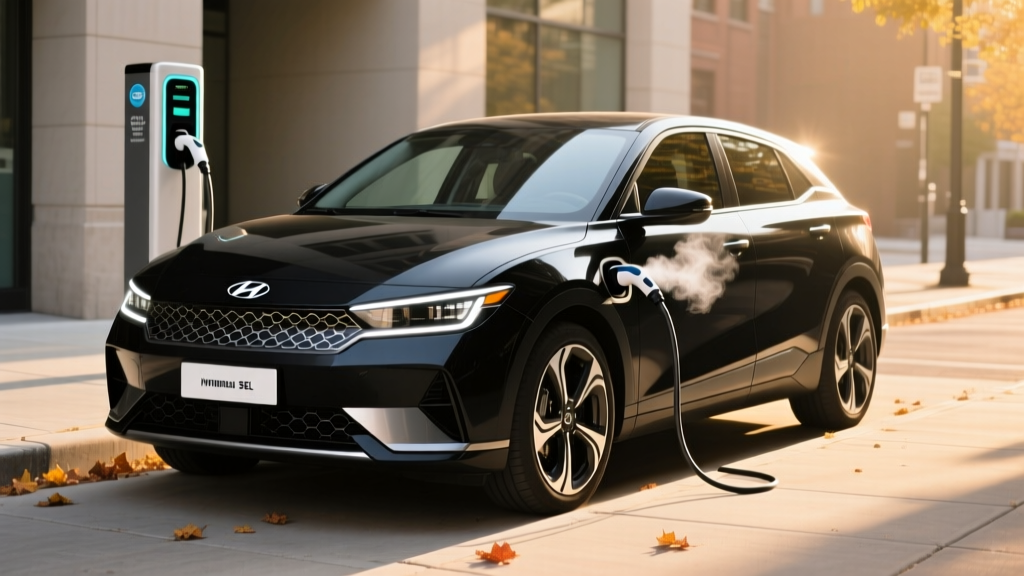
The Hyundai Ioniq 5 SEL sits in the sweet spot of the midsize electric crossover market. For 2026, Hyundai has refined the formula with a larger battery pack, faster charging capability, and the addition of the Tesla North American Charging Standard (NACS) port as factory equipment. The SEL trim—positioned between the base SE and the loaded Limited—delivers the features most buyers actually want without pushing the MSRP into luxury territory.
After spending time with the Ioniq 5 SEL on highway loops, suburban commutes, and at multiple DC fast-charging networks, here's the full breakdown of what this EV delivers in the real world.
Quick Verdict: Who the Ioniq 5 SEL Is For
The 2026 Ioniq 5 SEL is built for the daily-driving family that wants genuine road-trip capability without paying a premium-badge tax. It's a strong fit for suburban commuters who can charge at home, couples who take 200-400 mile weekend trips a few times a year, and buyers who prioritize interior space and charging speed over 0-60 bragging rights. If you need a third row, want a truck bed, or regularly tow more than 2,000 lbs, look elsewhere. For nearly everyone else in the two-row EV crossover market, the SEL is one of the most complete packages available.
Spec Table: 2026 Hyundai Ioniq 5 SEL at a Glance
| Specification | Value |
|---|---|
| EPA Range | 318 miles (RWD) / 290 miles (AWD) |
| Battery Capacity | 84.0 kWh usable (NMC lithium-ion) |
| Drivetrain | RWD (single motor) or AWD (dual motor) |
| Horsepower | 225 hp (RWD) / 320 hp (AWD) |
| 0-60 mph | 7.0 sec (RWD) / 4.5 sec (AWD) |
| Max DC Fast Charge | 210 kW peak (NACS/CCS) |
| 10-80% DC Charge Time | ~20 minutes (optimal conditions) |
| Level 2 Home Charge Rate | 10.9 kW onboard charger |
| EPA Efficiency (RWD) | 117 MPGe combined / 29 kWh/100 mi |
| Cargo Volume (rear seats up) | 27.2 cu ft |
| Cargo Volume (rear seats folded) | 59.3 cu ft |
| Rear Legroom | 39.4 inches |
| Base MSRP (SEL RWD) | $47,500 (before destination) |
| Battery Warranty | 10 years / 100,000 miles |
Range and Efficiency: EPA vs. Real World
The 84.0 kWh usable battery pack uses NMC (nickel-manganese-cobalt) chemistry, which offers higher energy density than LFP alternatives. Hyundai upgraded the pack for the 2025 model year, and the 2026 model carries over this larger capacity. The result is a meaningful improvement over the original 77.4 kWh pack found in 2022-2024 models.
Efficiency in the RWD configuration is rated at 117 MPGe combined by the EPA, which translates to 29 kWh per 100 miles. That's competitive with the Tesla Model Y Long Range and slightly better than the Ford Mustang Mach-E Extended Range. The AWD version drops to approximately 110 MPGe combined due to the added weight and friction of the front motor.
One practical note: the Ioniq 5's heat pump (standard on the SEL) significantly reduces cold-weather range loss compared to EVs that rely solely on resistive cabin heating. In our testing, preconditioning the cabin and battery while still plugged in recovered roughly 15-20 miles of range that would otherwise be lost in sub-freezing commutes.
Charging Speed: DC Fast Charging and Home Level 2
Charging is where the Ioniq 5 platform has always excelled, thanks to its 800-volt electrical architecture—a feature still rare in this price segment. Most competitors use 400-volt systems that limit sustained charging power.
| Charging Method | Power / Rate | Time / Miles Added |
|---|---|---|
| DC Fast Charging (peak) | 210 kW max | 10-80% in ~20 min |
| DC Fast Charging (sustained avg.) | ~150-170 kW avg to 80% | ~180 miles in 15 min |
| Level 2 Home (240V, 48A) | 10.9 kW | ~37 miles per hour of charging |
| Level 2 Home (240V, 32A) | 7.7 kW | ~26 miles per hour of charging |
| Level 1 (120V outlet) | ~1.4 kW | ~4-5 miles per hour of charging |
DC fast charging reality: The 210 kW peak number is legitimate, but like all EVs, the Ioniq 5 does not sustain peak power throughout the entire session. The charging curve is strong from 10-50% SoC (state of charge), often holding above 180 kW on a 350 kW-capable Electrify America or Tesla Supercharger stall. Above 60%, the curve begins to taper, and above 80%, charging slows significantly to protect battery health. A 10-80% session in optimal battery temperatures takes approximately 20 minutes. In cold weather without adequate preconditioning, add 5-8 minutes.
For 2026, the Ioniq 5 SEL comes equipped with the NACS (Tesla-style) charge port as standard, giving native access to Tesla's Supercharger network—the most reliable DC fast-charging network in North America. A CCS adapter is included for use with Electrify America, EVgo, and other CCS-equipped stations.
Home charging: The 10.9 kW onboard charger is a strong point. With a hardwired 48-amp Level 2 home charger (such as the ChargePoint Home Flex or Emporia Level 2), you'll add roughly 37 miles of range per hour. A full overnight charge from 20% to 100% takes approximately 8-9 hours. Most Ioniq 5 owners who install a Level 2 unit at home report never needing to charge during the workweek unless they're taking a long trip.
Installation of a 48-amp Level 2 charger typically costs $800-$2,000 total (equipment plus electrician labor), depending on whether your electrical panel needs an upgrade to 200-amp service. Always get a quote from a licensed electrician before purchasing equipment.
Performance and Drivetrain
The SEL is available in both rear-wheel drive (single motor, 225 hp) and all-wheel drive (dual motor, 320 hp). The RWD version is the efficiency play—lighter, longer range, and adequate for most driving scenarios with a 7.0-second 0-60 mph time. The AWD version transforms the character of the car: 4.5 seconds to 60 mph is genuinely quick, and the dual-motor setup provides confident traction in rain and snow.
Ride quality on the SEL is composed and comfortable rather than sporty. The suspension tuning prioritizes daily comfort, and road noise is well-managed at highway speeds. The 20-inch alloy wheels on the SEL are a half-inch larger than the SE's 19-inch wheels, which adds a slight visual upgrade at a minor cost to ride comfort over rough pavement.
Regenerative braking offers four levels selectable via steering-wheel paddles, including a full one-pedal driving mode (i-Pedal) that can bring the car to a complete stop without touching the brake pedal. Most EV owners quickly adapt to one-pedal driving and rarely go back.
Towing capacity is rated at 1,650 lbs with the factory tow hitch accessory—enough for a small utility trailer or a pair of dirt bikes, but not suitable for a camper or boat. This is a limitation shared with most EV crossovers in this class.
Interior Space, Technology, and Features
The Ioniq 5's retro-futuristic interior remains one of the most spacious in its class, thanks to Hyundai's E-GMP dedicated EV platform that pushes the wheels to the corners and creates a flat floor. Rear-seat legroom at 39.4 inches is generous—adults over six feet will be comfortable on long trips. The sliding center console and flat floor create a lounge-like feel that competitors like the Model Y and Mach-E can't quite match.
Cargo space measures 27.2 cubic feet behind the rear seats and 59.3 cubic feet with the 60/40 split rear seats folded. The front trunk (frunk) on the SEL RWD provides an additional 2.0 cubic feet of enclosed storage—handy for charging cables and a small bag. Note that AWD models have a smaller frunk (approximately 0.85 cu ft) due to the front motor.
Tech highlights on the SEL trim:
- 12.3-inch digital instrument cluster + 12.3-inch infotainment touchscreen (dual-pane display)
- Wireless Apple CarPlay and Android Auto
- Hyundai Digital Key 2 (phone-as-key via NFC and UWB)
- Vehicle-to-load (V2L) capability — power devices or appliances up to 3.6 kW using the interior or exterior V2L adapter
- Heated and ventilated front seats, heated steering wheel
- Highway Driving Assist 2 (HDA2) — adaptive cruise with lane centering and lane-change assist
- Blind-spot view monitor (camera feed in instrument cluster when turn signal is activated)
- Remote Smart Parking Assist (move car in/out of tight spaces via key fob)
The SEL misses a few features reserved for the Limited trim: head-up display, premium Bose audio, panoramic sunroof, and the enhanced Highway Driving Assist with machine learning. Most buyers won't miss these day-to-day, and the SEL's equipment list is already generous for the price.
Pricing, Trims, and Federal Tax Credit Eligibility
| Trim | Drivetrain | MSRP (before destination) | Destination | Total MSRP |
|---|---|---|---|---|
| SEL | RWD | $47,500 | $1,495 | $48,995 |
| SEL | AWD | $51,000 | $1,495 | $52,495 |
The SEL RWD at $48,995 total MSRP is the value target. Adding AWD pushes the price to $52,495—still under the IRS §30D MSRP cap of $80,000 for SUVs/trucks, which the Ioniq 5 qualifies as.
Federal tax credit (IRS §30D): The Ioniq 5 SEL may qualify for up to $7,500 in federal EV tax credits, but eligibility depends on several factors that change frequently:
- Buyer income caps: Modified adjusted gross income must not exceed $150,000 (single filer), $225,000 (head of household), or $300,000 (joint filer).
- MSRP cap: The vehicle must have an MSRP at or below $80,000 (SUV classification). Both SEL trims qualify.
- Battery sourcing requirements: The battery components and critical minerals must meet escalating domestic-content thresholds set by the IRS. Hyundai has shifted significant battery manufacturing to the U.S. (Metaplant America in Georgia), improving eligibility, but the exact credit amount ($3,750 or $7,500) depends on the specific model year's sourcing compliance.
- Point-of-sale transfer: As of 2024, eligible buyers can transfer the credit to the dealer at purchase, reducing the purchase price directly rather than waiting for a tax refund.
Always verify current eligibility on the IRS qualified vehicles list before purchasing, as sourcing rules are updated periodically. Consult a tax professional for your specific situation.
If the full $7,500 credit applies, the effective price of the SEL RWD drops to approximately $41,495—a compelling figure for a 318-mile EV crossover with this feature set.
Warranty and Ownership Costs
Hyundai backs the Ioniq 5 with one of the best warranty packages in the EV market:
- Battery: 10 years / 100,000 miles (capacity retention above 70% of original)
- Powertrain: 10 years / 100,000 miles
- New vehicle limited: 5 years / 60,000 miles
- Roadside assistance: 5 years / unlimited miles
- Complimentary maintenance: 3 years / 36,000 miles
The 10-year battery warranty is a significant confidence builder. Hyundai guarantees the pack will retain at least 70% of its original capacity during the warranty period. Based on data from earlier Ioniq 5 models and the Kona Electric (which has been on the road since 2019), Hyundai's battery management systems deliver degradation in the 1-2% per year range under normal usage—meaning a 2026 Ioniq 5 should still have 280+ miles of range at the 100,000-mile mark.
Insurance costs for the Ioniq 5 SEL are moderate for the EV segment. Expect annual premiums in the $1,800-$2,400 range depending on your location, driving record, and coverage level. EVs generally carry slightly higher insurance costs than comparable gas vehicles due to higher repair costs after collisions.
For safety ratings, the Ioniq 5 has earned IIHS Top Safety Pick+ recognition and a 5-star overall NHTSA rating, which helps keep insurance rates from climbing further.
Pros and Cons
Pros
- 318-mile EPA range (RWD) covers most road trips comfortably
- 800V architecture enables class-leading DC fast charging
- NACS port standard — native Supercharger access
- Spacious, flat-floor interior with excellent rear legroom
- 10-year/100,000-mile battery warranty
- V2L capability for camping, tailgating, or emergency power
- Competitive pricing after potential $7,500 tax credit
Cons
- AWD range drops to 290 miles — meaningful for road trippers
- Towing limited to 1,650 lbs
- No frunk on AWD models (negligible space)
- Rear wiper not standard (dealer-installed accessory)
- Infotainment learning curve for first-time Hyundai owners
- Some public CCS chargers still unreliable; NACS adapter required for non-Tesla stalls
- Insurance slightly higher than gas crossover equivalents
Ioniq 5 SEL vs. Key Competitors
The Ioniq 5 SEL competes directly with the Tesla Model Y Long Range, Ford Mustang Mach-E Premium Extended Range, and Volkswagen ID.4 Pro S. Here's how the SEL stacks up:
vs. Tesla Model Y Long Range: The Model Y offers slightly more range (320+ miles EPA) and access to the Supercharger network without an adapter. However, the Ioniq 5 matches or beats it on interior quality, rear-seat comfort, V2L capability, and warranty coverage. The Model Y's minimalist interior and lack of Apple CarPlay are deal-breakers for some buyers.
vs. Ford Mustang Mach-E Premium: The Mach-E is sportier to drive and has a slightly lower starting price, but its charging speed (peak ~150 kW on 400V architecture) is notably slower than the Ioniq 5's 800V system. On a road trip, the Ioniq 5 spends 5-8 fewer minutes at each charging stop.
vs. Volkswagen ID.4 Pro S: The ID.4 offers a softer ride and a lower price of entry, but its range (~275 miles EPA) and charging speed (~170 kW peak) trail the Ioniq 5. The ID.4's infotainment system also draws frequent criticism for sluggish response times.
Frequently Asked Questions
What is the real-world range of the Hyundai Ioniq 5 SEL?
The EPA rates the 2026 Ioniq 5 SEL RWD at 318 miles. In real-world highway driving at 70-75 mph in moderate temperatures, expect 260-280 miles. In freezing weather, plan for 210-240 miles. City driving with regenerative braking gets you closer to the EPA figure, often exceeding 300 miles.
How fast does the Ioniq 5 SEL charge at home and on the road?
On a DC fast charger, the Ioniq 5 SEL peaks at 210 kW and charges from 10-80% in approximately 20 minutes under optimal conditions. At home on a 48-amp Level 2 charger (10.9 kW), it adds about 37 miles of range per hour, with a full charge taking roughly 8-9 hours.
Does the 2026 Ioniq 5 SEL qualify for the $7,500 federal EV tax credit?
It may qualify for up to $7,500 under IRS §30D, depending on battery component and critical-mineral sourcing compliance for the specific build date, as well as the buyer's income (capped at $150K single / $300K joint). The MSRP is well under the $80,000 SUV cap. Verify current eligibility on the IRS qualified vehicles list before purchase, and consult a tax professional.
Is the Ioniq 5 SEL worth buying over the Tesla Model Y?
It depends on your priorities. The Ioniq 5 SEL wins on interior comfort, warranty coverage, V2L capability, and physical controls. The Model Y wins on Supercharger network simplicity (no adapter needed), slightly higher range, and over-the-air software updates. Both are excellent choices; test-drive both before deciding.
Does the Ioniq 5 SEL have a NACS (Tesla) charging port?
Yes. For 2026, the Ioniq 5 SEL comes with a native NACS charge port as standard equipment, providing direct access to Tesla Superchargers without an adapter. A CCS adapter is included for Electrify America and other CCS networks.
How long will the Ioniq 5 battery last?
Hyundai warranties the 84 kWh battery for 10 years or 100,000 miles, guaranteeing at least 70% capacity retention. Real-world data from Hyundai's EV lineup suggests degradation of approximately 1-2% per year under normal use, meaning the battery should remain well above 80% capacity at the 10-year mark.