What Is Tesla Self-Delivery and How Does It Work?
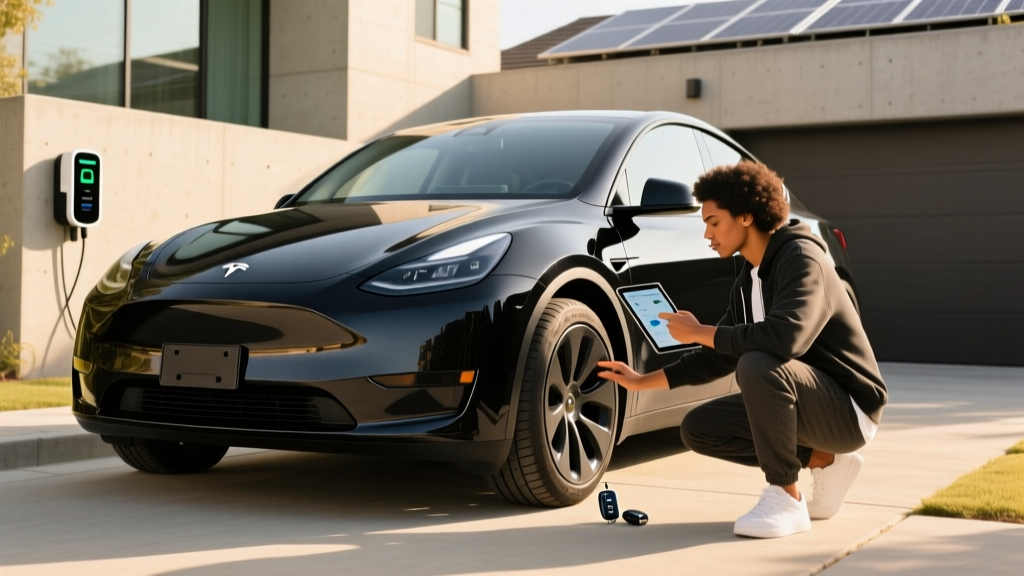
Tesla's self-delivery model (sometimes called "contactless delivery" or "unassisted delivery") is the company's standard vehicle handoff process in most U.S. markets. Instead of a delivery specialist walking you through every feature, you arrive at a Tesla Service Center or delivery hub, use the Tesla app to unlock your new vehicle, perform your own inspection, and drive away — all on your own timeline. In 2026, this remains the default experience for Model Y, Model 3, Model S, and Model X buyers outside of select metro areas where Tesla still offers guided deliveries.
The appeal is obvious: no sales pressure, no rushed walkthrough, and you can take as long as you need to inspect paint, panel gaps, and software configuration. The downside? You are your own quality-control department. If you sign off on the delivery in the app before catching a defect, getting Tesla to remedy it afterward becomes a service-center ordeal rather than a simple lot-side fix.
This guide covers the full self-delivery workflow — from pre-arrival prep to final acceptance — paired with the exact specs and ownership numbers you need to verify your vehicle matches what you ordered. We'll use the 2026 Model Y Long Range AWD as the reference vehicle, since it accounts for the vast majority of Tesla deliveries.
Before You Arrive: Pre-Delivery Checklist
The self-delivery experience starts days before you physically touch the car. Here's what to handle in advance:
- VIN verification: Once Tesla assigns your VIN (visible in the app under "Vehicle Details"), cross-reference it against your order — confirm the trim (Long Range vs. Performance vs. Standard), exterior color, wheel size, and interior. VIN decoder tools on the NHTSA site can confirm model year and build plant.
- Insurance binding: Tesla requires proof of insurance before release. Call your provider 48 hours ahead — EV premiums run 15-30% higher than comparable ICE vehicles, and some insurers require the VIN on-file before binding.
- Payment clearance: If financing through a third-party bank or credit union, ensure the wire or cashier's check clears at least one business day before delivery. Tesla app payments (ACH or credit card) process faster but may trigger fraud holds on large transactions.
- Charging setup confirmation: If you've installed a Level 2 home charger (NACS wall connector or J1772 with adapter), test it before delivery day. You'll want to plug in immediately upon arriving home to begin the battery management system calibration cycle.
- Download the latest Tesla app: The delivery unlock feature requires app version 4.38+ (as of early 2026). Update the night before.
2026 Model Y Long Range AWD: The Specs You're Taking Delivery On
Before you accept the vehicle, confirm it matches the specifications below. These are the current 2026 model-year figures per fueleconomy.gov and Tesla's official order page:
| Attribute | Specification |
|---|---|
| EPA Range | 320 miles |
| Battery (usable) | ~78 kWh, NMC (nickel manganese cobalt) |
| Drivetrain | Dual-motor AWD |
| Horsepower | 384 hp combined |
| 0-60 mph | 4.8 seconds |
| DC Fast Charge (peak) | 250 kW (CCS via NACS adapter or native NACS at Supercharger V3/V4) |
| 10-80% DC Charge | ~27 minutes |
| Level 2 Home Charge | 11.5 kW (~44 miles/hr on 48A circuit) |
| MPGe (combined) | 117 MPGe |
| Efficiency | 28 kWh/100 mi |
| Cargo (rear seats up) | 30.2 cu ft |
| Cargo (rear seats folded) | 72.1 cu ft |
| Rear Legroom | 41.6 inches |
| Battery Warranty | 8 years / 120,000 miles (min 70% retention) |
| Basic Vehicle Warranty | 4 years / 50,000 miles |
| Base MSRP | $44,990 (before destination) |
| Destination Fee | $1,390 |
| As-Tested (common config) | $49,380 (w/ FSD, 19" wheels, gray paint) |
The Physical Inspection: A 25-Point Walk-Around
Once the app unlocks the car, resist the urge to sit inside first. Exterior and panel inspection is harder once you've psychologically committed to the vehicle. Work methodically:
Exterior & Body
- Panel gaps: Check the hood-to-fender, trunk-to-quarter-panel, and door seams. Tesla's Fremont and Austin build quality has improved significantly since 2022, but asymmetrical gaps of 2mm+ on one side warrant a service note.
- Paint: Inspect under natural daylight (not the covered delivery bay lighting). Look for orange-peel texture, runs, or embedded debris — particularly on the roof and lower door panels where robotic spray paths can overlap inconsistently.
- Wheel condition: Check for curb rash (unlikely on a new car, but transport damage happens), and verify the tire brand/size match your order (19" Gemini or 20" Induction).
- Glass: Inspect the full glass roof and windshield for chips or stress cracks. The panoramic roof is a single large piece — replacement costs exceed $1,800 out of warranty.
- Charge port: Open the NACS charge port door (rear driver-side quarter panel). Confirm the motorized door opens/closes and the port latch illuminates.
Interior & Electronics
- Seat adjustment: Test all 8-way power adjustments on both front seats. Listen for grinding motors.
- Touchscreen: Check for dead pixels by loading a solid white screen (open the browser to about:blank). Test touch response at all four corners.
- Audio system: Play a bass-heavy track at volume 8/10. The 14-speaker premium audio should produce no door-panel rattle or subwoofer distortion.
- HVAC: Set to LO and HI for 60 seconds each. The heat pump should produce noticeable temperature change within 20 seconds.
- ADAS calibration: Navigate to Controls > Autopilot. Confirm cameras show a live feed with no "Calibration Required" warnings. If cameras require calibration, you can still accept delivery, but Autopilot and FSD features will be disabled for the first 20-40 miles of driving.
Drivetrain & Software
- Odometer: New Teslas typically show 5-15 miles from factory testing and transport. Anything over 50 miles warrants a question.
- Software version: Check Controls > Software. As of early 2026, new deliveries ship with firmware 2026.2.x or later. If your car shows a significantly older build, request a Wi-Fi update before leaving the lot.
- VIN match: Confirm the VIN on the touchscreen (Controls > Software) matches the VIN on the door jamb sticker and your app.
Accepting or Rejecting: Your Rights and Realities
Here's the uncomfortable truth about Tesla self-delivery: the app presents an "Accept Delivery" button that, once tapped, transfers ownership and begins your return clock. Tesla's current return policy allows 7 days or 1,000 miles (whichever comes first) for a full refund, minus a restocking fee that varies by state. However, cosmetic issues spotted after acceptance become service claims rather than pre-delivery corrections — meaning you wait in the service queue rather than getting a swap on the spot.
For minor issues — small paint imperfections, slight panel-gap asymmetry, a loose interior trim clip — accept delivery and schedule a service appointment. Tesla's mobile service rangers handle most cosmetic touch-ups at your home or office within 1-2 weeks.
Tax Credit & Pricing: What You Actually Pay
The federal EV tax credit under IRS §30D remains available for qualifying Tesla vehicles in 2026, but eligibility depends on three intersecting requirements that catch many buyers off guard:
| Requirement | Threshold |
|---|---|
| Vehicle MSRP Cap (SUVs/Pickups) | ≤ $80,000 |
| Vehicle MSRP Cap (Sedans) | ≤ $55,000 |
| Buyer AGI Limit (Married Filing Jointly) | ≤ $300,000 |
| Buyer AGI Limit (Head of Household) | ≤ $225,000 |
| Buyer AGI Limit (Single) | ≤ $150,000 |
| Battery Component Sourcing | Must meet North American assembly thresholds |
| Critical Minerals Sourcing | Must meet FTA-country sourcing thresholds |
| Point-of-Sale Transfer | Available — apply credit at purchase, not at tax filing |
The Model Y qualifies as an SUV under IRS classification, so the $80,000 MSRP cap applies — every current trim clears this easily. The Model 3 sedan falls under the $55,000 cap, which eliminates the Performance trim from credit eligibility. Battery sourcing requirements remain the biggest variable: Tesla's Austin-built vehicles using CATL LFP cells have faced partial credit disqualification in prior years. As of 2026, the Long Range AWD (NMC chemistry, U.S.-assembled pack) qualifies for the full $7,500, but always verify the current status on the IRS clean vehicle credit page before signing.
First 48 Hours: Post-Delivery Ownership Essentials
Once you drive off the lot, the next two days set the foundation for long-term ownership:
Charging Setup
Plug into your Level 2 home charger immediately. Set the charge limit to 80% for daily use (NMC chemistry benefits from avoiding sustained 100% states of charge). Configure Scheduled Departure if you have a consistent commute — this preconditioning feature warms the battery using grid power rather than pack energy, improving cold-weather efficiency by 5-10%.
If you rely on public charging, add the Tesla Supercharger network, Electrify America, and EVgo to your app's navigation favorites. The Model Y's NACS port gives you native access to over 20,000 Supercharger stalls in North America — the most reliable DC network by a wide margin, with median uptime above 97%.
Autopilot & FSD Clarification
Insurance & Registration
Confirm your insurer has bound coverage effective at delivery. Many states require you to transfer registration within 30 days. Tesla provides the title application and temporary registration documents in the glovebox at delivery — photograph both immediately as backup.
Pros and Cons: Honest Assessment After Delivery
Pros
- Supercharger network access — best-in-class DC reliability
- Over-the-air updates continuously add features post-purchase
- 320-mile EPA range covers most commutes for a full week
- Heat pump standard — excellent cold-weather cabin efficiency
- Frunk + 72.1 cu ft max cargo beats most compact SUVs
- 250 kW peak charge rate adds ~200 miles in 15 minutes
Cons
- Self-delivery means zero guided onboarding — steep learning curve
- Build quality improved but still inconsistent vs. legacy OEMs
- No physical stalks (turn signals on steering wheel buttons)
- Rear visibility limited by coupe-like roofline
- Service center wait times can stretch 2-4 weeks in some markets
- FSD (Supervised) is expensive and still requires full attention
Is the 2026 Model Y Worth It vs. Key Competitors?
The Model Y Long Range AWD competes directly with the Hyundai Ioniq 5 (310 mi EPA, $46,650), Ford Mustang Mach-E Extended Range (320 mi EPA, $48,995), and the Kia EV6 (310 mi EPA, $47,700). Here's where the Tesla wins and loses:
- Choose Model Y if: You prioritize Supercharger network access, want the most mature OTA update ecosystem, and value cargo volume above all else (72.1 cu ft leads the segment).
- Choose Ioniq 5 or EV6 if: You want 800V architecture enabling 10-80% charges in ~18 minutes (vs. Tesla's ~27), prefer physical buttons and stalks, or find Tesla's minimalist interior too sparse.
- Choose Mach-E if: You want a more traditional crossover driving feel with a quieter cabin and Ford's BlueCruise hands-free highway driving (which has clearer hands-off approval on mapped highways than Autopilot).
Frequently Asked Questions
What is the real-world range of the 2026 Model Y Long Range?
Expect 270-285 miles in warm-weather highway driving at 70-75 mph, and 220-250 miles in sub-freezing conditions. City driving with regenerative braking recovers energy and can push real-world range close to or slightly above the 320-mile EPA figure.
How fast does the Model Y charge at home and on the road?
At home on a 48-amp Level 2 circuit, the Model Y adds approximately 44 miles of range per hour (11.5 kW), fully replenishing from 10% in about 7 hours. On a V3 Supercharger (250 kW peak), a 10-80% charge takes approximately 27 minutes. Note that charge rate tapers significantly above 80% — a full 100% charge can take an additional 25+ minutes.
How much does the Model Y cost after the federal tax credit?
The 2026 Model Y Long Range AWD starts at $46,380 including destination. With the full $7,500 §30D credit applied at point of sale, the effective price drops to $38,880. Eligibility requires buyer AGI below $300,000 (MFJ), $225,000 (HOH), or $150,000 (single), plus battery sourcing compliance. Verify current eligibility at irs.gov.
Does the Model Y qualify for the federal EV tax credit?
Yes — as of 2026, the Model Y Long Range AWD qualifies for the full $7,500 credit under §30D, subject to buyer income limits and battery sourcing requirements. The credit can be transferred to Tesla at point of sale, reducing your purchase price immediately. Always confirm current eligibility before finalizing your order, as sourcing rules are updated periodically.
What if I find a problem after accepting delivery?
Tesla's return policy allows 7 days or 1,000 miles for a full refund (minus restocking fees where applicable). For non-critical issues, schedule a mobile service or service center appointment via the app. Cosmetic repairs (paint touch-up, trim replacement) are typically handled within 1-2 weeks. Major defects (drivetrain, battery) fall under the 4-year/50,000-mile basic warranty or 8-year/120,000-mile battery warranty.
Do I need a home charger for the self-delivery process?
No — Tesla does not require proof of home charging equipment for delivery. However, owning an EV without reliable Level 2 home charging significantly increases your cost-per-mile and inconvenience. Budget $500-$2,000 for a professional Level 2 installation (240V, 48-amp circuit) before or shortly after delivery.