Why BYD's Mexico Lineup Matters to North American EV Buyers
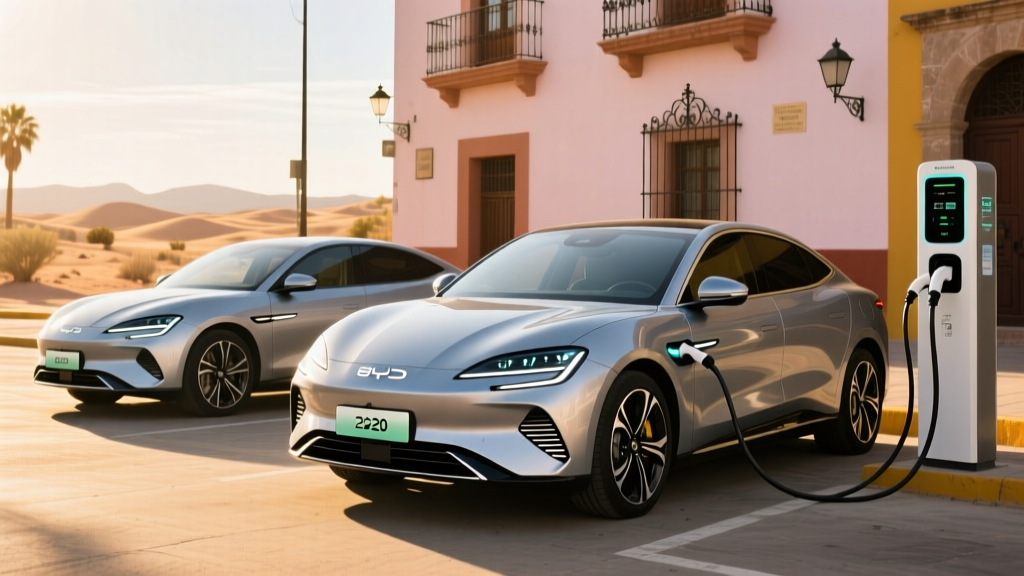
BYD has rapidly expanded its footprint in Latin America, and the automaker's growing catalog of BYD cars in Mexico offers a compelling case study for EV shoppers across the Americas. With models like the Dolphin, Seal, Atto 3 (Yuan Plus), and the Shark plug-in hybrid now available through Mexican dealerships, these vehicles present aggressive pricing and competitive specs — often undercutting legacy automakers by 15-25% on MSRP. For US-based buyers researching cross-border availability, or Mexican buyers evaluating their options, this profile breaks down the real numbers: EPA-equivalent range, DC fast-charge curves, battery chemistry, and ownership economics.
One critical caveat up front: BYD vehicles sold in Mexico do not currently qualify for the US federal §30D EV tax credit. The credit requires final assembly in North America and strict battery-component and critical-mineral sourcing thresholds that BYD's China-built vehicles do not meet under current IRS rules. We'll cover this in detail below. If you're reading from the US, these specs still matter — they reveal where BYD's global pricing and technology sit relative to competitors you can buy stateside.
2026 BYD Model Lineup: Specs at a Glance
| Model | Body Style | Battery (kWh) | Chemistry | Range (WLTP) | Range (EPA est.) | 0-60 mph | HP | Drivetrain | Base MSRP (MXN) |
|---|---|---|---|---|---|---|---|---|---|
| Dolphin | Hatchback | 60.4 kWh (usable ~58.5) | LFP (Blade) | 427 km / 265 mi | ~230 mi | 7.0 sec | 201 hp | FWD | ~$699,000 |
| Atto 3 (Yuan Plus) | Compact SUV | 60.48 kWh (usable ~58) | LFP (Blade) | 420 km / 261 mi | ~225 mi | 7.3 sec | 201 hp | FWD | ~$849,000 |
| Seal | Sedan | 82.5 kWh (usable ~79) | LFP (Blade) | 570 km / 354 mi | ~300 mi | 5.1 sec (AWD) | 523 hp (AWD) | RWD / AWD | ~$999,000 |
| Shark (PHEV) | Pickup Truck | 28.8 kWh (PHEV) | LFP | 100 km EV / 62 mi | ~55 mi EV | 5.7 sec | 430 hp (combined) | AWD | ~$899,000 |
Note: WLTP range figures are typically 10-15% higher than EPA estimates. EPA-equivalent figures above are AutoEdgeView estimates based on WLTP-to-EPA conversion ratios observed in similar-class vehicles. Mexican-market BYD vehicles are not EPA-certified, so official EPA numbers are not published on fueleconomy.gov.
Real-World Range: What the Sticker Doesn't Tell You
WLTP rated: 427 km (265 mi) · EPA-equivalent estimate: ~230 mi
Expect in real-world driving: ~195-210 mi at sustained highway speeds (70+ mph); ~170-185 mi in cold weather (below 40°F / 4°C) with cabin heating. City driving with regen braking recovers closer to the 220-230 mi estimate.
Efficiency: ~28-30 kWh/100 mi combined (~112-120 MPGe equivalent)
The BYD Blade battery — a cell-to-pack lithium iron phosphate (LFP) design — is central to understanding range behavior across this lineup. LFP chemistry has lower energy density than the NMC (nickel manganese cobalt) packs used in many Tesla and Hyundai vehicles, which is why BYD's range figures trail some competitors despite competitive kWh capacities. However, LFP offers two significant ownership advantages: superior cycle life (3,000+ full charge cycles before meaningful degradation) and thermal stability that reduces fire risk.
The practical trade-off: LFP batteries lose more range in cold weather than NMC — expect 20-30% range reduction below freezing, compared to 15-25% for NMC-equipped rivals. BYD's thermal management system includes a heat pump on the Seal and Atto 3 (standard on higher trims), which mitigates some of this loss. The base Dolphin uses resistive heating, which draws more from the pack in winter.
WLTP rated: 570 km (354 mi) · EPA-equivalent estimate: ~300 mi
Expect in real-world driving: ~255-275 mi highway; ~230-250 mi cold weather. The Seal's larger 82.5 kWh pack and more aerodynamic sedan profile help it hold range better at speed than the boxier Atto 3.
Efficiency: ~27-29 kWh/100 mi combined (~115-125 MPGe equivalent)
Charging Speed: DC Fast Charge and Home Level 2
Charging infrastructure compatibility is where BYD's Mexico lineup requires careful attention. All current BYD models sold in Mexico use the GB/T or CCS2 connector standard depending on the model year and trim — not the NACS (Tesla) or CCS1 connectors standard in North America. This matters enormously for public charging access.
| Model | Max DC Fast Charge | 10-80% Time | Level 2 AC Rate | Level 2 Time (0-100%) | Connector (Mexico) |
|---|---|---|---|---|---|
| Dolphin | 88 kW peak | ~36 min | 7 kW (single-phase) | ~9 hours | CCS2 / GB/T |
| Atto 3 | 88 kW peak | ~35 min | 7 kW (single-phase) | ~9 hours | CCS2 / GB/T |
| Seal (RWD) | 150 kW peak | ~26 min | 11 kW (three-phase) | ~8 hours | CCS2 |
| Seal (AWD) | 150 kW peak | ~26 min | 11 kW (three-phase) | ~8 hours | CCS2 |
| Shark (PHEV) | ~60 kW peak | ~30 min (10-80%) | 7 kW | ~4.5 hours | CCS2 / GB/T |
Charging curve reality check: The Dolphin and Atto 3 peak at 88 kW but sustain that rate only between roughly 10-50% state of charge. Above 60%, the curve tapers significantly — expect 40-50 kW through the 60-80% window, which is why the 10-80% time stretches to 35-36 minutes despite what sounds like a modest battery size. The Seal's 150 kW peak is more competitive with rivals like the Hyundai Ioniq 5 (which peaks at 240 kW on its 800V architecture), but the Seal still charges respectably for a 400V-class LFP pack.
For home charging, the 7 kW single-phase onboard charger in the Dolphin and Atto 3 means a full charge takes roughly 9 hours on a standard Level 2 home station. This is adequate for overnight charging but slower than the 11.5 kW chargers found in the Ford Mustang Mach-E or Tesla Model 3. The Seal's 11 kW three-phase charger is faster, but requires a three-phase electrical supply — uncommon in most Mexican and US residential settings.
Performance and Drivetrain Details
The BYD Seal AWD is the performance standout: 523 hp from dual motors, 0-60 mph in 5.1 seconds, and a low center of gravity from the floor-mounted Blade pack. It positions squarely against the Tesla Model 3 Performance and BMW i4 M50 on acceleration, though its heavier curb weight (~4,850 lbs) shows in cornering dynamics. The suspension tuning prioritizes comfort over sportiness — firm enough for highway stability but not the sharp response you'd get from a Model 3.
The Dolphin and Atto 3 are tuned for efficiency and urban comfort. Their 201 hp front motors deliver adequate acceleration (7.0-7.3 seconds to 60 mph) with smooth, linear power delivery. Regenerative braking offers two levels selectable through the infotainment system, but neither achieves true one-pedal driving — you'll still need the friction brake for complete stops, unlike the stronger regen found in Nissan's e-Pedal or Tesla's Hold mode.
The Shark PHEV pickup is the outlier: a body-on-frame truck with a 1.5L turbo engine paired with dual electric motors producing 430 combined horsepower. Its 55-mile EV-only range covers most daily commutes, and the series-parallel hybrid system means it can operate as a pure EV, a range-extended EV, or a conventional hybrid depending on battery state and driving demand. Towing capacity is rated at approximately 5,500 lbs, though real-world range under load drops sharply.
Pricing, Tax Credits, and Ownership Economics
| Model | Base MSRP (MXN) | Base MSRP (USD approx.) | US §30D Credit Eligible? | Effective Price After Credit |
|---|---|---|---|---|
| Dolphin | ~$699,000 | ~$35,000 | No | $35,000 (no credit) |
| Atto 3 | ~$849,000 | ~$42,500 | No | $42,500 (no credit) |
| Seal RWD | ~$999,000 | ~$50,000 | No | $50,000 (no credit) |
| Seal AWD | ~$1,099,000 | ~$55,000 | No | $55,000 (no credit) |
| Shark PHEV | ~$899,000 | ~$45,000 | No | $45,000 (no credit) |
Why no US tax credit? Under IRS §30D rules, a vehicle must meet final assembly in North America, battery component sourcing, and critical mineral requirements to qualify for up to $7,500 in federal credits. BYD's vehicles are manufactured in China (with some CKD assembly in Thailand and Brazil), and the battery supply chain is entirely BYD-owned, which does not satisfy the critical-mineral sourcing thresholds tied to US free-trade-agreement partners. Even if BYD opened a Mexican assembly plant, the battery sourcing rules would likely still disqualify these vehicles.
For Mexican buyers, the pricing is compelling because Mexico offers its own incentives: exemption from the ISAN (new vehicle tax) for EVs, reduced tenencia (annual vehicle tax) in many states, and access to HOV lanes in Mexico City. The effective savings versus a comparably equipped gasoline vehicle can reach 15-20% over five years of ownership when fuel and maintenance savings are factored in.
For US buyers cross-shopping from the border: a Dolphin at ~$35,000 USD with no credit is competitive with a Chevrolet Equinox EV (EPA 319 mi, ~$33,000 before credit, ~$25,500 after). The Equinox offers more range, North American charging-standard compatibility, and the full $7,500 credit — making it the stronger value for US residents despite the Dolphin's attractive build quality.
Battery Warranty and Long-Term Durability
BYD offers an 8-year/160,000 km (approximately 100,000 mile) warranty on the Blade battery pack across all models, with a guaranteed capacity retention of 70% over that period. This is competitive with the industry standard — Tesla offers 8 years/120,000 miles on the Model 3 rear-drive, while Hyundai offers 10 years/100,000 miles on the Ioniq 5.
The LFP chemistry gives BYD a structural advantage in longevity. Independent testing of Blade cells shows capacity retention above 90% after 1,500 full charge-discharge cycles, which translates to roughly 300,000+ miles of driving before meaningful degradation. For most owners, the battery will outlast the vehicle's useful life. The trade-off is that LFP replacement packs, if ever needed, are heavier and less energy-dense than NMC equivalents, though BYD's vertical integration keeps replacement costs lower than third-party suppliers.
The vehicle limited warranty is 6 years/150,000 km (~93,000 mi), which covers powertrain electronics, the electric motor, and structural components. Note that BYD's warranty service network in Mexico is still expanding — as of early 2026, authorized service centers are concentrated in Mexico City, Guadalajara, Monterrey, and a handful of other major metros. Rural or smaller-city owners should verify service proximity before purchasing.
Interior, Tech, and Driver Assistance
BYD's infotainment centers on a rotating 12.8-inch touchscreen (15.6-inch on the Seal) that pivots between landscape and portrait orientation — a signature feature that's genuinely useful for navigation in landscape and music/phone in portrait. The system runs BYD's DiLink OS, which supports wireless Apple CarPlay and Android Auto, over-the-air updates, and a built-in 4G LTE connection for remote features (preconditioning, charge monitoring, location tracking).
Build quality in the Seal and Atto 3 rivals European competitors: soft-touch materials on the dashboard and door panels, well-bolstered synthetic leather seats, and tight panel gaps. The Dolphin, positioned as the budget entry, uses more hard plastics but maintains solid assembly quality. Cargo volume is competitive:
- Dolphin: 12.1 cu ft trunk (seats up), 34.5 cu ft (seats folded) — no frunk
- Atto 3: 15.7 cu ft trunk, 42.0 cu ft folded — no frunk
- Seal: 14.1 cu ft trunk, plus a small 1.8 cu ft frunk
- Shark: 5.2 ft bed with ~35 cu ft volume, plus rear cabin storage
Driver assistance is SAE Level 2 across the lineup. BYD's DiPilot system includes adaptive cruise control, lane-keeping assist, automatic emergency braking, and blind-spot monitoring. On the Seal, a 360-degree camera and automated parking assist are standard. This is not self-driving — the system requires continuous driver supervision, hands on or near the wheel, and does not handle complex urban intersections or construction zones reliably. It's comparable to Toyota Safety Sense 3.0 or Honda Sensing, not to Tesla's FSD Supervised or GM's Super Cruise in hands-free capability.
Pros and Cons: The Honest Summary
- LFP Blade battery offers exceptional cycle life and safety
- Competitive pricing — 15-25% below legacy rivals in Mexico
- Seal AWD delivers 523 hp and 5.1s 0-60 at ~$55K USD
- Rotating infotainment screen is genuinely practical
- Shark PHEV fills a rare electrified pickup niche
- Strong build quality, especially Seal and Atto 3
- No US §30D tax credit eligibility (China assembly + sourcing)
- CCS2/GB/T connector — incompatible with US/Canada public DC networks without adapter
- DC fast-charge speeds trail 800V rivals (88-150 kW vs 240-350 kW)
- LFP range loss in cold weather exceeds NMC competitors
- Regen braking not strong enough for one-pedal driving
- Service network still limited outside major Mexican metros
- Not EPA-certified — no official US range/efficiency data
Who Should Buy a BYD in Mexico — and Who Shouldn't
Choose BYD if: You live in Mexico (especially a major metro with service access), want an affordable EV with proven LFP battery longevity, primarily drive in moderate climates, and charge mostly at home overnight. The Dolphin is an excellent urban commuter; the Seal AWD is a genuine sports-sedan value; the Shark fills a unique PHEV truck niche.
Look elsewhere if: You're a US buyer (the credit disqualification, connector incompatibility, and lack of EPA certification make it impractical). Also reconsider if you frequently drive in sub-freezing conditions, rely on DC fast charging for road trips (the 88 kW Dolphin/Atto 3 charging speed adds significant stop time on long routes), or live far from a BYD service center.
Frequently Asked Questions
What is the real-world range of BYD cars sold in Mexico?
The BYD Dolphin delivers approximately 195-210 miles at highway speeds and 170-185 miles in cold weather, against its WLTP rating of 265 miles. The Seal AWD manages 255-275 miles highway, down from its 354-mile WLTP figure. Always budget 15-25% below the WLTP sticker for real-world mixed driving, and 25-30% in freezing temperatures.
How fast do BYD vehicles charge on DC fast chargers?
The Dolphin and Atto 3 peak at 88 kW, reaching 10-80% in about 35-36 minutes. The Seal peaks at 150 kW with a 10-80% time of roughly 26 minutes. These are 400V-architecture speeds — faster than a Nissan Leaf but significantly slower than 800V vehicles like the Hyundai Ioniq 5 (240 kW peak, ~18 minutes 10-80%).
Do BYD cars in Mexico qualify for the US federal EV tax credit?
No. Under current IRS §30D regulations, BYD vehicles fail the North American final assembly requirement and the battery component/critical mineral sourcing thresholds. Even purchasing one in Mexico and importing it to the US would not make it eligible, and the import process itself involves significant DOT and EPA compliance hurdles.
Is the BYD Seal worth buying versus a Tesla Model 3?
For Mexican buyers, the Seal AWD at ~$55,000 USD offers comparable acceleration (5.1s vs 4.2s for Model 3 Performance) and a more comfortable ride at a lower price point. The Model 3 Highland (RWD, ~$53,000 USD in Mexico) offers superior charging infrastructure via Tesla's Supercharger network, better software, and faster DC charging. If charging access is your priority, Tesla wins. If comfort and value matter more, the Seal is a strong alternative.
What connector do BYD vehicles use in Mexico?
Most BYD models in Mexico use CCS2 (the European/Asian standard) or GB/T (the Chinese standard), not the CCS1 or NACS connectors used in the US and Canada. Mexico's public charging network includes a mix of CCS1 and CCS2 stations, so compatibility varies by location. Adapters exist but add cost and complexity.
How long will the BYD Blade battery last?
BYD's LFP Blade cells are rated for 3,000+ full charge cycles before dropping below 80% capacity. At an average of 200 miles per cycle, that translates to 600,000+ miles — well beyond the vehicle's expected lifespan. The warranty guarantees 70% capacity retention for 8 years/100,000 miles, which is conservative relative to the chemistry's demonstrated durability.