The Lucid Gravity is the luxury electric SUV that proves a three-row family hauler doesn't have to sacrifice efficiency or range to deliver performance. Built on the same LEAP (Lucid Electric Advanced Platform) architecture that gave the Air sedan its record-breaking efficiency, the Gravity arrives for the 2026 model year with up to 440 miles of EPA-estimated range, over 800 horsepower in dual-motor guise, and a cabin designed for seven adults. But beyond the spec sheet, buyers want to know: what colors can you get it in, how does it charge, and does it actually deliver on the highway?
Lucid Gravity Colors and Exterior Options
Let's start with what brings many shoppers to this page. The 2026 Lucid Gravity offers a curated palette of exterior colors across its trim lineup:
- Stellar White — Standard on Pure and Touring trims; a clean, pearlescent white that hides dust well.
- Infinite Black — A deep metallic black available across all trims; stunning but requires frequent washing.
- Quantum Grey — A sophisticated mid-tone grey metallic; one of the most popular choices among early reservation holders.
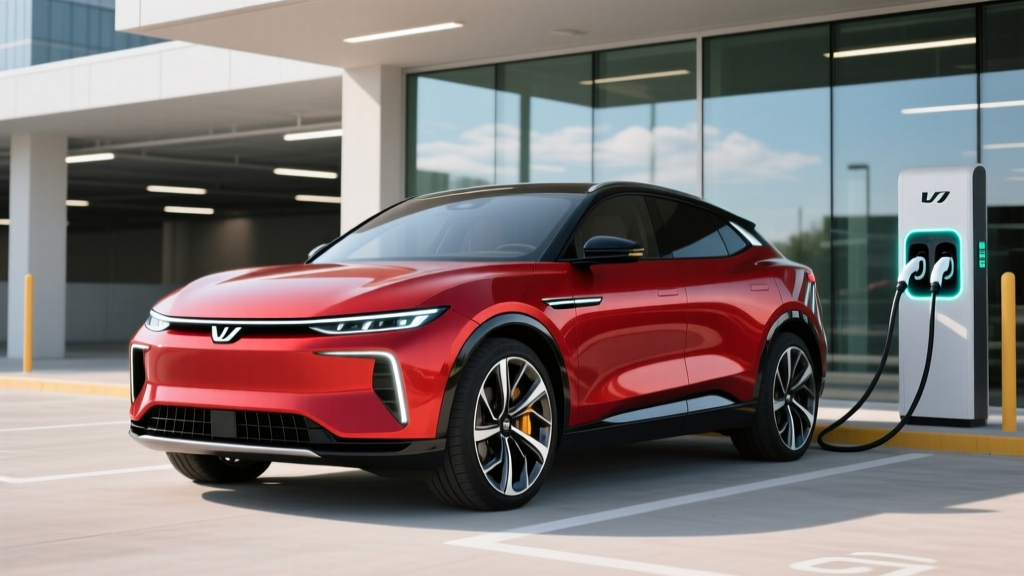
- Zen Red — A rich, deep red metallic that emphasizes the Gravity's sculpted body lines.
- Fathom Blue — A dark, oceanic blue with subtle metallic flake; exclusive to Grand Touring.
- Desert Platinum — A warm, sandy silver with champagne undertones; pairs beautifully with the available 22-inch wheels.
Grand Touring models also unlock Lucid's Alchemy roof option — a dark-tinted panoramic glass roof that extends from windshield to tailgate, flooding all three rows with light. Interior colorways include Tahoe (light cream), Santa Cruz (warm tan), and Space (dark charcoal), with Nappa leather standard on Touring and Grand Touring trims and a premium vegan alternative available on the Pure.
Range, Efficiency, and Real-World Expectations
The Lucid Gravity's headline figure is its EPA-estimated range, which varies by trim and wheel configuration. Lucid's efficiency engineering — rooted in miniaturized motors, low-resistance drivetrain components, and an aerodynamic profile unusual for a three-row SUV — gives the Gravity a genuine advantage over rivals.
- Gravity Touring (20" wheels): EPA 440 miles — Expect ~370-390 miles on mixed highway driving; ~310-330 miles in sustained cold weather (below 32°F) at highway speeds.
- Gravity Grand Touring (21" wheels): EPA 415 miles — Expect ~350-370 miles highway; ~290-310 miles in cold conditions.
- Gravity Pure (19" wheels): EPA 450 miles (estimated) — The efficiency-focused base model maximizes range with smaller wheels and a single-motor RWD layout.
Real-world range drops of 15-20% are typical for highway-speed driving at 70-80 mph in any EV. Cold weather compounds this with battery resistance and cabin heating demands. The Gravity's available heat pump helps mitigate winter losses compared to resistive heating systems.
| Spec | Pure (RWD) | Touring (AWD) | Grand Touring (AWD) |
|---|---|---|---|
| EPA Range | ~450 mi (est.) | 440 mi | 415 mi |
| Battery (usable) | ~112 kWh (NMC) | 118 kWh (NMC) | 118 kWh (NMC) |
| Horsepower | ~500 hp | 620 hp | 832 hp |
| 0-60 mph | ~5.5 sec | 3.8 sec | 3.5 sec |
| Drivetrain | RWD single-motor | AWD dual-motor | AWD dual-motor |
| Efficiency | ~130 MPGe / 26 kWh/100mi | 120 MPGe / 28 kWh/100mi | 115 MPGe / 29 kWh/100mi |
| Towing Capacity | — | 6,000 lbs | 6,000 lbs |
Lucid uses NMC (nickel manganese cobalt) lithium-ion battery chemistry across the Gravity lineup, prioritizing energy density to pack over 118 kWh of usable capacity into a pack that still allows for a flat floor and usable third-row seating. The pack operates on a 900V+ architecture — the same system proven in the Air — which is key to the Gravity's exceptional charging speeds.
Charging: DC Fast, Level 2, and Home Setup
The Gravity's 900V electrical architecture isn't just a marketing talking point — it directly translates to faster DC charging by allowing lower current at higher voltage, reducing heat and cable weight. Here's what that means at the plug:
| Charging Level | Power (kW) | Speed / Time | Notes |
|---|---|---|---|
| DC Fast Charge (peak) | Up to 300+ kW | 10-80% in ~20 min | Requires 350 kW-capable CCS/NACS station; peak rate tapers above 60% SoC |
| DC Fast Charge (sustained avg) | ~180-220 kW | ~200 mi added in 15 min | Real-world average across the 10-80% curve |
| Level 2 (home, 48A) | 11.5 kW | ~42 mi/hr of charge | Full 0-100% in ~11 hours; ideal overnight |
| Level 2 (home, 32A) | 7.7 kW | ~28 mi/hr of charge | Common on 40A circuits; full charge in ~16 hours |
| Level 1 (120V) | 1.4 kW | ~5 mi/hr of charge | Emergency/trickle only; impractical for full charge |
At a 350 kW Electrify America or equivalent station, the Gravity's charging curve peaks aggressively in the 10-40% state-of-charge window, then tapers progressively. Expect to add roughly 200 miles in 15 minutes under ideal conditions — competitive with the best in the segment. For home charging, a 48-amp Level 2 wall connector on a dedicated 60-amp circuit is the recommended setup, delivering a full overnight replenishment even after a heavy driving day.
The Gravity ships with a NACS (North American Charging Standard) port for 2026, granting native access to Tesla's Supercharger network without an adapter — a significant advantage for road-trip charging reliability.
Performance and Driving Dynamics
Even the base Gravity Pure delivers a strong 500-hp punch, but the dual-motor AWD models are where Lucid's performance DNA becomes obvious. The Grand Touring's 832 horsepower and 3.5-second 0-60 time place it firmly in supercar-SUV territory alongside the Tesla Model X Plaid and Rivian R1T tri-motor — but with far more emphasis on ride comfort and cabin quietness.
The Gravity uses a multi-link rear suspension with available air springs that adjust ride height for highway efficiency or rough-road clearance. Regenerative braking offers multiple levels, selectable via the steering-wheel paddles, but Lucid stops short of true one-pedal driving at a full stop — you'll still need the friction brake at low speeds. The steering is precise if slightly light, and the low center of gravity (thanks to the floor-mounted battery) keeps body roll well-controlled for a vehicle of this size.
Interior Space, Cargo, and Technology
The Gravity's cabin is designed for genuine seven-adult seating — a claim many three-row SUVs make but few deliver. Key dimensions:
- Front legroom: 41.8 inches
- Second-row legroom: 39.4 inches (with sliding bench)
- Third-row legroom: 32.7 inches — usable for adults on shorter trips
- Cargo behind 3rd row: 22.0 cu ft
- Cargo behind 2nd row (3rd row folded): 58.3 cu ft
- Max cargo (all rear seats folded): 87.5 cu ft
- Frunk (front trunk): 12.1 cu ft — large enough for a carry-on and charging cables
The centerpiece of the dashboard is Lucid's Clearview Cockpit — a 34-inch curved OLED display that floats above the steering wheel, providing speed, range, navigation, and media information in a single panoramic sweep. A secondary 12.3-inch lower touchscreen handles climate, seat controls, and vehicle settings. Wireless Apple CarPlay and Android Auto are standard, along with a 21-speaker Surreal Pro audio system by Mark Levinson on Touring and Grand Touring trims.
On the driver-assistance front, the Gravity comes equipped with Lucid DreamDrive Pro, a Level 2 (SAE) ADAS suite featuring adaptive cruise control, lane-centering steering, automatic emergency braking, blind-spot monitoring, and a 360-degree camera system. The system is competent for highway cruising but requires continuous driver engagement — it is not a hands-off or "self-driving" system. Lucid has indicated that a more advanced DreamDrive with LiDAR-enhanced capabilities may follow via over-the-air updates, but as of the 2026 launch, the driver must remain attentive at all times.
Pricing, Trims, and Federal Tax Credit Eligibility
| Trim | Base MSRP | As-Tested (typical) | §30D Credit Eligibility |
|---|---|---|---|
| Pure | $79,900 | $82,500 | Eligible up to $7,500 (subject to income + sourcing) |
| Touring | $94,900 | $101,000 | Eligible up to $7,500 (SUV MSRP cap: $80,000 — verify trim classification) |
| Grand Touring | $119,900 | $128,000 | Likely exceeds $80,000 SUV MSRP cap — credit may not apply |
The IRS §30D federal tax credit offers up to $7,500 for qualifying new EVs, but eligibility hinges on several factors that change frequently:
- MSRP Cap: SUVs/vans/pickups must have an MSRP at or below $80,000. The Gravity Pure may qualify; Touring and Grand Touring trims likely exceed the cap unless classified differently by the IRS.
- Buyer Income Limits: Modified AGI must not exceed $300,000 (joint), $225,000 (head of household), or $150,000 (single).
- Battery Sourcing: The credit is split into two $3,750 halves — one for critical-minerals sourcing and one for battery-component manufacturing. Lucid's supply chain compliance should be verified at the time of purchase via the fueleconomy.gov database.
- Point-of-Sale Transfer: Eligible buyers can transfer the credit to the dealer at purchase, reducing the out-of-pocket price immediately rather than waiting for a tax refund.
Because the Gravity sits near or above the MSRP threshold on most trims, buyers should confirm eligibility with their tax professional and check the latest IRS guidance before committing to a purchase.
Warranty and Long-Term Ownership
Lucid backs the Gravity with a warranty package in line with luxury EV competitors:
- Basic Vehicle Warranty: 4 years / 50,000 miles
- Battery & Powertrain Warranty: 8 years / 100,000 miles (covers defects and capacity loss below 70% of original capacity)
- Corrosion Warranty: 12 years / unlimited miles
- Roadside Assistance: 4 years / 50,000 miles
The 70% capacity-retention threshold over 8 years is industry-standard (matching Tesla, Rivian, and Hyundai). Lucid's NMC pack benefits from the same advanced thermal management system proven in the Air, which active liquid-cooling keeps within an optimal temperature window to slow degradation. Based on Air owner data at higher mileages, Gravity owners can reasonably expect 90%+ capacity retention at 100,000 miles under normal use patterns.
Who the Lucid Gravity Suits Best
- You need genuine three-row seating for adults but refuse to drive a boxy, truck-based SUV.
- Range is your top priority — 440+ miles eliminates most charging stops on trips under 400 miles.
- You value efficiency (kWh/100mi) and want the lowest per-mile energy cost in the luxury three-row segment.
- You want NACS-native Supercharger access for road-trip peace of mind.
- You need a sub-$60,000 family EV (consider the Kia EV9 or Hyundai Ioniq 9).
- Off-road capability is important (the Rivian R1S is more trail-capable).
- You want a hands-off autonomous driving system — no production vehicle currently offers this.
- Your budget is firm under $80,000 and you want guaranteed tax-credit eligibility.
Lucid Gravity Pros and Cons
- Class-leading EPA range (440+ mi) for a three-row SUV
- Exceptional efficiency (~26-29 kWh/100mi) reduces charging costs
- 300+ kW DC fast charging with 10-80% in ~20 minutes
- NACS port for native Tesla Supercharger access
- Genuine adult-capable third row with 32.7" legroom
- Stunning 34" Clearview OLED cockpit display
- 6,000-lb towing on AWD trims
- Strong 0-60 performance across all trims
- High starting price ($79,900+) — tax credit eligibility uncertain on upper trims
- Lucid's service center network is still expanding — coverage in rural areas is limited
- DreamDrive Pro is competent but not class-leading vs. GM Super Cruise on highways
- No one-pedal driving to a full stop
- Third-row cargo space (22 cu ft) is modest with all seats up
- Brand-new model — long-term reliability data not yet available
Frequently Asked Questions
What is the real-world range of the Lucid Gravity?
The EPA rates the Gravity Touring at 440 miles and the Grand Touring at 415 miles. In real-world highway driving at 70-80 mph, expect 370-390 miles from the Touring and 350-370 from the Grand Touring. In sustained cold weather (below freezing), plan for 310-330 miles. The Gravity's heat pump and preconditioning features help minimize winter losses when used properly.
How fast does the Lucid Gravity charge?
On a 350 kW DC fast charger, the Gravity peaks above 300 kW and can charge from 10-80% in approximately 20 minutes, adding roughly 200 miles in 15 minutes. At home on a 48-amp Level 2 charger (11.5 kW), you'll add about 42 miles per hour of charging, reaching a full charge overnight in about 11 hours.
Does the Lucid Gravity qualify for the federal EV tax credit?
The Gravity Pure at $79,900 may qualify for the full $7,500 §30D credit, provided the buyer meets income thresholds (under $300,000 joint AGI) and the battery sourcing requirements are met. The Touring ($94,900) and Grand Touring ($119,900) likely exceed the $80,000 MSRP cap for SUVs. Always verify current eligibility on fueleconomy.gov and consult a tax professional before purchasing.
Is the Lucid Gravity worth buying vs. the Tesla Model X or Rivian R1S?
The Gravity wins on range and efficiency — no three-row SUV matches its 440-mile EPA figure or ~26 kWh/100mi efficiency. The Model X offers a broader Supercharger network (though the Gravity now has native NACS access) and more established service infrastructure. The Rivian R1S excels off-road and offers a more adventurous design but trails significantly on range. If luxury, range, and efficiency are your top three priorities, the Gravity is the strongest pick in the segment.
What colors are available for the 2026 Lucid Gravity?
The 2026 Gravity is offered in Stellar White, Infinite Black, Quantum Grey, Zen Red, Fathom Blue (Grand Touring exclusive), and Desert Platinum. Interior options include Tahoe (cream), Santa Cruz (tan), and Space (charcoal) in Nappa leather or premium vegan material depending on trim.
Can the Lucid Gravity tow?
Yes. AWD Touring and Grand Touring trims are rated for up to 6,000 pounds of towing capacity, sufficient for a small boat, utility trailer, or lightweight travel trailer. Keep in mind that towing will reduce range by 30-50% depending on trailer weight and aerodynamics.