Why Tesla Sales Trends Matter for Buyers in 2026
Tesla's dominance in the U.S. EV market has faced sustained pressure from Hyundai, Ford, BMW, and a wave of Chinese-market competitors reshaping global pricing. According to Kelley Blue Book estimates, Tesla still commands roughly 45-50% of new U.S. EV registrations, but that share has compressed from a peak above 65% in 2022. The takeaway for shoppers isn't about market share — it's about value. Increased competition has forced aggressive price adjustments, refreshed hardware, and expanded Supercharger access to non-Tesla vehicles.
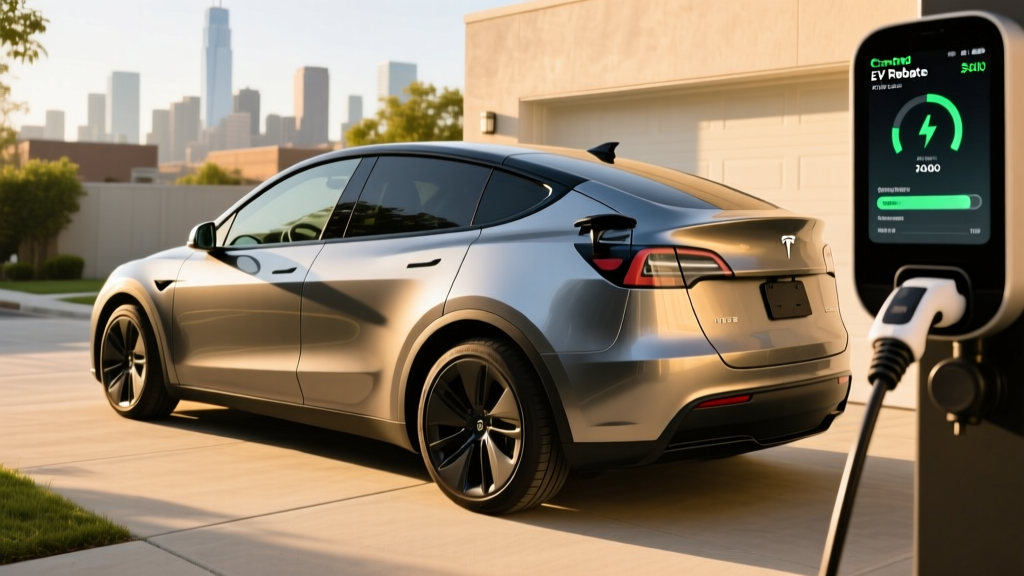
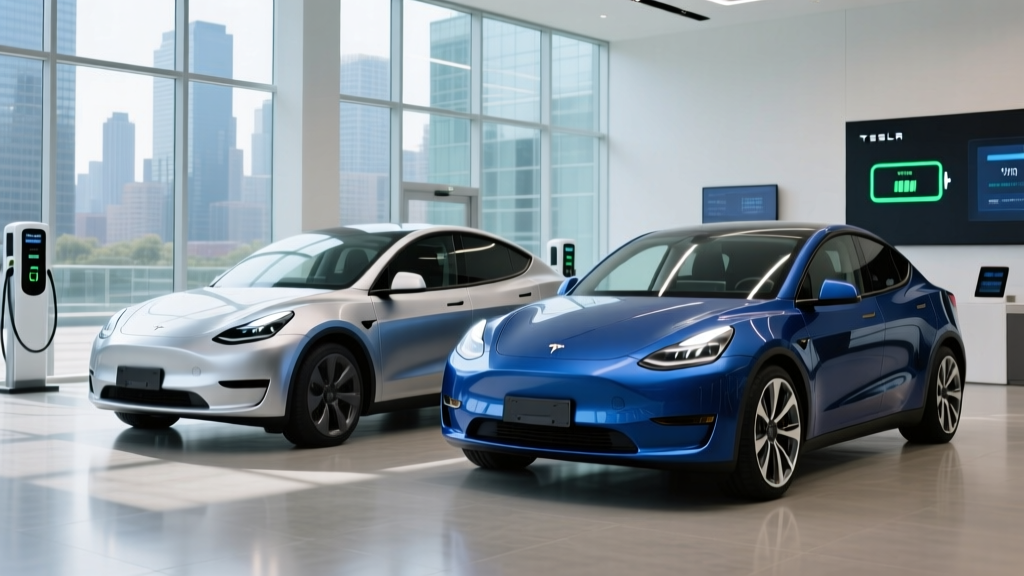
This profile covers the two models driving the bulk of Tesla sales volume: the Model Y (2026 Juniper refresh) and the Model 3 (Highland refresh). Both remain the default benchmark for efficiency, charging infrastructure access, and software integration. Below, we pair EPA sticker figures with real-world expectations so you can decide whether the numbers still justify the purchase.
2026 Tesla Model Y: Range, Battery, and Efficiency
The 2026 Model Y continues on the Juniper platform introduced for the 2025 model year, with a Long Range AWD variant leading sales volume. The Standard Range RWD trim uses an LFP (lithium iron phosphate) battery, while Long Range and Performance trims use NMC (nickel manganese cobalt) chemistry for higher energy density.
| Spec | Standard Range RWD | Long Range AWD | Performance AWD |
|---|---|---|---|
| EPA Range | 284 mi | 320 mi | 295 mi |
| Battery (usable) | ~60 kWh (LFP) | ~78 kWh (NMC) | ~78 kWh (NMC) |
| Drivetrain | RWD | Dual-Motor AWD | Dual-Motor AWD |
| Horsepower | 295 hp | 384 hp | 456 hp |
| 0-60 mph | 6.5 sec | 4.8 sec | 3.5 sec |
| Efficiency (MPGe) | 129 MPGe | 122 MPGe | 111 MPGe |
| kWh/100 mi | 26 | 28 | 30 |
| Cargo (rear seats up) | 30.2 cu ft (76 cu ft folded) | ||
| Frunk | 4.1 cu ft | ||
| Rear Legroom | 40.5 in | ||
Charging Speed: DC Fast, Level 2, and the Supercharger Advantage
Charging remains Tesla's strongest ownership moat, even as the NACS connector opens to rivals. The 2026 Model Y Long Range peaks at 250 kW on V3 Superchargers, though sustained rates taper meaningfully above 60% state of charge — a characteristic of the charge curve every buyer should understand.
| Charging Level | Power | Miles Added per Hour | Notes |
|---|---|---|---|
| Level 1 (120V household) | ~1.4 kW | ~4 mi/hr | Emergency/trickle only |
| Level 2 (240V Wall Connector) | 11.5 kW | ~44 mi/hr | Full overnight charge in ~8 hrs |
| DC Fast (V3 Supercharger) | Peak 250 kW | ~175 mi in 15 min | 10-80% in ~25 min |
| DC Fast (V4 Supercharger) | Peak 250 kW | Similar to V3 | CCS/NACS-native cabinet |
The 10-80% DC fast-charge time of roughly 25 minutes is competitive but no longer class-leading. The Hyundai Ioniq 5 and Kia EV6 on 800V architectures can achieve 10-80% in approximately 18 minutes at 350 kW chargers. However, Tesla's Supercharger network reliability — consistently above 95% uptime per U.S. DOE and third-party audits — offsets the peak-speed deficit for road-trippers.
Pricing, Trims, and Federal Tax Credit Eligibility
Tesla has repriced the Model Y multiple times over the last two years in response to shifting demand and incentive structures. Below are 2026 MSRP figures before destination, plus potential federal credit outcomes under current IRS §30D rules.
| Trim | Base MSRP | §30D Credit Potential | Effective Price |
|---|---|---|---|
| Standard Range RWD | $44,990 | Up to $7,500 | ~$37,490 |
| Long Range AWD | $48,990 | Up to $7,500 | ~$41,490 |
| Performance AWD | $53,990 | Up to $7,500 | ~$46,490 |
Critical §30D caveats (per IRS.gov):
- MSRP cap: SUVs like the Model Y must be below $80,000 — all trims qualify.
- Income cap: Modified AGI ≤ $150,000 (single), $225,000 (head of household), $300,000 (joint).
- Battery sourcing: Critical minerals and component rules phase in annually; the full $7,500 requires meeting both thresholds. Partial credit ($3,750) may apply if only one is met.
- Point-of-sale transfer: Eligible buyers can apply the credit at purchase, reducing out-of-pocket cost immediately.
Tesla's U.S.-built Fremont and Austin vehicles have historically qualified for at least partial credit, but the exact amount depends on the battery's supply-chain composition at time of delivery. Always verify eligibility via the IRS VIN lookup tool before signing.
Technology, Driver Assistance, and Interior
The Model Y's cabin is minimalist by design: a single 15.4-inch center touchscreen handles infotainment, climate, and vehicle controls. There is no traditional instrument cluster — speed and navigation appear on the main display. The Juniper refresh added ambient lighting, ventilated front seats, power-folding second row, and a rear 8-inch screen for passengers.
Standout tech includes:
- Over-the-air software updates adding features post-purchase
- Sentry Mode dashcam recording with cloud alerts
- Dog Mode, Camp Mode, and theater-style media streaming
- Tesla Vision (camera-only ADAS, no radar or LiDAR)
- Phone-as-key with Bluetooth proximity
Notable drawbacks: The camera-only Tesla Vision system has drawn NHTSA scrutiny for phantom braking events. Panel gap consistency has improved but still lags German rivals. No Apple CarPlay or Android Auto — Tesla's proprietary OS is the only option. Turn-signal stalks were removed on refreshed models, replaced by steering-wheel buttons that some drivers find unintuitive.
Warranty and Long-Term Ownership
Tesla's warranty structure is competitive with the EV segment standard:
- Basic vehicle: 4 years / 50,000 miles
- Battery & drive unit (Long Range/Performance): 8 years / 120,000 miles
- Battery & drive unit (Standard Range LFP): 8 years / 100,000 miles
- Capacity retention threshold: 70% minimum during warranty period
LFP batteries in the Standard Range trim typically show slower degradation than NMC — often retaining 90%+ capacity after 100,000 miles based on fleet telemetry data. NMC packs average 5-10% loss over the same interval. Out-of-warranty battery replacement costs range from $12,000 to $16,000 depending on pack size, though full replacements remain rare before 150,000 miles.
Who Should Buy the Tesla Model Y in 2026?
- You road-trip frequently and value Supercharger network reliability
- You want OTA software updates that add features over time
- Efficiency (kWh/100 mi) is a top priority for lower charging costs
- You need crossover cargo space with a usable frunk
- You prefer physical controls and a traditional instrument cluster
- You want faster 800V DC charging at 350 kW stations
- Apple CarPlay / Android Auto integration is non-negotiable
- Build quality and panel consistency are dealbreakers
2026 Tesla Model 3 Highland: Quick Comparison
The Model 3 sedan remains Tesla's entry point and a strong value play. The Highland refresh brought a stiffer chassis, improved ride comfort, ventilated seats, rear touchscreen, and subtle exterior revisions. Long Range AWD delivers an EPA 341 miles from a ~75 kWh NMC pack, with efficiency reaching 132 MPGe combined. Base MSRP starts at $38,990 for the RWD Standard Range (LFP, EPA 272 mi). The Model 3 qualifies for the same §30D credit framework, subject to the $55,000 sedan MSRP cap — all current trims clear it.
- Class-leading efficiency and real-world range per kWh
- Supercharger network reliability for road trips
- Strong OTA update cadence adds post-purchase value
- Spacious cargo area and optional 7-seat Model Y
- Competitive pricing after tax credit
- DC fast-charge peak 250 kW lags 800V rivals at 350 kW
- Camera-only ADAS has drawn NHTSA scrutiny
- No Apple CarPlay / Android Auto
- Turn-signal stalk removal divides drivers
- Insurance premiums run 15-25% above segment average
Frequently Asked Questions
What is the real-world range of the 2026 Tesla Model Y?
EPA rates the Long Range AWD at 320 miles. Real-world highway driving at 75 mph typically yields 260-280 miles; sub-freezing winter weather can drop that to 220-240 miles. Standard Range LFP owners should expect ~230 miles highway in mild conditions.
How fast does the Model Y charge at home and on the road?
At home on a 240V Tesla Wall Connector (11.5 kW), the Model Y adds ~44 miles per hour, fully charging overnight. On V3 Superchargers, peak 250 kW delivers 10-80% in approximately 25 minutes, though the charge curve tapers significantly above 60% SoC.
How much does the Model Y cost after the federal tax credit?
With the full $7,500 §30D credit applied at point of sale, the Standard Range RWD drops to ~$37,490 and the Long Range AWD to ~$41,490. Eligibility depends on buyer income caps, MSRP limits, and battery sourcing rules — verify via the IRS VIN tool.
Does the Model Y qualify for the federal EV tax credit?
Yes, all 2026 Model Y trims fall under the $80,000 SUV MSRP cap. However, the actual credit amount ($0, $3,750, or $7,500) depends on battery critical-mineral and component sourcing at time of delivery, plus buyer income limits. Consult a tax professional for personal eligibility.
Is the Tesla Model Y worth buying vs. the Hyundai Ioniq 5 or Ford Mach-E?
The Model Y wins on efficiency, Supercharger access, and software integration. The Ioniq 5 charges faster at 350 kW stations (10-80% in ~18 min) and offers Apple CarPlay. The Mach-E provides a more traditional cabin layout. Choose based on which trade-offs — charging speed, UI preference, network access — matter most for your driving pattern.
Are Tesla sales declining in 2026?
Tesla's U.S. market share has compressed from ~65% in 2022 to roughly 45-50% in 2026 as rivals launch competitive EVs. However, absolute unit sales remain high due to overall EV market growth, and the Model Y continues to rank among the best-selling vehicles (gas or electric) in the U.S.