The California EV Benchmark: 2026 Tesla Model Y
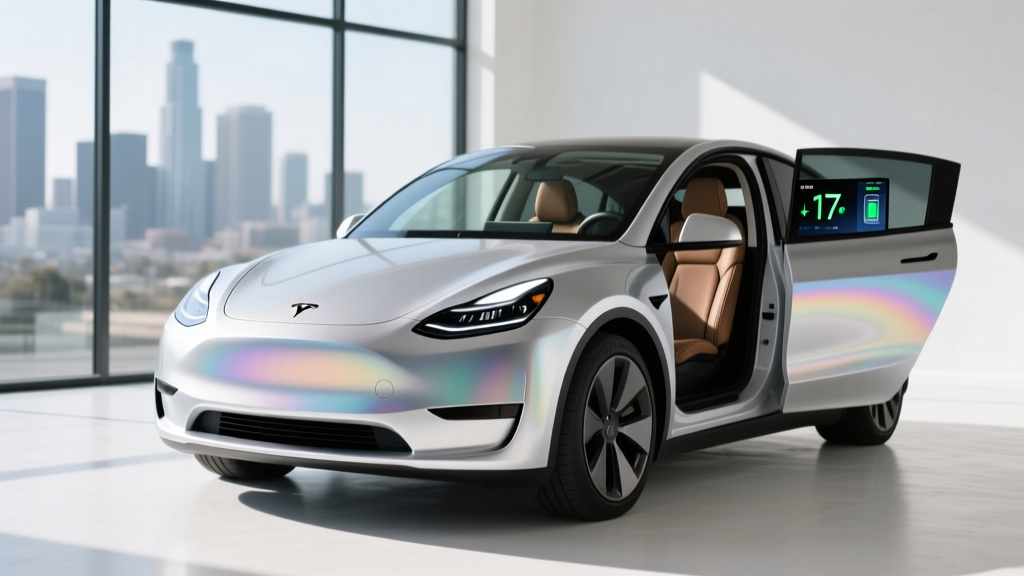
California accounts for roughly 40% of all U.S. EV registrations, and Tesla sales in California continue to anchor that dominance. The 2026 Model Y Long Range AWD remains the brand's highest-volume seller in the state — and for good reason. With a refreshed design, NACS-native Supercharger access, and sustained software support, it sets the template that rivals like the Hyundai Ioniq 5, Ford Mustang Mach-E, and Chevrolet Equinox EV are still chasing. This review breaks down the exact specs, real-world range, charging behavior, and ownership economics you need before signing a purchase agreement.
Range, Efficiency, and the Real-World Reality Check
Real-World Expectation: ~265–285 miles at sustained 70–80 mph highway speeds; ~230–250 miles in freezing temperatures with cabin heat active. City/regenerative driving can push 300+ miles.
The 2026 Model Y Long Range AWD carries an EPA-estimated 320 miles of range from its 78.1 kWh usable battery pack (NMC chemistry). Efficiency lands at 122 MPGe combined, or roughly 28 kWh/100 miles, according to fueleconomy.gov. That's competitive with the segment but not class-leading — the Ioniq 5 achieves 114 MPGe with a slightly smaller battery but lighter curb weight.
Tesla's thermal management system remains an advantage in cold climates. The heat pump (standard on all trims) reduces cabin-heating energy draw compared to resistive heaters, limiting cold-weather range loss to roughly 20–25% rather than the 30–40% seen in older EVs without heat pumps. Still, if you commute over the Tehachapi pass in January, plan for 240–250 miles of usable range and precondition the battery before fast-charging stops.
Charging Speed: DC Fast, Level 2, and Supercharger Access
| Charging Level | Power / Rate | Speed / Time |
|---|---|---|
| DC Fast Charge (Peak) | 250 kW (Supercharger V3) | 10–80% in ~22 minutes |
| DC Sustained (Avg 10–80%) | ~160–180 kW avg | Charge curve tapers sharply above 80% |
| Level 2 (Home / Destination) | 11.5 kW (48A onboard) | ~37 miles of range per hour |
| Level 1 (120V Outlet) | ~1.4 kW | ~4–5 miles per hour (emergency only) |
The Model Y's peak 250 kW DC fast-charge rate hasn't changed for 2026, and that's a genuine limitation. Competitors like the Hyundai Ioniq 5 and Kia EV6 use 800V architectures enabling 350 kW peak charging, achieving 10–80% in roughly 18 minutes under ideal conditions. The Model Y's 400V architecture caps it at 250 kW, and real-world charging curves show it holds peak rate only briefly before tapering. Expect a typical 10–80% session to average 160–180 kW — still fast, but not segment-leading.
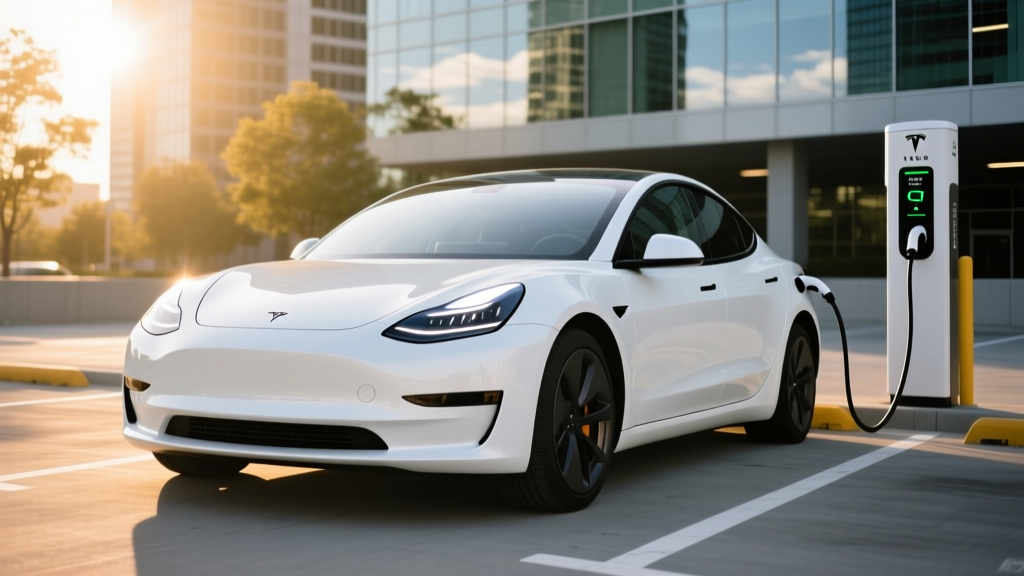
Where Tesla retains a massive edge: the Supercharger network. With over 20,000 V3 and V4 stalls across the U.S. and native NACS integration (no adapter needed), Tesla owners experience far fewer broken-charger or payment-app frustrations than CCS-dependent owners. For California road-trippers running the I-5 corridor or heading to Tahoe, this reliability matters more than peak kW specs.
Performance and Drivetrain
The 2026 Model Y Long Range AWD uses a dual-motor setup with a permanent-magnet rear motor and an induction front motor (which can freewheel to reduce drag under light-load cruising). Combined output is approximately 384 horsepower and 376 lb-ft of torque.
- 0–60 mph: 4.8 seconds (Long Range AWD)
- Drivetrain: Dual-motor AWD with torque vectoring
- Top Speed: 135 mph (electronically limited)
The Performance trim drops the 0–60 to 3.5 seconds with 510 hp, but at a $5,000 premium and a 20-mile range penalty. For most California commuters, the Long Range offers the right balance — it's quick enough for freeway merges and doesn't sacrifice efficiency for straight-line numbers you'll rarely use.
Pricing, Tax Credits, and the California Incentive Stack
| Trim | Base MSRP | Est. Federal Credit (§30D) | Est. After Credit |
|---|---|---|---|
| Long Range AWD | $44,990 | Up to $7,500* | ~$37,490* |
| Performance AWD | $49,990 | Up to $7,500* | ~$42,490* |
*Federal §30D credit eligibility depends on buyer income caps ($150K single / $300K joint MAGI), MSRP caps ($55K for SUVs — both trims qualify), and critical-mineral/battery-component sourcing requirements that change annually. The credit can now be transferred at point-of-sale as a discount. Confirm current-year rules at IRS.gov before purchase.
California buyers also benefit from state-level incentives. The Clean Vehicle Rebate Project (CVRP) has been restructured under recent legislation, and utilities like PG&E, SCE, and SDG&E offer their own rebates ($500–$1,500 depending on program). Combined with federal credits, a Long Range Model Y can effectively land in the mid-$30K range — a price point that competes directly with well-equipped gas-powered compact SUVs once fuel savings are factored in.
Interior, Cargo, and Technology
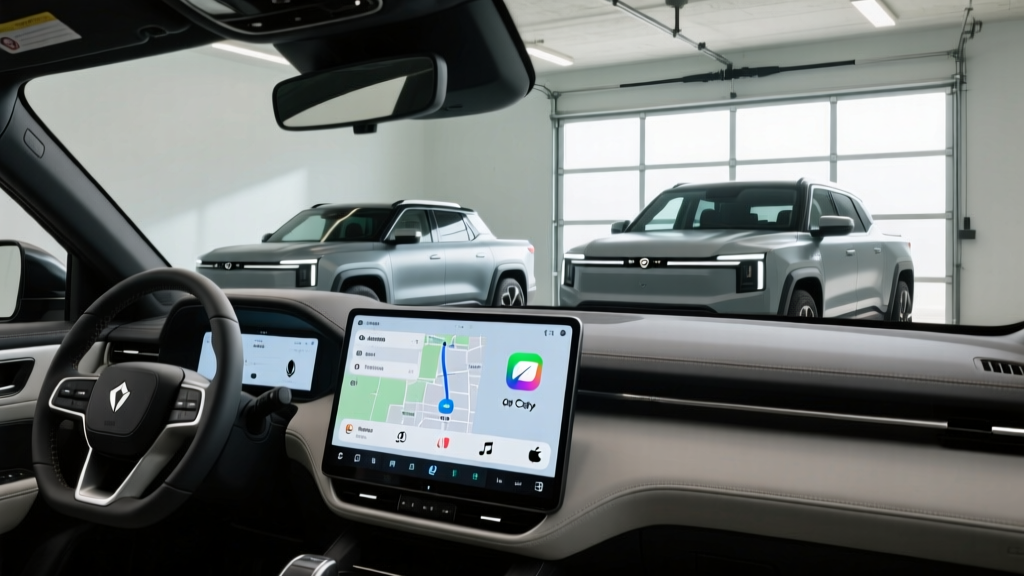
The 2026 refresh brought a quieter cabin (acoustic glass all around), ventilated front seats, and a second-row touchscreen for rear passengers. The minimalist interior remains polarizing — no physical stalks (turn signals are steering-wheel buttons), no instrument cluster — but the 15.4-inch center touchscreen handles everything with responsive, phone-like performance.
- Cargo Volume: 30.2 cu ft (rear seats up) / 72.1 cu ft (rear seats folded)
- Frunk: 4.1 cu ft (fits a carry-on or charging cables)
- Legroom: 41.8 in (front) / 39.5 in (rear)
- Towing: 3,500 lbs (with tow package)
Autopilot comes standard and includes Traffic-Aware Cruise Control and Autosteer (SAE Level 2). Full Self-Driving (Supervised) remains a $8,000 option or $99/month subscription — and despite the name, it is still a Level 2 driver-assist system requiring active supervision. NHTSA continues to monitor Tesla's FSD deployment, and buyers should not confuse marketing terminology with SAE Level 4 autonomy. No production Tesla is self-driving.
Warranty and Long-Term Ownership
- Basic Vehicle: 4 years / 50,000 miles
- Battery & Drive Unit: 8 years / 120,000 miles (Long Range AWD) — retains at least 70% capacity
- Roadside Assistance: 4 years / 50,000 miles
The 8-year/120,000-mile battery warranty is competitive but not class-leading — Hyundai offers 10 years/100,000 miles. Tesla's NMC packs historically show 10–12% degradation at 100,000 miles based on fleet data, well within the 70% retention threshold. For California's moderate climate, degradation tends to be on the lower end of that range thanks to less extreme thermal cycling.
Pros, Cons, and the Bottom Line
Pros
- Best-in-class Supercharger network reliability
- 320-mile EPA range with strong real-world highway efficiency
- Excellent software, OTA updates, and app integration
- Strong resale value relative to EV segment average
- Qualifies for full §30D credit under current rules
Cons
- 250 kW peak charge rate trails 800V competitors
- No physical controls (turn signals on wheel buttons frustrate some drivers)
- FSD (Supervised) is expensive and still Level 2 only
- Ride quality firm on 20-inch wheels over rough pavement
- Insurance premiums run 15–25% above segment average in CA
Who Should Buy the Model Y in California?
The 2026 Model Y Long Range AWD is the right pick if you need a practical family crossover with reliable fast-charging infrastructure for road trips up and down the West Coast. It's less ideal if you prioritize the fastest possible DC charging (look at Ioniq 5/EV6), want a traditional interior layout, or need a third row (consider the Kia EV9). Tesla sales in California persist because the total ownership package — range, Supercharger access, software, and resale — still adds up better than any single competitor's spec sheet alone.
Frequently Asked Questions
What is the real-world range of the 2026 Model Y?
Expect 265–285 miles on the highway at 70–80 mph and up to 300+ in city driving with regenerative braking. Cold weather drops usable range to roughly 230–250 miles. The EPA sticker says 320, but plan trips around 270 to avoid range stress.
How fast does the Model Y charge at home?
On a 48-amp Level 2 home charger (11.5 kW), the Model Y gains about 37 miles of range per hour. A full overnight charge from 20% to 80% takes roughly 5 hours. Most California owners on a time-of-use rate schedule charge between 12–6 AM for the lowest per-kWh cost.
Does the Model Y qualify for the $7,500 federal tax credit?
Under current §30D rules, yes — both trims fall under the $55K SUV MSRP cap. However, buyer income must not exceed $150K (single) or $300K (joint), and battery sourcing requirements must be met for the specific build month. The credit can be applied at point-of-sale. Always verify eligibility at IRS.gov or with a tax professional.
Is the Model Y worth buying over the Hyundai Ioniq 5?
It depends on your priorities. The Ioniq 5 charges faster (350 kW peak, ~18 min 10–80%), has a more conventional interior, and costs slightly less. The Model Y wins on Supercharger network reliability, cargo space, software polish, and California resale value. If road-trip charging reliability matters most, Tesla still has the edge.
Is Tesla FSD actually self-driving?
No. Full Self-Driving (Supervised) is an SAE Level 2 driver-assist system. You must keep your hands on the wheel and eyes on the road at all times. It can navigate highways, stop lights, and some city streets impressively, but the driver remains legally and practically responsible for the vehicle. True Level 4 autonomy (like Waymo's robotaxi) operates without a driver — Tesla does not offer this.