Quick Verdict: The Benchmark Sports Sedan, Still
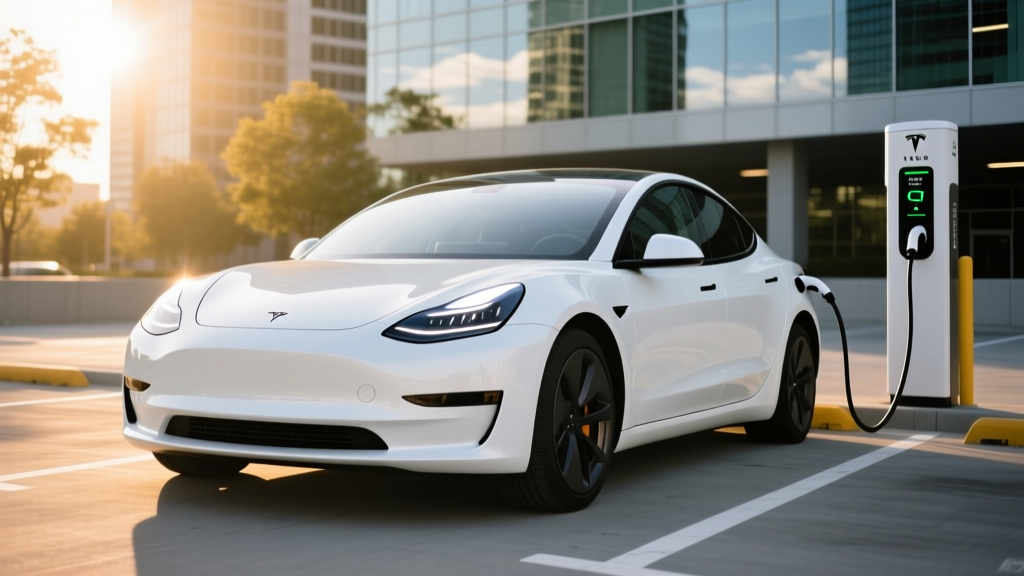
The Tesla Model 3 Performance has long been the default answer for anyone wanting a sports sedan that also happens to be electric. For 2025-2026, Tesla refreshed the platform with the "Highland" redesign, and the Performance variant received its own dedicated overhaul — new adaptive dampers, a track-ready front end, and the latest dual-motor powertrain pushing 510 horsepower. A white Model 3 Performance in Pearl White Multi-Coat remains one of the most-searched configurations, thanks to the paint's no-cost status and its ability to hide road grime better than darker hues.
But benchmarks don't stay unchallenged forever. The BMW i4 M50, Hyundai Ioniq 5 N, and Porsche Taycan all make compelling counterarguments. This review breaks down exactly what the white Model 3 Performance delivers — with the real numbers, the real limitations, and the real cost after incentives — so you can decide whether it still earns the top spot.
Specs at a Glance: 2025-2026 Tesla Model 3 Performance
| Spec | Value |
|---|---|
| EPA Range | 315 miles |
| Battery (usable) | ~82 kWh, NMC (nickel-manganese-cobalt) |
| Drivetrain | Dual-motor AWD |
| Horsepower | 510 hp |
| Torque | 546 lb-ft |
| 0-60 mph | 2.9 seconds |
| Top Speed | 163 mph |
| Max DC Fast Charge | 250 kW (peak) |
| 10-80% DC Charge | ~25 minutes |
| Level 2 Home Charging | 11.5 kW (~44 mi/hr) |
| Efficiency | 119 MPGe combined / 28 kWh/100 mi |
| Cargo Volume | 23 cu ft (trunk + frunk) |
| Rear Legroom | 35.2 inches |
| Battery Warranty | 8 years / 120,000 miles |
| Base MSRP | $54,990 (before incentives) |
Range & Efficiency: EPA vs. the Real World
EPA estimated: 315 miles. Expect approximately 260–285 miles in sustained highway driving at 70-80 mph. In cold weather (below 32°F), plan for 210–240 miles of usable range due to battery chemistry limitations and cabin heating load. City driving with regenerative braking can match or slightly exceed the EPA figure.
The Model 3 Performance uses an ~82 kWh usable NMC battery pack. Tesla's NMC chemistry offers higher energy density than LFP (lithium iron phosphate), which is how the Performance trim packs 315 EPA miles into a relatively compact sedan platform. The trade-off: NMC batteries prefer not to sit at 100% state of charge for extended periods. Daily charging to 80-90% is recommended, reserving 100% for road trips. This means your practical daily range is closer to 250-280 miles before you need to plug in.
Efficiency comes in at 119 MPGe combined per the EPA, or roughly 28 kWh per 100 miles. That's excellent for a 510-hp AWD performance sedan — the BMW i4 M50 returns a similar 109 MPGe combined while offering less range. Tesla's heat pump, standard on all current Model 3 variants, significantly reduces cold-weather energy consumption compared to resistive heating systems in older EVs.
One nuance that spec sheets hide: the Performance model's staggered 20-inch wheels and stickier summer tires reduce efficiency by roughly 5-8% compared to the Long Range trim's 19-inch setup. If maximum range matters more than cornering grip, the Long Range AWD (363 EPA miles) is the more pragmatic choice.
Charging Speed: DC Fast, Level 2, and the Curve Reality
| Charging Level | Power | Speed (miles added) | Notes |
|---|---|---|---|
| Level 1 (120V household) | ~1.4 kW | ~3-5 mi/hr | Emergency/trickle only |
| Level 2 (240V home) | 11.5 kW | ~44 mi/hr | Full charge overnight (~8 hrs) |
| DC Fast (Tesla Supercharger V3/V4) | 250 kW peak | ~170 mi in 15 min | 10-80% in ~25 min |
| DC Fast (CCS adapter, non-Tesla) | Up to 250 kW peak | Varies by station | CCS adapter sold separately |
The Model 3 Performance peaks at 250 kW on V3 and V4 Superchargers, but — and this is critical — that peak is sustained only between roughly 10% and 30% state of charge. Above 50%, the charge curve tapers progressively. By 80%, you're pulling closer to 60-70 kW. This is why the 10-80% time is ~25 minutes, not the ~15 minutes that peak-kW marketing might imply.
For home charging, the Model 3 Performance accepts up to 11.5 kW on a 48-amp Level 2 circuit (requiring a 60-amp breaker). A typical Wall Connector installation runs $500-$1,500 total (hardware plus electrician) if your panel has capacity. At 44 miles of range per hour, an overnight session from 20% to 80% adds roughly 190 miles — more than enough for any daily commute.
Preconditioning matters here: navigating to a Supercharger in the Tesla nav system automatically warms the battery, which can shave 5-10 minutes off your charging session in cold weather. Skipping preconditioning in winter can cut peak charge rates by 40-50%.
Tesla's NACS (North American Charging Standard) connector is now the industry standard, with Ford, GM, Rivian, and others adopting it. Model 3 Performance owners have access to over 25,000 Supercharger stalls in North America — still the most reliable DC fast-charging network by a significant margin, according to J.D. Power's EV charging satisfaction studies.
Performance & Driving Dynamics
The numbers are brutal in the best way: 510 horsepower, 546 lb-ft of torque, and a 2.9-second 0-60 mph time. That puts the Model 3 Performance in supercar-adjacent acceleration territory at a fraction of the cost. The dual-motor all-wheel-drive system provides torque vectoring that feels intuitive in wet and dry conditions alike.
The 2025-2026 Highland Performance refresh brought genuine chassis improvements. Tesla's new adaptive dampers (a first for Model 3) offer three settings — Comfort, Auto, and Sport — and the difference between them is tangible. Comfort mode absorbs highway expansion joints with surprising composure; Sport mode firms everything up for track-day duty. The new front subframe and revised steering ratio give the car a level of turn-in response that previous Model 3s lacked.
Track Mode remains exclusive to the Performance trim, allowing adjustable front/rear torque bias, adjustable regenerative braking levels, and simulated engine braking for circuit driving. It's a legitimate performance feature, not a marketing gimmick — owners regularly run club racing events at venues like Laguna Seca and Watkins Glen.
The trade-off: ride quality in Sport mode is firm enough to draw complaints on rough urban roads, and the 20-inch Pirelli P Zero tires generate noticeable road noise above 65 mph. Tesla improved cabin isolation significantly with the Highland redesign (acoustic glass, additional sound deadening), but it's still not as quiet as a BMW i4 at highway speeds.
Interior, Tech & Driver Assistance
The minimalist interior remains polarizing. Everything routes through a 15.4-inch center touchscreen — climate controls, glovebox release, mirror adjustment, wiper speed. The 2025-2026 refresh added a rear 8-inch touchscreen for passengers, ventilated front seats, ambient lighting, and a power-folding second row. Material quality is up, with woven textile dash accents and improved leatherette that feels closer to premium European competitors.
The infotainment system is Tesla's strongest interior asset. Navigation with real-time Supercharger routing, over-the-air updates that add features monthly, a full suite of streaming apps (Netflix, YouTube, Spotify), and a gaming platform that uses the actual steering wheel and pedals when parked. No other automaker matches Tesla's software ecosystem.
Autopilot comes standard and includes adaptive cruise control, lane-keeping assist, automatic emergency braking, and blind-spot monitoring. It is a SAE Level 2 driver-assistance system — meaning you must keep your hands on the wheel and eyes on the road at all times. Full Self-Driving (Supervised) is a $8,000 add-on that enables automated lane changes, navigation on Autopilot, and city-street assist, but it remains a Level 2 system requiring constant driver supervision. It is not autonomous driving.
Both Autopilot and FSD (Supervised) are SAE Level 2 systems. The driver is legally and practically responsible for all vehicle operation. FSD does not make the Model 3 a self-driving car. Treat it as an advanced cruise control and lane-centering aid that reduces fatigue on long trips — not a replacement for an attentive driver.
Pricing, Trims & Federal Tax Credit Eligibility
| Item | Cost |
|---|---|
| Base MSRP (Performance AWD) | $54,990 |
| Pearl White Multi-Coat paint | $0 (included) |
| Full Self-Driving (Supervised) | +$8,000 (optional) |
| Destination fee | $1,390 |
| As-tested (white, no FSD) | ~$56,380 |
| Federal §30D tax credit (if eligible) | Up to $7,500 |
| Effective price after max credit | ~$48,880 |
The white Model 3 Performance is one of the most value-optimized configurations Tesla offers because Pearl White Multi-Coat is a no-cost paint option. Every other color adds $1,000-$2,500. The $54,990 base MSRP sits under the IRS §30D MSRP cap of $55,000 for sedans, meaning it can qualify for the full $7,500 federal tax credit — but only if you meet all eligibility requirements.
- MSRP cap: Vehicle base price must be ≤ $55,000 for sedans (Model 3 qualifies)
- Buyer income cap: Modified AGI ≤ $150,000 (single), $225,000 (head of household), $300,000 (joint)
- Battery sourcing: Critical minerals and battery components must meet phased-in domestic/free-trade sourcing thresholds (verify current-year compliance on IRS.gov before purchase)
- Point-of-sale transfer: As of 2024+, you can transfer the credit to the dealer at purchase for an immediate price reduction rather than claiming it on your tax return
- Assembly: Vehicle must undergo final assembly in North America (Model 3 is built in Fremont, CA and Austin, TX — qualifies)
Rules change frequently. Consult a tax professional and check IRS.gov for current-year requirements before purchasing.
If you exceed the income cap or the battery-sourcing requirements shift, the credit may be reduced to $3,750 (critical minerals portion only) or eliminated entirely. State incentives vary widely — California's CVRP program, Colorado's state credit, and various utility rebates can stack on top. Check your state's energy office for current programs.
How It Compares: Model 3 Performance vs. the Competition
| Spec | Tesla Model 3 Perf. | BMW i4 M50 | Hyundai Ioniq 5 N |
|---|---|---|---|
| EPA Range | 315 mi | 227 mi | 221 mi |
| 0-60 mph | 2.9s | 3.7s | 3.25s |
| Horsepower | 510 hp | 536 hp | 641 hp (N Grin Boost) |
| Max DC Charge | 250 kW | 205 kW | 240 kW |
| Base MSRP | $54,990 | $69,900 | $66,000 |
| Charging Network | Supercharger (native) | CCS (EA, etc.) | NACS adapter / CCS |
| Tax Credit (§30D) | Eligible (up to $7,500) | Not eligible (MSRP cap) | Eligible (up to $7,500) |
✅ Pros
- Best-in-class range (315 mi EPA) for a performance EV sedan
- 2.9s 0-60 at a sub-$55K price point is unmatched
- Supercharger network access — still the gold standard for reliability
- Over-the-air updates continuously add features
- White paint is no-cost and hides dirt well
- Eligible for full $7,500 federal tax credit (if buyer qualifies)
- Low center of gravity, excellent handling balance with new adaptive dampers
- Minimal maintenance — no oil, no transmission fluid, brake pads last 100K+ miles
❌ Cons
- Everything through the touchscreen — no physical climate or volume controls
- Road noise on 20-inch tires at highway speed
- Rear seat legroom (35.2") is tight for taller passengers
- FSD ($8,000) remains Level 2 — expensive for what it delivers
- No Apple CarPlay or Android Auto
- Firm ride in Sport mode on rough roads
- Insurance premiums run 15-25% higher than comparable gas sedans
- Panel gaps and paint quality still inconsistent on some deliveries
Who Should Buy the White Model 3 Performance?
Decision Framework
Choose the Model 3 Performance if: You want the best combination of acceleration, range, and charging infrastructure in a sub-$55K sedan. You primarily drive in urban/suburban environments with occasional road trips. You value software features and OTA updates. You have access to home Level 2 charging.
Choose the BMW i4 M50 instead if: Interior material quality, physical controls, and traditional dealership service matter more to you than range or price. You're willing to pay $15K more for a premium cabin and don't mind lower EPA range.
Choose the Ioniq 5 N instead if: You want a track-focused EV with the most engaging driving experience (simulated gear shifts, aggressive regen), and you prefer crossover styling over a sedan.
Choose the Model 3 Long Range instead if: You want maximum range (363 mi EPA) and a softer ride, and you can live with 346 hp instead of 510 hp.
The white Model 3 Performance is ideal for the tech-forward commuter who wants supercar acceleration, can charge at home, and regularly drives 30-80 miles round-trip. It's also a strong road-trip vehicle thanks to Supercharger density — a coast-to-coast drive is entirely feasible with 20-25 minute charging stops every 200-250 miles. It's less ideal as a primary family hauler: rear-seat space is modest, and a second child seat makes the back feel cramped.
Ownership Costs & Warranty
Tesla covers the Model 3 Performance with a 4-year/50,000-mile basic warranty and an 8-year/120,000-mile battery and drive unit warranty. The battery warranty guarantees the pack will retain at least 70% of its original capacity during the coverage period. Based on Tesla's own fleet data and third-party tracking, Model 3 batteries typically degrade 8-12% over the first 100,000 miles — well within the warranty threshold.
Long-term battery replacement cost (out of warranty) is estimated at $12,000-$16,000 for the NMC pack, though very few owners have needed this. The larger ownership advantage is maintenance: no oil changes, no spark plugs, no transmission fluid, and regenerative braking extends brake pad life to 100,000+ miles in typical driving.
Insurance is the hidden cost. Expect annual premiums of $2,200-$3,200 depending on your state, driving record, and coverage level — roughly 15-25% more than a comparable gasoline sports sedan. Tesla Insurance is available in some states and can be competitive, but shop multiple quotes.
Charging cost at home (national average of $0.16/kWh) works out to roughly $0.045 per mile. Compare that to a BMW M3 at ~$0.18/mile on premium gasoline. Over 15,000 annual miles, that's a fuel savings of approximately $2,000 per year — or $10,000 over five years.
Frequently Asked Questions
What is the real-world range of the white Model 3 Performance?
The EPA rates it at 315 miles, but real-world highway driving at 70-80 mph typically yields 260-285 miles. In winter conditions below freezing, expect 210-240 miles. City driving with regenerative braking can match or exceed the EPA estimate.
How fast does the Model 3 Performance charge at home and on the road?
At home on a 240V Level 2 charger (48A), it adds about 44 miles of range per hour, fully recharging overnight in roughly 8 hours. On a Tesla V3/V4 Supercharger, it peaks at 250 kW and charges from 10% to 80% in approximately 25 minutes.
Does the white Model 3 Performance qualify for the $7,500 federal tax credit?
It can. The $54,990 MSRP is under the $55,000 sedan cap, and it's assembled in North America. However, you must also meet income limits ($150K single / $300K joint), and the battery must meet current-year critical mineral and component sourcing thresholds. Always verify on IRS.gov before purchasing, as sourcing rules update periodically.
Is the white paint worth it, or should I pay for another color?
Pearl White Multi-Coat is a no-cost option and is among the most practical choices — it hides dust, water spots, and light scratches better than black or gray. It also tends to have slightly better resale value due to broader buyer appeal. If you want a premium look, Ultra Red ($2,500) and Quicksilver ($2,000) are popular upgrades, but white is the smart financial pick.
Is the Model 3 Performance worth it over the Long Range trim?
If you value the adaptive dampers, Track Mode, staggered 20-inch wheels, and 510 hp, the ~$7,000 premium over the Long Range is justified. If you primarily commute and want maximum range (363 miles EPA) with a softer ride, the Long Range is the better daily driver. The Performance trim is for drivers who'll actually use the chassis and powertrain capabilities.
How does the Supercharger network compare to other charging networks?
Tesla's Supercharger network remains the most reliable DC fast-charging infrastructure in North America, with over 25,000 stalls and uptime rates consistently above 99%. Non-Tesla networks (Electrify America, EVgo, ChargePoint) have improved but still report higher rates of offline or malfunctioning chargers. With the industry's shift to NACS, the Supercharger network is opening to other brands, which may increase wait times at popular corridors over time.