If you own a Tesla—or are considering one—you've likely encountered the term Tesla Safety Score. Originally introduced as part of Tesla's Insurance program and later tied to Full Self-Driving (Supervised) beta access, the Safety Score remains one of the most scrutinized metrics in the EV world. But what does it actually measure, how is it calculated, and does it meaningfully affect your wallet in 2026?
This guide breaks down the Tesla Safety Score system, connects it to real-world insurance implications, and examines Tesla's actual crash-test safety ratings from the NHTSA and IIHS. We'll also cover the vehicles these scores apply to, including range, charging, and ownership costs—because safety doesn't exist in a vacuum.
What Is the Tesla Safety Score and How Is It Calculated?
The Tesla Safety Score is a proprietary metric that evaluates driver behavior using telemetry data collected from the vehicle's sensors, cameras, and driving computer. Initially rolled out to qualify drivers for FSD Beta access in 2021, it later became the backbone of Tesla Insurance pricing in states where Tesla offers its own coverage.
The score ranges from 0 to 100, with 100 being the safest. Tesla evaluates five core categories:
- Forward Collision Warning – How often the vehicle's FCW system activates per 1,000 miles (sensitivity set to high by default).
- Hard Braking – Instances of aggressive deceleration exceeding a defined g-force threshold.
- Aggressive Turning – Lateral g-force events during cornering.
- Unsafe Following – Time spent following another vehicle too closely, measured via the forward camera and radar/occupancy network.
- Forced Autopilot Disengagement – Whether the driver ignores hands-on-wheel warnings or other alerts requiring Autopilot to disengage.
Each trip generates a trip score; your overall Safety Score is a weighted rolling average, typically over the last 30 days. In 2026, Tesla has refined the algorithm to account for contextual factors like weather and traffic density, though the company does not publish exact weighting formulas.
Tesla Safety Score and Insurance: The Real Cost Impact
Tesla Insurance—available in states including California, Texas, Arizona, Ohio, Illinois, and others—uses the Safety Score as a primary pricing factor. Unlike traditional insurers that rely on demographic proxies (age, ZIP code, credit score), Tesla Insurance prices based on how you actually drive.
Here's what real-world Tesla owners have reported in 2025–2026:
| Safety Score Range | Estimated Monthly Premium | Compared to Traditional Insurer |
|---|---|---|
| 95–100 | $85–$120 | 30–50% lower |
| 85–94 | $130–$180 | Comparable |
| 70–84 | $190–$260 | 10–20% higher |
| Below 70 | $280+ | Significantly higher |
Note: Premiums vary by state, vehicle model, coverage level, and driving history. These figures are illustrative estimates based on owner reports, not official Tesla quotes. Always obtain a personalized quote.
The key takeaway: if you consistently score above 90, Tesla Insurance can be materially cheaper than traditional carriers. If you score below 80—perhaps due to city driving with frequent hard-braking events—you may pay more than you would with GEICO, Progressive, or State Farm.
Tesla Crash-Test Ratings: NHTSA and IIHS Safety Scores
The Tesla Safety Score measures driver behavior, but the vehicle's actual crashworthiness is evaluated independently by the National Highway Traffic Safety Administration (NHTSA) and the Insurance Institute for Highway Safety (IIHS).
NHTSA Ratings (2025–2026 Models)
Tesla's current lineup has historically earned top marks from NHTSA:
- Model 3 (2025–2026 Highland refresh): 5-Star Overall Rating
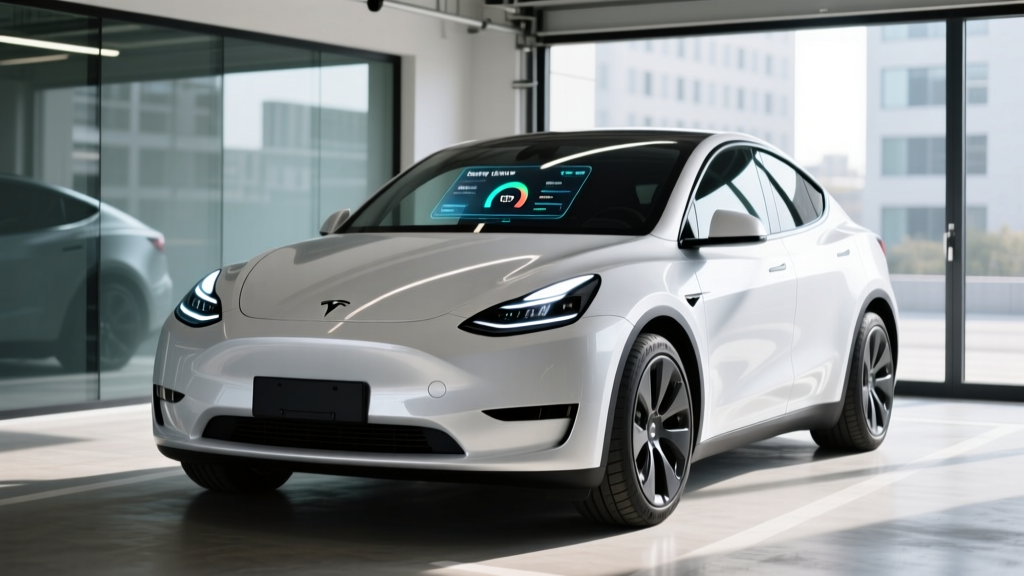
- Model Y (2025–2026 Juniper refresh): 5-Star Overall Rating
- Model S: 5-Star Overall Rating
- Model X: 5-Star Overall Rating
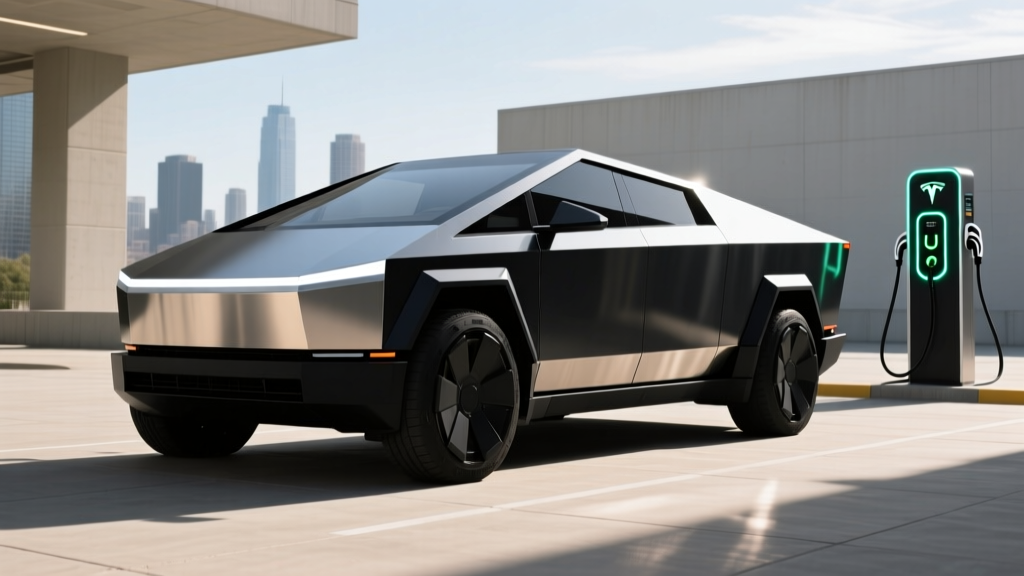
- Cybertruck: NHTSA testing ongoing; results expected mid-2026
The low center of gravity from the under-floor battery pack gives all Tesla models exceptional rollover resistance—a critical safety advantage over taller ICE vehicles and many SUVs.
IIHS Ratings
The IIHS has awarded the Model 3 its Top Safety Pick+ designation (the highest honor) for recent model years, citing superior crashworthiness and effective front crash prevention. The Model Y has also earned Top Safety Pick+ status. However, the IIHS has occasionally noted headlight performance on certain trims as an area for improvement.
Which Tesla Models Use the Safety Score? Key Specs at a Glance
The Safety Score applies to all Tesla vehicles equipped with the Tesla Vision hardware suite (HW3 or HW4). Here's how the current 2026 lineup stacks up on the specs that matter for daily ownership:
| Spec | Model 3 (Highland) | Model Y (Juniper) | Model S |
|---|---|---|---|
| EPA Range | 341 mi (LR AWD) | 320 mi (LR AWD) | 402 mi (LR) |
| Real-World Highway | ~285–305 mi | ~270–290 mi | ~340–365 mi |
| Battery (usable) | 75 kWh, NMC | 75 kWh, NMC | 100 kWh, NMC |
| Max DC Charge | 250 kW | 250 kW | 250 kW |
| 10–80% DC Time | ~25 min | ~27 min | ~30 min |
| Level 2 Home Rate | 11.5 kW (~44 mi/hr) | 11.5 kW (~44 mi/hr) | 11.5 kW (~34 mi/hr) |
| 0–60 mph | 4.2 sec (LR AWD) | 4.8 sec (LR AWD) | 3.1 sec (LR) |
| Horsepower | 346 hp | 384 hp | 670 hp |
| MPGe (combined) | 132 MPGe | 122 MPGe | 120 MPGe |
| Cargo (rear seats up) | 23 cu ft | 30 cu ft | 28 cu ft |
| Rear Legroom | 35.3 in | 40.5 in | 35.4 in |
| Base MSRP | $42,490 (RWD) | $44,990 (RWD) | $79,990 (LR) |
| Battery Warranty | 8 yr / 120,000 mi | 8 yr / 120,000 mi | 8 yr / 150,000 mi |
| Drivetrain | RWD or AWD dual-motor | RWD or AWD dual-motor | AWD dual-motor |
Sources: fueleconomy.gov, Tesla.com specifications (2026 model year). Real-world highway range assumes 70–75 mph sustained driving at moderate temperatures.
Federal Tax Credit Eligibility for Tesla Vehicles (2026)
Under IRS §30D rules, Tesla's most affordable models may qualify for up to $7,500 in federal tax credits, but eligibility depends on several factors that change yearly. Here's the current landscape:
| Model | Base MSRP | MSRP Cap Met? | Max Credit | Key Caveats |
|---|---|---|---|---|
| Model 3 RWD | $38,990 | ✅ Yes (under $55K sedan cap) | Up to $7,500 | LFP battery (CATL); critical-mineral sourcing determines partial or full credit |
| Model 3 LR AWD | $42,490 | ✅ Yes | Up to $7,500 | NMC battery; sourcing compliance varies by production batch |
| Model Y RWD | $44,990 | ✅ Yes (under $80K SUV cap) | Up to $7,500 | Battery sourcing rules apply; point-of-sale transfer available |
| Model Y LR AWD | $47,990 | ✅ Yes | Up to $7,500 | Same sourcing considerations |
| Model S / X | $79,990+ | ✅ Yes (under $80K SUV cap for X) | Model S: likely $0 (sedan cap $55K); Model X: up to $7,500 | Model S exceeds sedan MSRP cap; Model X qualifies as SUV |
Income caps for §30D (2026): Modified Adjusted Gross Income (MAGI) must not exceed $150,000 (single), $225,000 (head of household), or $300,000 (married filing jointly).
Critical minerals & battery sourcing: The credit is split into two $3,750 halves—one for critical-minerals sourcing and one for battery-component manufacturing. Tesla's North American battery production (via Panasonic at Gigafactory Nevada and other partnerships) generally satisfies the component requirement, but critical-mineral sourcing for NMC cathodes remains subject to evolving trade agreements. The RWD Model 3's LFP battery, sourced from CATL in China, has faced tighter scrutiny under these rules.
Point-of-sale transfer: As of 2024, buyers can transfer the credit to the dealer at purchase, receiving an immediate price reduction rather than waiting for a tax refund. This option is available for qualifying Tesla purchases in 2026.
Always verify eligibility at IRS.gov or consult a tax professional before relying on credit estimates.
Standout Tech, Driver Assistance, and Notable Drawbacks
Tech & Safety Features
- Tesla Vision: Camera-only perception system (no radar or ultrasonic sensors on current models). Powers Autopilot, FSD (Supervised), parking assist, and the Safety Score algorithm.
- Autopilot (standard): Traffic-Aware Cruise Control + Autosteer. SAE Level 2. Included on all trims.
- FSD (Supervised) – $8,000 or $99/month: Adds automatic lane changes, navigate-on-autopilot, traffic-light/stop-sign recognition, and autosteer on city streets. Still Level 2—driver must remain attentive.
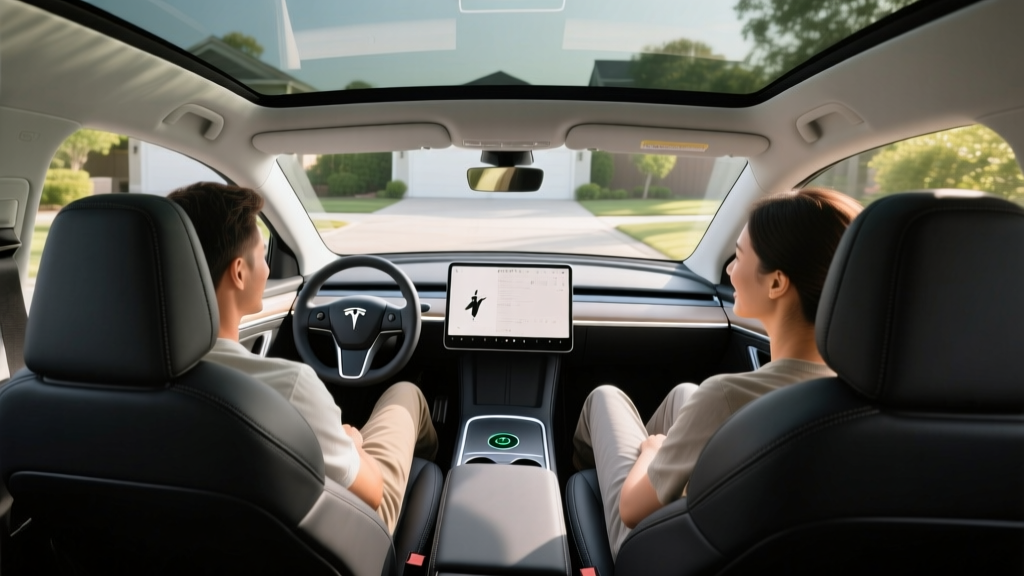
- Cabin camera monitoring: Ensures driver attention during Autopilot/FSD use; feeds into Safety Score.
- Over-the-air updates: Continuous safety-feature improvements delivered wirelessly.
- 15.4" center touchscreen (Model 3/Y Highland/Juniper): All vehicle controls, navigation, and media centralized.
- Sentry Mode & Dashcam: 360° recording when parked or driving; valuable for insurance claims.
Notable Drawbacks
- Camera-only limitations: Tesla Vision can struggle in heavy rain, fog, or direct sun glare—conditions where radar-equipped competitors (BMW iX, Hyundai Ioniq 5) may maintain better sensor reliability.
- No traditional instrument cluster: Speed and navigation info are displayed on the center screen only, which some drivers find distracting.
- Phantom braking: NHTSA has investigated reports of unexpected automatic emergency braking events in Tesla vehicles. While software updates have reduced frequency, it remains a known concern.
- FSD cost vs. capability: At $8,000, FSD (Supervised) is expensive for a Level 2 system that still requires full driver engagement.
- Insurance variability: In states without Tesla Insurance, traditional carriers often charge higher premiums for Teslas due to repair costs (aluminum body panels, proprietary parts).
✅ Pros
- Top-tier NHTSA 5-star and IIHS Top Safety Pick+ ratings
- Safety Score rewards good drivers with lower insurance
- Class-leading Supercharger network (17,000+ stalls in North America)
- Over-the-air safety improvements
- Low rollover risk from skateboard battery architecture
- Sentry Mode provides 24/7 vehicle surveillance
❌ Cons
- Camera-only system can be impaired by weather
- Phantom braking events under investigation
- High insurance costs with non-Tesla carriers
- No instrument cluster; center-screen-only speed display
- FSD (Supervised) is expensive for Level 2 capability
- Safety Score algorithm is opaque—drivers can't see exact weighting
Who Should Buy a Tesla Based on Safety and Ownership Profile?
Choose a Tesla if:
- You're a disciplined, attentive driver who will score 90+ on the Safety Score and benefit from lower Tesla Insurance premiums.
- You value top crash-test ratings and want a vehicle with best-in-class rollover protection.
- You have reliable home charging access (Level 2 installation) and want the convenience of the Supercharger network for road trips.
- You appreciate OTA updates that continuously improve safety features post-purchase.
Look elsewhere if:
- You drive primarily in heavy rain, fog, or snow where camera-only systems may be less reliable than radar-equipped alternatives like the Hyundai Ioniq 5, BMW iX, or Ford Mustang Mach-E.
- You live in a state without Tesla Insurance and your local carriers charge punitive premiums for Teslas.
- You want a traditional instrument cluster, physical buttons, or a more conventional driver-assist interface (GM Super Cruise, Ford BlueCruise).
- You're uncomfortable with the opacity of the Safety Score algorithm and its direct impact on your insurance costs.
Choose Model 3 if you want the lowest entry price, best efficiency (132 MPGe), and a sedan form factor ideal for commuting. After the $7,500 credit (if eligible), the RWD model effectively starts near $31,490.
Choose Model Y if you need cargo space (30 cu ft rear, 76 cu ft folded), rear legroom (40.5 in), and family practicality. It remains the best-selling EV in the U.S. for good reason.
Choose Model S only if you need 400+ miles of range, 670 hp performance, and premium luxury—accepting that the sedan MSRP cap likely eliminates the federal tax credit.
Frequently Asked Questions
What is the real-world range of a Tesla in 2026?
Real-world range depends on driving conditions. The Model 3 Long Range AWD (EPA 341 mi) typically delivers 285–305 miles on the highway at 70–75 mph and 310–330 miles in mixed city driving. In cold weather (below freezing), expect 240–275 miles unless you precondition the battery while plugged in. The Model Y Long Range (EPA 320 mi) averages 270–290 highway miles. The EPA's fueleconomy.gov site provides official figures for comparison.
How fast does a Tesla charge at home and on DC fast chargers?
On a Level 2 home charger (11.5 kW / 48A), the Model 3 and Model Y add approximately 44 miles of range per hour—a full overnight charge from 20% to 80% takes about 5–6 hours. On a 250 kW Supercharger (V3/V4), a 10–80% charge takes 25–30 minutes depending on battery temperature and state of charge. Note that charge speed tapers significantly above 80%—charging from 80–100% can take as long as 10–80%. Always precondition your battery by navigating to a Supercharger in the Tesla app before arriving.
Does Tesla qualify for the $7,500 federal EV tax credit?
Yes, but with conditions. The Model 3 and Model Y qualify under the §30D MSRP caps ($55,000 for sedans, $80,000 for SUVs/vans/trucks). Buyer income must fall under $150K single / $300K joint. Battery sourcing (critical minerals and component manufacturing) determines whether you receive the full $7,500 or a partial $3,750. The point-of-sale transfer option lets you apply the credit as an immediate discount at purchase. Always verify current rules at IRS.gov.
Is a Tesla worth buying vs. competitors like the Hyundai Ioniq 5 or Ford Mach-E?
Tesla's advantages are the Supercharger network (the most reliable DC fast-charging infrastructure in North America), OTA updates, and the Safety Score-linked insurance program. The Ioniq 5 offers faster 800V charging (up to 350 kW, 10–80% in ~18 min) and a more traditional interior with physical controls. The Mach-E provides BlueCruise (hands-free on approved highways, still Level 2) and a more conventional dealership service experience. If Supercharger access and software integration are your priorities, Tesla wins. If you value faster peak charging or a traditional cabin, the Ioniq 5 or Mach-E are strong alternatives.
What are the biggest pros and cons of Tesla's safety ecosystem?
Pros: Best-in-class crash-test ratings (NHTSA 5-star, IIHS Top Safety Pick+), low rollover risk, continuous OTA safety improvements, and insurance discounts for safe drivers via the Safety Score. Cons: Camera-only perception can be weather-sensitive, phantom braking remains a concern under NHTSA investigation, the Safety Score algorithm lacks transparency, and insurance from non-Tesla carriers is often expensive due to high repair costs.
Does a high Tesla Safety Score mean the car is self-driving?
No. The Safety Score measures driver behavior—smooth braking, safe following distances, attentive steering. Tesla's Autopilot and FSD (Supervised) are SAE Level 2 driver-assistance systems that require continuous human supervision. They are not autonomous. Only Level 4 services like Waymo operate without a human driver, and only within geofenced zones.