The Sacramento Tesla Buyer's Reality Check
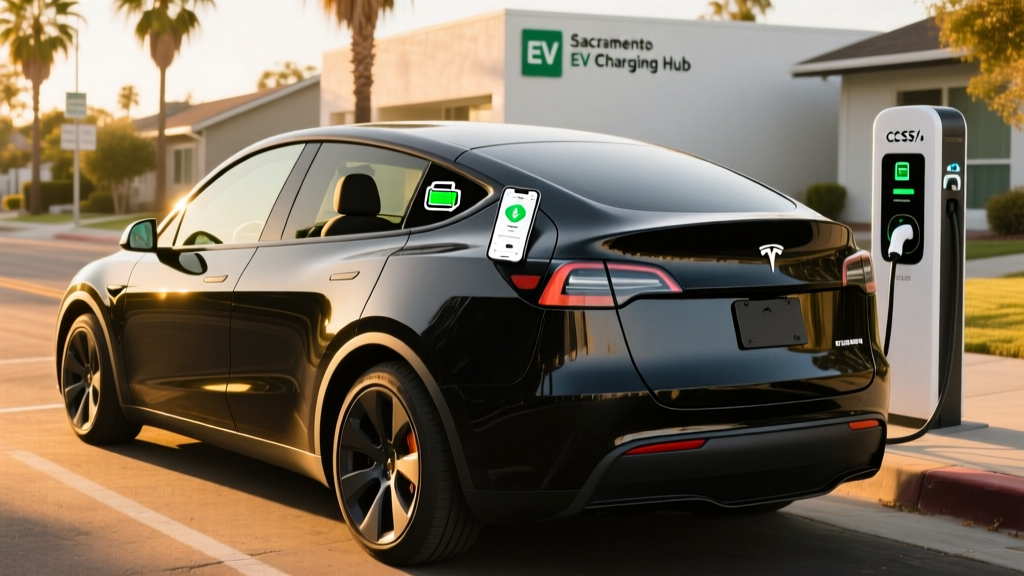
Walking into the Tesla store at Arden Fair Mall or ordering online for delivery at the Sacramento Service Center, the Model Y remains the best-selling EV in the United States for good reason. But Sacramento shoppers face specific realities: Central Valley summers push cabin temps past 110°F, Bay Area road trips demand honest highway range, and the $7,500 federal tax credit is far from guaranteed for every buyer. This review gives you the exact numbers — range, charging speed, pricing, and credit eligibility — so you can decide whether the Model Y fits your life in Northern California.
For 2026, the Model Y receives a significant refresh (internally dubbed "Juniper") with a redesigned interior, ambient lighting, ventilated front seats, a rear touchscreen, and improved acoustic glass. The powertrain lineup has been simplified, but the efficiency story remains compelling.
Model Y Specs: What Sacramento Buyers Need to Know
| Specification | Long Range AWD | Performance AWD |
|---|---|---|
| EPA Range | 320 miles | 298 miles |
| Battery (usable) | ~75 kWh, NMC | ~75 kWh, NMC |
| Drivetrain | Dual Motor AWD | Dual Motor AWD |
| Horsepower | 384 hp | 456 hp |
| 0–60 mph | 4.8 seconds | 3.5 seconds |
| Top Speed | 125 mph | 155 mph |
| Efficiency | 27 kWh/100 mi (120 MPGe) | 29 kWh/100 mi (111 MPGe) |
| Max DC Fast Charge | 250 kW (V3 Supercharger) | 250 kW |
| 10–80% DC Charge | ~27 minutes | ~27 minutes |
| Level 2 Home Charge | 11.5 kW (~44 mi/hr) | 11.5 kW (~44 mi/hr) |
| Cargo Volume | 30.2 cu ft (rear up) / 72.1 cu ft (folded) | 30.2 / 72.1 cu ft |
| Frunk | 4.1 cu ft | 4.1 cu ft |
| Rear Legroom | 41.6 inches | 41.6 inches |
| Towing Capacity | 3,500 lbs | 3,500 lbs |
| Battery Warranty | 8 yr / 120,000 mi | 8 yr / 120,000 mi |
| Base MSRP | $44,990 | $49,990 |
Source: EPA Fuel Economy, Tesla.com specifications.
Real-World Range: Sacramento Heat, Sierra Cold, and Highway Truth
Real-World Expectation: ~270–290 mi on mixed highway driving at 70 mph. Expect ~240–260 mi on I-80 eastbound to Tahoe in winter (cold + elevation). Sacramento summer heat (100°F+) typically costs 5–8% range due to cabin cooling, yielding ~295–305 mi.
Tesla's NMC (nickel-manganese-cobalt) battery chemistry delivers strong energy density but is more temperature-sensitive than LFP. During Central Valley summers, preconditioning the cabin while plugged in is essential — it preserves range and reduces battery stress. On the positive side, the Model Y's heat pump (standard since 2021) recovers waste heat efficiently, making winter range loss less severe than older EVs without one.
For Sacramento commuters running I-5 or Highway 50 daily, 320 EPA miles means charging once or twice a week at home, with plenty of buffer. The 200-mile round trip to San Francisco is trivial. But if you regularly drive to Lake Tahoe, Lassen, or Yosemite in winter, plan for a Supercharger stop — the Sierra Nevada elevation gain and cold sap both range and regenerative braking effectiveness.
Charging Speed: Superchargers, Home, and the Sacramento Network
| Charging Method | Power | Speed | Sacramento Context |
|---|---|---|---|
| Level 1 (120V outlet) | ~1.4 kW | ~3–5 mi/hr | Emergency only; not practical for daily use |
| Level 2 (240V, Wall Connector) | 11.5 kW | ~44 mi/hr | Full charge in ~7 hours; ideal for SMUD off-peak rates |
| DC Fast (V3 Supercharger) | 250 kW peak | 10–80% in ~27 min | Multiple Supercharger stations across Sacramento metro |
| DC Fast (CCS adapter at EA/others) | Up to 150–350 kW | Variable | Requires Tesla CCS adapter (included with newer deliveries) |
The 250 kW peak charge rate on V3 Superchargers is legitimate, but as with all EVs, the charge curve tapers significantly above 50–60% State of Charge (SoC). You will see 250 kW only in the 10–30% window; by 60%, you are closer to 100 kW, and above 80%, it drops to ~40 kW. This is physics — lithium-ion cells resist accepting high current at elevated SoC to prevent degradation.
For Sacramento home charging, the Tesla Wall Connector ($475) on a 60-amp circuit delivers the full 11.5 kW (48 amps continuous). Sacramento Municipal Utility District (SMUD) offers time-of-use rates where off-peak charging (overnight) can cost as little as $0.12/kWh, making a full 75 kWh charge roughly $9.00 — versus $55+ for a comparable gas fill-up at $4.50/gallon for a 25 MPG SUV.
Sacramento has robust Supercharger coverage: stations at Arden Fair, Natomas, Elk Grove, Folsom, and along I-80 in Roseville. The NACS (North American Charging Standard) connector, which Tesla pioneered and the industry has now widely adopted, means future access to Electrify America and other networks is expanding, though Tesla's own Supercharger network remains the most reliable for road trips.
Pricing, Trims, and the Federal Tax Credit Reality
| Trim | Base MSRP | Est. Destination | As-Tested (typical config) | §30D Credit Eligibility |
|---|---|---|---|---|
| Long Range AWD | $44,990 | $1,390 | $47,000–$52,000 | Potential $7,500 (see rules below) |
| Performance AWD | $49,990 | $1,390 | $52,000–$57,000 | Potential $7,500 (see rules below) |
The Model Y qualifies as an SUV under IRS rules (the MSRP cap for SUVs/vans/pickups is $80,000, versus $55,000 for sedans), so both trims clear the price ceiling. However, the full $7,500 federal tax credit under IRS §30D depends on multiple factors that change frequently:
- Buyer income caps: Modified AGI must not exceed $150,000 (single), $225,000 (head of household), or $300,000 (married filing jointly).
- Battery sourcing: A percentage of critical minerals and battery components must be sourced from the U.S. or free-trade-agreement countries. These thresholds increase annually and can disqualify vehicles mid-year.
- Point-of-sale transfer: Since 2024, you can transfer the credit to the dealer at purchase, reducing your out-of-pocket cost directly — but you must still meet income and sourcing requirements, and you will need to file IRS Form 8936 to reconcile.
Critical caveat: Tesla's battery supply chain has shifted multiple times. Some Model Y vehicles built at Giga Texas use LFP batteries (sourced from CATL in China), which may not meet critical-mineral requirements. Long Range and Performance models with NMC cells from Panasonic (Giga Nevada) have historically qualified more consistently. Always verify the specific VIN's eligibility on fueleconomy.gov before purchase, and consult a tax professional for your situation.
Technology, Autopilot, and the Sacramento Driving Experience
The 2026 Model Y refresh brings a cleaner interior with ambient lighting, ventilated front seats, power-folding second-row seats, and a rear 8-inch touchscreen for passengers. The 15.4-inch front touchscreen runs Tesla's latest software with improved navigation, trip planning with automatic Supercharger routing, and over-the-air updates.
For Sacramento driving, Autopilot excels on the monotonous stretches of I-5 and Highway 99, handling lane centering and adaptive cruise reliably. FSD Supervised adds automatic lane changes, navigation-based on/off-ramp handling, and city-street stop-light recognition — useful on complex Sacramento intersections, but it still requires constant supervision and occasionally makes conservative or erratic decisions in construction zones.
Notable tech strengths include the Tesla app's remote preconditioning (critical for Sacramento summers — cool the cabin before you walk out to the parking lot), Sentry Mode dashcam surveillance, and the Supercharger network's seamless plug-and-charge experience (no apps or RFID cards needed).
Drawbacks: The Model Y still lacks Apple CarPlay/Android Auto (Tesla uses its own ecosystem), the minimalist interior means no physical buttons for climate or mirrors (all touchscreen), and the panoramic glass roof, while beautiful, can make the cabin noticeably warm in 110°F Valley heat even with the tint — many Sacramento owners buy the aftermarket sunshade.
Model Y vs. the Competition: What Else Can You Buy?
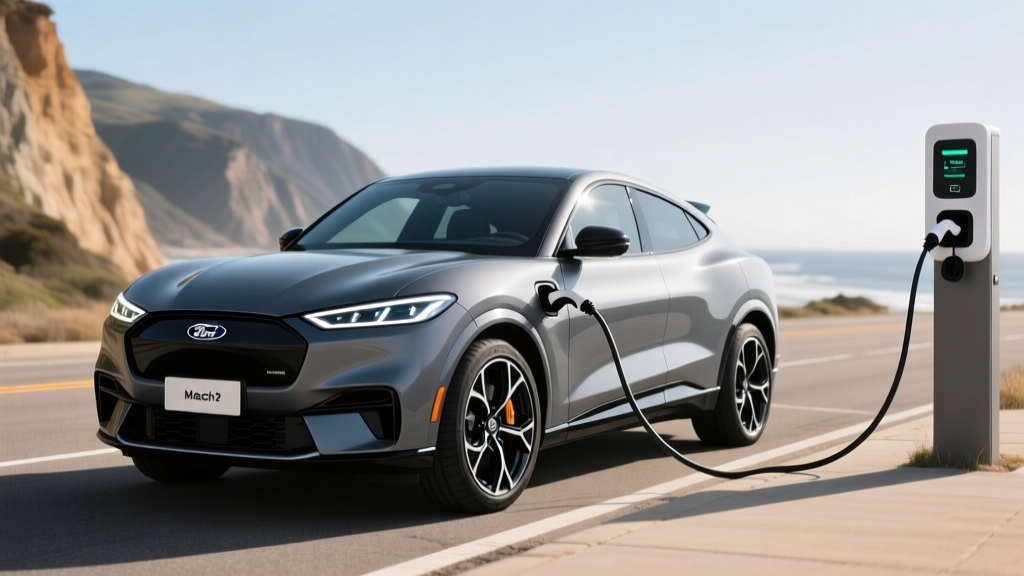
Sacramento shoppers cross-shopping the Model Y typically consider the Hyundai Ioniq 5, Ford Mustang Mach-E, and Chevrolet Equinox EV. Here is how the Model Y Long Range compares on the metrics that matter:
| Metric | Tesla Model Y LR | Hyundai Ioniq 5 LR AWD | Ford Mach-E ER AWD |
|---|---|---|---|
| EPA Range | 320 mi | 290 mi | 305 mi |
| Max DC Charge | 250 kW | 238 kW | 150 kW |
| 10–80% Time | ~27 min | ~18 min (800V) | ~45 min |
| Cargo (rear up) | 30.2 cu ft | 27.2 cu ft | 29.7 cu ft |
| Charging Network | Supercharger (native) | NACS adapter needed* | NACS adapter needed* |
| Starting MSRP | $44,990 | $49,950 | $48,495 |
*By 2026, most non-Tesla EVs ship with NACS ports or include adapters for Supercharger access, but reliability and billing seamlessness still favor native Tesla vehicles on the Supercharger network.
The Ioniq 5 charges faster (800V architecture enables a flatter charge curve), but the Model Y wins on range, cargo space, and native Supercharger access — a significant advantage for road trips to Tahoe, Oregon, or Southern California. The Mach-E offers a more traditional driving feel and physical controls but lags on charging speed.
Pros, Cons, and Who Should Buy
- 320 mi EPA range covers most Northern California trips without charging stops
- 250 kW Supercharger network is the most reliable DC fast-charging experience
- 30.2 cu ft cargo + 4.1 cu ft frunk handles family gear, Costco runs, and camping
- 3,500-lb towing handles small trailers and boat rigs
- Low running costs: ~$9 full home charge on SMUD off-peak vs. $55+ gas
- Strong OTA update cadence keeps the vehicle improving post-purchase
- 8-year/120,000-mile battery warranty with 70% minimum retention guarantee
- No Apple CarPlay or Android Auto — Tesla-only ecosystem
- Touchscreen-only controls frustrate some drivers (no physical climate knobs)
- Glass roof contributes to cabin heat in Sacramento summers; sunshade recommended
- FSD Supervised is expensive ($8,000) and still requires full driver attention
- Insurance premiums in Sacramento run 15–30% higher than comparable gas SUVs
- NMC battery chemistry degrades slightly faster than LFP if routinely charged to 100%
- Tax credit eligibility is VIN-specific and subject to mid-year changes
Best for: Sacramento-area commuters with home charging access, families needing cargo flexibility, and road-trippers who value Supercharger network reliability. The Model Y Long Range AWD is the sweet spot — it delivers the best range and value without the Performance trim's ride-harshening 21-inch wheels and range penalty.
Consider alternatives if: You want the fastest possible DC charging (Ioniq 5), you need three rows of seating (Kia EV9), or you prefer physical controls and CarPlay (Mach-E, Ioniq 5).
Frequently Asked Questions
What is the real-world range of the 2026 Tesla Model Y in Sacramento?
Expect 270–290 miles on mixed highway driving at 70 mph. Sacramento summer heat (100°F+) reduces range by 5–8%, yielding roughly 295–305 miles. Winter trips to Tahoe over the Sierras can drop to 240–260 miles due to cold and elevation. The EPA sticker of 320 miles assumes ideal conditions.
How fast does the Model Y charge at home and on road trips?
At home on a 240V Wall Connector (11.5 kW), the Model Y adds ~44 miles per hour — a full overnight charge in about 7 hours. On a V3 Supercharger (250 kW peak), 10–80% takes ~27 minutes, though the charge curve tapers significantly above 60% SoC. Plan 30–35 minutes total for a road-trip stop including plug-in and walk-around time.
Does the 2026 Tesla Model Y qualify for the $7,500 federal tax credit?
It can, but eligibility depends on the specific VIN's battery sourcing, your income (capped at $150K single / $300K joint), and current IRS critical-mineral thresholds. Model Y Long Range/Performance with Panasonic NMC cells from Giga Nevada have historically qualified. Always verify on fueleconomy.gov and consult a tax professional before relying on the credit.
How much does a Model Y actually cost after incentives?
Base MSRP for the Long Range AWD is $44,990 plus $1,390 destination, totaling $46,380 before options. With the full $7,500 §30D credit applied (if eligible), the effective price drops to ~$38,880. Add common options like FSD ($8,000) or premium paint ($1,000–$2,500) and the as-tested price typically lands between $47,000–$55,000 before credit.
Is the Model Y worth buying over the Ioniq 5 or Mach-E?
For Sacramento buyers who road-trip frequently and value the Supercharger network, the Model Y remains the strongest choice. The Ioniq 5 charges faster and offers CarPlay; the Mach-E has a more conventional interior. If home charging is your primary routine and you rarely road-trip, the Ioniq 5's 800V charging and lower price are compelling. For road warriors, Tesla's network advantage is real.
What should I know about buying from the Sacramento Tesla store?
Tesla sells direct — there are no traditional dealerships or negotiated pricing. The Arden Fair Mall Tesla store and the Fremont/Bay Area delivery centers handle Sacramento-area orders. You configure and order online, and the price is fixed. Delivery wait times vary by configuration; check Tesla.com for current estimates. Service is handled at the Sacramento Service Center on Auburn Blvd or via mobile Ranger service for many repairs.