If you've been searching for what is the Tesla Roadster, you're not alone. First unveiled in 2017 and repeatedly delayed, Tesla's second-generation Roadster has become one of the most anticipated — and most scrutinized — vehicles in the electric-vehicle industry. As of early 2026, Tesla has confirmed the Roadster is slated for production, but exact delivery timelines remain fluid. What follows is a comprehensive breakdown of everything we know from Tesla's official disclosures, engineering updates shared at shareholder events, and industry analysis — with clear labels on what is confirmed versus what remains preliminary.
The Tesla Roadster at a Glance: Preliminary Specifications
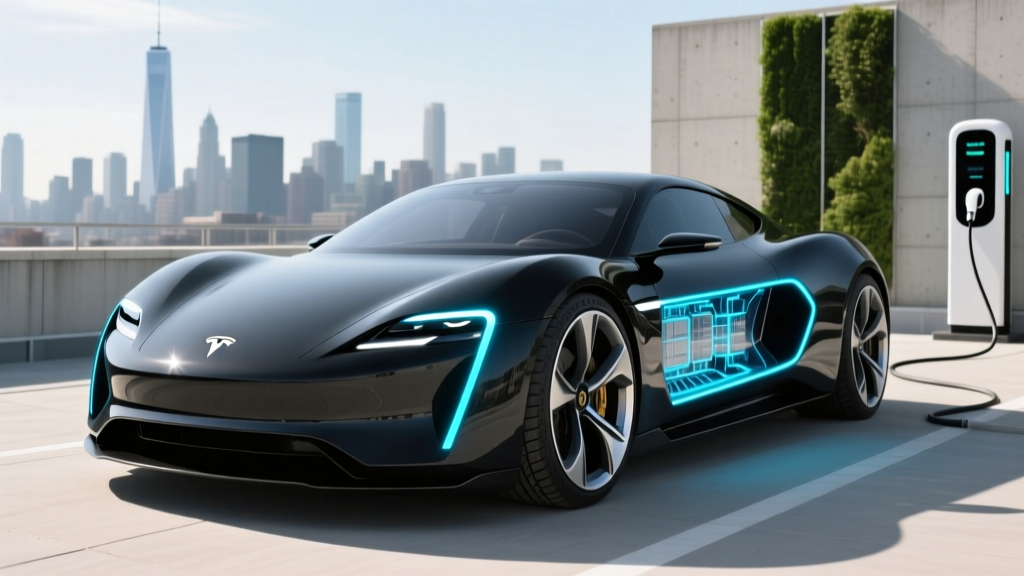
The second-generation Roadster is positioned as a halo performance car — a low-volume, high-impact statement about what electric powertrains can achieve. It is not a mass-market vehicle, and its specs reflect that ambition. Below is a summary of the key figures Tesla has published or confirmed through official channels.
| Attribute | Specification |
|---|---|
| Body Style | 2+2 convertible sports car (removable glass roof) |
| Drivetrain | Tri-motor AWD (one front, two rear) |
| Horsepower | Estimated 1,000+ hp (wheel torque: 10,000 Nm / 7,376 lb-ft) |
| 0–60 mph | 1.9 seconds (base); 1.1 seconds with SpaceX package |
| Top Speed | 250+ mph |
| Quarter Mile | 8.8 seconds (claimed) |
| Battery Capacity | 200 kWh (announced) |
| Battery Chemistry | NMC (nickel manganese cobalt) — expected high-energy-density cells |
| EPA Range (est.) | 620 miles (preliminary, unverified by EPA) |
| Max DC Fast Charge | 250 kW (Supercharger V4 compatible) |
| 10–80% DC Charge Time | Estimated 30–35 minutes (preliminary) |
| Level 2 Home Charging | ~11.5 kW / ~35–40 miles per hour |
| Base MSRP | $200,000 (Founders Series: $250,000, limited to 1,000 units) |
| Federal Tax Credit (§30D) | Not eligible — exceeds MSRP cap |
| Battery Warranty | Expected 8 years / 150,000 miles (consistent with Tesla's performance models) |
Note: All specifications are preliminary and subject to change until Tesla begins production and submits the vehicle for EPA certification. Tesla has a history of adjusting claimed figures between announcement and delivery.
What Is the Real-World Range of the Tesla Roadster?
Tesla's headline claim of 620 miles of range from a 200 kWh battery pack would make the Roadster the longest-range production EV ever built. But translating that number into real-world driving requires context.
EPA Estimate (preliminary): 620 miles
Expected Highway Range (70–80 mph): ~430–480 miles
Expected Cold-Weather Range (below 32°F): ~370–430 miles
Aggressive/Spirited Driving: ~300–350 miles
Why the gap? Aerodynamic drag increases with the square of speed, and a sports car driven at highway velocities will consume significantly more energy than the EPA's combined-cycle test suggests. Cold temperatures reduce lithium-ion cell efficiency and increase cabin heating load, typically reducing range 20–30% in sub-freezing conditions.
A 200 kWh battery is enormous — roughly double the capacity of a Tesla Model S Long Range. Even with the Roadster's performance-oriented drivetrain consuming more energy per mile than a sedan, the sheer energy capacity provides a buffer that most EVs simply don't have. For context, driving the Roadster at an efficiency of 300 Wh/mile (reasonable for a tri-motor sports car at moderate speeds) would yield roughly 667 miles. At highway speeds where efficiency may drop to 380–420 Wh/mile, you're looking at 475–525 miles.
The critical question is whether Tesla's 200 kWh pack will use conventional NMC cells or a more energy-dense chemistry. Tesla has not disclosed cell-level energy density figures, but industry analysts expect the Roadster to use next-generation 4680-format cells with a silicon-anode or high-nickel cathode to achieve the necessary energy density within a sports-car floorpan.
Charging Speed: DC Fast Charging and Home Level 2
A 200 kWh battery is only practical if you can charge it at a reasonable speed. Here's what we know about the Roadster's charging capabilities.
| Charging Level | Power (kW) | Miles Added per Hour | Notes |
|---|---|---|---|
| Level 1 (120V outlet) | ~1.4 kW | ~4–5 mi/hr | Emergency/trickle only; full charge would take 6+ days |
| Level 2 (240V home) | ~11.5 kW | ~35–40 mi/hr | Full charge in ~18–20 hours; overnight top-up practical |
| DC Fast Charge (Supercharger V4) | 250 kW (peak) | ~750+ mi/hr at peak | 10–80% est. 30–35 min; tapers significantly above 80% |
Charging curve reality: The 250 kW peak rate will not be sustained across the entire session. Tesla's battery management system will taper charge speed as the state of charge rises — typically dropping to ~150 kW around 50% SoC and ~50–80 kW above 80%. For a 200 kWh pack, a 10–80% session at an average of ~170 kW would take roughly 30–35 minutes, which aligns with Tesla's claims but assumes optimal battery preconditioning.
Preconditioning matters. If you navigate to a Supercharger using the car's built-in navigation, the battery thermal management system will preheat or cool the pack to the ideal temperature for maximum charge acceptance. Arriving at a charger without preconditioning — especially in cold weather — can reduce peak charge rates by 30–50%.
For home charging, an 11.5 kW Level 2 setup (48-amp circuit on a 60-amp breaker) adds roughly 35–40 miles per hour. Overnight charging from 20% to 80% would take about 10–11 hours — practical for daily use, but a full 0–100% charge is a multi-day affair on Level 2 given the massive pack size.
Performance: The Numbers That Define the Roadster
The Roadster's performance figures are the core of its identity. Tesla claims a 1.9-second 0–60 mph time for the base model and a staggering 1.1 seconds with the optional SpaceX package, which reportedly includes cold-gas thrusters positioned around the vehicle for additional downforce and acceleration assist.
The tri-motor AWD layout — one motor driving the front axle and two motors on the rear — enables torque vectoring across all four wheels. Tesla has claimed 10,000 Nm (7,376 lb-ft) of wheel torque, though it's important to note this is wheel torque (after gear reduction), not motor shaft torque. For comparison, a Bugatti Chiron produces roughly 1,180 lb-ft of engine torque.
The 250+ mph top speed places the Roadster in hypercar territory, though sustained speeds above 200 mph will drain the battery rapidly — expect range to drop to well under 100 miles if driven at maximum velocity for extended periods.
Drivetrain: All-wheel drive with tri-motor configuration provides traction in varied conditions, though the Roadster's low ground clearance and performance tires make it unsuitable for snow or rough roads without dedicated winter setups.
Pricing, Tax Credits, and Total Cost
The Tesla Roadster was originally announced with a $200,000 base price and a $250,000 Founders Series limited to the first 1,000 units. Reservations required a $50,000 deposit (the Founders Series required full payment upfront). As of 2026, Tesla has not announced any price increases, but given inflation, supply chain shifts, and the extended development timeline, a price adjustment before production begins is plausible.
| Trim | MSRP | Federal §30D Credit | Effective Price |
|---|---|---|---|
| Roadster (Base) | $200,000 | $0 — exceeds MSRP cap | $200,000 + destination |
| Roadster Founders Series | $250,000 | $0 — exceeds MSRP cap | $250,000 |
Federal tax credit ineligibility: Under current IRS §30D rules, the Roadster does not qualify for the $7,500 federal EV tax credit. The credit is capped at vehicles with an MSRP of $55,000 or less for sedans/sports cars (and $80,000 for SUVs/trucks/vans). At $200,000+, the Roadster far exceeds this threshold. Additionally, buyer income caps ($150,000 single / $300,000 joint filers) would exclude many potential buyers regardless. For the latest rules, consult the IRS clean vehicle credits page.
Running costs: Despite the high purchase price, the Roadster's per-mile energy cost will be a fraction of a comparable gasoline hypercar. At an average electricity cost of $0.15/kWh and an efficiency of ~350 Wh/mile, fueling costs roughly $0.05 per mile — compared to $0.40–$0.60 per mile for a mid-engined gasoline supercar requiring premium fuel.
Interior, Cargo, and Practicality
The Roadster is a 2+2 configuration, meaning two full-size front seats and two small rear seats suitable for children or luggage. Tesla has not published detailed interior dimensions, but based on the vehicle's proportions and the original Roadster's packaging:
- Front legroom: Estimated ~42 inches (sports car typical)
- Rear legroom: Estimated ~28–30 inches (children only for extended trips)
- Cargo (rear trunk): Estimated ~6–8 cu ft
- Frunk (front trunk): Estimated ~3–5 cu ft
- Total cargo: ~10–13 cu ft combined — enough for two carry-on bags and a weekend bag
The removable glass roof panel stores in the trunk, converting the car to an open-air roadster. Tesla has shown a minimalist interior with a central touchscreen (likely 15–17 inches, consistent with current Tesla design language) and a yoke-style steering wheel.
Notable drawbacks: Ground clearance is expected to be very low (~4–5 inches), making speed bumps, steep driveways, and parking garages a constant concern. Visibility rearward will be limited with the roof in place. There is no tow rating — this is not a utility vehicle.
Tech, Driver Assistance, and Standout Features
The Roadster will ship with Tesla's latest hardware suite, including:
- Autopilot / FSD (Supervised): Tesla's Level 2 driver-assistance system, offering adaptive cruise control, lane centering, automatic lane changes, and traffic-light recognition. Per NHTSA SAE definitions, this is a Level 2 system — the driver must remain fully engaged and responsible at all times. It is not self-driving.
- Infotainment: Tesla's latest UI with over-the-air updates, streaming media, gaming, and dog/sentry/camp modes.
- SPD (SpaceX Package) thrusters: Cold-gas thrusters using compressed air to augment cornering downforce, braking, and acceleration. This is the most unconventional feature and remains unproven in production vehicles.
- Regenerative braking: One-pedal driving with adjustable regen levels, recovering energy during deceleration.
- Thermal management: Active battery thermal conditioning with heat pump for cabin heating efficiency and battery preconditioning.
Tesla's Full Self-Driving (Supervised) is an SAE Level 2 driver-assistance system. Despite its name, it does not make the vehicle autonomous. The driver must keep hands on the wheel, eyes on the road, and remain prepared to take over at any moment. Only Level 4 systems (such as Waymo's robotaxi service in designated areas) operate without a human driver. Do not rely on FSD as a substitute for attentive driving.
Who Should Buy the Tesla Roadster — and Who Shouldn't?
- You want the fastest-accelerating production car ever built and can absorb a $200K+ price tag
- You value extreme range (620 mi est.) for road-trip flexibility without frequent charging stops
- You already own a practical daily driver and want a weekend/halo EV
- You're a Tesla enthusiast willing to accept the risk of production delays and first-year build variability
- You need a daily driver with practical cargo space, ground clearance, or rear-seat usability
- You want a vehicle you can take delivery of immediately — the Roadster is still forthcoming
- You're counting on the federal tax credit to offset cost (it does not qualify)
- You prefer proven platforms — the Roadster's tri-motor layout and SpaceX thrusters are unproven at scale
- Your budget is better served by a Tesla Model S Plaid ($89,990, 396 mi EPA, 1.99s 0–60) which delivers 90% of the performance at less than half the price
Tesla Roadster vs. Key Competitors
The Roadster occupies a narrow niche. Its closest rivals span both electric and internal-combustion hypercars:
- Tesla Model S Plaid ($89,990): 396 mi EPA range, 1,020 hp, 1.99s 0–60. The pragmatic alternative within Tesla's own lineup.
- Rimac Nevera (~$2,200,000): 1,914 hp, 1.85s 0–60, 340 mi WLTP range. Far more expensive but already in production with proven hypercar credentials.
- Lotus Evija (~$2,100,000): 1,972 hp, sub-2.0s 0–60, ~250 mi range. Limited production, combustion-era brand transitioning to electric.
- Porsche Taycan Turbo GT (~$230,000): 1,019 hp, 2.1s 0–60, 268 mi EPA. A more practical four-door with track capability and proven build quality.
The Roadster's unique value proposition is its combination of extreme acceleration, massive range, and a price point well below European electric hypercars — if Tesla can deliver on its promises.
Frequently Asked Questions
What is the Tesla Roadster's real-world range?
Tesla claims a preliminary 620-mile EPA range from a 200 kWh battery. In real-world highway driving at 70–80 mph, expect approximately 430–480 miles. In cold weather (below freezing), that drops to roughly 370–430 miles. Aggressive driving will reduce range further, potentially to 300–350 miles.
How fast does the Tesla Roadster charge?
The Roadster is expected to support up to 250 kW DC fast charging on Tesla's Supercharger V4 network, achieving a 10–80% charge in approximately 30–35 minutes under optimal conditions. Home Level 2 charging at 11.5 kW adds roughly 35–40 miles per hour.
Does the Tesla Roadster qualify for the federal EV tax credit?
No. Under current IRS §30D rules, the Roadster's $200,000+ MSRP far exceeds the $55,000 cap for sedans and sports cars. It is not eligible for the $7,500 federal clean vehicle credit regardless of buyer income or battery sourcing.
Is the Tesla Roadster available to buy now?
As of early 2026, the Roadster is not yet in production. Tesla has accepted reservations (with $50,000 deposits) but has not confirmed a firm delivery date. Specifications remain preliminary and subject to change.
How does the Roadster compare to the Tesla Model S Plaid?
The Model S Plaid offers 1,020 hp, a 1.99-second 0–60 time, and 396 miles of EPA range for $89,990 — roughly 45% of the Roadster's base price. The Roadster adds a convertible roof, tri-motor AWD (vs. Plaid's tri-motor AWD), a larger battery, and potentially faster acceleration, but at more than double the cost and with no confirmed delivery date.
What is the SpaceX package on the Tesla Roadster?
The optional SpaceX package reportedly includes cold-gas thrusters using compressed air to improve cornering grip, braking performance, and acceleration. Tesla claims it reduces the 0–60 time to 1.1 seconds. This technology has not been used in a production road vehicle before and remains unverified in real-world conditions.
Sources: Tesla Roadster official page, IRS §30D Clean Vehicle Credits, U.S. DOE Fuel Economy Guide