Quick Answer: Should You Buy the Mercedes-Benz GLC EV?
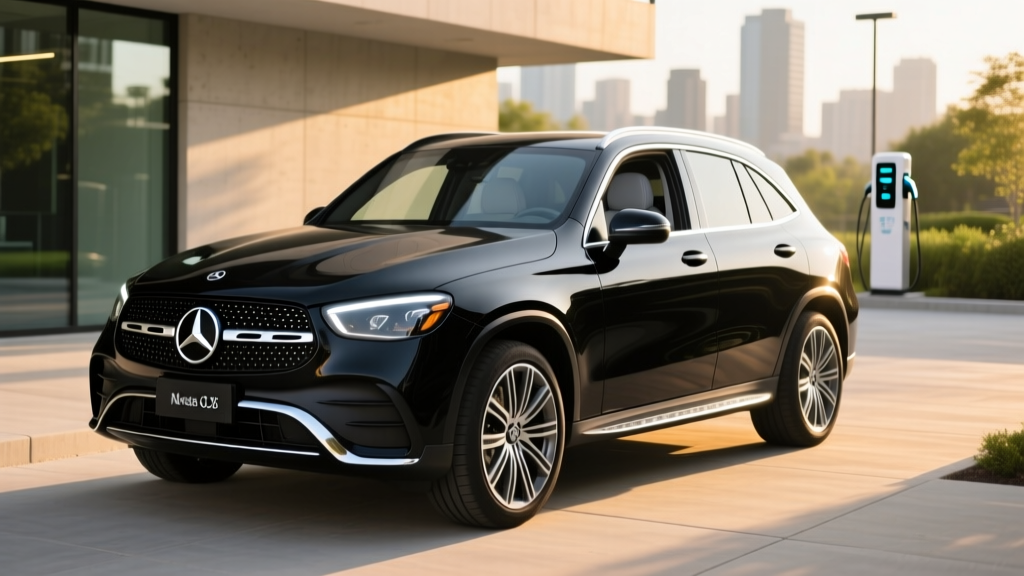
The Mercedes-Benz GLC EV (badged globally as the electric GLC on the MB.EA platform) is Mercedes' luxury compact electric SUV aimed squarely at the BMW iX3, Audi Q6 e-tron, and Tesla Model Y. For the 2026 model year, it delivers an EPA-estimated 295–312 miles of range depending on trim, DC fast charging up to 250 kW (10–80% in approximately 22 minutes), and a starting MSRP around $59,900. It is best suited for buyers who prioritize ride refinement, interior material quality, and Mercedes' MBUX infotainment over maximum performance-per-dollar. If you have reliable Level 2 home charging and drive under 300 miles daily, it's a compelling luxury EV. If you lack home charging or need maximum cargo space, rival options may serve you better.
What Is the Mercedes-Benz GLC EV and Who Is It For?
The Mercedes-Benz GLC EV is the battery-electric successor to the EQC, now built on Mercedes' dedicated MB.EA (Mercedes-Benz Electric Architecture) platform. Unlike the older EQC—which was adapted from a combustion chassis—the GLC EV is ground-up electric, yielding a flat floor, lower center of gravity, and more interior volume relative to its footprint.
Mercedes positions this SUV for buyers migrating from a GLC 300 gas model who want electric propulsion without sacrificing the brand's hallmark cabin insulation, air suspension comfort, and dealer service network. The typical buyer profile: a two-car household replacing a luxury ICE crossover, with access to home Level 2 charging and a daily commute under 60 miles.
Range, Battery, and Charging: The Numbers That Matter
The GLC EV uses an 85 kWh usable lithium-ion battery pack (NMC chemistry) paired with an 800-volt electrical architecture. Here are the key specifications by trim:
| Specification | GLC 300e (RWD) | GLC 400 4MATIC (AWD) |
|---|---|---|
| EPA Range (est.) | 312 miles | 295 miles |
| Battery (usable) | 85 kWh (NMC) | 85 kWh (NMC) |
| Motor Output | 288 hp / 324 lb-ft | 402 hp / 443 lb-ft |
| 0–60 mph | 6.5 sec | 4.7 sec |
| Peak DC Fast Charge | 250 kW | 250 kW |
| 10–80% DCFC Time | ~22 min | ~22 min |
| Level 2 (AC) Charge Rate | 11 kW | 11 kW |
| Level 2 0–100% Time | ~8.5 hours | ~8.5 hours |
| EPA Efficiency (MPGe) | 92 MPGe combined | 87 MPGe combined |
| Base MSRP | $59,900 | $65,400 |
Real-World Range Expectations
The EPA sticker says 295–312 miles, but real-world results vary. In mixed highway driving at 70–75 mph in moderate temperatures (60–80°F), expect 260–280 miles. In cold weather (below 30°F) with cabin heating, range drops to approximately 220–245 miles—roughly a 20–25% reduction typical of NMC packs without a standard heat pump on base trims. The GLC EV's heat pump (standard on 400 4MATIC, optional on 300e) mitigates some of this loss. On road trips, plan charging stops at the 200-mile mark to maintain a comfortable buffer.
The 800V architecture is the GLC EV's charging highlight. At a 350 kW-capable DC fast charger (such as Electrify America or EVgo stations), the GLC EV peaks near 250 kW and sustains over 200 kW through roughly 55% State of Charge (SoC), before tapering. The full 10–80% session takes about 22 minutes under ideal thermal conditions. Preconditioning the battery via the MBUX navigation system—routing to a charger—warms the pack for optimal charge acceptance and is essential for achieving advertised speeds in cooler weather.
Mercedes-Benz GLC EV vs. Gas GLC: Cost and Driving Comparison
Most GLC EV shoppers are cross-shopping against the gas-powered GLC 300 4MATIC. Here's how the numbers stack up over a 5-year, 75,000-mile ownership period:
| Cost Factor | GLC EV (300e) | GLC 300 4MATIC (Gas) |
|---|---|---|
| Base MSRP | $59,900 | $48,250 |
| Estimated Federal Tax Credit (§30D)* | $0–$3,750** | $0 |
| Fuel/Energy (75k mi) | $3,900*** | $9,750**** |
| Scheduled Maintenance (5 yr) | $1,200 | $3,800 |
| Insurance (5 yr avg.) | $12,500 | $10,200 |
| Estimated Depreciation | $26,000 | $19,500 |
| 5-Year Total Cost of Ownership | ~$77,300 | ~$72,500 |
* Federal §30D credit eligibility for the 2026 GLC EV depends on battery-component and critical-mineral sourcing requirements under the Inflation Reduction Act. The MSRP cap for SUVs is $80,000 (the GLC EV qualifies), and buyer income caps apply ($150k single / $300k joint). Confirm eligibility at IRS.gov or with a tax professional before purchase.
** As of early 2026, the GLC EV's battery sourcing may qualify for only the $3,750 critical-minerals half-credit or no credit, depending on supply-chain updates. Verify at point of sale.
*** Based on $0.14/kWh national average home charging and 3 mi/kWh efficiency.
**** Based on $3.90/gal premium and 26 MPG combined per fueleconomy.gov.
The gas GLC 300 wins on upfront price and depreciation. The GLC EV recoups ground through dramatically lower fuel and maintenance costs—no oil changes, fewer brake replacements (thanks to regenerative braking), and no transmission fluid. Over 10 years or 150,000 miles, the EV's total cost advantage widens significantly, particularly if electricity rates stay below $0.16/kWh.
Real Ownership Considerations: Charging, Climate, and Daily Life
Home Charging Access Is Non-Negotiable
The GLC EV's 11 kW onboard charger means a Level 2 home charger (240V, 48A circuit) replenishes the battery from 0–100% in roughly 8.5 hours—perfect for overnight charging. If you have a garage or dedicated parking spot with 240V access, a Level 2 install typically costs $800–$2,500 (charger hardware plus electrician labor, assuming no panel upgrade). Without home charging, relying solely on public DC fast charging adds cost (roughly $0.35–$0.50/kWh at networks like Electrify America) and time. The GLC EV's NACS charge port (standard for 2026) grants access to Tesla Superchargers via the expanding network, adding route flexibility.
Cold-Weather Realities
If you live in a climate where temperatures regularly drop below freezing, budget for 20–25% range loss. The available heat pump (standard on 400 4MATIC) helps, but cabin heating and battery thermal management still draw significant energy. Practical tips: precondition the cabin while plugged in, use seat/steering-wheel heaters instead of cranking cabin air, and keep SoC between 20–80% for daily use to preserve long-term battery health.
Driving Patterns That Fit
The GLC EV excels for commuters with round trips under 150 miles, families doing school runs and errands, and weekend road trippers willing to stop every 200–220 miles for a 20-minute DC fast charge. It is less ideal for frequent 500+ mile single-day drives or buyers in rural charging deserts where DC fast infrastructure is sparse.
Common Misconceptions About the GLC EV
| Myth | Fact |
|---|---|
| "The battery will need replacing in 5 years." | Mercedes warranties the battery for 8 years / 100,000 miles against degradation below 70% capacity. NMC chemistry with active thermal management typically retains 85–90% capacity at 100k miles based on industry fleet data. |
| "It charges as fast as a Tesla." | The GLC EV peaks at 250 kW—competitive, but the Tesla Model Y on V3 Superchargers sustains its charge curve more aggressively due to lighter vehicle mass. Real-world 10–80% times are comparable (~20–22 min), but the GLC tapers earlier above 80%. |
| "I'll get the full $7,500 tax credit." | Federal §30D credit for 2026 is split into two $3,750 halves (battery components + critical minerals). The GLC EV's supply chain may only qualify for one half or none. Always verify via the IRS VIN-lookup tool at point of sale. |
| "Electric means zero maintenance." | Tires wear 15–20% faster on EVs due to instant torque and heavier curb weight (~4,800 lbs). Cabin air filters, brake fluid, coolant, and wiper blades still require service. Budget ~$250/year for EV-specific maintenance. |
| "The GLC EV is self-driving." | Mercedes' Drive Pilot is a SAE Level 3 system available only in limited jurisdictions (NV, CA) and only under 40 mph on mapped highways. The standard Driver Assistance Package is SAE Level 2—you must keep hands on the wheel and eyes on the road at all times. |
SAE Automation Level Reminder
Mercedes-Benz Driver Assistance (adaptive cruise + lane centering) is SAE Level 2: the system assists steering and speed, but the driver is fully responsible. Mercedes' Drive Pilot (Level 3, conditional hands-off) is a separate, limited-availability option. Neither is "self-driving." You are the driver.
Decision Framework: Is the GLC EV the Right Buy for You?
Choose the Mercedes-Benz GLC EV If:
- You have Level 2 home charging (garage or dedicated 240V outlet)
- Your daily driving is under 150 miles round trip
- You value cabin quietness, air suspension ride quality, and MBUX tech over 0–60 bragging rights
- You're replacing a GLC 300 or similar luxury compact SUV and want to stay in the Mercedes ecosystem
- You live in a state with robust DC fast-charging corridors (CA, TX, FL, Northeast)
- You can absorb the higher upfront cost (~$12,000 more than the gas GLC) and recoup through fuel/maintenance savings over 7+ years
Look Elsewhere If:
- You lack reliable home or workplace charging
- You regularly drive 400+ miles in a single day and can't tolerate 20-minute stops
- You need maximum cargo volume (the Tesla Model Y offers 76 cu ft vs. the GLC EV's ~62 cu ft)
- Upfront budget is tight—the gas GLC 300 or a BMW iX3 (lower MSRP) may fit better
- You live in extreme cold (below 0°F regularly) where range loss compounds and charging speeds drop without a garage
Pricing, Trims, and What's Included
The 2026 GLC EV launches in two trims:
- GLC 300e (RWD) — $59,900 MSRP: 288 hp, 312 mi EPA range, 19" wheels, MBUX with 11.9" OLED display, heated front seats, Driver Assistance Package (Level 2), wireless CarPlay/Android Auto.
- GLC 400 4MATIC (AWD) — $65,400 MSRP: 402 hp, 295 mi EPA range, 20" wheels, AIRMATIC air suspension (standard), heat pump, Burmester 3D audio, augmented-reality navigation.
Key options to consider: the AMG Line package ($2,500, cosmetic/suspension tuning), rear-axle steering ($1,100, tightens turning radius for city driving), and the DC fast-charge preconditioning software (included standard but confirm activation at delivery).
The battery and powertrain carry an 8-year/100,000-mile warranty, with Mercedes guaranteeing the pack retains at least 70% of original capacity during that period. Out-of-warranty battery replacement, if ever needed, is estimated at $14,000–$18,000 based on current NMC pack pricing—though industry data shows most packs outlast the vehicle itself.
Frequently Asked Questions
Does the Mercedes-Benz GLC EV qualify for the $7,500 federal tax credit?
It depends on your income, the vehicle's battery sourcing, and MSRP. The GLC EV's MSRP falls under the $80,000 SUV cap. Buyer income must not exceed $150,000 (single) or $300,000 (joint). However, the §30D credit is split into two $3,750 halves based on battery-component manufacturing and critical-mineral sourcing. As of early 2026, the GLC EV may qualify for $0, $3,750, or the full $7,500 depending on supply-chain compliance. Check the fueleconomy.gov tax credit lookup using the specific VIN before signing paperwork. The credit can be transferred to the dealer at point of sale as a price reduction.
How does the GLC EV compare to the Tesla Model Y?
The Model Y Long Range AWD starts at roughly $48,990, offers 310 miles EPA range, and charges at up to 250 kW on V3 Superchargers. It wins on price (~$11,000 less), cargo space (76 vs. ~62 cu ft), and Supercharger network maturity. The GLC EV wins on interior material quality, ride comfort (air suspension vs. Model Y's firm setup), cabin noise isolation, and dealership service access. They serve different buyer priorities: value and efficiency (Model Y) vs. luxury and comfort (GLC EV).
What does it cost to charge the GLC EV at home?
At the national average residential rate of $0.14/kWh, a full 85 kWh charge costs approximately $11.90, yielding about 312 miles. That works out to roughly $0.038 per mile—compared to $0.15 per mile for the gas GLC 300 at $3.90/gallon and 26 MPG. Over 15,000 miles/year, home charging saves approximately $1,680 annually versus gasoline.
Is the GLC EV good for road trips?
Yes, with planning. The 250 kW peak charge rate and NACS port (Tesla Supercharger access) make highway charging practical. On a 600-mile trip, expect two DC fast-charge stops of ~20–25 minutes each. Use the MBUX route planner, which automatically preconditioning the battery and suggests chargers. In winter or mountainous terrain, add 10–15 minutes per stop and plan conservatively around 200 miles between charges.
Will the battery need replacing, and what does it cost?
Modern NMC packs with active liquid thermal management (like the GLC EV's) are designed to last 200,000+ miles before reaching 70% capacity. Mercedes' 8-year/100,000-mile battery warranty covers premature degradation. Full pack replacement is estimated at $14,000–$18,000 if needed out of warranty, but most EV batteries outlast the vehicle's economic life. Routine care—avoiding frequent 100% charges, minimizing DC fast charging to when needed, and preconditioning in cold weather—extends longevity.
What should a first-time EV buyer know before purchasing the GLC EV?
Three essentials: (1) Install a Level 2 home charger before delivery day—a NEMA 14-50 outlet or hardwired 48A charger like the ChargePoint Home Flex ($600–$700 hardware) is the single biggest ownership convenience factor. (2) Understand kW vs. kWh: kW is charge speed (like a fuel pump's flow rate), kWh is battery capacity (like a gas tank's size). The GLC EV charges at up to 250 kW and stores 85 kWh. (3) Download the Mercedes me app and link it to your vehicle before pickup to enable remote preconditioning, charge scheduling, and charging-station routing.
Sources: EPA efficiency data via fueleconomy.gov; federal tax credit rules via IRS.gov §30D; vehicle specifications per Mercedes-Benz USA press materials. All figures reflect 2026 model-year estimates and are subject to change. Confirm final specs and credit eligibility with your dealer.