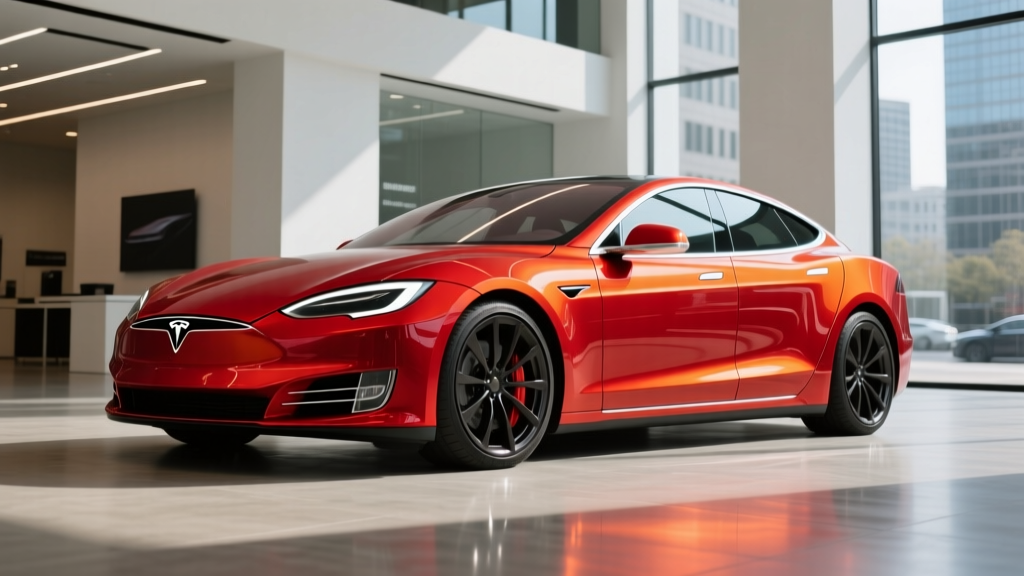
For years, Tesla's paint quality was the punchline of every EV forum joke. Panel gaps, orange peel, and thin clear coats plagued early Fremont-built cars, and the color palette was notoriously conservative. That changed when Tesla introduced Red Multi-Coat — a premium, multi-layer paint option that debuted on the refreshed Model S and Model X, then expanded across the lineup. Today, it remains the most expensive color in Tesla's configurator, commanding a $2,500 premium on most models.
But is Tesla Red Multi-Coat actually worth the upcharge? And does choosing it affect your delivery timeline, resale value, or long-term paint durability? In this review, we'll break down everything you need to know about Tesla's signature red — across the current Model 3, Model Y, Model S, and Model X lineup — while also covering the core specs, range, charging, and ownership economics that matter to any Tesla buyer in 2026.
What Is Tesla Red Multi-Coat, and How Much Does It Cost?
Tesla's Red Multi-Coat is a tri-coat paint process that uses multiple layers — a base coat, a mid-coat with metallic flakes, and a clear coat — to produce a deep, saturated red with exceptional depth and reflectivity. It replaced the older "Red Multi-Coat" formulation that launched with the Model S refresh and is now available across Tesla's entire consumer lineup.
Here's the current pricing for Red Multi-Coat across the 2026 Tesla lineup:
| Model | Paint Upcharge | Standard Free Color | Notes |
|---|---|---|---|
| Model 3 (Long Range / Performance) | $2,500 | Stealth Grey | Also available on Highland refresh |
| Model Y (Long Range / Performance) | $2,500 | Stealth Grey | Juniper refresh models |
| Model S (Long Range / Plaid) | $2,500 | Stealth Grey | Available since 2021 refresh |
| Model X (Long Range / Plaid) | $2,500 | Stealth Grey | Available since 2021 refresh |
| Cybertruck | N/A | Stainless steel (no paint) | No Red Multi-Coat option |
For context, Tesla's other premium colors — Ultra White, Deep Blue Metallic, and Quicksilver — typically cost $1,500–$2,500 depending on the model and year. Red Multi-Coat consistently sits at the top of that range.
Paint Quality and Durability: Has Tesla Fixed Its Reputation?
The honest answer: it depends on where your car is built. Tesla's Fremont factory (Model S, Model X, and some Model 3/Y) has historically produced more paint inconsistencies than Gigafactory Texas (Model Y) and Gigafactory Berlin (Model Y for Europe). The Berlin paint shop, in particular, uses a more advanced application process that Tesla has touted as a major quality improvement.
For US-delivered vehicles in 2026, most Model Y units now come from Austin, while Model 3 Highland variants are split between Fremont and Shanghai imports. Red Multi-Coat specifically tends to show fewer orange-peel issues than the solid colors because the metallic mid-coat masks minor imperfections better. However, owners should still expect to inspect their delivery carefully and file a service request for any touch-ups under Tesla's limited paint warranty.
Long-term durability note: Red pigments are historically more susceptible to UV fading than darker or metallic colors. Tesla's clear coat on the Multi-Coat formulation includes UV inhibitors, but if you park outdoors consistently in high-UV states (Arizona, Texas, Florida), expect some gradual dulling over 5–7 years regardless of brand. Ceramic coating or regular waxing mitigates this significantly.
2026 Tesla Model Lineup: Core Specs at a Glance
While Red Multi-Coat is available across the lineup, the vehicles themselves vary enormously. Here's a consolidated spec table for the most popular configurations buyers cross-shop:
| Spec | Model 3 Long Range AWD | Model Y Long Range AWD | Model S Long Range | Model X Long Range |
|---|---|---|---|---|
| EPA Range | 341 mi | 320 mi | 402 mi | 348 mi |
| Battery (usable) | ~75 kWh (NMC) | ~75 kWh (NMC) | ~95 kWh (NMC) | ~95 kWh (NMC) |
| Drivetrain | Dual-Motor AWD | Dual-Motor AWD | Dual-Motor AWD | Dual-Motor AWD |
| Horsepower | ~346 hp | ~384 hp | ~670 hp | ~670 hp |
| 0–60 mph | 4.2 sec | 4.8 sec | 3.1 sec | 3.8 sec |
| MPGe (combined) | 132 MPGe | 122 MPGe | 120 MPGe | 108 MPGe |
| Efficiency | 25 kWh/100mi | 28 kWh/100mi | 28 kWh/100mi | 33 kWh/100mi |
| Base MSRP | $47,740 | $48,990 | $79,990 | $84,990 |
| Max DC Fast Charge | 250 kW | 250 kW | 250 kW | 250 kW |
| 10–80% DC Charge | ~25 min | ~27 min | ~30 min | ~32 min |
| Level 2 Home Charge | 11.5 kW (~44 mi/hr) | 11.5 kW (~44 mi/hr) | 11.5 kW (~34 mi/hr) | 11.5 kW (~30 mi/hr) |
| Cargo Volume | 23 cu ft (rear) + 3 cu ft (frunk) | 30 cu ft (rear) + 4 cu ft (frunk) | 28 cu ft (rear) + 5 cu ft (frunk) | 88 cu ft (rear, seats folded) + 7 cu ft (frunk) |
| Battery Warranty | 8 yr / 120,000 mi | 8 yr / 120,000 mi | 8 yr / 150,000 mi | 8 yr / 150,000 mi |
Sources: fueleconomy.gov, Tesla.com spec pages. Specs reflect 2026 model year configurations as of publication. Always verify on Tesla's configurator before ordering.
EPA estimates are measured under controlled conditions. In real-world highway driving at 70–80 mph, expect 10–15% less range than the EPA sticker. In cold weather (below 32°F / 0°C), range loss of 20–30% is typical for all Teslas due to battery chemistry and cabin heating demands. The Model 3 Long Range's 341-mile EPA rating translates to roughly 290–305 miles on a warm highway trip and 240–270 miles in freezing conditions. Preconditioning the battery before fast charging (automatic when navigating to a Supercharger) helps mitigate cold-weather charging slowdowns.
Charging Deep Dive: Supercharger Network and Home Setup
All current Teslas use the NACS (North American Charging Standard) connector natively — the same plug Tesla has used since 2012, now adopted by Ford, GM, Rivian, and most major automakers. This gives Tesla owners seamless access to the Supercharger network, which remains the most reliable and widespread DC fast-charging infrastructure in the US.
Here's what charging looks like across the three main levels:
| Charging Level | Power (kW) | Miles of Range Added | Typical Use Case |
|---|---|---|---|
| Level 1 (120V household) | ~1.4 kW | ~3–5 mi/hr | Overnight trickle; emergency top-up |
| Level 2 (240V home, 48A) | 11.5 kW | 30–44 mi/hr (varies by model) | Daily home charging; full overnight charge |
| DC Fast (V3 Supercharger) | Up to 250 kW peak | ~170 mi in 15 min (Model 3) | Road trips; rapid top-up |
Charging curve reality: Tesla's peak 250 kW rate is only sustained between roughly 10–30% state of charge. Above 50%, the rate tapers significantly — by 80%, you're typically at 60–80 kW. This is why Tesla (and all EV makers) quote 10–80% times rather than 0–100%. Charging from 80–100% can add as much time as the 10–80% session. For daily driving, setting a charge limit of 80–90% preserves battery longevity and avoids the slowest portion of the curve.
Home charging cost: A Level 2 home installation (Tesla Wall Connector or equivalent) typically costs $500–$1,500 for the unit plus $500–$2,500 for electrician labor, depending on whether your panel needs a 60A circuit upgrade. Total installed cost ranges from $1,000 to $4,000. At the US average electricity rate of ~$0.16/kWh, fully charging a Model 3 Long Range (75 kWh) costs roughly $12 — versus $45–$60 for an equivalent gasoline fill-up.
Federal Tax Credit Eligibility: Does a Red Tesla Qualify?
The federal EV tax credit under IRS §30D provides up to $7,500 for qualifying new EVs, but eligibility is complex and model-dependent. Here's the 2026 landscape for Tesla:
- Model 3 Long Range AWD: Eligible for up to $7,500, provided the buyer meets income caps ($150K single / $300K joint AGI) and the vehicle MSRP is under $55,000. Adding Red Multi-Coat ($2,500) pushes the as-tested price to ~$50,240 — still under the cap. Point-of-sale transfer is available, meaning the $7,500 can be applied as a down payment reduction at delivery.
- Model Y Long Range AWD: Eligible for up to $7,500 under the $80,000 SUV MSRP cap. Red Multi-Coat brings the total to ~$51,490, well within limits.
- Model S and Model X: Not eligible. Both exceed the MSRP cap ($55K for sedans, $80K for SUVs/vans). Even the base Model S at $79,990 is classified as a sedan subject to the $55K cap.
- Battery sourcing requirement: The full $7,500 requires both critical-minerals and battery-component sourcing thresholds. Tesla's US-built models with LFP batteries (some Model 3 RWD from Shanghai) may qualify for only $3,750 or none, depending on current-year sourcing percentages. NMC models from Fremont and Austin generally qualify for the full amount, but verify on the IRS clean vehicle credit page before ordering.
Because the paint upcharge adds to MSRP, it could theoretically push a borderline Model 3 configuration over the $55,000 sedan cap. As of 2026, a Model 3 Long Range with Red Multi-Coat ($50,240) remains safely under the threshold. However, adding FSD ($8,000) or other high-cost options could push you over. Always check your exact configuration's MSRP on Tesla.com and cross-reference with IRS.gov before finalizing your order.
Autopilot, FSD, and Tech Features
Every Tesla ships with Basic Autopilot — a Level 2 driver-assistance system (per SAE classification) that includes Traffic-Aware Cruise Control and Autosteer. This is not self-driving; the driver must remain attentive with hands on or near the wheel at all times.
Full Self-Driving (Supervised) — currently priced at $8,000 as a one-time purchase or $99/month — adds Navigate on Autopilot, Auto Lane Change, Autopark, Summon, and traffic light/stop sign recognition. Despite the name, FSD remains a SAE Level 2 system requiring full driver supervision. Tesla's "Supervised" branding was added to clarify this after regulatory pressure.
Tesla's driver-assistance features are SAE Level 2 — the driver is always responsible for the vehicle. Only Waymo and Zoox robotaxi services operate at Level 4 (no driver required) in limited geofenced areas. Do not rely on FSD for hands-off or eyes-off driving. NHTSA continues to investigate Tesla Autopilot-related incidents.
On the tech side, Tesla's 15.4-inch center touchscreen (Model 3/Y) or 17-inch screen (Model S/X) handles everything — climate, navigation, media, vehicle settings — with no physical buttons. The interface is fast and responsive, but the lack of physical controls for common functions (wipers, glovebox, mirrors) draws consistent criticism from traditional car reviewers. Over-the-air updates continue to add features post-purchase, though some promised capabilities remain unfulfilled for years.
Pros and Cons of Choosing Tesla Red Multi-Coat
Pros
- Deep, multi-layer finish with strong visual depth and metallic flake
- Hides minor paint imperfections better than solid colors
- Strong resale appeal — red Teslas photograph well and attract buyers
- Available across entire Tesla lineup
- UV-inhibited clear coat provides better fade resistance than older red formulations
Cons
- $2,500 upcharge — the most expensive color option
- Red paint historically shows swirl marks and scratches more readily
- May extend delivery timeline if not in local inventory
- Does not add functional value — purely aesthetic
- Could push Model 3 MSRP closer to tax credit cap with other options
Who Should Choose a Tesla — and Who Should Look Elsewhere?
Best for: Tech-forward commuters and road-trippers who prioritize access to the Supercharger network, over-the-air updates, and strong efficiency. The Model 3 Long Range remains one of the best value-per-mile EVs on the market, and Red Multi-Coat adds visual distinction for buyers who want their Tesla to stand out from the sea of grey and white examples.
Consider alternatives if: You need physical buttons and knobs, prioritize interior material quality over tech, or want a vehicle from a brand with a longer dealership service network. The Hyundai Ioniq 6, BMW i4, and Ford Mustang Mach-E offer competitive range and charging with more traditional ownership experiences. For families needing three rows, the Rivian R1S or Kia EV9 may be more practical than the Model X.
Frequently Asked Questions
Does Tesla Red Multi-Coat fade over time?
All red automotive paints are more susceptible to UV degradation than other colors. Tesla's Multi-Coat formulation includes UV inhibitors in the clear coat, which helps, but long-term outdoor parking in high-sun states will cause gradual fading over 5–7 years regardless. Ceramic coating or garage parking significantly extends color life.
Does choosing Red Multi-Coat affect my delivery date?
Possibly. Tesla's delivery timeline depends on factory production batches and regional inventory. Less common colors like Red Multi-Coat may have longer wait times than the default Stealth Grey or Pearl White, especially if your preferred configuration isn't in local inventory. Check Tesla's current estimated delivery window on the configurator before ordering.
Is Tesla Red Multi-Coat the same as the older "Red Multi-Coat" from 2021?
Tesla has refined the formulation since its initial launch on the refreshed Model S/X. The current version has improved metallic flake distribution and a slightly deeper base tone. If you're comparing a 2021 Model S in Red to a 2026 Model Y, expect subtle visual differences despite the shared name.
Can I wrap or PPF a Tesla in Red Multi-Coat?
Yes. Paint protection film (PPF) is highly recommended for Red Multi-Coat, as red paints show rock chips and swirl marks readily. A full-front PPF application typically costs $1,500–$2,500 and preserves the paint underneath. Full-vehicle wraps in a different color are also possible but will void the original paint's appearance — consider this carefully before committing.
Does the $2,500 paint upcharge hold its value at resale?
Partially. Red is a desirable color in the used market, but paint upcharges rarely recoup 100% at resale. Expect to recover roughly $1,000–$1,500 of the $2,500 premium when selling or trading in, depending on vehicle condition and market demand. The bigger resale factors remain mileage, battery health, and overall condition.