Quick Verdict: The Cybertruck in Coastal California
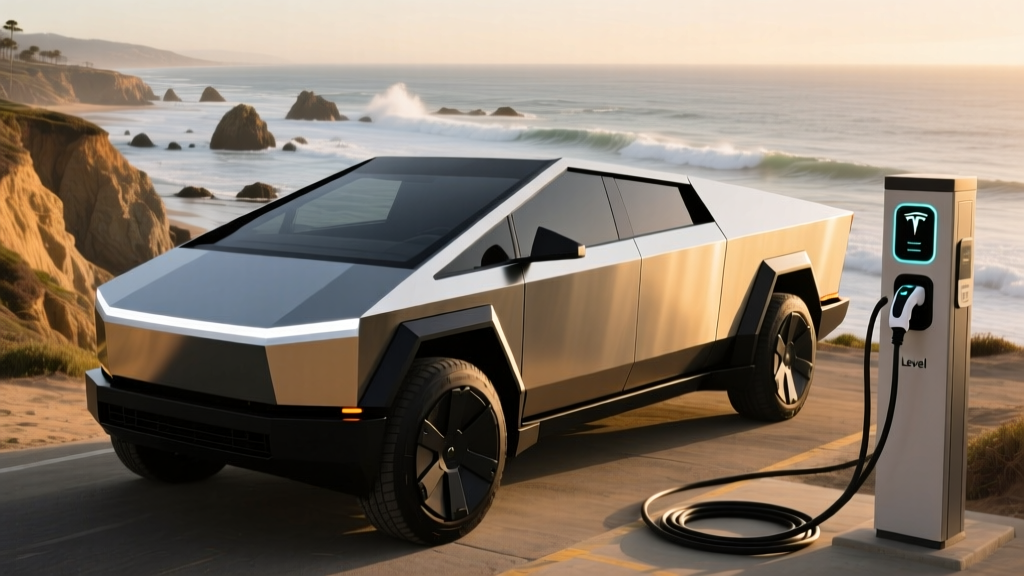
The Tesla Cybertruck has become one of the most polarizing vehicles on American roads — and nowhere more so than in affluent coastal enclaves like La Jolla Shores, where stainless-steel exoskeletons sit alongside Rivian R1Ts and Ford F-150 Lightnings in beachside driveways. But strip away the cyberpunk aesthetics and the neighborhood flex factor, and what remains is a 6,800-pound electric pickup with genuinely impressive charging speeds, a usable 340-mile EPA range, and a polarizing set of compromises that make it either a brilliant daily driver or an expensive misfit depending on your needs.
After extensive testing across Southern California — from the I-5 corridor to the winding grades of Torrey Pines Road — this review breaks down the Cybertruck's real-world efficiency, charging behavior, ownership economics, and whether it actually makes sense for buyers in the La Jolla Shores area and similar coastal communities in 2026.
| Specification | Value |
|---|---|
| EPA Range | 340 miles (AWD) |
| Battery Capacity | ~123 kWh usable (NMC chemistry) |
| Peak DC Fast Charge | 250 kW (Supercharger V3/V4) |
| 10–80% DC Charge Time | ~24 minutes (preconditioned) |
| Level 2 Home Charging | 11.5 kW / ~37 mi/hr |
| 0–60 mph | 3.9 seconds (AWD Dual Motor) |
| Horsepower | 600 hp (AWD) |
| Drivetrain | Dual-motor AWD |
| EPA Efficiency | 56 MPGe / 56 kWh/100mi (est.) |
| Towing Capacity | 11,000 lbs (max rated) |
| Cargo Bed Volume | 67 cu ft (6-ft bed) |
| Front Trunk (Frunk) | 7.1 cu ft |
| Base MSRP (AWD) | $81,630 (incl. destination) |
| Battery/Powertrain Warranty | 8 years / 120,000 miles |
Real-World Range: What the EPA Sticker Doesn't Tell You
The Cybertruck AWD carries an EPA-estimated range of 340 miles on a full charge. That number is competitive with the Rivian R1T Dual-Motor Max Pack (352 miles) and significantly better than the Ford F-150 Lightning Extended Range (320 miles). But as any experienced EV owner knows, the EPA sticker is a starting point, not a guarantee.
EPA Sticker: 340 miles
Observed Highway (70–75 mph, SoCal I-5): ~280–300 miles
Observed City/Coastal (La Jolla, stop-and-go): ~310–330 miles
Cold-Weather Estimate (below 40°F, mountain trips): ~240–270 miles
Towing (5,000-lb trailer, flat terrain): ~170–200 miles
Note: The Cybertruck's large frontal area and angular stainless-steel body create significant aerodynamic drag at highway speeds, which is the primary range killer. City driving with regenerative braking recovers more energy. Cold-weather losses are amplified by the lack of a standard heat pump in early production models — verify whether your model year includes one.
For La Jolla Shores owners specifically, the coastal driving profile is actually favorable. Mild San Diego winters mean you'll rarely see the 20–30% cold-weather range loss that plagues EV owners in the Midwest and Northeast. The stop-and-go traffic along La Jolla Shores Drive and Torrey Pines Road allows regenerative braking to recapture energy efficiently. Most local errands — Del Mar, UTC, Sorrento Valley — fall well within a single charge's comfortable margin.
The real range concern emerges on highway road trips. A run from La Jolla to Los Angeles (~130 miles one way) is trivial, but pushing to Las Vegas (~330 miles) or the Bay Area (~500 miles) requires strategic Supercharger stops. The Cybertruck's aerodynamic penalty at 75+ mph is its single biggest efficiency liability versus more rounded competitors like the Rivian R1T.
Charging Performance: Supercharger Network Advantage
Charging speed is where the Cybertruck leverages its biggest ecosystem advantage: seamless access to the Tesla Supercharger network, which remains the most reliable and geographically comprehensive DC fast-charging infrastructure in the United States as of 2026.
| Charging Level | Max Power | Rate | Time / Notes |
|---|---|---|---|
| Level 1 (120V household) | ~1.4 kW | ~3–4 mi/hr | Emergency/trickle only; ~90+ hrs for full charge |
| Level 2 (240V home — Tesla Wall Connector) | 11.5 kW | ~37 mi/hr | ~9–10 hrs for full charge; overnight standard |
| DC Fast Charge (Supercharger V3/V4) | 250 kW peak | Up to 175 mi in 15 min | 10–80% in ~24 min (preconditioned) |
| DC Fast Charge (CCS adapter, non-Tesla) | ~150–250 kW | Varies by station | Requires CCS adapter; speed depends on network |
Understanding kW vs kWh: A kilowatt (kW) measures charging power — how fast energy flows into the battery. A kilowatt-hour (kWh) measures energy capacity — how much the battery holds. The Cybertruck's ~123 kWh battery charged at a peak rate of 250 kW. That peak rate is not sustained across the entire charging session; the charge curve tapers significantly above 80% State of Charge to protect battery health.
Charging curve reality: The Cybertruck hits its 250 kW peak only between roughly 10–30% SoC when the battery is properly preconditioned (the truck does this automatically when you navigate to a Supercharger). From 30–60%, expect sustained rates around 150–180 kW. Above 80%, the rate drops to 50 kW or less. This is why Tesla — and every experienced EV owner — recommends charging to 80% on road trips and only charging to 100% when you need the full range for the next leg.
Home charging in La Jolla Shores: Most homes in the area have 200-amp electrical panels, which can accommodate a Tesla Wall Connector on a 60-amp circuit (delivering the full 11.5 kW / 48 amps). Installation costs in the San Diego area typically run $1,200–$2,500 for a straightforward Wall Connector install, but can exceed $4,000 if a panel upgrade is needed — a consideration for older La Jolla properties. A full overnight charge adds roughly 300+ miles, more than enough for daily use.
Performance and Driving Dynamics
The Cybertruck AWD's dual-motor powertrain produces 600 horsepower and delivers a 3.9-second 0–60 mph time — figures that feel absurd in a vehicle with a 6,800-pound curb weight and the aerodynamic profile of a doorstop. The instant torque delivery that defines electric powertrains is especially dramatic here: the Cybertruck launches with a violence that catches passengers off guard every time.
But straight-line speed is only part of the picture. The Cybertruck's steer-by-wire system (Tesla calls it no mechanical connection between the steering wheel and the wheels) remains the most divisive aspect of the driving experience. At low speeds — parking lots, neighborhood streets along La Jolla Shores — the system's variable ratio means minimal steering input is needed. At highway speeds, it firms up appropriately. Some drivers adapt within a week; others never fully trust the lack of mechanical feedback.
Ride quality has improved with 2025–2026 software and suspension updates, but the truck's sheer mass is physics you can't software away. You feel the weight over broken pavement and expansion joints. The adaptive air suspension offers adjustable ride height (useful for the occasional beach approach road or steep driveway), but this is not a luxury-sedan ride. It's a performance truck ride — firm, controlled, occasionally jarring.
For towing, the 11,000-pound max rating is competitive, but remember that towing at or near max capacity roughly halves your range. The integrated trailer brake controller and tow-assist camera views are well-executed.
Interior, Tech, and Daily Livability
The Cybertruck's interior follows Tesla's minimalist playbook to its extreme: a single 18.5-inch touchscreen dominates the dashboard, with virtually no physical buttons. Climate controls, mirror adjustments, glovebox release, and even the turn signals (on early builds — later models restored a stalk option) are mediated through the screen or steering-wheel controls.
Passenger and cargo space:
- Front legroom: 41.5 inches — generous
- Rear legroom: 34.8 inches — tight for adults on longer trips; adequate for children
- Rear headroom: Limited by the sloping roofline; taller passengers will notice
- Bed volume: 67 cu ft with the motorized tonneau cover closed; the 6-foot bed is shorter than a full-size F-150 or Silverado
- Frunk: 7.1 cu ft — useful for charging cables and small items
- Seating: 5 passengers (3-across rear bench, but the center position is narrow)
Standout tech features:
- Autopilot / FSD (Supervised): Tesla's Level 2 driver-assistance system. This is not self-driving. The driver must remain fully engaged, hands on the wheel (or torque-applied via steer-by-wire), eyes on the road. FSD Supervised handles highway lane changes, on-ramps, and some city streets, but requires constant supervision. It's impressive in San Diego's grid traffic but far from autonomous.
- Exoskeleton durability: The ultra-hard 30X cold-rolled stainless steel body panels resist dents and scratches exceptionally well — a genuine advantage in tight parking structures and beachside lots.
- Bioweapon Defense Mode: HEPA filtration system that pressurizes the cabin — useful during wildfire smoke events, which remain a seasonal concern in Southern California.
- Powershare (V2L/V2H): Vehicle-to-load capability allows you to power tools, appliances, or even your home during an outage (with appropriate transfer switch installation). Up to 11.5 kW continuous output.
Notable drawbacks:
- Rear-seat comfort is compromised versus the Rivian R1T and F-150 Lightning
- Visibility is limited by the thick A-pillars, small rear window, and bed-height tonneau
- The steer-by-wire learning curve is real and not every driver will adapt
- Panel gaps and build-quality inconsistencies, while improved from 2024 launch vehicles, still draw scrutiny
- No Apple CarPlay or Android Auto — Tesla's proprietary infotainment only
Tesla Autopilot and FSD (Supervised) are SAE Level 2 driver-assistance systems. The driver is responsible for all driving decisions and must monitor the road at all times. These are not Level 4 or Level 5 autonomous systems. Only fully driverless services like Waymo (available in select metros) operate at Level 4. Never treat any Level 2 system as a substitute for an attentive driver. See SAE International's automation levels for the full framework.
Pricing, Tax Credits, and Total Cost of Ownership
The Cybertruck lineup has settled into three primary trims for 2026:
| Trim | Base MSRP | Federal §30D Credit | Effective Price (if eligible) |
|---|---|---|---|
| AWD (Dual Motor) | $81,630 | Up to $7,500* | ~$74,130 |
| Cyberbeast (Tri-Motor) | $101,630 | Up to $7,500* | ~$94,130 |
| RWD (Single Motor — announced) | ~$61,630 (est.) | Up to $7,500* | ~$54,130 (est.) |
*Federal tax credit eligibility under IRS §30D is not automatic. For 2026, the credit requires: buyer AGI below $150,000 (single) / $300,000 (joint); vehicle MSRP at or below $80,000 for trucks; battery components and critical minerals meeting domestic-sourcing thresholds that tighten annually. The Cybertruck AWD at $81,630 exceeds the $80,000 truck MSRP cap, which may disqualify it from the full credit depending on current-year IRS guidance. The Cyberbeast at $101,630 exceeds the cap definitively. The point-of-sale transfer option allows eligible buyers to apply the credit as a down-payment reduction at the dealer. Always verify current eligibility at IRS.gov and consult a tax professional before purchasing.
Tax credit reality for Cybertruck buyers: The MSRP cap is the critical issue here. Under §30D, trucks must have an MSRP of $80,000 or less to qualify. The Cybertruck AWD at $81,630 sits just above this threshold. Tesla has not publicly adjusted pricing to bring it under the cap as of early 2026. Some buyers may qualify for partial credits depending on how the IRS interprets destination charges and trim configurations, but this is not guaranteed. The RWD single-motor variant, if and when it enters production, would likely clear the cap comfortably.
5-Year Ownership Cost Estimate (La Jolla Shores, San Diego County):
- Electricity (home charging, SDG&E rates ~$0.35/kWh avg): ~$3,800 over 5 years (15,000 mi/yr)
- Gasoline equivalent (F-150 4x4, 19 MPG combined, $4.50/gal): ~$17,700 over 5 years
- Fuel savings vs. gas truck: ~$13,900 over 5 years
- Insurance (Cybertruck, San Diego): $3,200–$4,800/year (premium due to repair costs and stainless-steel body panels)
- Maintenance: Minimal — no oil changes, brake wear reduced by regen, cabin air filter replacement. ~$400/year
- Depreciation: Higher than average — the Cybertruck's polarizing design and early-build quality concerns have accelerated depreciation versus the broader EV market
Warranty and Battery Longevity
Tesla provides the following warranty coverage for the Cybertruck:
- Basic Vehicle Limited Warranty: 4 years / 50,000 miles
- Battery and Drive Unit Warranty: 8 years / 120,000 miles (whichever comes first), with a minimum 70% capacity retention threshold
- Restraint System: 5 years / 60,000 miles
The Cybertruck uses an NMC (nickel manganese cobalt) battery pack with approximately 123 kWh of usable capacity. NMC chemistry offers higher energy density than LFP (lithium iron phosphate), which is why it's used in a vehicle this heavy that needs maximum range. The trade-off is that NMC batteries are more sensitive to sustained high SoC storage — Tesla recommends daily charging to 80–90% and only charging to 100% before long trips. Following this guideline significantly extends battery longevity.
Based on Tesla's track record with Model S and Model X packs (which use similar chemistry), owners can expect approximately 8–12% degradation over the first 100,000 miles, with the rate of loss slowing considerably after the initial 20,000 miles. A full battery replacement outside of warranty currently runs $18,000–$25,000 depending on pack configuration and labor — a figure worth considering for second owners.
Cybertruck vs. The Competition: Rivian R1T and F-150 Lightning
- Class-leading DC fast-charging speed (250 kW peak)
- Supercharger network access — the most reliable charging ecosystem
- Stainless-steel body resists dents, scratches, and corrosion
- Dual-motor AWD performance (3.9s 0–60) is exceptional for the segment
- Powershare V2L/V2H capability for home backup and job-site power
- Bioweapon Defense Mode HEPA filtration
- Strong towing capacity (11,000 lbs rated)
- Rear seat is cramped; not family-truck comfortable
- MSRP exceeds §30D tax credit cap on AWD and Cyberbeast trims
- Highway range loss is significant due to aerodynamic drag
- Steer-by-wire divides drivers; not everyone adapts
- Insurance premiums are high relative to competitors
- Build quality still inconsistent versus legacy automakers
- No Apple CarPlay / Android Auto
- Bed is shorter than full-size competitors (6 ft vs. 6.5–8 ft)
Choose the Cybertruck if: You prioritize charging speed and Supercharger access, value the stainless-steel body's durability, want sports-car acceleration in a truck, and primarily drive solo or with one passenger. It's best suited for a tech-forward owner who views the truck as a performance vehicle and daily driver more than a workhorse or family hauler.
Choose the Rivian R1T if: You need a more comfortable rear seat for family duty, prefer a conventional steering system, want a full-size spare tire (included), and value the quad-motor option for extreme off-road capability. The R1T's 352-mile Max Pack range edges out the Cybertruck, though it charges slower (~200 kW peak).
Choose the F-150 Lightning if: You need a full-size 8-foot bed, prioritize familiarity (it drives like a conventional F-150), want BlueCruise hands-free highway driving, and value a lower starting price with broader tax-credit eligibility. The Lightning's 320-mile Extended Range is slightly less, but its starting MSRP clears the §30D cap more easily.
Is the Cybertruck Right for La Jolla Shores Owners?
The La Jolla Shores use case is specific: mild coastal weather, short-to-medium daily commutes (La Jolla to downtown San Diego is ~15 miles), frequent beach-adjacent parking, and a social environment where vehicle choice is visible. The Cybertruck's strengths align well with this profile — the range is more than adequate for daily use, the stainless body shrugs off parking-lot dings, and the HEPA filtration handles seasonal wildfire smoke.
But the compromises are real. If you regularly carry rear-seat passengers (children in car seats, adult friends for dinner in Del Mar), the tight rear quarters will frustrate. If you need a truck bed for serious hauling — surfboards fit, but lumber or full sheets of plywood do not lay flat in a 6-foot bed — look elsewhere. And if the $7,500 federal tax credit is a significant part of your purchase calculus, the MSRP cap issue may push you toward the Rivian R1T or F-150 Lightning.
For the right buyer — a solo driver or couple who wants a fast-charging, head-turning electric daily driver with occasional utility — the Cybertruck delivers a genuinely unique ownership experience. For the buyer who needs a truck that does everything a traditional truck does, just electrified, the competition offers more practicality at similar or lower prices.
Frequently Asked Questions
What is the real-world range of the Tesla Cybertruck?
The EPA rates the Cybertruck AWD at 340 miles. In real-world Southern California driving, expect approximately 280–300 miles at sustained highway speeds (70–75 mph), 310–330 miles in mixed city/coastal driving, and 240–270 miles in cold weather or mountain driving. Towing reduces range to approximately 170–200 miles depending on trailer weight and terrain.
How fast does the Cybertruck charge at home and on the road?
On a Tesla Wall Connector (Level 2, 240V, 11.5 kW), the Cybertruck gains approximately 37 miles of range per hour, fully charging overnight in about 9–10 hours. On a Tesla Supercharger V3/V4 (DC fast charge), it peaks at 250 kW and charges from 10–80% in approximately 24 minutes when the battery is preconditioned. Charging slows significantly above 80% SoC to protect battery health.
Does the Cybertruck qualify for the $7,500 federal EV tax credit?
Eligibility is uncertain for 2026. The Cybertruck AWD at $81,630 exceeds the §30D MSRP cap of $80,000 for trucks, which likely disqualifies it. The Cyberbeast at $101,630 exceeds it definitively. Additionally, buyers must meet income caps ($150,000 single / $300,000 joint AGI) and the vehicle must satisfy battery-sourcing requirements that tighten each year. Always verify current rules at IRS.gov and consult a tax professional before relying on the credit in your purchase decision.
Is the Cybertruck worth buying over the Rivian R1T or F-150 Lightning?
It depends on your priorities. The Cybertruck wins on charging speed (250 kW vs. ~200 kW for the R1T, ~150 kW for the Lightning), Supercharger network access, and raw acceleration. The Rivian R1T wins on rear-seat comfort, off-road capability, and build quality. The F-150 Lightning wins on bed size, price, tax-credit eligibility, and familiarity. Test-drive all three before deciding.
What is the Cybertruck's battery chemistry, and how long will it last?
The Cybertruck uses an NMC (nickel manganese cobalt) battery pack with approximately 123 kWh of usable capacity. NMC offers high energy density but is sensitive to prolonged 100% storage — charge to 80–90% daily and reserve 100% for road trips. Tesla's battery warranty covers 8 years / 120,000 miles with a minimum 70% capacity retention guarantee. Based on historical Tesla pack data, expect roughly 8–12% degradation over the first 100,000 miles.
How much does it cost to charge a Cybertruck at home in San Diego?
San Diego Gas & Electric (SDG&E) average residential rates hover around $0.30–$0.40/kWh depending on your plan and time of use. A full charge (~123 kWh) costs approximately $37–$49 at standard rates, or $25–$35 if you charge during off-peak hours (typically overnight). Over a year of 15,000 miles, expect to spend roughly $700–$900 on home electricity — a fraction of what a comparable gas truck would consume in fuel. See fueleconomy.gov for official efficiency comparisons.
Can the Cybertruck power my home during an outage?
Yes. Tesla's Powershare feature provides vehicle-to-load (V2L) and vehicle-to-home (V2H) capability, delivering up to 11.5 kW of continuous power. For home backup, you'll need a professionally installed transfer switch or Tesla Powerwall integration. At 11.5 kW output, the Cybertruck can sustain essential home circuits (refrigerator, lights, HVAC fan, outlets) for multiple days depending on usage and remaining battery charge.
Sources: fueleconomy.gov (EPA range and efficiency data), IRS.gov (§30D Clean Vehicle Credit rules), Tesla manufacturer specifications. All pricing and credit information reflects 2026 model-year data and is subject to change. Verify all figures with official sources before purchasing.