The Short Answer: 1,020 Horsepower (But the Details Matter)
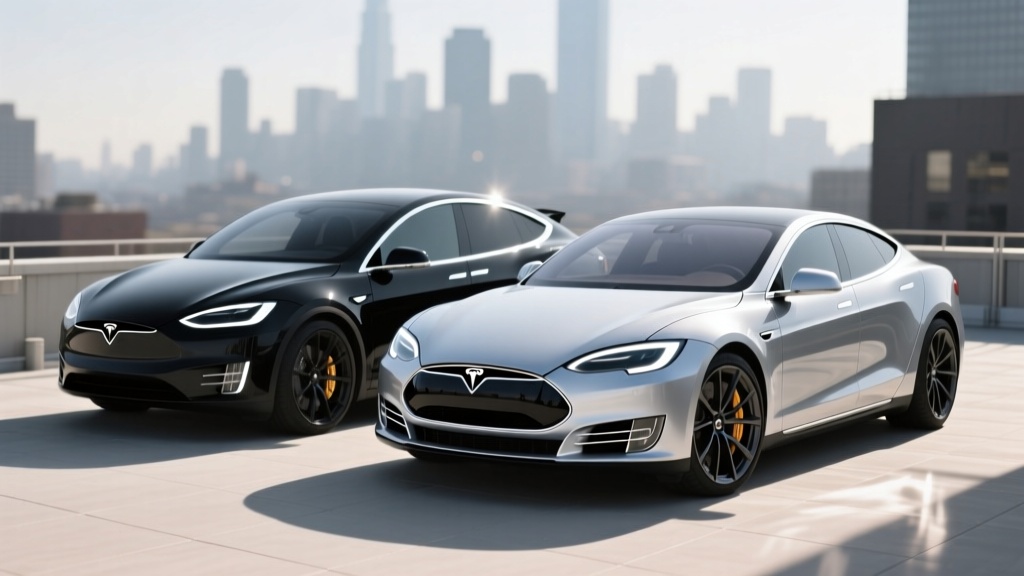
If you've searched "how much hp does a Tesla Plaid have," the headline number is 1,020 horsepower (760 kW) across both the Model S Plaid and Model X Plaid. That figure comes from Tesla's tri-motor all-wheel-drive powertrain — one motor on the front axle and two on the rear — using carbon-sleeved rotors that can sustain peak output well beyond typical EV thermal limits.
But horsepower alone doesn't tell the ownership story. Peak HP is only useful if the battery can sustain it, the thermal management can keep up, and the car remains livable day-to-day. Below, we break down the full spec sheet, real-world range, charging behavior, and 2026 pricing so you can decide whether a Plaid-badged Tesla fits your garage.
| Spec | Model S Plaid | Model X Plaid |
|---|---|---|
| Horsepower | 1,020 hp (760 kW) | 1,020 hp (760 kW) |
| Drivetrain | Tri-Motor AWD | Tri-Motor AWD |
| 0-60 mph | 1.99 seconds | 2.5 seconds |
| Top Speed | 200 mph | 163 mph |
| Battery (usable) | ~95 kWh (NMC) | ~95 kWh (NMC) |
| EPA Range | 396 miles (19" wheels) | 326 miles (20" wheels) |
| MPGe (combined) | 120 MPGe | 102 MPGe |
| Max DC Fast Charge | 250 kW (V3 Supercharger) | 250 kW (V3 Supercharger) |
| 10-80% DC Time | ~30 minutes | ~32 minutes |
| Level 2 Home Charge | 11.5 kW (~34 mi/hr) | 11.5 kW (~30 mi/hr) |
| Cargo Volume | 28 cu ft (rear) + frunk | 88.1 cu ft (max) + frunk |
| Base MSRP | $89,990 | $94,990 |
Battery Chemistry, Capacity, and What It Means for Longevity
Both Plaid models use an NMC (nickel manganese cobalt) lithium-ion pack with approximately 95 kWh of usable capacity. Tesla does not publish exact cell-level chemistry changes year over year, but the structural battery pack architecture introduced in recent refreshes improves thermal conductivity and pack rigidity.
NMC chemistry is chosen here for its high energy density — essential for packing 390+ miles of range into a sedan platform while still delivering 1,020 hp bursts. The trade-off versus LFP (lithium iron phosphate) is that NMC cells are more sensitive to sustained high states of charge. Tesla recommends daily charging to 80-90% for NMC packs and only charging to 100% before long trips. Following this guidance, owners typically see 8-12% degradation over 100,000 miles, based on fleet data aggregated by EV tracking communities.
The battery and drive unit warranty covers 8 years or 150,000 miles (whichever comes first) with a minimum 70% capacity retention threshold — one of the more generous thresholds in the luxury EV segment.
Real-World Range: What the EPA Sticker Doesn't Tell You
EPA vs. Real World — Model S Plaid:
EPA sticker: 396 miles (19" wheels). Expect ~320-340 miles in mixed highway driving at 70-80 mph, and ~270-290 miles in freezing temperatures (below 32°F). The 21" Arachnid wheel option drops EPA range to 359 miles; real-world highway drops proportionally.
EPA vs. Real World — Model X Plaid:
EPA sticker: 326 miles (20" wheels). Expect ~265-285 miles highway, ~220-240 miles in cold weather. The SUV's larger frontal area and weight (~5,185 lbs) hit efficiency hard at speed.
The Plaid powertrain's energy appetite is real. Sustained hard acceleration, frequent high-speed driving, and cold weather all compress range noticeably. The heat pump (standard on current Plaid models) mitigates cold-weather cabin heating losses but cannot fully offset the physics of a 5,000-lb vehicle pushing through dense air at highway speeds.
According to fueleconomy.gov, the Model S Plaid achieves 120 MPGe combined, translating to roughly 28 kWh/100mi. That's efficient for a 1,020-hp vehicle but noticeably thirstier than a Long Range Model S (132 MPGe) or a Lucid Air Pure (146 MPGe).
Charging Speed: 250 kW Peak, But Read the Curve
Both Plaid models peak at 250 kW on Tesla V3 Superchargers, but — as with all EVs — peak rate is not sustained rate. The charging curve looks roughly like this:
| Charging Level | Power | Speed / Time | Notes |
|---|---|---|---|
| Level 1 (120V) | ~1.4 kW | ~3-4 mi/hr | Emergency/trickle only |
| Level 2 (240V, 48A) | 11.5 kW | ~30-34 mi/hr | Full charge overnight (~10 hrs) |
| DC Fast (V3 Supercharger) | Up to 250 kW | 10-80% in ~30 min | Peak holds to ~50%, tapers to ~100 kW above 65% |
| DC Fast (V4 Supercharger) | Up to 250 kW (current vehicles) | Similar to V3 | V4 hardware supports higher rates, but Plaid onboard limit is 250 kW |
The critical insight: Tesla's V3 Supercharger network delivers 250 kW per stall without splitting, so you'll typically see the full peak — but only from roughly 10% to 50% state of charge. Above 65%, the rate tapers significantly to protect cell health. A 10-80% session takes approximately 30 minutes, which is competitive but not class-leading; the Hyundai Ioniq 5 and Porsche Taycan (800V architecture) can do 10-80% in 18-22 minutes on 350 kW chargers.
One practical note: preconditioning is essential for fast charging. Navigate to a Supercharger using the car's built-in routing and the battery will preheat automatically, arriving at optimal temperature for peak charge rate. Without preconditioning (e.g., pulling into a charger without navigation routing), you may see peak rates limited to 100-150 kW in cold weather.
Performance Beyond the Horsepower Number
The 1,020 hp figure is generated by Tesla's three permanent-magnet synchronous reluctance motors with carbon-sleeved rotors — a design that prevents rotor expansion at extreme RPMs (up to 20,000+ RPM). This is why the Plaid can sustain its power delivery to 200 mph rather than tapering off like many EVs above 120 mph.
The Model S Plaid's 1.99-second 0-60 mph time (with rollout subtracted, on a prepped surface) makes it one of the quickest production cars ever built. In real-world conditions on public roads, expect 2.1-2.3 seconds. The Model X Plaid, carrying roughly 500 additional pounds, manages 2.5 seconds — still absurdly quick for a three-row SUV.
Torque vectoring across the tri-motor setup provides exceptional corner-exit grip. The rear dual-motor assembly can independently torque-vector the left and rear wheels, making the car feel smaller than its dimensions suggest on twisty roads. However, at 4,766 lbs (Model S Plaid), physics still governs — this is a grand tourer, not a track car, despite what the lap times suggest.
Pricing, Trims, and Federal Tax Credit Reality
Here's where many Plaid shoppers face a hard truth: neither the Model S Plaid nor Model X Plaid qualifies for the federal §30D EV tax credit in 2026.
| Model | Base MSRP | As-Tested (typical) | §30D Credit Eligible? | Why / Why Not |
|---|---|---|---|---|
| Model S Plaid | $89,990 | $93,000-$97,000 | No | Exceeds $55,000 sedan MSRP cap |
| Model X Plaid | $94,990 | $98,000-$105,000 | No | Exceeds $80,000 SUV MSRP cap |
Under current IRS §30D rules, new clean vehicle credits are capped at $55,000 MSRP for sedans and $80,000 for SUVs/trucks/vans. Both Plaid models blow past these limits. Additionally, buyer income caps apply ($150,000 single / $300,000 joint AGI), and battery critical-mineral and component sourcing requirements must be met — though the MSRP cap alone disqualifies these vehicles regardless of your income or the battery supply chain.
There is no point-of-sale transfer option for the Plaid lineup because the credit simply doesn't apply. If you're trading in a vehicle, Tesla does offer competitive trade-in values that can offset some cost, and certain states (California, Colorado, Massachusetts) offer additional incentives that may apply — check your state-specific EV incentives for details.
Interior, Tech, and Daily Livability
Model S Plaid interior highlights:
- 17" center touchscreen with 22-speaker audio system
- Yoke steering wheel standard (round wheel available at no cost)
- Rear-seat 8" touchscreen with HVAC and media controls
- 28 cu ft cargo (rear seats up), expandable with 60/40 fold
- Front trunk (frunk) for additional storage
- HEPA air filtration with Bioweapon Defense Mode
Model X Plaid adds:
- Falcon-wing rear doors (dramatic but add complexity; sensors prevent opening into obstacles)
- Optional 6-seat layout with second-row captain's chairs
- 88.1 cu ft max cargo with seats folded — genuine family-hauler utility
- 5,000-lb towing capacity (when properly equipped)
Both models include Tesla's Autopilot as standard, which is a SAE Level 2 driver-assistance system — meaning lane centering and adaptive cruise control that require continuous driver supervision. Full Self-Driving (Supervised) is a $8,000 option (or $99/month subscription) that adds city-street navigation and traffic-light recognition but remains Level 2. The driver must remain attentive and ready to take over at all times.
Notable drawbacks: The minimalist interior isn't for everyone — no physical buttons for climate or mirrors (all screen-controlled). Panel gap quality has improved but still varies by unit. The yoke steering wheel is polarizing, particularly for low-speed parking maneuvers where hand-over-hand is natural. And road noise at highway speeds is more noticeable than in a Lucid Air or Mercedes EQS.
Plaid vs. the Competition: Is It Worth It?
Model S Plaid — Pros
- 1,020 hp / 1.99s 0-60 — performance benchmark
- 396-mile EPA range (class-leading among performance EVs)
- Supercharger network access — most reliable DC charging in the US
- OTA updates continuously add features
- Strong resale value relative to luxury EV segment
Model S Plaid — Cons
- No federal tax credit eligibility
- 250 kW max charge rate (slower than 800V competitors)
- Interior materials don't match the $90K+ price point
- Yoke steering divisive; limited physical controls
- Service center wait times can stretch weeks in some markets
Choose the Model S Plaid if: You want the ultimate blend of daily-drivable range and supercar-crushing acceleration, you rely on the Supercharger network for road trips, and you prioritize tech-forward features over traditional luxury materials.
Consider the Lucid Air Grand Touring if: You want 516 miles of EPA range, 350 kW+ charging capability, and a more traditionally luxurious cabin — though you sacrifice some Supercharger convenience (Lucid uses CCS with a NACS adapter).
Consider the Porsche Taycan Turbo GT if: Track capability and 800V charging architecture matter more than range (EPA ~280 miles) and you want a driver-focused cockpit with physical controls.
Choose the Model X Plaid if: You need three-row seating, falcon-wing cargo access, 5,000-lb towing, and 1,020 hp in a family SUV — a combination no other vehicle on the market offers.
Frequently Asked Questions
How much hp does a Tesla Plaid have in real driving conditions?
The full 1,020 hp is available when the battery is above roughly 50% state of charge and at optimal temperature. Below 20% SoC or in extreme cold, peak power output is software-limited to protect the battery — you may see 700-850 hp instead. Preconditioning the battery (via navigation routing or manual preconditioning) restores full output.
Does the Tesla Plaid qualify for any tax credits in 2026?
Not the federal §30D credit — both Plaid models exceed MSRP caps. Some state incentives (California's CVRP, Colorado's EV tax credit) may partially apply depending on your income and residency. Consult a tax professional for your specific situation.
What's the real-world highway range of the Model S Plaid?
Expect 320-340 miles at 70-80 mph in moderate temperatures (60-80°F). In winter conditions (below freezing), plan for 270-290 miles. If you drive aggressively or tow, range drops further. Always plan road trips with a 20-30% buffer below your expected range.
How long does it take to charge a Tesla Plaid at home?
On a 48-amp Level 2 home charger (11.5 kW), a full charge from 10% to 90% takes roughly 9-10 hours. Most owners charge overnight and never visit a gas station. Installation of a 240V/60A circuit typically costs $800-$2,000 depending on your electrical panel's capacity and distance from the charger location.
Is the Plaid powertrain reliable long-term?
Tesla's tri-motor Plaid powertrain is covered by an 8-year/150,000-mile warranty with a 70% battery retention guarantee. Fleet data from high-mileage Plaid owners shows 8-12% battery degradation at 100,000 miles. The carbon-sleeved rotor motors have proven durable, though the Plaid variant's higher thermal loads mean cooling system maintenance should not be deferred.
Is the Tesla Plaid self-driving?
No. Even with Full Self-Driving (Supervised) enabled, the Plaid is an SAE Level 2 vehicle. The driver must keep hands on the wheel (or demonstrate attention via the cabin camera) and remain prepared to take over instantly. No consumer Tesla is a self-driving vehicle.