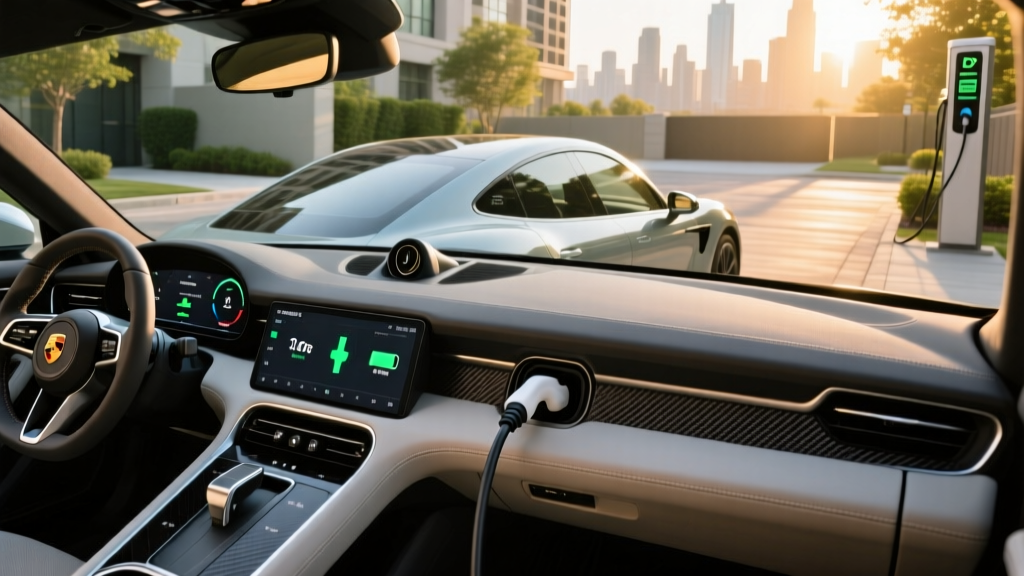
The Porsche Taycan occupies a rare space in the EV market: a luxury performance sedan that actually delivers on the driving dynamics its badge promises, while still functioning as a practical daily driver. For buyers who want that Stuttgart engineering without absorbing the brutal first-year depreciation, a certified pre-owned Porsche Taycan has become one of the smartest plays in the electric luxury segment heading into 2026.
With the refreshed 2025+ Taycan now on dealer lots featuring larger batteries and faster charging, earlier model years (2020–2024) are flowing into Porsche's CPO pipeline in meaningful numbers. This guide breaks down exactly what you're getting — real-world range, charging behavior, warranty coverage, and whether the federal used-EV tax credit can apply — so you can evaluate a CPO Taycan with data, not just emotion.
Real-World Range: What the EPA Sticker Doesn't Tell You
The Taycan's EPA range figures have always been a point of controversy. Porsche's conservative testing methodology consistently underestimates what the car delivers in real-world driving, which is the opposite problem most EV buyers face. Here's what the numbers actually look like across key trims:
| Trim | Battery (kWh usable) | EPA Range | Real-World Highway | Real-World City/Mixed | Cold Weather (20°F) |
|---|---|---|---|---|---|
| Taycan RWD | 79.2 (Performance Battery Plus) | 225 mi | ~210–225 mi | ~240–260 mi | ~175–195 mi |
| Taycan 4S | 79.2 (Performance Battery Plus) | 227 mi | ~210–230 mi | ~235–255 mi | ~175–195 mi |
| Taycan Turbo | 79.2 (Performance Battery Plus) | 212 mi | ~195–210 mi | ~220–240 mi | ~165–185 mi |
| Taycan Turbo S | 79.2 (Performance Battery Plus) | 201 mi | ~185–200 mi | ~210–230 mi | ~155–175 mi |
| Taycan GTS | 79.2 (Performance Battery Plus) | 227 mi | ~210–225 mi | ~235–250 mi | ~175–190 mi |
| Cross Turismo 4S | 79.2 (Performance Battery Plus) | 215 mi | ~200–215 mi | ~225–240 mi | ~165–185 mi |
Battery Chemistry, Capacity, and Long-Term Degradation
All 2020–2024 Taycan models use an NMC (nickel-manganese-cobalt) lithium-ion battery supplied primarily by LG Energy Solution. Two pack sizes were offered:
- Performance Battery (standard): 71.0 kWh usable (93.4 kWh gross) — available on base RWD models through 2023
- Performance Battery Plus: 79.2 kWh usable (93.4 kWh gross) — standard on 4S, Turbo, Turbo S, GTS; optional on RWD
The split between gross and usable capacity is deliberate: Porsche maintains a ~7 kWh buffer at the top and ~7 kWh at the bottom to protect long-term cell health. This is one reason Taycan battery degradation has proven exceptionally low in fleet data.
According to Geotab's battery health study, Porsche Taycan packs show an average degradation rate of approximately 2.5–3.5% over the first three years / 45,000 miles — among the best in the industry. This is attributable to the generous buffer, the 800V architecture's lower per-cell current draw, and an advanced liquid thermal management system that keeps cells in their optimal 68–86°F window.
Charging Speed: The 800-Volt Advantage in Practice
The Taycan was the first production EV with an 800-volt architecture, and this translates directly into charging performance. Here's what to expect at the plug:
| Charging Method | Max Power | Speed / Time | Notes |
|---|---|---|---|
| DC Fast Charge (800V station) | 270 kW peak | 10–80% in ~22.5 min | Requires 350 kW CCS station; sustains ~200+ kW to 55% SoC |
| DC Fast Charge (400V station) | ~135 kW peak | 10–80% in ~38 min | Most 50–150 kW CCS stations; uses onboard step-up converter |
| Level 2 Home (240V, 48A) | 11.5 kW | ~33 mi/hr of range | 0–100% in ~8.5 hours (PB+ battery) |
| Level 2 Home (240V, 32A) | 7.7 kW | ~22 mi/hr of range | Common NEMA 14-50 outlet setup; 0–100% in ~12 hours |
| Level 1 (120V) | 1.4 kW | ~4 mi/hr of range | Emergency/trickle only; ~57 hours for full charge |
Charging curve reality check: The Taycan's 270 kW peak is achievable but not sustained. On a 350 kW Electrify America or compatible CCS station with a preconditioned battery (the Taycan automatically preconditions when a charger is set as your navigation destination), you'll see 250–270 kW from roughly 5–25% SoC, then a gradual taper. From 55–80%, expect 100–130 kW. The 10–80% time of approximately 22.5 minutes remains one of the fastest in the industry for a ~80 kWh pack.
For CPO buyers: verify that the vehicle's charging port shows no signs of corrosion or damage. Porsche's CCS port is robust, but high-mileage examples that relied heavily on public DC fast charging may show minor port wear. The onboard charger (11.5 kW AC) is covered under the powertrain warranty.
Performance Specs: What You're Actually Paying For
The Taycan's driving experience is the reason it exists. Every variant shares the 800V architecture, a two-speed automatic transmission on the rear axle (first gear for launch, second for efficiency at speed), and a single-speed transmission on the front axle for AWD models. Here's the performance breakdown:
| Trim | Drivetrain | Horsepower (Launch Control) | 0–60 mph | Top Speed |
|---|---|---|---|---|
| Taycan RWD | Rear-wheel drive | 402 hp | 5.1 sec | 143 mph |
| Taycan 4S | Dual-motor AWD | 562 hp | 3.8 sec | 155 mph |
| Taycan GTS | Dual-motor AWD | 590 hp | 3.5 sec | 155 mph |
| Taycan Turbo | Dual-motor AWD | 670 hp | 3.0 sec | 161 mph |
| Taycan Turbo S | Dual-motor AWD | 750 hp | 2.6 sec | 162 mph |
The two-speed rear transmission is a key differentiator. Unlike single-speed EVs that lose punch above 80 mph, the Taycan shifts into its second gear and continues accelerating with urgency well past triple digits. This is also why the Taycan's highway efficiency holds up better than competitors like the Tesla Model S or Lucid Air at sustained 75–85 mph cruising.
CPO Pricing, Tax Credits, and Total Cost
A certified pre-owned Porsche Taycan represents significant value compared to new pricing, particularly because luxury EVs absorb steep depreciation in years one through three. Here's where the market sits in early 2026:
| Trim / Year Range | Original MSRP (New) | CPO Price Range | Typical Mileage |
|---|---|---|---|
| 2021–2022 Taycan RWD | $82,700–$90,000 | $48,000–$58,000 | 20,000–40,000 mi |
| 2021–2022 Taycan 4S | $105,200–$115,000 | $58,000–$72,000 | 18,000–38,000 mi |
| 2022–2023 Taycan GTS | $136,500–$145,000 | $75,000–$92,000 | 10,000–28,000 mi |
| 2021–2023 Taycan Turbo | $153,500–$165,000 | $82,000–$105,000 | 12,000–30,000 mi |
| 2021–2023 Taycan Turbo S | $187,600–$195,000 | $95,000–$125,000 | 8,000–25,000 mi |
The new-vehicle §30D credit of up to $7,500 does not apply to CPO purchases. This is a common point of confusion. The §30D credit is exclusively for new vehicles meeting battery-sourcing, MSRP, and income requirements.
What Does Porsche CPO Warranty Cover?
Porsche's Certified Pre-Owned program adds significant protection beyond the original factory warranty:
- CPO Limited Warranty: 2 years from CPO purchase date with no mileage limit, covering most vehicle components beyond the original 4-year/50,000-mile new-vehicle warranty
- Original Battery Warranty (still applies): 8 years / 100,000 miles against defects and capacity loss below 70% of original capacity — this transfers to CPO buyers
- Original Powertrain Warranty: 4 years / 50,000 miles (may be partially or fully expired on older CPO examples; the CPO warranty picks up coverage)
- Roadside Assistance: 2 years included with CPO purchase
- 111-Point Inspection: Every CPO Taycan undergoes a multi-point inspection with reconditioning as needed
For a 2022 Taycan 4S with 30,000 miles purchased CPO in 2026, you'd still have approximately 5 years / 70,000 miles of battery warranty remaining, plus the 2-year CPO comprehensive coverage. This is meaningful protection on a high-voltage system.
Interior, Cargo, and Daily Livability
The Taycan's interior is where Porsche's luxury DNA shows, but it's also where practical compromises become apparent compared to rivals:
| Measurement | Specification |
|---|---|
| Front legroom | 41.2 in |
| Rear legroom | 33.3 in |
| Front headroom | 38.0 in |
| Rear headroom | 36.2 in (sedan); 37.8 in (Cross Turismo) |
| Trunk (rear) | 12.9 cu ft (sedan); 14.3 cu ft (Cross Turismo) |
| Frunk (front trunk) | 2.9 cu ft |
| Total cargo volume | 15.8 cu ft (sedan) |
The rear seat is the Taycan's most common complaint. At 33.3 inches of legroom, it trails the Tesla Model S (35.4 in), Lucid Air (36.0 in), and Mercedes EQS (38.7 in) significantly. Adults over 6 feet will find extended rear-seat travel uncomfortable. The Cross Turismo variant solves the headroom issue with its wagon roofline and adds a slightly larger rear cargo area, but legroom remains identical.
The dual-screen infotainment system (10.9-inch center + 10.9-inch passenger display on most trims, plus an 8.4-inch haptic climate control panel) holds up well in 2026. Wireless Apple CarPlay and Android Auto are standard. The optional passenger screen is a nice touch but adds $1,080 to the original window sticker — it's a nice-to-have on CPO examples, not a dealbreaker.
Driver Assistance Technology
The Taycan comes equipped with Porsche InnoDrive (adaptive cruise with predictive speed adjustment based on road data) and standard Porsche Active Safe features including automatic emergency braking, lane-keeping assist, and surround-view cameras. Optional features to look for on CPO examples:
- Lane Change Assist: Blind-spot monitoring with rear cross-traffic alert
- Night Vision Assist: Thermal imaging camera with pedestrian/animal detection
- Park Assist with Surround View: 360-degree cameras with automatic parking
- Head-Up Display: Projects speed, navigation, and ADAS info onto windshield
CPO Taycan vs. Key Competitors
How does a CPO Taycan stack up against other luxury EVs in the same price bracket? Here's a functional comparison:
| Factor | Porsche Taycan 4S (CPO) | Tesla Model S Plaid (CPO) | Lucid Air Pure (CPO) | Mercedes EQS 450+ (CPO) |
|---|---|---|---|---|
| CPO Price Range | $58K–$72K | $62K–$78K | $52K–$65K | $55K–$70K |
| EPA Range | 227 mi | 396 mi | 419 mi | 350 mi |
| 0–60 mph | 3.8 sec | 1.99 sec | 5.2 sec | 5.9 sec |
| Max DC Charge | 270 kW | 250 kW | 220 kW | 200 kW |
| Build Quality | Exceptional | Good (improved 2022+) | Very Good | Excellent |
| Rear Seat Space | Tight (33.3 in) | Adequate (35.4 in) | Generous (36.0 in) | Luxurious (38.7 in) |
| Driving Dynamics | Best in class | Raw speed, softer chassis | Refined, GT-oriented | Comfort-first |
| CPO Warranty | 2 yr / unlimited mi | Varies (limited CPO program) | Limited CPO availability | 2 yr / unlimited mi |
Look elsewhere if: Maximum range is critical (choose Model S or Lucid Air), you regularly carry rear-seat adults (choose EQS or Lucid Air), or you need the lowest possible cost of ownership (Tesla's Supercharger network and lower maintenance costs win).
Pros, Cons, and the CPO Verdict
Pros
- Best-in-class driving dynamics and steering feel
- 800V architecture delivers fastest-in-class DC charging
- Exceptional build quality and materials
- Strong CPO warranty with remaining battery coverage
- Real-world range often exceeds EPA estimates in city driving
- Two-speed transmission maintains performance at highway speeds
- Aggressive depreciation makes CPO values compelling
- Porsche dealer network for service and support
Cons
- EPA range (201–227 mi) trails rivals by 100+ miles
- Rear seat legroom is cramped for adults
- CCS charging only — no native NACS (requires adapter for Tesla Superchargers)
- Cargo space (15.8 cu ft total) is modest for the class
- No federal tax credit on most CPO examples (price exceeds $25K cap)
- Optional equipment was expensive new; verify what's included
- Tire costs are high (20/21-inch performance tires: $300–$500 each)
- Insurance premiums run 15–25% above comparable ICE Porsches
Frequently Asked Questions
What is the real-world range of a CPO Porsche Taycan?
For the most common CPO configuration (4S with Performance Battery Plus, 79.2 kWh usable), expect 235–255 miles in mixed city/highway driving and 210–230 miles at sustained highway speeds. City-heavy routes with regenerative braking can push 260+ miles. Cold weather (below freezing) reduces range by 15–25%, putting realistic winter range at 175–195 miles.
How fast does the Taycan charge at home and on the road?
On a 350 kW DC fast charger with a preconditioned battery, the Taycan peaks at 270 kW and charges from 10–80% in approximately 22.5 minutes. At home on a 48-amp Level 2 charger (11.5 kW), expect roughly 33 miles of range per hour, or a full charge in about 8.5 hours. Most CPO buyers should budget $800–$2,000 for a professional Level 2 home charger installation.
Does a CPO Taycan qualify for any federal tax credit?
Most CPO Taycans do not qualify for the §25E used-EV credit because their sale price exceeds the $25,000 cap. The §30D new-vehicle credit (up to $7,500) does not apply to pre-owned purchases. Some state and local incentives may apply — check your state's energy office or the Alternative Fuels Data Center for current programs.
What should I inspect on a CPO Taycan before buying?
Request the battery State of Health (SoH) report from the dealer — Porsche diagnostic tools can read this. A healthy 3-year-old Taycan should show 95–97%+ SoH. Also check: brake rotor wear (heavy regen use can extend pad life but rotors may corrode from low friction-brake use), tire tread depth and age (performance tires wear quickly), charging port condition, and whether the original Mobile Charger Connect (Level 2 cord) is included — replacements cost $800+.
Is a CPO Taycan reliable compared to other luxury EVs?
The Taycan has proven to be one of the more reliable luxury EVs in its class. Porsche's 800V system, robust thermal management, and generous battery buffer contribute to low degradation and few powertrain issues. Common complaints center on software glitches (mostly addressed via OTA updates), PCM infotainment reboots, and occasional 12V battery drain on vehicles that sit unused for extended periods. The CPO inspection and warranty provide a meaningful safety net.
Is the CPO Taycan worth it versus buying new?
Financially, a CPO Taycan is the clear winner. A 2022 Taycan 4S with 30,000 miles at $65,000 CPO represents a ~$50,000 savings versus a comparably equipped new 2026 model — and the CPO warranty bridges the gap meaningfully. The trade-off is missing the updated 2025+ Taycan's larger 105 kWh battery (up to 318 miles EPA) and slightly faster charging. If range is your primary concern, the newer models are worth the premium. If driving experience and value dominate your decision, CPO is the way to go.