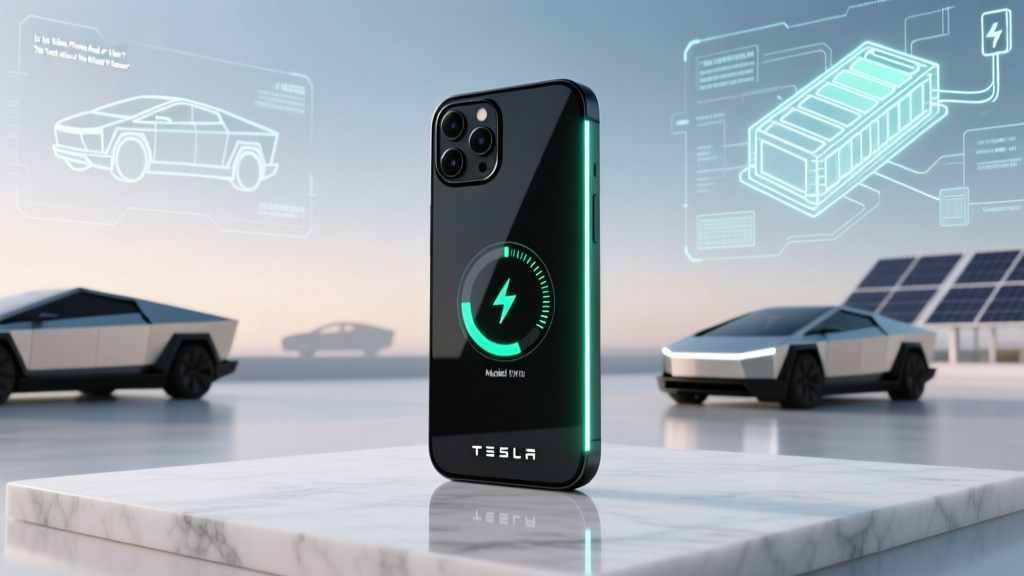
If you have spent any time on YouTube, TikTok, or Facebook in the past few years, you have likely encountered a viral video or article asking: is the Tesla phone real or fake? Rendered images of a sleek "Tesla Model Pi" smartphone circulate endlessly, often promising satellite connectivity, solar charging, Neuralink integration, and even free Starlink internet. The rumor has accumulated millions of views and spawned countless listicles. As of 2026, the answer is definitive and unambiguous.
The Tesla phone is fake. Tesla has never announced, manufactured, or sold a smartphone. There is no "Model Pi," no FCC filing, no supply-chain leak from a contract manufacturer, and no statement from Tesla or Elon Musk confirming a phone project. What exists is a persistent internet myth layered over renderings created by independent designers and amplified by engagement-driven content farms.
At AutoEdgeView, we review real electric vehicles with real EPA data, real charging curves, and real MSRP stickers. So rather than entertain a phantom product, this article does two things: (1) it dissects exactly where the Tesla phone rumor came from and why it refuses to die, and (2) it redirects you to the Tesla products that actually exist in 2026 — with the hard specs, pricing, and tax-credit details you need to make a purchase decision.
Where the "Tesla Model Pi" Rumor Came From
The rumor appears to have originated around 2021–2022, when concept artist Antonio De Rosa and other independent designers published fan-made renders of a hypothetical Tesla smartphone. These were clearly labeled as concept art, but aggregator sites stripped the attribution, added speculative spec sheets, and republished the images as leaked product photos. The rumor gained oxygen for three reasons:
- Elon Musk's cross-company footprint. Because Musk leads Tesla, SpaceX (Starlink), xAI, and Neuralink, audiences assumed a phone tying these ecosystems together was inevitable.
- A 2022 podcast comment. Musk remarked in an interview that Tesla could build an "alternative phone" if Apple and Google ever banned the X (formerly Twitter) app from their stores. This conditional, hypothetical remark was flattened into a product announcement by rumor channels.
- SEO incentives. "Tesla phone" became a high-volume search term, rewarding every outlet that published a fresh take — regardless of factual basis.
As of 2026, none of the prerequisites for a real Tesla phone have materialized: no FCC equipment authorization (searchable at FCC OETC), no iOS/Android store submission, no retail channel, no teardown from iFixit, no carrier partnership. In consumer electronics, a flagship phone from the world's most valuable automaker cannot reach market without leaving a regulatory and supply-chain paper trail. That trail does not exist.
What Tesla Actually Sells in 2026
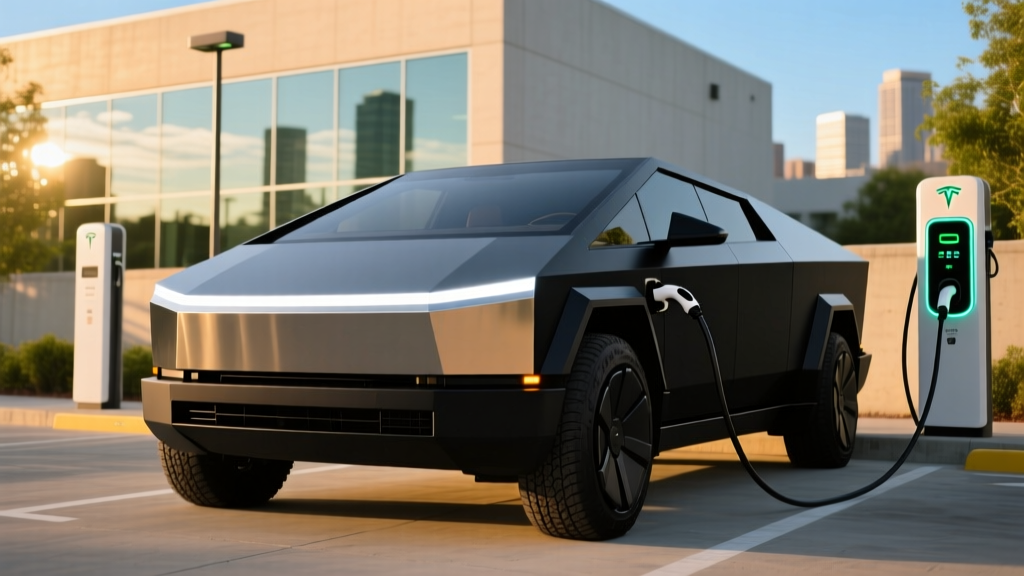
While the phone is fiction, Tesla's 2026 lineup is very real and represents the company's most competitive positioning in years. Below is a spec snapshot of the four current U.S. consumer models, all of which can be ordered today.
| Model | Body | EPA Range | Battery | 0–60 mph | Starting MSRP |
|---|---|---|---|---|---|
| Model 3 Long Range AWD | Sedan | 341 mi | ~75 kWh, NMC | 4.2 s | $47,240 |
| Model Y Long Range AWD | Crossover | 320 mi | ~75 kWh, NMC | 4.8 s | $49,990 |
| Cybertruck AWD | Pickup | 340 mi | ~123 kWh, NMC | 4.1 s | $79,990 |
| Model S Long Range | Luxury sedan | 402 mi | ~100 kWh, NMC | 3.1 s | $79,990 |
Sources: fueleconomy.gov and Tesla.com specifications as of model year 2026.
Deep Dive: 2026 Tesla Model 3 Long Range AWD
Because the Model 3 remains Tesla's volume anchor and the most common entry point for new EV buyers, it deserves the full review treatment the fake phone rumor will never get. The 2026 Model 3 Long Range AWD is the variant we recommend for most shoppers: it balances range, price, and practicality better than any other Tesla.
Range and Efficiency
Real-world expectation: Plan for ~275–295 miles on sustained 75-mph highway driving in moderate temperatures. In sub-30°F winter conditions, expect a 20–30% reduction, landing real-world range around 240–270 miles. City driving with regenerative braking often exceeds the EPA combined figure.
Efficiency on the EPA combined cycle is rated at 132 MPGe, which translates to roughly 25 kWh per 100 miles. That is among the best in the luxury EV sedan segment, reflecting Tesla's continued advantage in powertrain thermal management and inverter efficiency.
Battery and Chemistry
The Long Range AWD uses a ~75 kWh (usable) nickel-manganese-cobalt (NMC) pack. NMC offers higher energy density than LFP (lithium iron phosphate), which is why it is used in the dual-motor, longer-range trims. The base Model 3 RWD, by contrast, uses a ~57 kWh LFP battery — heavier but more cycle-durable and cheaper, and Tesla recommends charging LFP to 100% regularly, unlike NMC where daily charging to 80% is preferred for longevity.
Charging Speed
| Level | Power | Speed / Time |
|---|---|---|
| Level 1 (120V household) | ~1.4 kW | ~3–4 miles per hour |
| Level 2 (240V home Wall Connector) | 11.5 kW | ~44 miles per hour |
| DC fast charge (peak) | 250 kW | 10–80% in ~25 minutes |
On a Tesla V4 Supercharger, the Model 3 Long Range peaks near 250 kW in the 10–40% state-of-charge window, then tapers progressively. Expect an average rate of roughly 150 kW across the full 10–80% session — the peak number is never sustained. Preconditioning the battery via the car's navigation-routed Supercharger prep is essential; without it, cold-soak can cut peak charging power by 40% or more.
The Model 3 uses the native NACS (North American Charging Standard) connector. As of 2026, NACS is the dominant DC fast-charging standard in the U.S., with Ford, GM, Rivian, Hyundai, and most other automakers having adopted it.
Performance and Drivetrain
The dual-motor AWD powertrain delivers 346 horsepower and 362 lb-ft of torque. The 0–60 mph time is 4.2 seconds — quick enough to merge onto any freeway with authority, though not supercar territory. Ride quality on the refreshed Model 3 is noticeably improved over pre-2024 versions, with softer damping and better isolation from road noise.
Interior, Cargo, and Tech
Interior space remains a Model 3 constraint versus midsize rivals. Front legroom is 42.7 inches; rear legroom is 35.2 inches — adequate for adults on short trips, tight for long hauls. Cargo volume is 23 cubic feet behind the rear seats, plus a 3.1-cubic-foot frunk. The minimalist cabin centers on a single 15.4-inch touchscreen; there is no instrument cluster, no physical gear selector (it is touchscreen and steering-column based), and no Apple CarPlay or Android Auto — a dealbreaker for some buyers.
Standard tech includes Tesla's Autopilot (SAE Level 2 driver assist), meaning adaptive cruise and lane-centering that require continuous driver supervision. Full Self-Driving (Supervised) remains an $8,000 option and is also Level 2 — it does not make the car autonomous despite the marketing name.
Pricing, Tax Credit, and Warranty
| Item | Amount |
|---|---|
| Base MSRP (AWD Long Range) | $47,240 |
| Destination fee | $1,390 |
| As-tested (with FSD Supervised) | ~$57,130 |
| Federal §30D credit (if eligible) | Up to $7,500 |
| Effective price after max credit | ~$39,740 |
Federal tax credit eligibility under IRS §30D is not automatic. For 2026, buyers must meet adjusted gross income caps ($150k single / $300k joint), the vehicle MSRP must not exceed $55,000 for sedans (the Model 3 Long Range qualifies), and the battery must satisfy critical-mineral and battery-component sourcing thresholds that have tightened annually since 2023. The credit can now be transferred to the dealer at point of sale, reducing the purchase price directly. Always verify current eligibility on IRS.gov before committing, as sourcing rules can shift mid-year.
Warranty coverage: 4 years / 50,000 miles limited vehicle; 8 years / 120,000 miles on the battery and drive units, with Tesla guaranteeing at least 70% capacity retention over that period.
Who Should Buy a Real Tesla (and Who Shouldn't)
The people who should buy a 2026 Tesla Model 3 or Model Y are drivers with reliable home Level 2 charging access, tech-forward preferences, and a tolerance for minimal interior ornamentation. The Supercharger network remains the most reliable public DC fast-charging ecosystem in the U.S., which matters enormously for road-trippers.
The people who should look elsewhere: buyers who need Apple CarPlay, who want a traditional instrument cluster, who prioritize rear-seat comfort (the Hyundai Ioniq 6 and BMW i4 offer more), or who want a dealership service experience rather than mobile-ranger-and-app-based support.
Pros and Cons of the 2026 Model 3 Long Range
Pros
- Class-leading efficiency (132 MPGe combined)
- Access to the mature Supercharger network
- Strong real-world range (~275+ mi highway)
- Excellent over-the-air update cadence
- Point-of-sale tax credit transfer available
- Competitive 250 kW DC fast-charge peak
Cons
- No Apple CarPlay / Android Auto
- Tight rear legroom vs. midsize rivals
- Service model frustrates some owners
- FSD Supervised name is misleading (still Level 2)
- Insurance premiums run 15–25% above segment average
- Tax credit eligibility depends on sourcing rules that can change
Is a Tesla Worth Buying vs. the Competition?
Against the Hyundai Ioniq 6 (361-mi EPA SE Long Range, ~$42k starting), the Model 3 loses on pure range and interior space but wins on charging-network convenience and software polish. Against the BMW i4 eDrive40 (307-mi EPA, ~$57k), the Tesla is cheaper but less refined in ride and materials. Against the Ford Mustang Mach-E, the Model 3 is more efficient; the Mach-E offers a more conventional cabin and hatchback cargo flexibility.
None of these competitors are fake. All of them have EPA window stickers, IIHS crash-test results, and real-world owners. If you are shopping for an EV, these are the comparisons that matter — not a phone that does not exist.
FAQ: Tesla Phone Rumors and Real Tesla EVs
Is the Tesla phone real or fake?
Fake. As of 2026, Tesla has never announced, produced, or sold a smartphone. The "Model Pi" is a long-running internet rumor based on fan-made concept renders. There is no FCC filing, no retail listing, and no official confirmation.
Will Tesla ever release a phone?
There is no public indication that Tesla is developing a phone. Elon Musk's 2022 comment about building an "alternative phone" was a hypothetical response to a hypothetical app-store ban and has not been followed by any product development activity.
What is the real-world range of the 2026 Model 3 Long Range?
The EPA rates it at 341 miles. Real-world highway driving at 75 mph in moderate weather typically yields 275–295 miles. In cold weather below 30°F, expect 240–270 miles.
How fast does the Model 3 Long Range charge?
Peak DC fast charging is 250 kW, with 10–80% in roughly 25 minutes on a V4 Supercharger. At home on a 240V Level 2 Wall Connector at 11.5 kW, it gains about 44 miles of range per hour.
Does the 2026 Model 3 qualify for the federal EV tax credit?
It can, but eligibility depends on your income (≤$150k single / $300k joint), the sedan MSRP cap ($55,000 — the Model 3 qualifies), and current battery-sourcing rules under §30D. Verify at IRS.gov before purchasing; the credit can be transferred at point of sale.
What is the biggest drawback of owning a Tesla?
The lack of Apple CarPlay/Android Auto, reliance on Tesla's own service infrastructure (no traditional dealerships), and higher-than-average insurance costs are the most commonly cited owner complaints.
Is Tesla Autopilot self-driving?
No. Autopilot and even the optional FSD (Supervised) are SAE Level 2 driver-assistance systems. The driver must remain attentive, keep hands available, and supervise the vehicle at all times. True driverless operation (Level 4) in the U.S. currently exists only in limited commercial robotaxi services like Waymo.
The next time you see a headline asking whether the Tesla phone is real or fake, you can close the tab with confidence. The phone is fake. The cars are real — and the 2026 Model 3 Long Range AWD, priced around $39,740 after the federal credit, remains one of the most compelling electric vehicles on the market.