The Quick Answer: Is the Radio Flyer Ultimate 24V Electric Go-Kart Worth It?
The Radio Flyer Ultimate 24V Electric Go-Kart is a battery-powered ride-on designed for children ages 3 to 8, featuring a 24-volt lead-acid battery system, a top speed of approximately 8–10 mph, and a runtime of roughly 45–60 minutes per full charge depending on terrain and rider weight. At a retail price typically between $250 and $350, it competes in the mid-tier kids' electric ride-on segment. It's a solid pick for flat, paved driveways and parks — but if you need extended runtime, variable terrain capability, or a lithium-ion upgrade path, you'll want to weigh alternatives carefully before buying.
What Exactly Is the Radio Flyer Ultimate 24V Electric Go-Kart?
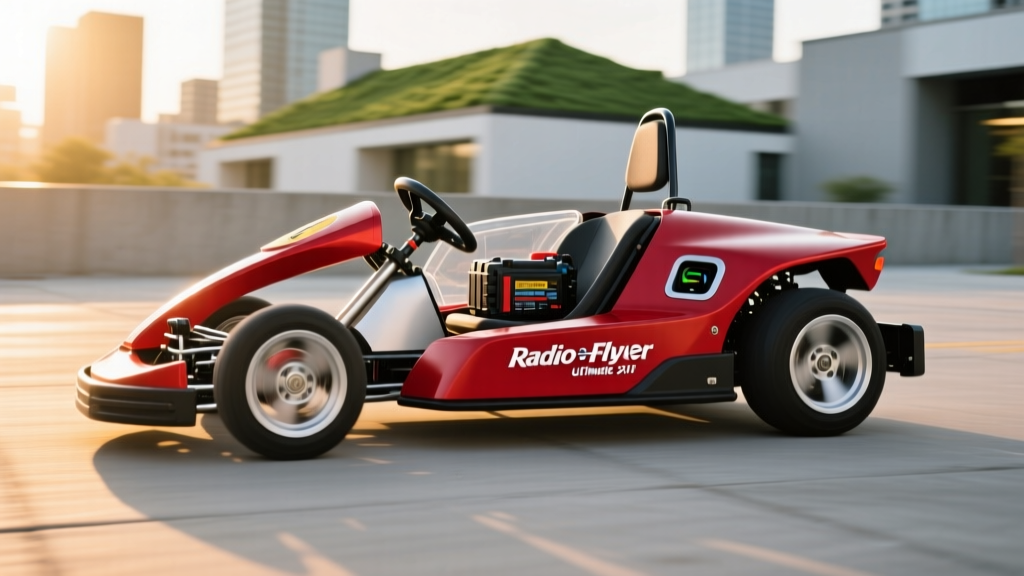
The Radio Flyer Ultimate 24V Electric Go-Kart is a single-seat, battery-electric ride-on vehicle built for young children. Unlike full-size electric vehicles covered elsewhere on this site, this product sits in the toy and youth recreation category — but its electric powertrain fundamentals (battery chemistry, voltage, charge times, energy capacity) follow the same physics that govern every EV on the road.
Radio Flyer, a heritage American brand best known for wagons and tricycles, has expanded into battery-powered ride-ons over the past decade. The "Ultimate" 24V go-kart represents the higher-output end of their lineup, offering more torque and speed than their 12V models. Here's what you need to know before purchasing:
- Battery: 24V sealed lead-acid (SLA), typically comprised of two 12V 12Ah batteries wired in series
- Energy capacity: Approximately 288 watt-hours (Wh) total — or 0.288 kWh
- Motor: Rear-wheel-mounted electric motor, typically 100–150W output
- Top speed: ~8–10 mph (varies by surface gradient and rider weight)
- Runtime: 45–60 minutes continuous use under typical conditions
- Charge time: 8–12 hours from empty to full using the included charger
- Weight capacity: Approximately 80–100 lbs depending on model year
- Recommended ages: 3–8 years old
Specs and Performance: The Numbers That Matter
Parents shopping for electric ride-ons often fixate on top speed, but runtime and charge time are the metrics that determine day-to-day satisfaction. A go-kart that runs out of battery after 20 minutes will disappoint a child far more than one that tops out at 8 mph instead of 12.
| Specification | Value |
|---|---|
| Battery Type | 24V Sealed Lead-Acid (2x 12V 12Ah) |
| Energy Capacity | ~288 Wh (0.288 kWh) |
| Motor Output | ~100–150W |
| Top Speed | 8–10 mph |
| Runtime (typical) | 45–60 min |
| Charge Time (0–100%) | 8–12 hours |
| Charger Included | Yes, 24V wall adapter |
| Rider Weight Limit | ~80–100 lbs |
| Recommended Ages | 3–8 years |
| Typical Retail Price | $250–$350 |
Understanding 24V vs. 12V: Why It Matters
Voltage in an electric ride-on determines the potential power delivery to the motor. A 24V system can push more current through the motor than a 12V system, resulting in better hill-climbing ability, faster acceleration, and a higher top speed. If your child will be driving on inclines or grass, the 24V system provides noticeably better performance than a 12V equivalent.
However, the kilowatt-hour (kWh) capacity — the actual energy stored — is what determines runtime. At 0.288 kWh, the Radio Flyer's battery holds roughly the same energy as leaving a 60-watt light bulb on for about 4.8 hours. That's modest, but appropriate for a vehicle weighing under 50 lbs carrying a 50-lb child at low speeds.
Electric Go-Kart vs. Gas-Powered Kids' Karts: A Cost and Practicality Comparison
Gas-powered kids' karts (typically 50cc–110cc engines) exist in the $500–$1,500+ range and offer longer continuous runtime — you simply refill the tank. But they come with noise, exhaust fumes, maintenance (oil changes, spark plugs, carburetor cleaning), and safety concerns that make them inappropriate for younger children or residential use.
| Factor | Radio Flyer 24V Electric | Typical 50cc Gas Kids' Kart |
|---|---|---|
| Purchase Price | $250–$350 | $500–$1,200 |
| "Fuel" Cost Per Hour | ~$0.02–$0.04 (electricity) | ~$1.50–$3.00 (gasoline) |
| Runtime Per Fill/Charge | 45–60 min | 60–90 min |
| Refuel/Recharge Time | 8–12 hours | 2 minutes (refill tank) |
| Noise Level | Near-silent | 75–90 dB (loud) |
| Emissions | None at point of use | CO, HC, NOx exhaust |
| Annual Maintenance | $0–$30 (battery care) | $50–$150 (oil, plugs, filters) |
| Indoor/Garage Storage | Safe | Fuel odor and vapor risk |
| Appropriate Ages | 3–8 | 6+ (typically) |
The electric option wins decisively on cost of operation, noise, emissions, and age-appropriateness. The gas kart wins on runtime and quick refueling — but for most families with young children, those advantages don't justify the added complexity, cost, and safety considerations.
Real-World Ownership: What Parents Actually Experience
Spec sheets tell one story. Living with the product tells another. Here's what to expect from daily ownership of the Radio Flyer Ultimate 24V Electric Go-Kart based on the common patterns reported by owners:
Battery Life and Degradation
Sealed lead-acid (SLA) batteries are the same chemistry used in conventional car 12V starter batteries and older EVs like the first-generation Nissan Leaf's auxiliary systems. SLA batteries are heavy, inexpensive, and have a shorter cycle life than lithium-ion. Expect the batteries to retain usable capacity for roughly 1–3 years depending on usage frequency and storage habits.
Critical ownership tip: never store an SLA battery in a discharged state. Lead-acid batteries sulfate when left uncharged, permanently reducing capacity. Charge the go-kart after every use, even if the battery isn't fully depleted. If storing for winter, charge fully and recharge monthly.
Runtime Reality Check
The 45–60 minute runtime figure assumes a child of average weight (40–50 lbs) driving on flat, paved surfaces with intermittent stops. In practice:
- Grass or gravel: Runtime drops 20–35% due to higher rolling resistance
- Hills or inclines: Runtime drops 30–40% — the motor draws significantly more current climbing
- Heavier rider (70+ lbs): Runtime drops 15–25%
- Cold weather (below 50°F): SLA battery capacity drops 10–20% in cold temperatures, similar to how full-size EV batteries lose range in winter
For families where an hour of play isn't enough, purchasing a second set of batteries and swapping them extends runtime immediately — at a cost of roughly $50–$80 for replacement 12V 12Ah SLA batteries.
Charging Logistics
The 8–12 hour charge time means overnight charging is the practical standard. This is similar to Level 1 (120V) charging of a full-size EV — slow but adequate when you can plan ahead. The charger plugs into a standard household 120V outlet. There's no "fast charging" option at this scale.
If your child uses the kart daily, establish a routine: plug in immediately after use, unplug in the morning. The included charger should have an automatic shutoff or trickle-maintenance mode, but verify this in the product manual — some basic chargers lack smart termination and can overcharge if left connected for days.
Total Cost of Ownership: 3-Year Breakdown
One advantage of a small electric ride-on is that the total cost picture is far simpler than a full-size EV. No insurance, no registration, no tax credits to navigate. Here's what three years of ownership actually costs:
| Cost Item | Year 1 | Year 2 | Year 3 |
|---|---|---|---|
| Purchase Price | $300 (typical) | — | — |
| Electricity (charging ~3x/week) | $3–$5 | $3–$5 | $3–$5 |
| Battery Replacement | — | $60–$80 (if needed) | $60–$80 (if needed) |
| Tire/General Wear | — | — | $0–$20 |
| Annual Total | ~$305 | ~$65–$85 | ~$65–$100 |
Over three years, total ownership runs roughly $435–$490. For context, a comparable gas kids' kart over the same period would cost $800–$1,800+ when factoring in purchase price, fuel, oil changes, and seasonal maintenance.
Note: The Radio Flyer Ultimate 24V Electric Go-Kart does not qualify for any federal EV tax credits under IRS §30D. Those credits apply to on-road motor vehicles meeting specific battery sourcing, MSRP, and buyer income requirements — not off-road toys or youth ride-ons.
Common Misconceptions About Electric Go-Karts for Kids
| Myth | Fact |
|---|---|
| "24V means it's dangerously fast" | Top speed is 8–10 mph — comparable to a child's bicycle. Voltage enables torque, not extreme speed. |
| "The battery will need replacing every few months" | With proper care (charge after use, don't store discharged), SLA batteries last 1–3 years and cost $60–$80 to replace. |
| "It can handle any terrain" | Designed for paved and hard-packed surfaces. Grass, sand, and steep hills dramatically reduce performance and runtime. |
| "It charges quickly like a phone" | Full charge takes 8–12 hours. Plan for overnight charging — same as Level 1 EV charging. |
| "It's maintenance-free" | Battery care is essential. Neglected SLA batteries degrade rapidly. Check terminals for corrosion periodically. |
Decision Framework: Is This the Right Electric Go-Kart for Your Family?
Choose the Radio Flyer Ultimate 24V Electric Go-Kart if:
- Your child is 3–8 years old and under the weight limit
- You have a flat, paved area (driveway, cul-de-sac, park path) for riding
- 45–60 minutes of runtime per session is adequate
- You can charge overnight and don't need same-day turnaround without a spare battery
- Your budget is $250–$350 and you want low ongoing operating costs
- You value quiet operation (no noise complaints from neighbors)
Consider alternatives if:
- You need 2+ hours of continuous runtime (look at lithium-ion equipped models or buy spare batteries)
- Your child will ride on significant grass, gravel, or hills (consider higher-wattage motor options)
- Your child is approaching the weight limit or is older than 8 (look at larger youth karts)
- You need quick turnaround between rides without buying extra batteries
- Your budget allows $500+ and you want premium features like adjustable speed limiters, suspension, or Bluetooth speakers
Frequently Asked Questions
How fast does the Radio Flyer Ultimate 24V Electric Go-Kart go?
Top speed is approximately 8–10 mph depending on rider weight, surface conditions, and battery charge level. This is roughly the speed of a child pedaling a bicycle at a moderate pace — fast enough to be exciting, slow enough to be manageable with basic supervision.
How long does the battery last on a single charge?
Expect 45–60 minutes of continuous use on flat, paved surfaces with a child weighing 40–50 lbs. Runtime decreases on grass, hills, or with heavier riders. Cold weather (below 50°F) can reduce capacity by 10–20%.
How long does it take to charge?
A full charge from depleted takes 8–12 hours using the included 120V wall charger. Plan for overnight charging. There is no fast-charging option available for this product.
Can I replace the battery myself?
Yes. The go-kart uses two standard 12V 12Ah sealed lead-acid batteries wired in series to produce 24V. Replacement batteries are widely available online and at battery retailers for roughly $25–$40 each. Disconnect the old batteries, connect the new ones matching polarity, and secure them in the battery compartment.
Is it safe for a 3-year-old?
Radio Flyer recommends ages 3 and up, but a 3-year-old will need close adult supervision. The kart has a simple forward/reverse control, but younger children may not have the judgment to stop or steer around obstacles reliably. Always require a helmet and supervise closely, especially near streets or driveways with vehicle traffic.
Does it work on grass?
It can move on short, dry, flat grass, but performance drops significantly. The small wheels and moderate motor power struggle with thick grass, wet surfaces, or any incline. For grass-heavy use, look for models with larger wheels and higher-wattage motors.
Does this qualify for any EV tax credits?
No. The IRS §30D Clean Vehicle Credit applies only to qualified on-road motor vehicles meeting battery sourcing, MSRP caps, and buyer income requirements. Children's electric ride-ons and toys do not qualify.
What's the warranty?
Radio Flyer typically provides a 1-year limited warranty on the vehicle and a shorter warranty period (often 6 months) on the battery, as batteries are considered consumable components. Check the specific warranty terms included with your model year at the Radio Flyer website or your point of purchase.
Final Assessment
The Radio Flyer Ultimate 24V Electric Go-Kart occupies a practical middle ground in the kids' electric ride-on market. It delivers adequate speed and runtime for most families at a price point well below premium competitors, with operating costs that are essentially negligible. The lead-acid battery technology is dated compared to lithium-ion — it's heavier, degrades faster, and charges slower — but it keeps the purchase price accessible and replacement costs low.
For parents seeking a first electric vehicle experience for a young child on paved, flat terrain, this kart delivers predictable performance with minimal ongoing cost. Just manage expectations around runtime, commit to proper battery care, and keep the charger plugged in overnight.