Why Orange County Drivers Are Re-Evaluating Tesla in 2026
Orange County remains one of the densest EV markets in the United States. With average commutes stretching from Irvine to downtown Los Angeles or south toward San Diego, daily driving demands regularly exceed 60 miles round-trip. Add weekend runs to Big Bear or coastal drives up PCH, and the average OC driver needs an EV that delivers real-world range, reliable fast charging, and practical cargo space — not just impressive spec-sheet numbers.
Tesla's 2026 lineup includes four consumer models: the Model 3 sedan, Model Y crossover, Model S luxury sedan, and Model X SUV. Each targets a different buyer profile, and the differences in range, charging speed, battery chemistry, and price are substantial. This guide breaks down every current Tesla model through the lens of what actually matters for Southern California ownership — from the 405 corridor to Pacific Coast Highway.
2026 Tesla Lineup: Spec Comparison Table
| Spec | Model 3 Long Range AWD | Model Y Long Range AWD | Model S Long Range | Model X Long Range |
|---|---|---|---|---|
| EPA Range | 341 mi | 320 mi | 402 mi | 348 mi |
| Battery (usable) | ~75 kWh (NMC) | ~75 kWh (NMC) | ~95 kWh (NMC) | ~95 kWh (NMC) |
| Peak DC Charge Rate | 250 kW | 250 kW | 250 kW | 250 kW |
| 10–80% DC Fast Charge | ~25 min | ~25 min | ~30 min | ~32 min |
| Level 2 Home Charge | 11.5 kW (~44 mi/hr) | 11.5 kW (~44 mi/hr) | 11.5 kW (~34 mi/hr) | 11.5 kW (~30 mi/hr) |
| 0–60 mph | 4.2 sec | 4.8 sec | 3.1 sec | 3.8 sec |
| Horsepower | ~346 hp | ~384 hp | ~670 hp | ~670 hp |
| Drivetrain | Dual-Motor AWD | Dual-Motor AWD | Dual-Motor AWD | Dual-Motor AWD |
| MPGe (combined) | 134 MPGe | 122 MPGe | 120 MPGe | 102 MPGe |
| Efficiency (kWh/100mi) | 25 | 28 | 28 | 33 |
| Cargo Volume | 23 cu ft (trunk+frunk) | 76 cu ft (seats folded) | 28 cu ft (trunk+frunk) | 88 cu ft (seats folded) |
| Base MSRP | $47,740 | $49,630 | $79,990 | $84,990 |
| Warranty (Battery) | 8 yr / 120,000 mi | 8 yr / 120,000 mi | 8 yr / 150,000 mi | 8 yr / 150,000 mi |
Source: fueleconomy.gov and Tesla official specifications, 2026 model year.
Real-World Range: What OC Drivers Actually Get
EPA Sticker vs. Reality: EPA range figures assume a mixed driving cycle at moderate temperatures. In Orange County's warm climate, you'll see range closer to EPA estimates than buyers in colder states. However, sustained highway driving at 70–80 mph on the 5 or 405 will reduce range by roughly 10–15% compared to the sticker.
- Model 3 LR: EPA 341 mi → expect ~290–310 mi on highway road trips; ~325–340 mi mixed city/highway OC commuting
- Model Y LR: EPA 320 mi → expect ~270–290 mi highway; ~300–315 mi mixed driving
- Model S LR: EPA 402 mi → expect ~345–365 mi highway; ~380–400 mi mixed
- Model X LR: EPA 348 mi → expect ~295–315 mi highway; ~330–345 mi mixed
Cold-weather impact is minimal in coastal OC, but trips to Big Bear (elevation 6,750 ft, winter temps below freezing) can reduce range by 15–25% due to cabin heating and battery thermal demands. Tesla's heat pump, standard across the lineup, mitigates this better than resistive heating systems.
Charging in Orange County: Superchargers, Home, and Destination
Orange County has one of the highest densities of Tesla Superchargers in the country, with V3 (250 kW) and V4 stations scattered from Anaheim to San Clemente. For daily driving, most OC owners charge at home and use Superchargers only for road trips.
DC Fast Charging Reality
All 2026 Teslas peak at 250 kW on V3 Superchargers, but that peak only holds between roughly 10–30% state of charge. The charging curve tapers significantly above 60%, which is why the 10–80% time is a more honest metric than peak kW:
- Model 3 / Model Y: 10–80% in ~25 minutes at a 250 kW V3 stall
- Model S / Model X: 10–80% in ~30–32 minutes (larger 95 kWh battery takes longer even at the same peak rate)
On a road trip from Irvine to San Diego (~85 miles), a Model 3 LR owner would arrive with roughly 70–75% charge remaining — no stop needed. For Irvine to Las Vegas (~270 miles), plan one 20-minute Supercharger stop around Barstow.
Home Level 2 Charging
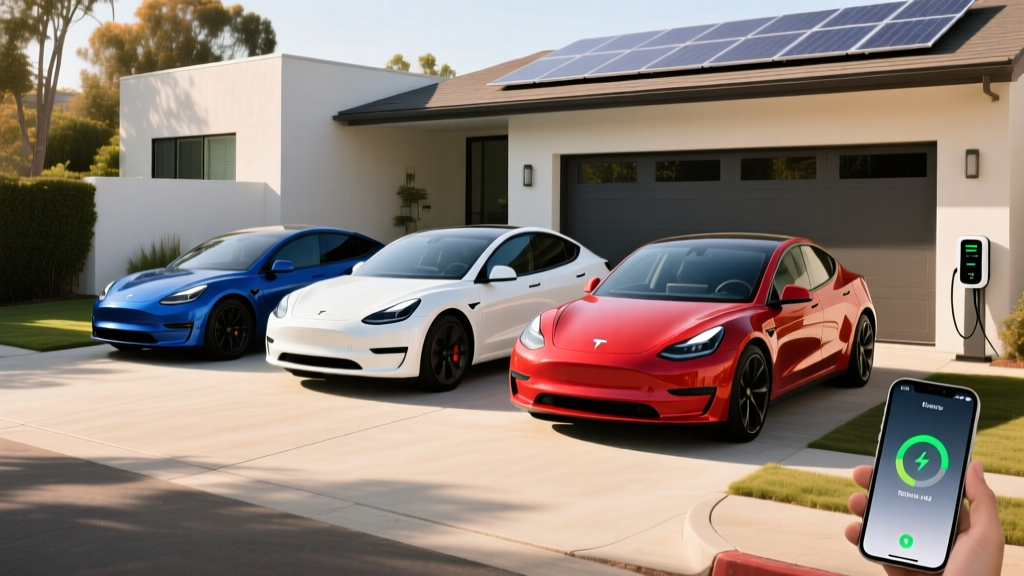
Tesla's Wall Connector delivers up to 11.5 kW on a 48-amp circuit (requires a 60-amp breaker). At this rate:
- Model 3/Y: ~44 miles of range per hour of charging
- Model S: ~34 miles per hour
- Model X: ~30 miles per hour
Most OC homes have 200-amp electrical panels that can accommodate a 60-amp dedicated circuit without a panel upgrade. Installation costs in Orange County typically range from $800 to $2,500 depending on conduit run length and whether the panel is adjacent to the garage. Homes with older 100-amp panels may need a $2,000–$4,000 panel upgrade — consult a licensed electrician for a site-specific quote.
Federal Tax Credit: What You'll Actually Pay
The IRS §30D federal EV tax credit remains a major purchase factor, but eligibility is nuanced. Here's where each 2026 Tesla stands:
| Model | Base MSRP | MSRP Cap (§30D) | Estimated Credit | Key Caveats |
|---|---|---|---|---|
| Model 3 LR AWD | $47,740 | $55,000 (sedans) | Up to $7,500 | Battery sourcing & critical minerals requirements must be met; buyer income caps apply ($150K single / $300K joint) |
| Model Y LR AWD | $49,630 | $80,000 (SUVs) | Up to $7,500 | Same sourcing and income requirements; qualifies as SUV under IRS classification |
| Model S LR | $79,990 | $55,000 (sedans) | $0 | Exceeds sedan MSRP cap — ineligible for §30D credit |
| Model X LR | $84,990 | $80,000 (SUVs) | $0 | Exceeds SUV MSRP cap — ineligible for §30D credit |
Effective price after maximum credit (Model 3 LR): $47,740 – $7,500 = $40,240 before destination, options, or state rebates. The credit can be transferred to the dealer at point of sale, reducing your out-of-pocket cost immediately rather than waiting for a tax return.
Critical reminder: §30D eligibility depends on battery component and critical mineral sourcing percentages that shift annually. Always verify current eligibility on the IRS clean vehicle credit page before purchasing. A tax professional can confirm whether your income and filing status qualify.
Tech, Driver Assistance, and Interior
Every 2026 Tesla ships with the same core tech stack: a 15.4-inch central touchscreen (Model 3/Y) or 17-inch (Model S/X), over-the-air updates, and Tesla's Basic Autopilot driver-assistance suite. Autopilot includes Traffic-Aware Cruise Control and Autosteer (lane centering) — this is an SAE Level 2 system, meaning the driver must remain fully engaged with hands on the wheel and eyes on the road at all times.
Full Self-Driving (Supervised)
Tesla's optional FSD (Supervised) package ($8,000 one-time or $99/month) adds automated lane changes, Navigate on Autopilot, traffic light and stop sign recognition, and Autopark. Despite the name, FSD remains SAE Level 2 — it is not autonomous driving. The driver bears full legal responsibility for vehicle operation. This distinction matters: competitors like GM's Super Cruise and Ford's BlueCruise offer hands-free driving on pre-mapped highways, though they also remain Level 2.
Interior and Practicality
The Model 3 and Model Y share a minimalist interior with no physical instrument cluster — all information routes through the central screen. Rear-seat legroom is adequate (Model 3: 35.3 in; Model Y: 40.5 in) but the Model Y's elevated seating position and hatchback cargo area make it substantially more practical for families. The Model Y offers up to 76 cu ft of cargo space with seats folded, compared to the Model 3's 23 cu ft trunk-and-frunk combination.
The Model S and Model X add a driver instrument display, ventilated front seats, premium audio (22 speakers in the Model S), and available rear-seat entertainment screens. The Model X's falcon-wing rear doors remain distinctive but add complexity and have historically generated more service visits than conventional doors.
Which Tesla Fits Your Orange County Lifestyle?
Choose the Model 3 Long Range if: You commute solo or as a couple, prioritize efficiency (134 MPGe combined, the best in the lineup), and want the lowest effective price after the $7,500 credit. Ideal for Irvine-to-LA commuters covering 50–80 miles daily who charge at home overnight.
Choose the Model Y Long Range if: You need family cargo flexibility, car seats, or weekend gear capacity. The 76 cu ft hatchback and higher seating position make it the default choice for OC families. It costs ~$2,000 more than the Model 3 and sacrifices ~20 miles of range — a worthwhile trade for most households.
Choose the Model S Long Range if: You want 402 miles of EPA range (the longest of any Tesla), sub-3.5-second 0–60 performance, and premium luxury appointments — and you're comfortable paying ~$80K without a federal tax credit. Best for high-mileage drivers who regularly exceed 300 miles between charges.
Choose the Model X Long Range if: You need three-row seating (up to 7 passengers), maximum cargo volume (88 cu ft), and towing capacity (5,000 lbs). The falcon-wing doors are a conversation starter at Fashion Island, but expect higher maintenance complexity. Like the Model S, no federal credit applies.
Pros and Cons at a Glance
Pros
- Supercharger network remains the most reliable DC fast-charging ecosystem in the US
- Class-leading efficiency (Model 3 at 25 kWh/100mi)
- Over-the-air updates continuously add features post-purchase
- Strong resale value relative to most EV competitors
- Model 3 and Model Y qualify for up to $7,500 federal credit (income/sourcing dependent)
- Heat pump standard across the lineup for efficient cabin climate control
Cons
- Model S and Model X exceed MSRP caps — no federal tax credit
- 250 kW peak DC charge rate now trails Hyundai/Kia's 800V architecture (350 kW capability)
- Minimalist interior lacks physical controls — not every driver adapts easily
- FSD (Supervised) costs $8,000 and remains Level 2 — not autonomous
- Service center wait times in OC can stretch 2–4 weeks for non-critical repairs
- Model X falcon-wing doors add mechanical complexity
Frequently Asked Questions
What is the real-world range of a Tesla in Orange County?
In OC's mild climate, real-world range closely tracks EPA estimates for mixed city/highway driving. Expect the Model 3 LR to deliver 325–340 miles in daily commuting and 290–310 miles on sustained highway trips at 75 mph. Cold weather is rarely a factor at sea level, but mountain trips to Big Bear can reduce range by 15–25%.
How fast does a Tesla charge at home and on the road?
On a Tesla Wall Connector (11.5 kW, Level 2), the Model 3 and Model Y add roughly 44 miles of range per hour — a full overnight charge easily covers a week of commuting. At a V3 Supercharger (250 kW DC), 10–80% takes approximately 25 minutes for the Model 3/Y and 30–32 minutes for the Model S/X.
Does the Tesla Model Y qualify for the $7,500 federal tax credit?
The 2026 Model Y Long Range AWD at $49,630 falls under the $80,000 SUV MSRP cap and can qualify for up to $7,500 under IRS §30D — provided the buyer meets income limits ($300,000 joint / $150,000 single) and the vehicle's battery meets critical mineral and component sourcing thresholds. Verify current eligibility at irs.gov before purchase.
Is Tesla worth buying over competitors in 2026?
For Orange County buyers, Tesla's Supercharger network and efficiency remain compelling advantages. However, the Hyundai Ioniq 5 and Kia EV6 charge faster (800V architecture, 10–80% in ~18 minutes), and the BMW i4 offers a more traditional luxury interior. The Model 3 and Model Y are strongest for buyers who value the charging ecosystem, OTA updates, and proven efficiency. The Model S and Model X face stiffer competition from the Lucid Air and Rivian R1S, respectively.
What's the battery warranty on a 2026 Tesla?
Tesla covers the Model 3 and Model Y battery and drive unit for 8 years or 120,000 miles, whichever comes first, with a minimum 70% capacity retention guarantee. The Model S and Model X receive 8 years or 150,000 miles with the same 70% threshold. In practice, NMC batteries in Teslas have shown degradation of approximately 8–12% over 100,000 miles based on fleet data, well within warranty coverage.
How much does it cost to charge a Tesla in Orange County?
At the average OC residential electricity rate of ~$0.28/kWh (2026), fully charging a Model 3 LR (~75 kWh usable) costs approximately $21 — roughly equivalent to $0.06 per mile. Compare that to a 30 MPG gas car at $4.80/gallon: $0.16 per mile. Supercharger pricing in OC averages $0.38–$0.48/kWh, or roughly $0.09–$0.11 per mile — still significantly cheaper than gasoline.