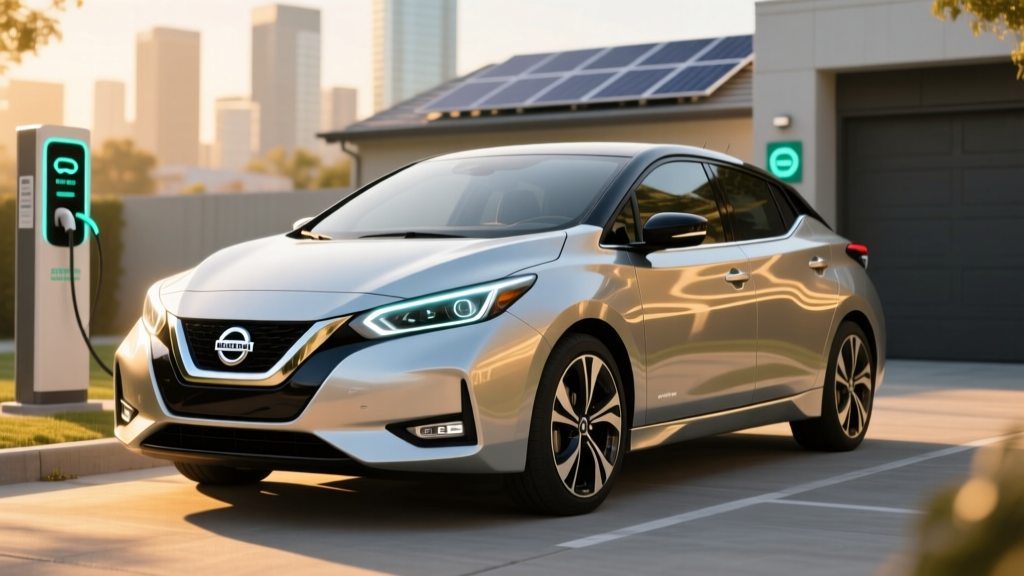
The Nissan Leaf holds a unique place in EV history as the car that kicked off the modern electric movement back in 2011. For 2025, it remains one of the most affordable new electric vehicles you can buy in the United States — but its aging platform, CHAdeMO connector, and modest fast-charging speeds raise serious questions about its value proposition in a market now flooded with newer, faster-charging rivals. If you're researching the 2025 Nissan Leaf MSRP and trying to figure out whether this EV still makes financial and practical sense, this review gives you every number you need.
We'll walk through exact pricing by trim, real-world range expectations beyond the EPA sticker, the Leaf's charging limitations that every prospective buyer must understand, and the federal tax credit situation — which, for the Leaf, is more complicated than a simple "$7,500 off."
2025 Nissan Leaf MSRP and Trim-Level Pricing
Nissan offers the 2025 Leaf in two trims, each with a different battery size and range profile. Here's the complete pricing breakdown before any incentives or destination charges:
| Trim | Battery (usable) | EPA Range | Motor Output | Base MSRP | With Destination |
|---|---|---|---|---|---|
| Leaf S | 40 kWh | 149 mi | 110 kW (147 hp) | $28,140 | ~$29,585 |
| Leaf SV Plus | 60 kWh | 212 mi | 160 kW (214 hp) | $36,190 | ~$37,635 |
The Leaf S targets budget-conscious commuters who need an EV for daily driving under 100 miles round-trip. The SV Plus is the trim most buyers should consider: it adds nearly 60% more range, a significantly more powerful motor, and features like a larger 8-inch touchscreen, ProPilot Assist, and a DC fast-charging port (the base S trim's DC fast-charging capability is limited and often requires an optional package depending on model year specifics).
Destination charges add approximately $1,095–$1,445 depending on the trim, so plan for a true out-the-door starting point around $29,500 for the S and $37,600 for the SV Plus before taxes, fees, or incentives.
Real-World Range: What the EPA Number Doesn't Tell You
| Trim | EPA Est. | Real-World Highway (70 mph) | Cold Weather (below 30°F) |
|---|---|---|---|
| Leaf S (40 kWh) | 149 mi | ~115–125 mi | ~95–110 mi |
| Leaf SV Plus (60 kWh) | 212 mi | ~170–185 mi | ~140–155 mi |
Sources: EPA fueleconomy.gov, real-world owner testing aggregates.
The Leaf SV Plus carries a 60 kWh battery pack (approximately 58–59 kWh usable) using NMC (nickel manganese cobalt) lithium-ion chemistry. On paper, 212 miles of EPA range is adequate for most daily commutes and errands. But the Leaf's passive air-cooled battery thermal management system — a holdover from its original 2011 design — means real-world performance diverges from the sticker more than liquid-cooled competitors.
At sustained highway speeds of 70–75 mph, expect the SV Plus to deliver roughly 170–185 miles before you need to find a charger. In freezing temperatures, that number drops further to 140–155 miles. The Leaf lacks a heat pump (standard on competitors like the Hyundai Kona Electric and Kia Niro EV), so cabin heating draws directly from the traction battery, compounding cold-weather range loss.
For the base S trim with its 40 kWh pack, the 149-mile EPA rating becomes genuinely restrictive for anything beyond city commuting. Highway driving shrinks that to roughly 115–125 miles, and a cold winter day can push it under 100 miles of usable range. This is a car for a specific use case: predictable, short daily routes with reliable home charging.
Charging Speed: The Leaf's Biggest Compromise
Charging is where the 2025 Leaf's age shows most clearly. While the rest of the EV industry has moved to CCS or NACS connectors with fast-charge rates of 150–350 kW, the Leaf soldiers on with CHAdeMO — a connector standard that is being actively phased out across North America's public charging networks.
| Charging Level | Leaf S (40 kWh) | Leaf SV Plus (60 kWh) | Miles Added per Hour |
|---|---|---|---|
| Level 1 (120V household) | ~1.4 kW | ~1.4 kW | ~3–5 mi/hr |
| Level 2 (240V home/public) | 6.6 kW | 6.6 kW | ~20–25 mi/hr |
| DC Fast Charge (CHAdeMO) | 50 kW peak | ~100 kW peak | ~150–180 mi/hr (peak) |
DC Fast Charging Reality: The SV Plus peaks at approximately 100 kW on a compatible CHAdeMO station, achieving a 10–80% charge in roughly 40–45 minutes. That's nearly double the time of a Hyundai Ioniq 5 or Tesla Model 3 on a DC fast charger. The base S trim is limited to 50 kW DC fast charging, meaning a 10–80% session takes roughly 40 minutes for its smaller battery — an eternity by modern standards.
Worse, the Leaf's air-cooled battery means repeated DC fast-charging sessions trigger thermal throttling. Nissan's battery management system deliberately slows charge rates to protect the pack from heat damage — a phenomenon owners call "Rapidgate." On a road trip with multiple fast-charge stops, your second and third sessions will be noticeably slower than the first.
Home Level 2 Charging: The onboard charger maxes at 6.6 kW. A full charge from empty on the SV Plus takes about 9.5 hours; the S trim takes roughly 6.5 hours. For overnight home charging, this is perfectly adequate — plug in when you get home, wake up to a full battery. Most owners will rarely need public charging if they have Level 2 at home.
The CHAdeMO Problem: Electrify America, the largest non-Tesla DC fast-charging network in the U.S., has been reducing CHAdeMO connector availability at new stations in favor of CCS and NACS. If you plan to rely on public DC fast charging, verify CHAdeMO availability along your typical routes using apps like PlugShare before committing to a Leaf purchase.
Performance, Efficiency, and Daily Driving
| Spec | Leaf S | Leaf SV Plus |
|---|---|---|
| Motor | Single front motor | Single front motor |
| Horsepower | 147 hp | 214 hp |
| Torque | 236 lb-ft | 250 lb-ft |
| 0–60 mph | ~7.9 sec | ~6.5 sec |
| Drivetrain | FWD | FWD |
| EPA MPGe (combined) | 111 MPGe | 104 MPGe |
| kWh/100 mi | 30 kWh | 32 kWh |
| Top Speed | ~90 mph (governed) | ~98 mph (governed) |
The SV Plus's 214-hp motor delivers genuinely peppy acceleration. The 0–60 mph time of roughly 6.5 seconds makes it quick off the line and confident for highway merging. The base S trim, at 147 hp and ~7.9 seconds to 60, is adequate for city driving but feels strained at highway speeds, especially when loaded with passengers and cargo.
Efficiency is respectable: the SV Plus returns 104 MPGe combined (32 kWh per 100 miles), while the lighter S trim achieves 111 MPGe combined (30 kWh/100 mi). Per fueleconomy.gov, these figures translate to roughly $0.04–$0.06 per mile on average U.S. electricity rates — dramatically cheaper than a comparable gas-powered compact.
The Leaf uses a conventional gear lever rather than true one-pedal driving. Nissan's "e-Pedal" mode enables aggressive regenerative braking that can bring the car to a complete stop, but it must be manually toggled and doesn't hold the car at a stoplight without brake application — a quirk compared to the seamless one-pedal experience in a Chevrolet Bolt or Tesla Model 3.
Interior, Cargo, and Technology
The 2025 Leaf's cabin reflects its platform's age. Materials are hard-plastic-heavy, the seating position is somewhat upright, and the overall aesthetic feels a generation behind the Hyundai Kona Electric or Volkswagen ID.4. That said, it's functional and comfortable enough for daily commuting.
| Measurement | Leaf S / SV Plus |
|---|---|
| Front Legroom | 42.1 in |
| Rear Legroom | 33.5 in |
| Front Headroom | 39.6 in |
| Rear Headroom | 37.3 in |
| Cargo (behind rear seats) | 23.6 cu ft |
| Cargo (rear seats folded) | 30.0 cu ft |
The 23.6 cubic feet of cargo space behind the rear seats is competitive with compact hatchbacks, but the 30.0 cu ft maximum with seats folded trails rivals like the Bolt EUV (54+ cu ft) and Kona Electric (45+ cu ft). The Leaf also lacks a front trunk (frunk).
Technology highlights:
- 8-inch touchscreen (SV Plus; 7-inch on S) with Apple CarPlay and Android Auto
- Nissan ProPilot Assist (SV Plus): adaptive cruise control + lane centering — SAE Level 2 driver assist, not autonomous driving
- Around View Monitor (360° camera) available on SV Plus
- Automatic emergency braking, blind-spot warning, and rear cross-traffic alert standard on SV Plus
- 4G LTE Wi-Fi hotspot available
ProPilot Assist works well on well-marked highways and reduces fatigue on longer drives, but it requires hands on the wheel at all times and disengages in construction zones or faded lane markings. It is not a substitute for an attentive driver.
Federal Tax Credit: Does the 2025 Leaf Qualify?
This is where things get complicated for the Leaf. Under the current IRS §30D Clean Vehicle Credit rules, eligibility depends on MSRP caps, buyer income limits, and battery component/critical mineral sourcing requirements.
| Requirement | Rule | Leaf Status |
|---|---|---|
| MSRP Cap | ≤ $55,000 (sedans/hatchbacks) | ✅ Both trims qualify |
| Buyer Income Cap | ≤ $150K single / $225K HOH / $300K joint | ⚠️ Varies by buyer |
| Battery Sourcing | Critical minerals + components must meet escalating thresholds | ❌ Likely fails — Leaf batteries sourced from Japan/non-FTA partners |
| Final Assembly | Must be in North America | ✅ Assembled in Smyrna, TN |
| Point-of-Sale Transfer | Credit can be applied at dealership | ⚠️ Only if credit is earned |
The critical issue: The Leaf's battery cells are manufactured in Japan by AESC (now Envision AESC), and the critical mineral sourcing requirements under §30D have become increasingly strict. As of the 2025 tax year, 80% of critical minerals must be sourced from the U.S. or FTA partners, and 100% of battery components must be manufactured or assembled in North America. The Leaf's supply chain likely does not meet these thresholds, meaning most buyers should not expect the full $7,500 federal tax credit.
Some buyers may qualify for a partial credit ($3,750) if the vehicle meets one of the two sourcing requirements but not both. However, you should verify current eligibility on fueleconomy.gov's tax credit tracker before making a purchase decision. Never assume eligibility based on a vehicle being electric — the sourcing rules have disqualified many previously eligible models.
If the Leaf does not qualify for §30D, check your state and local incentives. States like California, Colorado, and Massachusetts offer additional rebates that may apply regardless of federal eligibility.
Warranty and Battery Longevity
| Coverage | Term |
|---|---|
| Basic (bumper-to-bumper) | 3 years / 36,000 miles |
| Powertrain | 5 years / 60,000 miles |
| EV Battery (capacity) | 8 years / 100,000 miles |
| Battery Capacity Threshold | 9 bars out of 12 (~66% SoH) |
Nissan's battery warranty covers capacity loss below 9 bars on the 12-bar gauge (approximately 66% state of health) for 8 years or 100,000 miles. This is an important detail: the warranty does not guarantee a specific percentage of original range. A Leaf with 66% battery health still has 34% degradation — meaning your 212-mile SV Plus could legally have just 140 miles of range and still fall within warranty terms.
The air-cooled battery design is a genuine longevity concern. Heat is the enemy of lithium-ion batteries, and the Leaf's passive thermal management means the pack runs hotter during fast charging and in hot climates. Long-term data from early Leaf owners shows more degradation than liquid-cooled competitors, particularly in southern states. If you live in Arizona, Texas, or Southern California, factor in accelerated capacity loss.
How Does the Leaf Stack Up Against Competitors?
| Spec | Nissan Leaf SV Plus | Hyundai Kona Electric | Chevrolet Bolt EV* | Tesla Model 3 RWD |
|---|---|---|---|---|
| Base MSRP | $36,190 | ~$33,000 | ~$26,500 (discontinued) | ~$38,990 |
| EPA Range | 212 mi | 261 mi | 259 mi | 272 mi |
| DC Fast Charge | ~100 kW (CHAdeMO) | ~100 kW (CCS) | ~55 kW (CCS) | ~170 kW (NACS) |
| 10–80% DCFC | ~40–45 min | ~43 min | ~55 min | ~25 min |
| Connector | CHAdeMO | CCS/NACS adapter | CCS | NACS |
| Battery Cooling | Passive air | Liquid | Liquid | Liquid |
| 0–60 mph | ~6.5 sec | ~7.5 sec | ~6.5 sec | ~5.8 sec |
*Chevrolet Bolt EV ended production in late 2023; remaining inventory and used market only. Bolt successor expected for 2026.
- You find it at a significant dealer discount ($3,000–$5,000 off MSRP)
- Your daily commute is under 80 miles round-trip and you charge at home
- You live in a mild climate where battery degradation from heat is less of a concern
- You value a proven, simple EV with low maintenance costs
- CHAdeMO charging infrastructure is still robust in your area
- You need DC fast charging for road trips — CHAdeMO is a dying standard
- You live in a hot climate and plan to keep the car 5+ years
- You want the latest tech, fastest charging, or best range per dollar
- Federal tax credit eligibility is important to your purchase math
The Bottom Line: Is the 2025 Leaf Worth It?
At its 2025 MSRP of $28,140–$36,190, the Leaf is priced aggressively — but value depends entirely on your use case and what you can negotiate at the dealership. The Leaf SV Plus at $36,190 is hard to recommend when the Hyundai Kona Electric offers 49 more miles of EPA range, liquid-cooled battery longevity, CCS/NACS charging compatibility, and more modern tech for a similar price.
Where the Leaf makes sense is as a deeply discounted commuter car. If your dealer is offering $4,000–$6,000 off (not uncommon given the Leaf's slow sales), the SV Plus drops into the low $30Ks, making it one of the cheapest ways to get a new 200+ mile EV. For a second car, a city commuter, or someone with solar panels and a Level 2 home charger who rarely drives more than 100 miles in a day, a discounted Leaf is a rational, economical choice.
Just go in with eyes open about the CHAdeMO connector's declining infrastructure, the air-cooled battery's long-term degradation risk, and the likely ineligibility for the $7,500 federal tax credit.
- Low starting MSRP — one of the cheapest new EVs available
- Comfortable ride quality and quiet cabin at city speeds
- Strong dealer network for service and parts
- ProPilot Assist is competent for the price point
- Adequate cargo space for a compact hatchback
- Assembled in Tennessee — supports U.S. manufacturing
- CHAdeMO connector is being phased out across North America
- Passive air-cooled battery degrades faster than liquid-cooled rivals
- Slow DC fast charging (~100 kW peak, ~40–45 min 10–80%)
- Likely does not qualify for the $7,500 federal tax credit
- Outdated interior design and materials
- No heat pump — cold-weather range loss is significant
- Rear seat legroom is tight at 33.5 inches
Frequently Asked Questions
What is the real-world range of the 2025 Nissan Leaf?
The SV Plus (60 kWh) is EPA-rated at 212 miles, but expect 170–185 miles in real-world highway driving and 140–155 miles in freezing temperatures. The base S trim (40 kWh) is EPA-rated at 149 miles, delivering roughly 115–125 miles on the highway and under 100 miles in cold weather.
How fast does the 2025 Leaf charge at home and on DC fast chargers?
At home on a Level 2 (240V) charger, the Leaf charges at 6.6 kW, adding roughly 20–25 miles of range per hour. A full charge takes 6.5 hours (S trim) or 9.5 hours (SV Plus). On DC fast chargers, the SV Plus peaks at ~100 kW via CHAdeMO, reaching 10–80% in about 40–45 minutes — slower than most modern competitors.
Does the 2025 Nissan Leaf qualify for the $7,500 federal EV tax credit?
Most likely not the full credit. While the Leaf's MSRP is under the $55,000 cap and it's assembled in Tennessee, its battery components and critical minerals likely do not meet the §30D sourcing thresholds because the battery cells are manufactured in Japan. Check fueleconomy.gov for the latest eligibility status before purchasing, and consult a tax professional for your specific situation.
Is the 2025 Leaf worth buying over a Hyundai Kona Electric or Tesla Model 3?
At full MSRP, no — the Kona Electric offers more range (261 mi), liquid battery cooling, and CCS/NACS charging for a similar price. The Tesla Model 3 offers far superior range, charging speed, and Supercharger network access for about $3,000 more. The Leaf only makes sense if you can negotiate a significant dealer discount ($4,000+) and primarily need a short-range commuter EV with home charging.
What is the biggest problem with the Nissan Leaf?
The CHAdeMO charging connector. As Electrify America and other networks prioritize CCS and NACS, finding DC fast chargers compatible with the Leaf is becoming harder. Combined with the air-cooled battery's faster degradation and thermal throttling during repeated fast charges, the Leaf is increasingly a "home charging only" vehicle — fine for commuters, limiting for anyone who needs road-trip flexibility.
How long will the 2025 Leaf battery last?
Nissan warrants the battery for 8 years or 100,000 miles against capacity loss below 9/12 bars (~66% state of health). With the air-cooled design, expect 10–15% degradation in the first 5 years under normal use, potentially more in hot climates. Many early Leaf owners report 20–30% degradation after 8–10 years. Liquid-cooled competitors generally show less degradation over equivalent timeframes.