Why Tesla's Patent Strategy Matters for Your Next EV Purchase
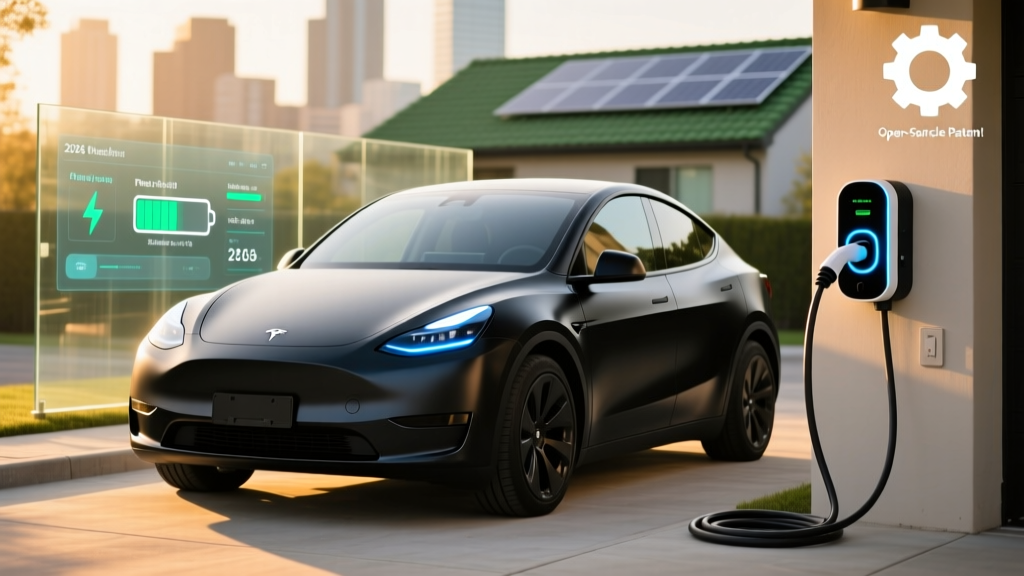
In 2014, Tesla CEO Elon Musk published a blog post titled "All Our Patent Are Belong To You," pledging that Tesla would not initiate patent lawsuits against anyone who wanted to use their technology in good faith. This unusual move — effectively making Tesla's intellectual property open source — was framed as an effort to accelerate the adoption of electric vehicles. Over a decade later, the ripple effects of that decision are visible across the entire EV industry, from the proliferation of NACS charging connectors to shared battery thermal-management concepts. But what does Tesla motors patents open source actually mean for someone shopping for a 2026 Tesla Model Y today?
The short answer: Tesla's open-patent posture helped establish industry-wide standards that benefit every EV buyer, while the Model Y itself remains Tesla's most refined, best-selling vehicle. This review covers the 2026 Model Y with the exact numbers you need — EPA range, charging curves, real-world efficiency, pricing, and tax-credit eligibility — so you can decide if it's the right EV for you.
2026 Tesla Model Y: Core Specifications at a Glance
| Specification | Long Range AWD | Performance |
|---|---|---|
| EPA Range | 320 miles | 295 miles |
| Battery Capacity | 78.1 kWh usable (NMC) | 78.1 kWh usable (NMC) |
| Drivetrain | Dual-Motor AWD | Dual-Motor AWD |
| Horsepower | 384 hp | 510 hp |
| 0–60 mph | 4.8 seconds | 3.5 seconds |
| Max DC Fast Charge | 250 kW (peak) | 250 kW (peak) |
| 10–80% DC Charge Time | ~25 minutes | ~25 minutes |
| Level 2 Home Charging | 11.5 kW (~37 mi/hr) | 11.5 kW (~37 mi/hr) |
| MPGe (Combined) | 122 MPGe | 111 MPGe |
| Efficiency | 28 kWh/100 mi | 30 kWh/100 mi |
| Cargo Volume (rear seats up) | 30.2 cu ft | 30.2 cu ft |
| Cargo Volume (rear seats folded) | 72.1 cu ft | 72.1 cu ft |
| Base MSRP | $44,990 | $51,490 |
| Battery/Drive Unit Warranty | 8 years / 120,000 miles | 8 years / 120,000 miles |
Sources: EPA fueleconomy.gov, Tesla Model Y official specs.
Real-World Range: What the EPA Sticker Doesn't Tell You
EPA Estimated Range: 320 miles (Long Range AWD) / 295 miles (Performance)
Real-World Expectation: Plan for 260–290 miles on highway-heavy trips at 70–80 mph. In freezing temperatures (below 32°F), expect a 20–30% reduction, bringing effective range to roughly 200–250 miles depending on cabin heating use and terrain. City driving with regenerative braking can match or slightly exceed EPA estimates.
The Model Y Long Range AWD carries a 78.1 kWh usable battery pack using nickel-manganese-cobalt (NMC) chemistry. NMC offers higher energy density than lithium iron phosphate (LFP), which is why Tesla reserves it for Long Range and Performance trims. The trade-off: NMC batteries degrade slightly faster over thousands of cycles compared to LFP, though Tesla's thermal management system — one of the technologies that emerged from the era when Tesla began sharing patent-adjacent knowledge — keeps degradation modest. Most owners report 5–8% capacity loss after 100,000 miles based on aggregated fleet data.
For road trips, the Model Y's efficiency of 28 kWh per 100 miles means you'll consume roughly 2.8 kWh per 10 miles driven. On a 300-mile highway run, that translates to approximately 84 kWh consumed — more than the usable pack capacity, confirming that a charging stop will be necessary on longer journeys.
Charging Speed and Infrastructure: The NACS Advantage
One of the most consequential outcomes of Tesla's open-patent philosophy was the eventual industry-wide adoption of the North American Charging Standard (NACS). In 2022, Tesla opened its proprietary connector design to other automakers, and by 2025, nearly every major manufacturer — Ford, GM, Rivian, Hyundai, BMW, and others — had adopted NACS for their North American EVs. This means the 2026 Model Y charges on a network that is now both the largest and the most universally compatible in the U.S.
| Charging Level | Power (kW) | Miles Added Per Hour | Typical Use Case |
|---|---|---|---|
| Level 1 (120V household) | 1.4 kW | ~4–5 mi/hr | Emergency / overnight trickle |
| Level 2 (240V home Wall Connector) | 11.5 kW | ~37 mi/hr | Daily home charging |
| Level 2 (public 7.2 kW) | 7.2 kW | ~23 mi/hr | Workplace / destination |
| DC Fast Charge (Supercharger V3) | 250 kW (peak) | ~1,000+ mi/hr at peak | Road trips |
| DC Fast Charge (Supercharger V4) | 250 kW (peak)* | ~1,000+ mi/hr at peak | Road trips (newer stations) |
*The Model Y's onboard architecture caps at 250 kW even at V4 stalls capable of higher output. The 10–80% charge takes approximately 25 minutes under optimal battery preconditioning. Above 80% SoC, the charge curve tapers significantly — expect 80–100% to take an additional 20+ minutes.
Preconditioning matters. When you navigate to a Supercharger in the Tesla app or in-car navigation, the car automatically warms the battery to the optimal temperature for fast charging. Without preconditioning — for example, arriving at a charger after the car has been sitting cold — peak charge rates can be 30–50% lower in the first several minutes. This is a common mistake new EV owners make on winter road trips.
Performance and Driving Dynamics
The Long Range AWD model delivers 384 horsepower and a 4.8-second 0–60 mph time — genuinely quick for a family crossover that starts under $45,000. The Performance trim bumps output to 510 hp and drops the sprint to 3.5 seconds, rivaling sports sedans at twice the price.
Both trims feature Tesla's dual-motor all-wheel-drive system with independent front and rear motors. The regenerative braking system is strong enough for one-pedal driving in most conditions, though Tesla removed the user-adjustable regen setting several model years ago — the car manages regen intensity automatically. Some EV veterans prefer manual control, but most buyers adapt within a week.
Ride quality in the current-generation Model Y has improved meaningfully over earlier builds. The suspension tuning absorbs highway imperfections more competently, and cabin noise isolation is noticeably better. That said, the Model Y still rides firmer than competitors like the Hyundai Ioniq 5 or the Ford Mustang Mach-E, which prioritize comfort over sportiness.
Interior, Tech, and Driver Assistance
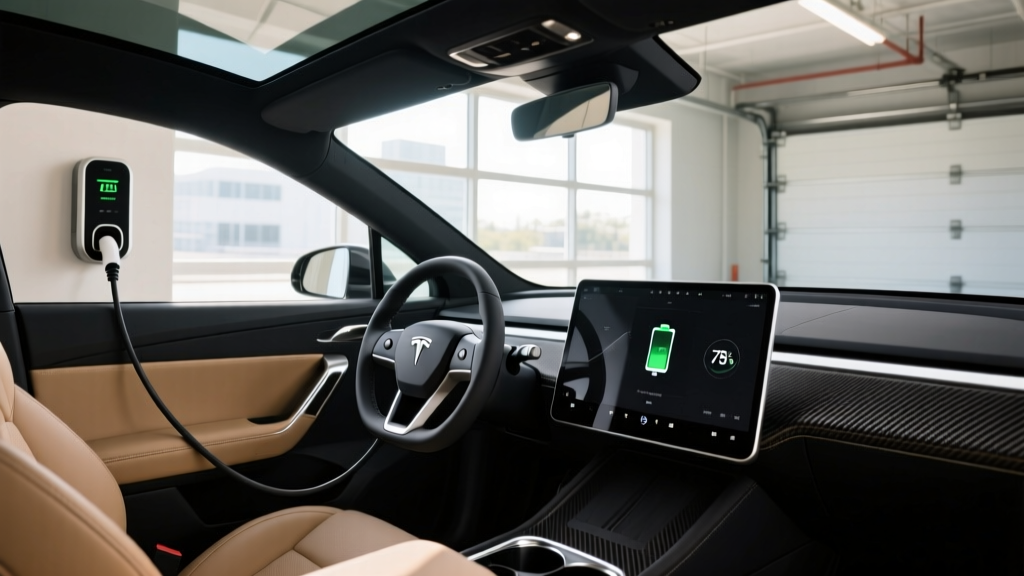
The Model Y's interior remains minimalist: a single 15.4-inch center touchscreen handles navigation, climate, media, vehicle settings, and even the speedometer. There is no separate instrument cluster. This is polarizing — some buyers love the clean aesthetic, while others find the reliance on a single screen distracting.
Autopilot and FSD (Supervised): Every Model Y ships with basic Autopilot (traffic-aware cruise control and lane centering). Tesla's Full Self-Driving (Supervised) package is available as a $8,000 add-on or subscription. It's critical to understand that FSD is an SAE Level 2 driver-assistance system — not autonomous driving. The driver must remain fully attentive, hands on or near the wheel, and ready to take over at any moment. Tesla's steering-wheel torque monitoring and cabin camera enforce this, but the system's name can mislead first-time buyers.
ADAS Limitation Warning: Tesla Autopilot and FSD (Supervised) are SAE Level 2 systems. They do NOT make the vehicle self-driving. The driver is legally and practically responsible for all vehicle operation at all times. Level 4 autonomous driving (no driver needed) is currently only available through commercial robotaxi services like Waymo in limited geographic zones.
Notable tech features include:
- Over-the-air (OTA) software updates that add features and refine performance
- Sentry Mode (parked-camera surveillance with cloud alerts)
- Dog Mode (climate-controlled cabin for pets with external display message)
- Tesla app integration for remote preconditioning, charging management, and location
- HEPA air filtration with "Bioweapon Defense Mode"
Drawbacks: No Apple CarPlay or Android Auto — Tesla's proprietary infotainment is the only option. No physical buttons for climate or volume (all screen-based). Rear-seat legroom (37.0 inches) is adequate but trails the Ioniq 5 (39.4 inches). The panoramic glass roof can create significant cabin heat in summer — many owners add an aftermarket sunshade.
Pricing, Tax Credits, and Total Cost
| Trim | Base MSRP | Federal §30D Credit | Effective Price |
|---|---|---|---|
| Long Range AWD | $44,990 | Up to $7,500* | As low as $37,490* |
| Performance | $51,490 | Up to $7,500* | As low as $43,990* |
*Federal EV tax credit eligibility under IRS §30D is NOT automatic. To qualify for the full $7,500, you must meet ALL of the following criteria:
- Income caps: Modified AGI ≤ $150,000 (single) / $300,000 (joint) / $225,000 (head of household)
- MSRP cap: Vehicle base MSRP must be ≤ $80,000 for SUVs/crossovers (Model Y qualifies)
- Battery sourcing: A percentage of critical minerals and battery components must be sourced from the U.S. or free-trade-agreement countries — these thresholds increase annually and can change mid-year
- Point-of-sale transfer: As of 2024+, you can transfer the credit to the dealer at purchase for an immediate price reduction, or claim it on your tax return
- Assembly: Vehicle must undergo final assembly in North America (Model Y is built in Texas and California — qualifies)
Rules change frequently. Always verify current eligibility on IRS.gov and confirm the specific VIN's battery-sourcing compliance with Tesla before purchase. State and local incentives may stack on top — check your state's energy office or AFDC incentive database.
5-Year Ownership Cost Perspective: The Model Y's efficiency (28 kWh/100 mi) means home charging at the U.S. average of $0.17/kWh costs roughly $4.76 per 100 miles. A comparable gas SUV at 25 MPG and $3.40/gallon costs $13.60 per 100 miles. Over 60,000 miles, that's approximately $5,300 in fuel savings with the Model Y — before factoring in reduced maintenance (no oil changes, fewer brake replacements due to regen, no transmission fluid).
Who Should Buy the 2026 Model Y — and Who Shouldn't
Pros
- Best-in-class Supercharger network access with NACS connector
- Strong real-world efficiency (28 kWh/100 mi)
- Excellent cargo versatility (72.1 cu ft with seats folded + front trunk)
- Continuous OTA updates add value post-purchase
- Competitive pricing after tax credit
- Strong resale value relative to EV segment average
Cons
- No Apple CarPlay / Android Auto
- All-screen interface polarizing; no physical controls
- Rear legroom trails key competitors
- FSD (Supervised) is expensive and still Level 2
- Glass roof causes cabin heat in summer
- Firm ride compared to comfort-oriented rivals
Best for: Daily commuters with home charging access, tech-forward buyers who value OTA updates and app integration, small families needing cargo flexibility, and road-trippers who prioritize Supercharger reliability. The Model Y's combination of range, charging speed, and network access makes it the most capable EV for drivers who regularly travel beyond their local area.
Consider alternatives if: You prioritize rear-seat comfort for adults (Hyundai Ioniq 5 or Kia EV6 offer more legroom), you want Apple CarPlay (nearly every non-Tesla EV offers it), you prefer a softer ride (Ford Mustang Mach-E), or you need a third row (Kia EV9).
Frequently Asked Questions
What is the real-world range of the 2026 Tesla Model Y?
The EPA rates the Long Range AWD at 320 miles. In real-world highway driving at 70–80 mph, expect 260–290 miles. In freezing weather, plan for 200–250 miles due to battery chemistry limitations and cabin heating demands. City driving with regenerative braking can approach or slightly exceed the EPA figure.
How fast does the Model Y charge at home and on the road?
At home on a 240V Level 2 Tesla Wall Connector (11.5 kW), the Model Y adds approximately 37 miles of range per hour — a full overnight charge from 20% to 100% takes roughly 8–9 hours. On a Tesla Supercharger (DC fast charge at up to 250 kW peak), the 10–80% charge takes about 25 minutes with battery preconditioning active. Peak rate is not sustained — the charge curve tapers significantly above 50% SoC and drops sharply above 80%.
How much does the 2026 Model Y cost after tax credits?
The Long Range AWD starts at $44,990 and the Performance at $51,490. If you qualify for the full $7,500 federal §30D credit (subject to income caps, MSRP caps, and battery-sourcing rules — verify on IRS.gov), the effective price drops to as low as $37,490 or $43,990 respectively. The credit can be transferred at point of sale for an immediate price reduction.
Does the Tesla Model Y qualify for the federal EV tax credit?
As of 2026, the Model Y qualifies for up to $7,500 under §30D, provided the buyer meets income limits (≤$150K single / ≤$300K joint), the specific VIN's battery meets critical-mineral and component sourcing thresholds, and the vehicle undergoes final assembly in North America (it does). Battery-sourcing rules tighten annually, so eligibility can change — always confirm with Tesla and the IRS before purchasing.
What does Tesla's open-source patent strategy mean for Model Y buyers?
Tesla's 2014 decision to open its patents accelerated industry-wide EV development and, critically, led to the NACS charging connector becoming the North American standard. For Model Y buyers, this means access to the most mature and reliable charging network, plus a vehicle whose core technologies (thermal management, battery pack design, powertrain efficiency) have been refined through years of competition that Tesla itself helped catalyze. The open-patent approach didn't weaken Tesla's product — it strengthened the entire EV ecosystem the Model Y operates within.
Is the 2026 Model Y worth buying versus key competitors?
The Model Y remains the benchmark for charging infrastructure access, efficiency, and software integration. Competitors like the Hyundai Ioniq 5 offer faster peak charging (up to 350 kW on 800V architecture), more rear-seat space, and CarPlay support. The Ford Mustang Mach-E offers a more comfortable ride and traditional controls. However, if Supercharger reliability and proven long-term software support are your priorities, the Model Y is still the segment leader. Test-drive at least two competitors before deciding.