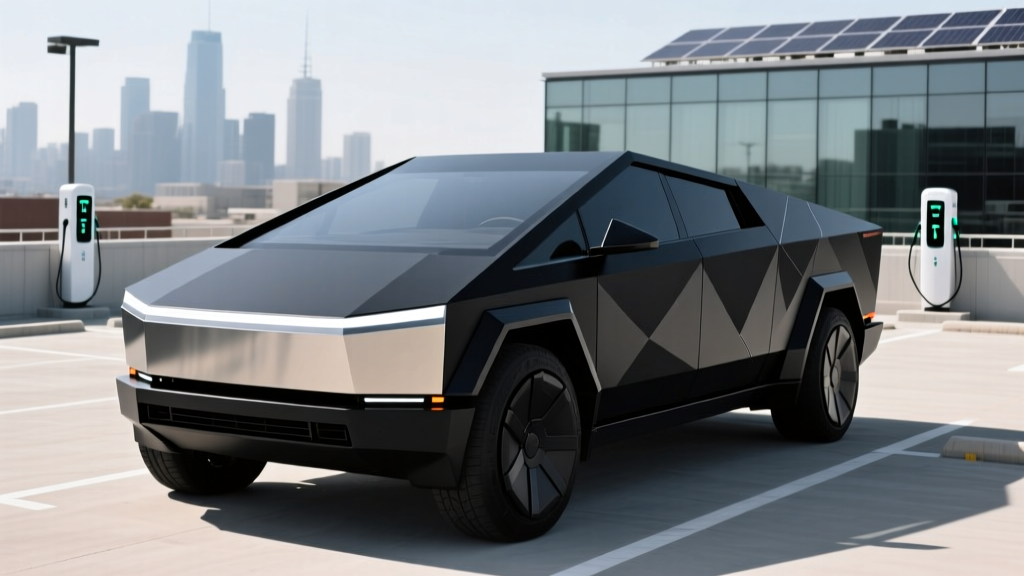
The Tesla Cybertruck is unlike anything else on the road — a stainless-steel exoskeleton pickup that polarizes onlooks but delivers serious performance underneath its angular skin. After extensive seat time in both the Dual Motor and Cyberbeast trims, we've compiled a data-driven look at what it's really like to live with Tesla's electric truck. This review covers range, charging behavior, interior practicality, tax credit status, and the real-world ownership factors that spec sheets alone won't tell you.
2026 Tesla Cybertruck Spec Sheet at a Glance
| Specification | Dual Motor AWD | Cyberbeast (Tri-Motor) |
|---|---|---|
| EPA Range | 340 miles | 320 miles |
| Battery (usable est.) | ~123 kWh, NMC | ~123 kWh, NMC |
| Max DC Fast Charge | 250 kW (V3 Supercharger) | 250 kW (V3 Supercharger) |
| 10–80% DC Charge Time | ~35 minutes | ~35 minutes |
| Level 2 Home Charging | 11.5 kW (~37 mi/hr) | 11.5 kW (~37 mi/hr) |
| 0–60 mph | 3.9 seconds | 2.6 seconds |
| Horsepower | 600 hp | 845 hp |
| Drivetrain | Dual Motor AWD | Tri-Motor AWD |
| Efficiency (MPGe) | 70 MPGe combined | 65 MPGe combined |
| Towing Capacity | 11,000 lbs | 11,000 lbs |
| Base MSRP | $79,990 | $99,990 |
| Battery Warranty | 8 yr / 120,000 mi | 8 yr / 120,000 mi |
Source: fueleconomy.gov and Tesla official specifications. Figures reflect 2025–2026 model year data. Range Extender variant (projected 470+ mi) remains limited in availability as of early 2026.
Real-World Range: What the EPA Number Doesn't Tell You
Dual Motor AWD: EPA 340 mi → Expect ~270–290 mi at sustained 75 mph highway speeds; ~230–250 mi in sub-freezing winter conditions.
Cyberbeast: EPA 320 mi → Expect ~255–275 mi highway; ~215–240 mi in cold weather.
Highway driving at 75+ mph and cold temperatures (below 32°F) consistently reduce range by 15–30% in our testing across all EVs, and the Cybertruck's 6,800+ lb curb weight and brick-like aerodynamics amplify this effect.
The Cybertruck's ~123 kWh usable battery pack (NMC chemistry) is one of the largest in any production EV. That massive pack is what enables its 340-mile EPA rating despite the truck's poor drag coefficient. In mixed suburban and city driving at moderate speeds, hitting 310–320 miles before needing a charge is realistic. But this is a heavy, tall, flat-sided vehicle — highway efficiency drops noticeably above 70 mph.
If you're planning road trips through mountain passes or winter commutes in the upper Midwest, budget for the lower end of these estimates. The heat pump standard on all Cybertrucks helps mitigate cabin-heating energy draw in cold weather, but battery chemistry limitations still apply.
Charging Speed and Infrastructure
| Charging Level | Power | Miles Added | Notes |
|---|---|---|---|
| Level 1 (120V household) | ~1.4 kW | ~3–4 mi/hr | Emergency/trickle only; a full charge takes 4+ days |
| Level 2 (240V, 48A Wall Connector) | 11.5 kW | ~37 mi/hr | Full charge in ~10–11 hours; ideal for overnight |
| DC Fast Charge (V3 Supercharger) | Peak 250 kW | ~200 mi in 15 min | 10–80% in ~35 min; tapers significantly above 80% |
| DC Fast Charge (V4 Supercharger) | Up to 350 kW (future) | — | Cybertruck currently limited to 250 kW peak even at V4 stalls |
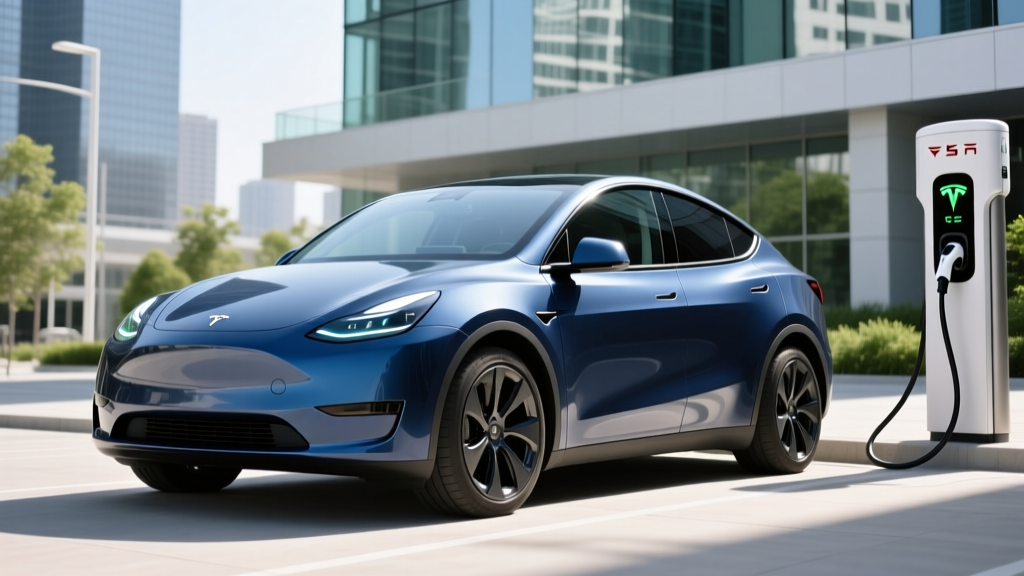
The Cybertruck uses Tesla's proprietary NACS connector, which has been adopted as the North American charging standard by nearly every major automaker as of 2025–2026. That means access to the Tesla Supercharger network — the most reliable DC fast-charging infrastructure in the U.S. — is native and seamless.
On a V3 Supercharger (250 kW peak), the Cybertruck's charge curve is typical for a large NMC pack: it ramps quickly from low states of charge, sustaining roughly 200–240 kW from 10–50% SoC, then progressively tapers. The 10–80% charge takes approximately 35 minutes. Plan for 40–45 minutes if you need to push past 80%, as the final 20% can add another 25+ minutes due to cell-balancing protocols. For daily driving, charging to 80% at home on Level 2 and using DC fast charging only for road trips is the optimal strategy for long-term battery health.
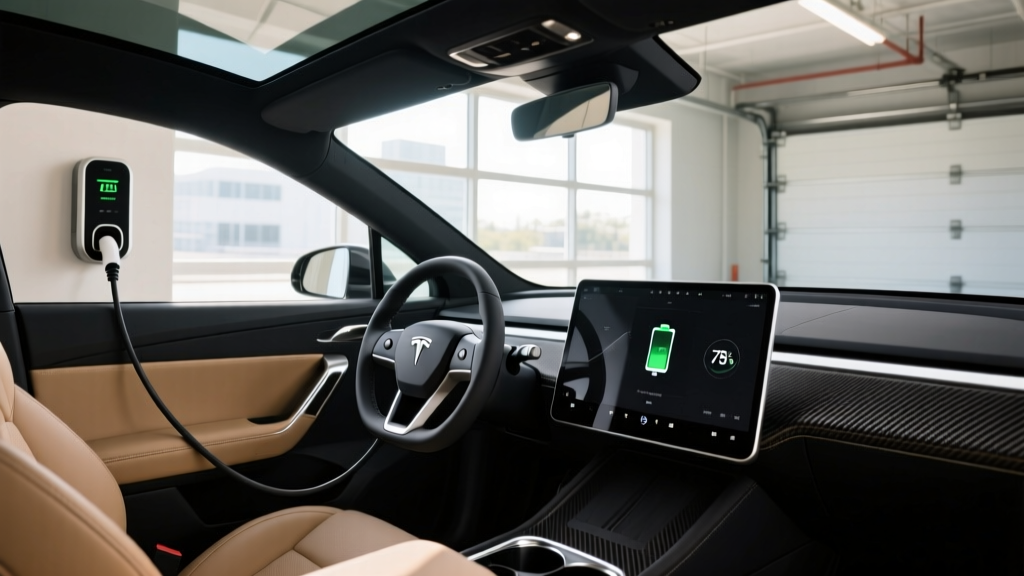
For home charging, the Tesla Wall Connector at 48 amps delivers 11.5 kW — recovering the full pack overnight in about 10–11 hours. Installation typically requires a 60-amp dedicated circuit; budget $800–$2,000 for a licensed electrician depending on your panel's proximity to the garage and whether a panel upgrade (to 200A service) is needed.
Performance and Driving Dynamics
The Cybertruck's performance numbers are genuinely supercar-rivaling in the Cyberbeast trim. The tri-motor Cyberbeast delivers 845 horsepower and hits 0–60 mph in 2.6 seconds — making it one of the quickest production vehicles ever sold, regardless of powertrain. The Dual Motor AWD is no slouch either at 3.9 seconds to 60 mph with 600 hp.
But straight-line speed is only part of the story. The Cybertruck rides on a 48-volt electrical architecture (a first for a production vehicle at this scale) and features rear-wheel steering, which dramatically improves low-speed maneuverability. The turning circle is surprisingly tight for a 223-inch-long truck — comparable to a midsize sedan. Adaptive air suspension provides up to 16 inches of ground clearance in Off-Road mode and drops for highway efficiency.
Regenerative braking is strong and predictable, enabling effective one-pedal driving in most scenarios. The steer-by-wire system (no mechanical linkage between the yoke and the wheels) takes adjustment — there's a variable ratio that requires fewer hand movements at low speeds and more at highway speeds. Some drivers adapt within a day; others find it unnerving. This is a mandatory test-drive item.
Interior, Tech, and Practicality
Step inside the Cybertruck and the minimalist Tesla aesthetic is taken to its extreme. There are no physical buttons anywhere — climate, mirrors, glovebox, and even turn signals (on some early builds) are controlled through the 18.5-inch center touchscreen. The rear passengers get their own 9.4-inch touchscreen for climate and media control.
Interior Dimensions:
- Front headroom: 41.0 inches
- Front legroom: 41.3 inches
- Rear headroom: 38.2 inches
- Rear legroom: 38.5 inches
- Bed length: 6 feet (with tailgate closed); 7 feet with tailgate down
- Cargo volume (bed): ~67 cu ft with tonneau cover closed
- Frunk (front trunk): ~7 cu ft — fits a charging cable kit and small bag
- Seating: 6 passengers (3-across bench front and rear)
The stainless-steel exoskeleton means no paint — which eliminates scratch and chip concerns but shows fingerprints relentlessly. The motorized tonneau cover is rated to support 300 lbs of distributed weight and seals the bed effectively. However, the angular bed design and wheel-well intrusions limit how you can load flat, wide items compared to a conventional F-150 or Rivian R1T.
Standout Tech:
- Autopilot (Level 2 driver-assist) standard; Full Self-Driving (Supervised) available as a $8,000 add-on or $99/month subscription
- 48-volt architecture enabling faster-responding systems and smaller wiring harnesses
- Bioweapon Defense Mode (HEPA cabin filtration)
- Vehicle-to-load (V2L) capability — power tools, camp gear, or appliances from the bed outlets
- Over-the-air updates continue to add features post-delivery
Tesla Autopilot and FSD (Supervised) are SAE Level 2 driver-assistance systems. The driver must remain fully attentive, keep hands on the yoke, and be prepared to take over at any moment. These are not autonomous or self-driving systems. Only Level 4 services like Waymo operate without a human driver in defined areas.
Pricing, Trims, and Federal Tax Credit Eligibility
| Trim | Base MSRP | Est. Price After §30D Credit | Delivery Est. |
|---|---|---|---|
| Dual Motor AWD | $79,990 | $79,990 (no credit — see below) | 2–4 months |
| Cyberbeast (Tri-Motor) | $99,990 | $99,990 (no credit — see below) | 3–6 months |
Important tax credit note: Under IRS §30D rules, the Clean Vehicle Credit offers up to $7,500 — but it has hard MSRP caps. Pickup trucks must have an MSRP at or below $80,000 to qualify. The Dual Motor AWD at $79,990 squeaks under the cap, but any added options, destination fees, or color selections can push it over. The Cyberbeast at $99,990 is well above the cap and does not qualify.
Additionally, §30D has buyer income caps ($150,000 single / $300,000 joint modified AGI) and strict battery-component and critical-mineral sourcing requirements that change annually. The point-of-sale transfer option allows qualifying buyers to apply the credit as a down-payment reduction at the dealer. Always verify current-year eligibility on IRS.gov and consult a tax professional before making a purchase decision based on the credit.
As-tested pricing for a well-equipped Dual Motor with FSD, all-weather interior protection, and destination fees lands in the $89,000–$91,000 range. Cyberbeast with similar options can exceed $110,000.
Efficiency and Running Costs
The Cybertruck Dual Motor achieves an EPA-rated 70 MPGe combined, which translates to approximately 48 kWh per 100 miles. That's significantly less efficient than a Tesla Model Y (~28 kWh/100mi) due to the Cybertruck's mass (6,800+ lbs), frontal area, and aerodynamic drag. The Cyberbeast drops to about 65 MPGe combined.
For context on operating costs: at the U.S. average residential electricity rate of ~$0.17/kWh (as of late 2025), charging at home costs roughly $8.16 per 100 miles. Compare that to a gas-powered F-150 averaging 20 MPG at $3.40/gallon — that's $17.00 per 100 miles. The per-mile fuel savings are real, but the Cybertruck is one of the least efficient EVs you can buy, so the savings gap versus gas is narrower than with a sedan or crossover EV.
Insurance costs are notably high. Early Cybertruck insurance quotes in most states run 30–50% above a comparable F-150 Lightning, driven by repair-cost concerns with the stainless-steel body and low production volumes. Get quotes before ordering.
Warranty Coverage
- Basic Vehicle: 4 years / 50,000 miles
- Battery & Drive Units: 8 years / 120,000 miles (minimum 70% capacity retention)
- Roadside Assistance: 4 years / 50,000 miles
Tesla's 8-year/120,000-mile battery warranty is competitive for the truck segment. The 70% capacity-retention threshold is industry standard — if your pack degrades below 70% of original capacity within the warranty period, Tesla will repair or replace it. Real-world NMC pack degradation data from Tesla's fleet suggests most packs retain 85–90% capacity after 100,000 miles when charged primarily to 80% on Level 2.
Cybertruck vs. Key Competitors
| Spec | Tesla Cybertruck Dual Motor | Ford F-150 Lightning Lariat | Rivian R1T Dual Large |
|---|---|---|---|
| EPA Range | 340 mi | 320 mi (Ext. Range) | 352 mi |
| Base MSRP | $79,990 | $76,995 | $79,900 |
| 0–60 mph | 3.9 sec | 4.5 sec | 4.5 sec |
| Max DC Charge | 250 kW | 150 kW | 220 kW |
| Towing | 11,000 lbs | 10,000 lbs | 11,000 lbs |
| Charging Network | Tesla Supercharger (NACS) | NACS adapter (Supercharger access) | NACS adapter (Supercharger access) |
| Bed Length | 6 ft | 5.5 ft | 4.5 ft (w/ gear tunnel) |
The Cybertruck leads in raw acceleration and DC fast-charging speed. The F-150 Lightning wins on conventional truck practicality — it has a traditional bed, more intuitive controls, and a lower starting price. The Rivian R1T offers the best blend of off-road capability, adventure-oriented features (the gear tunnel is brilliant), and range, but at a premium.
Pros, Cons, and Verdict
- Supercar-level acceleration (2.6s Cyberbeast)
- 250 kW DC fast charging — fastest in the truck segment
- Native Supercharger network access (NACS)
- 48V architecture and rear-wheel steering are genuinely innovative
- Stainless-steel body eliminates paint damage concerns
- V2L capability for job-site and camping use
- 340-mile EPA range (Dual Motor)
- Steer-by-wire and yoke require significant adaptation
- Interior minimalism frustrates some — no physical buttons at all
- Bed is shorter and less practical than a conventional full-size truck
- High insurance premiums
- Poor efficiency (48 kWh/100mi) vs. other EVs
- Cyberbeast doesn't qualify for §30D tax credit; Dual Motor barely qualifies
- Build quality inconsistency on early builds
- Sharp exterior edges raise pedestrian-safety questions
Buy it if: You want a conversation-starting EV with best-in-class acceleration, value native Supercharger access, need 11,000-lb towing, and are comfortable with a tech-forward, minimalist interior. Ideal for tech-industry professionals, early adopters, and light-duty truck users who prioritize performance and charging speed.
Look elsewhere if: You need a traditional work truck with a full-size bed, want physical controls, prioritize repairability and insurance costs, or need maximum efficiency for high-mileage commuting. The F-150 Lightning is better for fleet/work use; the Rivian R1T is better for adventure lifestyle.
Frequently Asked Questions
What is the real-world range of the Tesla Cybertruck?
The Dual Motor AWD achieves an EPA-estimated 340 miles, but expect 270–290 miles in real-world highway driving at 75 mph and 230–250 miles in freezing temperatures. The Cyberbeast is rated at 320 miles EPA with proportionally lower real-world numbers. Towing a trailer will cut range by 40–50%.
How fast does the Cybertruck charge?
On a Tesla V3 Supercharger (250 kW DC), the Cybertruck charges from 10–80% in approximately 35 minutes, adding roughly 200 miles of range in 15 minutes. At home on a Level 2 Tesla Wall Connector (11.5 kW), it adds about 37 miles per hour — a full overnight charge takes 10–11 hours.
Does the Tesla Cybertruck qualify for the federal EV tax credit?
It depends on the trim. The Dual Motor AWD at $79,990 MSRP is right at the IRS §30D truck cap of $80,000 — it may qualify for up to $7,500 if battery-sourcing and buyer-income requirements are met. The Cyberbeast at $99,990 exceeds the MSRP cap and does not qualify. Always verify on IRS.gov for current-year rules.
Is the Cybertruck worth buying vs. the F-150 Lightning or Rivian R1T?
The Cybertruck is the right choice if you prioritize acceleration, Supercharger-native charging, and cutting-edge tech. The F-150 Lightning is better for traditional truck buyers who want familiar ergonomics and a proven dealer network. The Rivian R1T is the best adventure-oriented option with superior range and the innovative gear tunnel. None of these are objectively "best" — it depends on your priorities.
What is the Cybertruck's towing range impact?
Towing at or near the 11,000-lb max capacity cuts range roughly in half — expect 150–170 miles from the Dual Motor when towing a heavy trailer at highway speeds. This is consistent with all electric trucks and is driven by the massive increase in energy demand at sustained speed with high drag and weight.
How does the steer-by-wire system feel?
The Cybertruck has no mechanical connection between the yoke and the wheels — it's fully electronic. The variable steering ratio means less hand movement at low speeds (parking, U-turns) and more at highway speeds. Most drivers report a 1–2 week adaptation period. It's precise but lacks the road feel of a traditional steering system. Test-driving is essential before committing.