Quick Answer: Is the 2024 Kia Niro EV Wind Worth It?
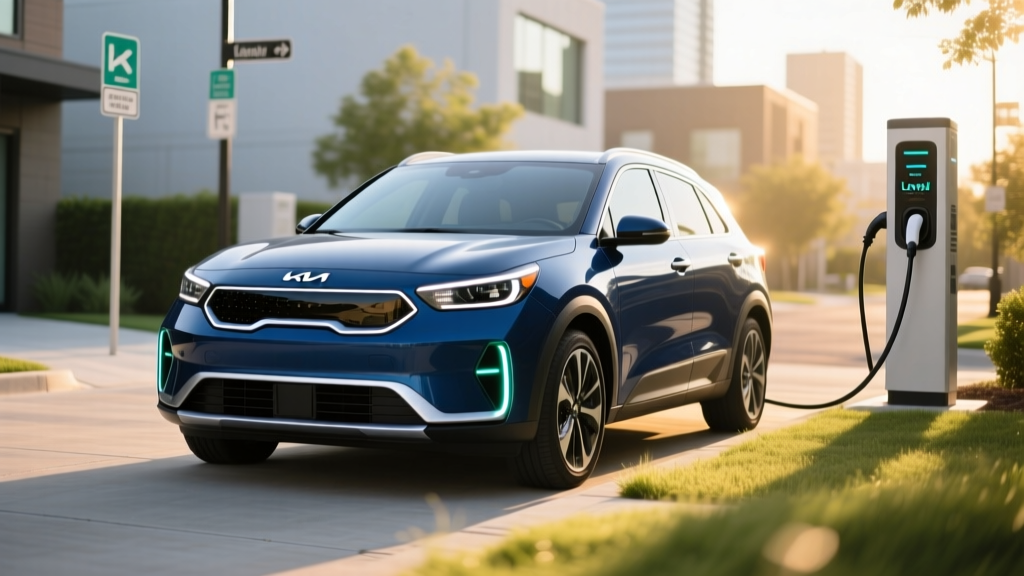
The 2024 Kia Niro EV Wind starts at $39,600 MSRP and delivers an EPA-rated 239 miles of range from its 64.8 kWh NMC battery. In real-world mixed driving, expect 200–220 miles; highway-heavy or cold-weather trips drop that to roughly 170–190 miles. It charges at up to 85 kW DC fast charging (10–80% in about 45 minutes) and 11 kW Level 2. The Wind trim adds a power sunroof, heated/ventilated front seats, and Highway Driving Assist over the base model. It qualifies for a $3,750 federal tax credit under current IRS §30D rules (not the full $7,500 — see eligibility details below). Compared to the Niro Hybrid, the EV costs more upfront but saves an estimated $4,000–$6,000 in fuel and maintenance over 5 years for a driver covering 12,000 miles annually with home charging access.
Range & Battery: What the EPA Number Doesn't Tell You
The EPA rates the 2024 Kia Niro EV Wind at 239 miles with a combined efficiency of 113 MPGe (30 kWh/100 miles), per fueleconomy.gov. That number comes from a standardized lab test blending city and highway cycles with climate control at moderate temperatures. Your actual experience will differ based on three factors that hit this car harder than some larger-battery EVs:
Real-World Range Expectations
- City/suburban, mild weather (60–75°F): 220–240 miles — regen braking in stop-and-go traffic maximizes recovery.
- Highway cruising (70 mph, 75°F): 190–210 miles — the Niro's boxy crossover shape creates more drag than a sedan at sustained speed.
- Cold weather (25°F, mixed driving): 165–185 miles — NMC chemistry loses 20–30% capacity in freezing temps even with the heat pump running.
- Cold weather highway: 150–170 miles — the worst-case scenario. Plan charging stops accordingly.
The Niro EV uses a 64.8 kWh usable NMC (nickel manganese cobalt) battery pack. NMC offers higher energy density than LFP chemistry, keeping the pack relatively compact under the floor, but it degrades slightly faster over time and benefits from staying between 20–80% state of charge for daily use. Kia backs the battery with a 10-year/100,000-mile warranty guaranteeing at least 70% capacity retention — one of the strongest in the segment.
| Spec | Value |
|---|---|
| EPA Range | 239 miles |
| Battery (usable) | 64.8 kWh, NMC |
| Efficiency | 113 MPGe / 30 kWh/100mi |
| Motor Output | 201 hp / 188 lb-ft torque |
| 0–60 mph | ~7.0 seconds |
| DC Fast Charge (peak) | 85 kW (CCS) |
| 10–80% DC Charge Time | ~45 minutes |
| Level 2 Charge Rate | 11 kW (48A) |
| Level 2 Full Charge Time | ~6.5 hours |
| Drivetrain | FWD, single-speed reduction |
| Cargo Volume | 19.1 cu ft (rear seats up) / 53.0 cu ft (folded) |
| Battery Warranty | 10 years / 100,000 miles |
| MSRP (Wind trim) | $39,600 |
Charging Reality: Speeds, Connectors, and the 85 kW Ceiling
The Niro EV's DC fast-charging peak of 85 kW is the most important limitation to understand before buying. While competitors like the Hyundai Ioniq 5 (peak 240 kW on 800V architecture) or Tesla Model Y (peak ~250 kW) can add 150+ miles in 15 minutes, the Niro EV adds roughly 90–100 miles in 30 minutes at a 150+ kW station. The charge curve is relatively flat — it sustains close to 80 kW through about 60% SoC, then tapers to 40–50 kW above 80%.
This matters most on road trips. A 300-mile drive requires one 45-minute stop (10–80%) in mild weather, or potentially two shorter stops in winter. For daily commuting with home Level 2 charging, the 85 kW ceiling is irrelevant — you'll plug in overnight and wake up full every morning.
| Level | Power (kW) | Miles Added Per Hour | Use Case |
|---|---|---|---|
| Level 1 (120V) | 1.4 kW | ~4–5 mi/hr | Emergency top-up only |
| Level 2 (240V, 48A) | 11 kW | ~36 mi/hr | Daily home/work charging |
| DC Fast (CCS) | 85 kW peak | ~170 mi/hr (peak) | Road trips, quick top-ups |
The Niro EV uses a CCS1 connector for DC fast charging and a J1772 inlet for Level 1/2. It does not have a NACS (Tesla-style) port. You can charge at Tesla Superchargers only with a CCS-to-NACS adapter, which Kia does not include. Public networks like Electrify America, EVgo, and ChargePoint all support CCS natively.
Cost Breakdown: Niro EV vs. Niro Hybrid vs. Gas Crossover
The Niro lineup spans hybrid, plug-in hybrid, and full EV. Here's how the EV Wind stacks up financially against the Niro Hybrid EX and a comparable gas-powered subcompact crossover over 5 years and 60,000 miles.
| Cost Factor | Niro EV Wind | Niro Hybrid EX | Gas Crossover (28 MPG avg) |
|---|---|---|---|
| MSRP (base) | $39,600 | $30,600 | $28,000 |
| Federal Tax Credit (§30D) | −$3,750 | $0 | $0 |
| Effective Purchase Price | $35,850 | $30,600 | $28,000 |
| Fuel/Energy (60k mi) | $2,700* | $5,400** | $7,500*** |
| Maintenance (60k mi) | $900 | $2,400 | $3,000 |
| Estimated Insurance (5 yr) | $7,500 | $6,500 | $6,000 |
| 5-Year Total | $46,950 | $44,900 | $44,500 |
*Assumes $0.15/kWh home charging (90%) and $0.40/kWh public DC (10%). **Assumes 53 MPG combined at $3.50/gal. ***Assumes 28 MPG at $3.50/gal. Insurance varies significantly by driver profile, ZIP code, and carrier. Source: fueleconomy.gov and author estimates.
The EV Wind breaks even with the Hybrid around year 4–5 if you have home charging and drive 12,000+ miles annually. If you rely entirely on public DC fast charging at $0.35–$0.50/kWh, the fuel cost advantage narrows substantially, and the Hybrid may be the better financial choice.
Federal Tax Credit: The $3,750 Reality
Under current IRS §30D rules, the 2024 Niro EV qualifies for $3,750 — not the full $7,500. It meets the critical minerals requirement but does not satisfy the battery component sourcing threshold for the additional $3,750 half. Key eligibility rules:
- MSRP cap: Must be under $55,000 (Niro EV Wind at $39,600 qualifies)
- Buyer income cap: AGI ≤ $150,000 single / $300,000 joint
- Point-of-sale transfer: You can apply the credit as a down-payment reduction at the dealer
- Sourcing rules: Subject to annual tightening — verify current status at purchase
Always confirm eligibility with your tax professional before relying on the credit in your purchase math. Rules can shift with IRS guidance updates.
What First-Time EV Buyers Must Know Before Choosing the Niro EV
If this is your first electric vehicle, the Niro EV Wind is a solid entry point — but only if your situation fits. Here are the ownership realities that brochures don't emphasize:
Home Charging Is the Make-or-Break Factor
Level 2 home charging (240V, ideally a 48-amp circuit) transforms EV ownership from a chore into a convenience. A typical Niro EV home-charge installation costs $800–$2,000 for the charger and electrician if your panel has capacity. If you need a panel upgrade (100A to 200A), add $1,500–$3,000. Without home charging, you'll spend 2–3 hours per week at public chargers, and your per-mile energy cost roughly doubles.
Cold Climate Means Real Range Loss
The Niro EV includes a heat pump, which helps cabin heating efficiency compared to resistive heaters, but battery chemistry itself slows in cold. If you live where winter temperatures regularly drop below 30°F and your commute is over 80 miles round-trip, you'll need to precondition the battery (using the Kia Connect app while plugged in) and plan for 25–30% range reduction.
Public Charging Reliability Varies
CCS networks have improved but remain inconsistent. Electrify America stations average about 80% uptime nationally. Before a road trip, use PlugShare or A Better Routeplanner to verify station status along your route. The Niro's built-in navigation can route through chargers and precondition the battery, but the preconditioning function is less aggressive than Tesla's — expect slightly slower initial charge rates in cold weather.
| Myth | Fact |
|---|---|
| "The battery will need replacing in 5 years" | Kia's 10-year/100,000-mile warranty covers capacity below 70%. NMC batteries in similar Kia/Hyundai models show ~10–12% degradation at 100,000 miles based on fleet data. |
| "I can't take road trips" | You can, but plan 45-minute stops every 170–200 miles. A 500-mile trip takes ~2 hours longer than in a gas car. |
| "EVs cost more to insure" | Sometimes 10–20% more due to repair costs, but varies by carrier. Get quotes before buying — some insurers offer EV discounts. |
| "The $7,500 tax credit applies to everyone" | The Niro EV qualifies for $3,750 only, and income/MSRP caps apply. Verify with IRS guidelines and your tax advisor. |
Decision Framework: Should You Buy the Niro EV Wind?
Choose the 2024 Niro EV Wind If:
- You have (or can install) Level 2 home charging
- Your daily commute is under 80 miles round-trip
- You take road trips fewer than 5 times per year
- You want a compact crossover with strong cargo space (19.1 cu ft) and Kia's 10-year warranty
- You qualify for the $3,750 federal credit and your state offers additional EV incentives
- You value a quiet, smooth powertrain with 201 hp and instant torque
Choose the Niro Hybrid Instead If:
- You lack reliable home or workplace charging access
- You regularly drive 300+ miles in a single day
- You live in an extreme cold climate (sub-zero winters) and have a long commute
- Your budget is firm at $30,000 and you can't absorb the EV premium even with tax credits
Look at a Competitor If:
- DC fast-charging speed is critical: the Hyundai Ioniq 5 or Tesla Model Y charge 2–3× faster
- You need AWD: the Niro EV is front-wheel drive only; consider the Ioniq 5 AWD or Model Y
- You want 300+ miles of range: the Model Y Long Range (330 mi EPA) or Chevy Equinox EV (319 mi EPA) go further
Wind Trim: What You Get for the Money
The Wind sits in the middle of the Niro EV lineup (above the base S, below the top Wave). At $39,600, it adds over the base model:
- Power sunroof with tilt and slide
- Heated and ventilated front seats
- Heated steering wheel
- Highway Driving Assist (HDA) — Kia's SAE Level 2 adaptive cruise + lane centering system
- Smart power liftgate
- Wireless phone charging pad
HDA is competent for highway cruising but requires hands on the wheel. It is not autonomous driving — it's a driver-assist system (SAE Level 2) that reduces fatigue on long trips. Keep your attention on the road.
Frequently Asked Questions
Can the 2024 Kia Niro EV Wind tow?
Kia does not rate the Niro EV for towing. If you need to pull a trailer, look at the Hyundai Ioniq 5 (2,300 lb rating) or Ford Mustang Mach-E (up to 2,200 lb).
How long does a full Level 2 charge take at home?
From near-empty to 100% on an 11 kW Level 2 charger: approximately 6.5 hours. Most owners charge from 20–80% daily, which takes about 3.5 hours — easily done overnight on a timer to hit off-peak electricity rates.
Is the Niro EV Wind eligible for HOV lane access?
In many states, yes. California's Clean Air Vehicle decal program, for example, grants solo HOV lane access for qualifying EVs. Check your state's DMV for current rules and expiration dates.
What happens if the battery degrades past 70%?
Under Kia's 10-year/100,000-mile battery warranty, the dealer will repair or replace modules to restore capacity above the 70% threshold at no cost to you. Out-of-warranty replacement for the full pack runs $8,000–$12,000 based on current parts pricing — but most NMC packs in Kia/Hyundai vehicles retain 85–90% capacity at 100,000 miles based on available fleet data.
Does the Niro EV support vehicle-to-load (V2L)?
No. The 2024 Niro EV does not offer V2L capability. If you need to power devices or appliances from your EV (camping, outages), the Hyundai Ioniq 5 and Ford F-150 Lightning both offer V2L.
Should I charge to 100% every day?
For NMC batteries like the Niro's, daily charging to 80% is recommended for longevity. Charge to 100% only when you need the full range for a longer trip, and try to start driving soon after reaching full charge rather than letting it sit at 100% for hours. Use the charge-limit setting in the infotainment system or Kia Connect app.