If you have been browsing EV forums or social media, you have likely seen the phrase "Tesla wrap cost" trending among owners looking to personalize their vehicles or protect factory paint. But beyond aesthetics, the real question for buyers in 2026 is whether wrapping a Tesla Model Y makes financial sense when stacked against the total cost of ownership — from the base MSRP and federal tax credit to charging, efficiency, and long-term battery health. This review covers the 2026 Tesla Model Y in full: specs, real-world range, charging speed, pricing after incentives, and whether a vinyl wrap is a smart investment or an unnecessary expense.
2026 Tesla Model Y At a Glance: Core Specifications
Before we get into wrap costs and customization, here are the hard numbers every buyer needs. The 2026 Model Y continues to dominate the compact electric SUV segment with strong efficiency, access to the Supercharger network, and competitive pricing. Below is the spec sheet for the most popular trim: the Long Range AWD.
| Spec | 2026 Model Y Long Range AWD |
|---|---|
| EPA Range | 320 miles |
| Battery Capacity | 78.1 kWh usable (NMC chemistry) |
| Drivetrain | Dual-Motor AWD |
| Horsepower | 384 hp combined |
| 0-60 mph | 4.8 seconds |
| Max DC Fast Charge | 250 kW peak |
| 10-80% DC Fast Charge | ~27 minutes |
| Level 2 Home Charge | 11.5 kW (~44 mi/hr) |
| EPA Efficiency | 117 MPGe combined (29 kWh/100 mi) |
| Cargo Volume | 30.2 cu ft (rear seats up) / 72.0 cu ft (folded) |
| Rear Legroom | 38.4 inches |
| Base MSRP | $44,990 |
| Battery Warranty | 8 years / 120,000 miles |
Real-World Range: What to Actually Expect
Real-World Highway (70-80 mph): ~265-285 miles
Cold Weather (below 32°F): ~220-250 miles
City / Mixed Commuting: ~295-315 miles
The EPA's 320-mile estimate for the 2026 Model Y Long Range is achievable under ideal conditions — moderate temperatures, city-heavy driving, and speeds under 65 mph. In practice, sustained highway driving at 75-80 mph pushes energy consumption closer to 33-35 kWh/100 mi, reducing effective range to roughly 265-285 miles. Cold weather compounds this: the battery's internal resistance increases and cabin heating draws significant power, even with the Model Y's standard heat pump. Expect a 20-30% range reduction in sub-freezing conditions, landing between 220 and 250 miles per charge.
For daily commuters covering 40-60 miles round trip, this is a non-issue — you will charge at home every few days. Road trippers should plan Supercharger stops every 200-230 miles to keep the battery in the fast-charging sweet spot (10-80%) and avoid the steep taper above 80% State of Charge.
Charging Speed: DC Fast, Level 2, and Level 1
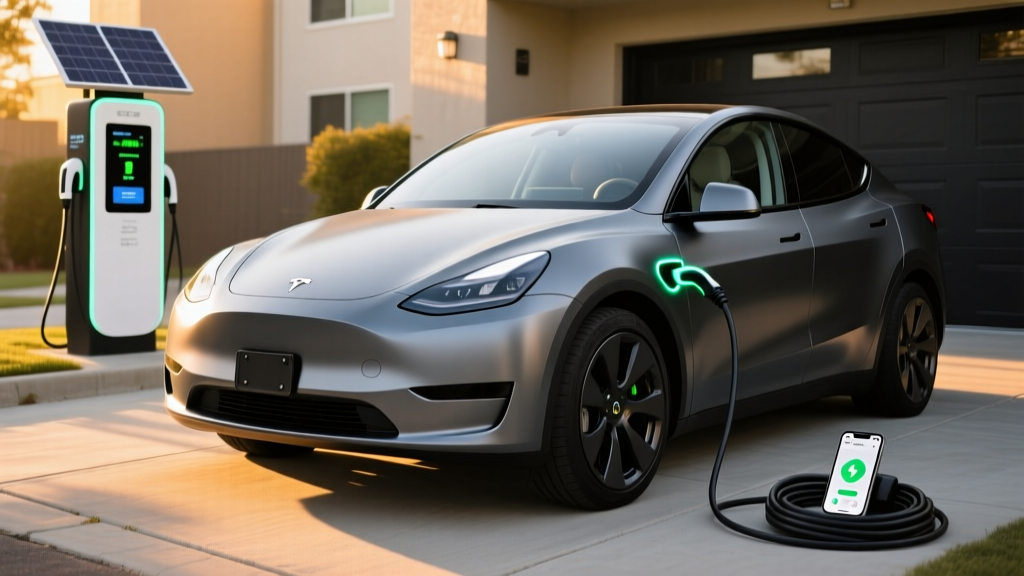
Charging speed remains one of the Model Y's strongest advantages, thanks to Tesla's mature Supercharger network and the vehicle's capable thermal management system. Here is the breakdown by charging level:
| Level | Power (kW) | Miles Added Per Hour | Notes |
|---|---|---|---|
| Level 1 (120V) | ~1.4 kW | ~4-5 mi/hr | Emergency/trickle only |
| Level 2 (240V, 48A) | 11.5 kW | ~44 mi/hr | Home Wall Connector; full charge ~7.5 hrs |
| DC Fast (V3 Supercharger) | 250 kW peak | ~175 mi in 15 min | 10-80% in ~27 min; tapers above 60% |
| DC Fast (V4 Supercharger) | Up to 325 kW | ~200 mi in 15 min | Limited availability; Model Y caps at ~250 kW |
The Model Y's charge curve peaks at 250 kW between roughly 10-35% State of Charge, then gradually tapers. By 60% SoC, you are pulling around 120 kW, and above 80% it drops below 50 kW. This is why Tesla and most EV experts recommend charging to 80% on road trips — the last 20% can take as long as the first 70%.
For home charging, Tesla's Wall Connector at 48 amps delivers 11.5 kW, adding roughly 44 miles of range per hour. A full overnight charge from 20% to 100% takes about 7-8 hours, which is ideal for daily use. Installation typically requires a 60-amp circuit and costs between $500 and $1,500 depending on panel proximity and local permitting, according to Tesla's home charging guide.
Pricing, Trims, and Federal Tax Credit Eligibility
The 2026 Model Y lineup includes three main trims. Here is where pricing stands and how the federal tax credit applies:
| Trim | Base MSRP | Est. Price After §30D Credit | Eligible for $7,500 Credit? |
|---|---|---|---|
| Long Range AWD | $44,990 | ~$37,490 | Yes (if income/sourcing rules met) |
| Performance AWD | $48,990 | ~$41,490 | Yes (if income/sourcing rules met) |
| Long Range RWD | $42,990 | ~$35,490 | Yes (if income/sourcing rules met) |
Important §30D caveats: The IRS federal EV tax credit of up to $7,500 is subject to multiple requirements in 2026:
- Income caps: Modified AGI must not exceed $150,000 (single), $225,000 (head of household), or $300,000 (joint filers).
- MSRP cap: SUVs like the Model Y must have an MSRP at or below $80,000 (all trims qualify).
- Battery sourcing: A percentage of critical minerals and battery components must be sourced from the U.S. or free-trade-agreement partners. Tesla has made significant progress in domestic battery cell production at its Nevada and Texas gigafactories, but exact eligibility can shift based on supply-chain changes.
- Point-of-sale transfer: As of 2024, buyers can transfer the credit to the dealer at purchase, effectively reducing the purchase price upfront rather than waiting for a tax refund.
Always verify current eligibility on fueleconomy.gov before purchasing, as battery-sourcing compliance can change model year to model year.
Tesla Wrap Cost: Is It Worth It?
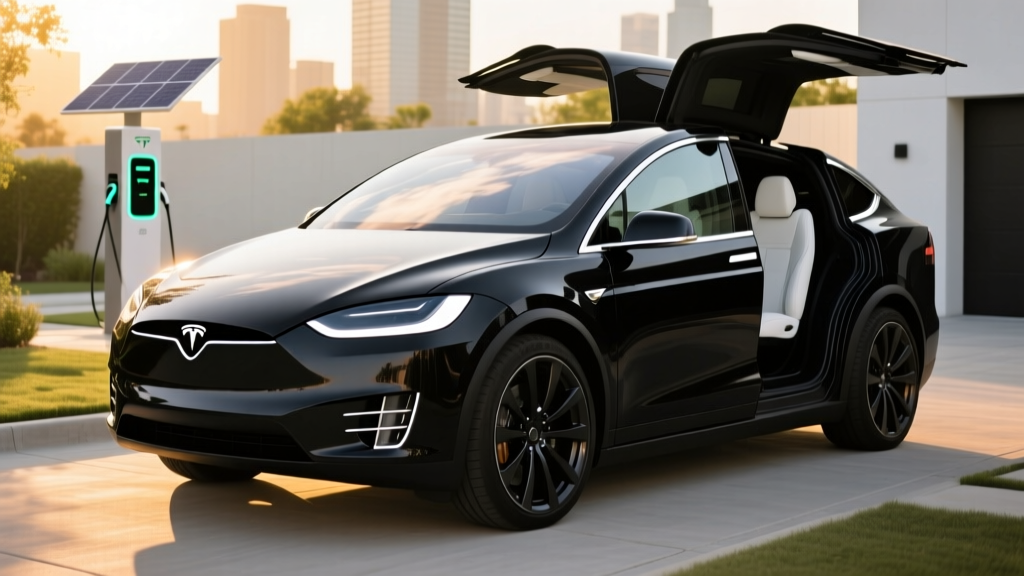
Now to the keyword that brought you here. A full vinyl wrap on a Tesla Model Y typically costs between $2,500 and $5,000 depending on material quality, color complexity, and installer reputation. Here is how the costs break down:
- Budget wrap (standard gloss/matte vinyl): $2,500-$3,200. Lasts 3-5 years. Basic color change with moderate UV protection.
- Mid-range wrap (premium cast vinyl, satin/metallic): $3,200-$4,200. Lasts 5-7 years. Better conformability around complex body panels, superior color depth.
- High-end wrap (color-shift, chrome, PPF hybrid): $4,200-$6,500+. Lasts 7+ years. Paint Protection Film (PPF) layers add rock-chip and scratch resistance on top of color change.
- Partial wrap (roof, hood, mirrors): $800-$1,500. Popular for two-tone effects without full-vehicle cost.
Does a wrap make financial sense? Compared to a professional paint respray ($5,000-$10,000+), a wrap is significantly cheaper and reversible — important if you plan to sell the car and want to preserve factory paint. A quality wrap also provides a thin layer of protection against minor scratches and UV fading. However, wraps do not add resale value in a quantifiable way; they are a personalization expense, not an investment.
For owners in areas with heavy road debris or harsh sun, combining a front-end PPF application ($1,200-$2,000) with a full color wrap is a popular strategy that protects high-impact zones while customizing appearance.
Performance, Tech, and Daily Livability
The 2026 Model Y Long Range AWD delivers 384 horsepower through its dual-motor setup, hitting 0-60 mph in 4.8 seconds. The Performance trim drops that to 3.5 seconds with 456 hp. Both trims offer confident all-weather traction and a low center of gravity thanks to the under-floor battery pack.
Inside, the minimalist cabin centers on a 15.4-inch touchscreen running Tesla's proprietary infotainment system. There is no Apple CarPlay or Android Auto — everything runs through Tesla's native apps, including navigation, media, and vehicle settings. The system is fast and well-integrated, but the lack of smartphone mirroring remains a drawback for some buyers.
Driver assistance comes via Tesla's Autopilot (standard), which includes adaptive cruise control, lane-keeping, and automatic emergency braking. Full Self-Driving (Supervised) is an optional $8,000 add-on that enables automated lane changes, on-ramp to off-ramp navigation, and city street steering. It is critical to understand that FSD is an SAE Level 2 system — the driver must remain fully engaged, hands on or near the wheel, eyes on the road at all times. It is not autonomous driving.
Cargo space is generous: 30.2 cubic feet behind the rear seats, expanding to 72.0 cubic feet with the 60/40 split rear seats folded. The front trunk (frunk) adds 4.1 cubic feet for cables, bags, or groceries. Rear legroom of 38.4 inches is competitive with rivals like the Hyundai Ioniq 5 and Ford Mustang Mach-E.
Pros and Cons: The Honest Take
Pros
- 320-mile EPA range with strong real-world highway usability
- 250 kW DC fast charging with extensive Supercharger network
- Class-leading efficiency at 117 MPGe combined
- Over-the-air updates continuously add features
- Spacious cargo area and practical frunk
- Strong resale value relative to EV segment average
Cons
- No Apple CarPlay or Android Auto
- FSD is expensive and still requires full driver attention
- Ride quality is firm on rough pavement
- Panel gaps and build consistency still draw criticism
- Insurance premiums run 15-25% above segment average
- Wrap adds $2,500-$5,000 with no resale value recovery
Who Should Buy the 2026 Model Y?
The Model Y Long Range AWD is best suited for:
- Daily commuters who can charge at home and want minimal charging stops during the week.
- Small families needing cargo flexibility (strollers, groceries, road-trip luggage) without stepping up to a larger SUV.
- Road trippers who value the Supercharger network's reliability and coverage across the U.S.
- Tech-forward buyers who prefer OTA updates and a software-defined vehicle experience over traditional dealership service models.
It is less ideal for buyers who prioritize plush ride quality, want smartphone integration (CarPlay/Android Auto), or need heavy towing capacity (the Model Y is rated for 3,500 lbs — adequate for a small trailer, not a boat or large camper).
Frequently Asked Questions
What is the real-world range of the 2026 Tesla Model Y?
The EPA rates the Model Y Long Range AWD at 320 miles. In real-world highway driving at 75-80 mph, expect 265-285 miles. In cold weather below freezing, plan for 220-250 miles due to battery resistance and cabin heating demands.
How fast does the Model Y charge at home and on the road?
At home on a Level 2 Tesla Wall Connector (11.5 kW), the Model Y adds about 44 miles per hour, fully charging overnight. On a V3 Supercharger at 250 kW peak, it charges from 10-80% in approximately 27 minutes, adding up to 175 miles in 15 minutes.
How much does the Model Y cost after the federal tax credit?
The Long Range AWD starts at $44,990. If you meet IRS §30D income, MSRP, and battery-sourcing requirements, the $7,500 credit brings the effective price to approximately $37,490. The credit can now be transferred at point of sale to reduce your purchase price directly.
Is the Tesla Model Y worth buying over the Hyundai Ioniq 5 or Ford Mach-E?
The Model Y wins on charging network access (Superchargers), efficiency, and software integration. The Ioniq 5 offers faster 10-80% charging (18 minutes on a 350 kW charger), CarPlay support, and a more comfortable ride. The Mach-E provides a more traditional interior feel. Your decision should hinge on charging access, tech preferences, and ride-quality priorities.
How much does a Tesla wrap cost, and does it protect the paint?
A full vinyl wrap on a Model Y costs $2,500-$5,000 depending on material and installer. A wrap provides minor scratch and UV protection but is not a substitute for dedicated Paint Protection Film (PPF). Wraps are reversible and cheaper than a quality respray, making them popular for personalization.
Does the 2026 Model Y qualify for the $7,500 federal EV tax credit?
Yes, all Model Y trims fall under the $80,000 SUV MSRP cap. However, buyer eligibility depends on income limits ($150K single / $300K joint) and battery-sourcing compliance. Check IRS guidelines and fueleconomy.gov for the latest sourcing determinations before purchasing.
What is the battery warranty on the Model Y?
Tesla covers the Model Y battery and drive unit for 8 years or 120,000 miles (whichever comes first), with a guaranteed minimum 70% battery capacity retention over that period. The NMC chemistry in the Long Range provides strong energy density but is more sensitive to repeated 100% charging than LFP — Tesla recommends daily charging to 80-90% for longevity.