Quick Verdict: The Benchmark EV Faces New Pressure
The 2026 Tesla Model Y remains the best-selling electric vehicle in the United States, and for good reason: 320 miles of EPA range, access to the largest fast-charging network in North America, and a starting price that undercuts many rivals. But a growing conversation around "Tesla union" organizing efforts — led by workers at the Fremont and Austin plants pushing for UAW representation — is adding a new dimension to the purchase decision. Whether you view labor relations as a buying factor or not, the Model Y's specs, charging speed, and federal tax credit eligibility demand a close, numbers-first look.
This review covers the 2026 Model Y Long Range AWD and Performance trims with exact EPA data, real-world range expectations, DC fast-charging curves, and the current IRS §30D tax credit rules that determine whether you'll pay $44,990 or closer to $37,490.
Range, Battery, and Real-World Efficiency
The 2026 Model Y Long Range AWD carries an EPA-estimated 320 miles of range from a 78.1 kWh usable battery pack (approximately 82 kWh gross). Tesla sources NMC (nickel-manganese-cobalt) cells from Panasonic for the Long Range and Performance trims, while the base Rear-Wheel-Drive model uses a 60 kWh LFP (lithium iron phosphate) pack with 260 miles of EPA range.
EPA sticker: 320 miles (Long Range AWD). In mixed highway driving at 70-75 mph, expect 270-290 miles before needing to charge. In freezing temperatures (below 32°F), range can drop to 220-250 miles due to battery resistance and cabin heating loads. City driving with regenerative braking recovers energy and can push real-world results closer to or even slightly above the EPA estimate.
| Trim | EPA Range | Battery (usable) | Chemistry | MPGe (combined) | kWh/100 mi |
|---|---|---|---|---|---|
| RWD (Base) | 260 mi | 60 kWh | LFP | 123 MPGe | 27 kWh |
| Long Range AWD | 320 mi | 78.1 kWh | NMC | 117 MPGe | 29 kWh |
| Performance AWD | 295 mi | 78.1 kWh | NMC | 111 MPGe | 30 kWh |
Efficiency is measured in MPGe (miles per gallon equivalent) and kWh per 100 miles. Lower kWh/100 mi means better efficiency. The Long Range AWD's 29 kWh/100 mi is competitive with the Hyundai Ioniq 5 (30 kWh/100 mi) and slightly less efficient than the Ford Mustang Mach-E Extended Range (28 kWh/100 mi), according to fueleconomy.gov.
Charging Speed: DC Fast Charge and Home Level 2
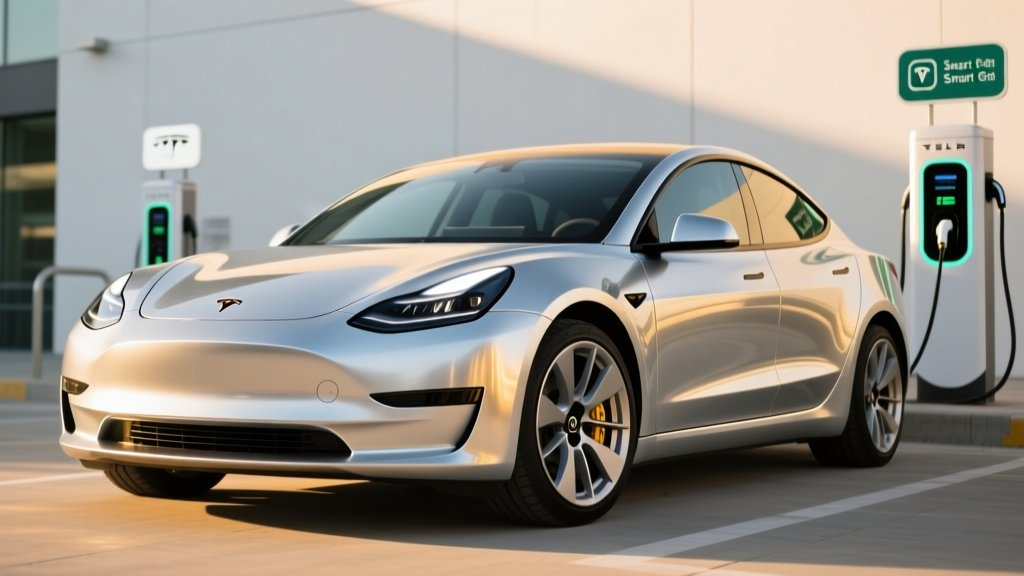
Charging speed is where the Model Y's NMC battery chemistry shows its advantage. The Long Range and Performance trims support a peak DC fast-charge rate of 250 kW on V3 Superchargers, achieving a 10-80% charge in approximately 22 minutes. However, the charge curve tapers significantly above 80% — a full 10-100% session takes closer to 45 minutes. This is typical for NMC chemistry, which limits high-SoC charging to protect long-term battery health.
The LFP-equipped RWD model peaks at 170 kW and takes roughly 28 minutes for 10-80%. LFP batteries tolerate regular 100% charging better than NMC, which Tesla recommends keeping between 20-80% for daily use.
| Charging Level | Power (kW) | Speed (miles/hr) | 10-80% Time | Notes |
|---|---|---|---|---|
| Level 1 (120V household) | 1.4 kW | ~4 mi/hr | N/A (days) | Emergency/trickle only |
| Level 2 (240V, 48A Wall Connector) | 11.5 kW | ~44 mi/hr | ~7 hours | Standard home install |
| Level 2 (240V, 32A Mobile) | 7.7 kW | ~30 mi/hr | ~10 hours | Included Mobile Connector |
| DC Fast (V3 Supercharger, LR/Perf) | 250 kW peak | ~1,000 mi/hr peak | ~22 min | Tapers above 50% SoC |
| DC Fast (V3 Supercharger, RWD LFP) | 170 kW peak | ~680 mi/hr peak | ~28 min | LFP can charge to 100% regularly |
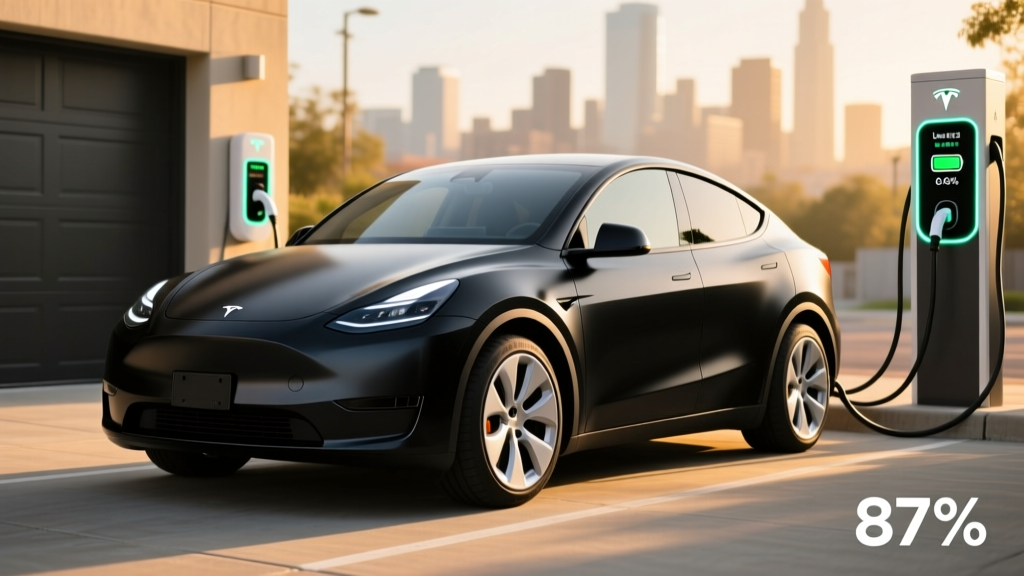
At home, Tesla's Wall Connector on a 60-amp circuit delivers 11.5 kW (48 amps), adding roughly 44 miles of range per hour. A full overnight charge from 20% to 80% takes about 5 hours. Installation costs for a Level 2 home setup typically range from $500 to $2,500 depending on panel capacity and conduit runs — always get a quote from a licensed electrician before purchasing equipment.
Performance, Drivetrain, and Cargo
The Long Range AWD uses a dual-motor setup producing 384 horsepower and an EPA-verified 0-60 mph time of 4.8 seconds. The Performance trim bumps output to 456 hp with a 3.5-second 0-60. Both use Tesla's all-wheel-drive system with independent front and rear motors.
Cargo volume is a strong suit: 30.2 cubic feet behind the second row and 72.1 cubic feet with the rear seats folded. The front trunk (frunk) adds 4.1 cubic feet. Rear-seat legroom measures 41.6 inches, competitive with midsize SUVs like the Toyota RAV4 Hybrid.
| Spec | Long Range AWD | Performance AWD |
|---|---|---|
| Horsepower | 384 hp | 456 hp |
| 0-60 mph | 4.8 sec | 3.5 sec |
| Drivetrain | Dual-motor AWD | Dual-motor AWD |
| Cargo (rear seats up) | 30.2 cu ft | 30.2 cu ft |
| Cargo (rear seats folded) | 72.1 cu ft | 72.1 cu ft |
| Frunk | 4.1 cu ft | 4.1 cu ft |
| Rear legroom | 41.6 in | 41.6 in |
Pricing, Trims, and Federal Tax Credit Eligibility
The 2026 Model Y starts at $44,990 for the Long Range AWD (the RWD base trim was discontinued for 2026 in the U.S. market). The Performance trim lists at $48,990. Adding Full Self-Driving (Supervised) costs $8,000; premium paint colors add $1,000-$2,000.
| Trim | Base MSRP | As-Tested (typical) | §30D Credit | Effective Price |
|---|---|---|---|---|
| Long Range AWD | $44,990 | $46,990 | Up to $7,500 | ~$39,490 |
| Performance AWD | $48,990 | $51,990 | Up to $7,500 | ~$44,490 |
Federal tax credit rules (IRS §30D) for 2026: The Model Y qualifies for up to $7,500 in federal tax credits, but eligibility depends on several factors:
- MSRP cap: SUVs must be priced at or below $80,000 — all Model Y trims qualify.
- Buyer income cap: Modified adjusted gross income must not exceed $150,000 (single), $225,000 (head of household), or $300,000 (joint filers).
- Battery sourcing: A percentage of critical minerals and battery components must be sourced from the U.S. or free-trade-agreement countries. Tesla's Austin-built Model Y has progressively increased domestic sourcing; check the latest IRS eligible vehicle list before purchasing, as eligibility can change quarterly.
- Point-of-sale transfer: As of 2024, the credit can be transferred to the dealer at purchase, reducing your out-of-pocket cost immediately rather than waiting for a tax refund.
Consult a tax professional to confirm your personal eligibility. State and local incentives vary by jurisdiction and may stack on top of the federal credit.
Tech, Driver Assistance, and the Union Conversation
The Model Y's 15.4-inch center touchscreen runs Tesla's proprietary infotainment system with native navigation, streaming, and over-the-air updates. Autopilot (SAE Level 2 driver assistance) is standard, including adaptive cruise control and lane-keeping. Full Self-Driving (Supervised) adds automated lane changes, navigation-guided on/off-ramp handling, and traffic-light recognition — but remains a Level 2 system requiring continuous driver supervision. It is not autonomous driving.
Tesla Autopilot and FSD (Supervised) are SAE Level 2 driver-assistance systems. The driver must remain fully engaged, hands on or near the wheel, and eyes on the road at all times. Level 4 (fully driverless in defined areas) is currently only available through commercial robotaxi services like Waymo in select cities.
The Tesla union conversation has gained visibility as UAW organizers target Tesla's Fremont, California factory and Gigafactory Texas. Workers have raised concerns about production-line injury rates and scheduling practices. Tesla has opposed unionization, and as of early 2026, no Tesla U.S. plant operates under a UAW contract. For buyers, this raises questions about long-term build consistency and corporate direction — but it has not affected vehicle availability, warranty terms, or Supercharger network reliability to date.
Warranty and Ownership Costs
Tesla provides a 4-year/50,000-mile limited vehicle warranty and an 8-year/120,000-mile battery and drive unit warranty for the Long Range and Performance trims (the warranty guarantees at least 70% battery capacity retention over that period). This is competitive with Hyundai's 10-year/100,000-mile battery warranty but falls short on the vehicle side.
Insurance costs are notably higher than average for the segment. Expect annual premiums of $2,200-$3,200 depending on state, age, and driving record — roughly 30-50% above a comparable Toyota RAV4 Hybrid. Get quotes before purchasing.
- 320-mile EPA range with strong real-world highway efficiency
- 250 kW peak DC fast charging; 10-80% in ~22 min
- Access to 25,000+ Tesla Superchargers (most reliable U.S. network)
- 30.2 cu ft cargo + 4.1 cu ft frunk
- OTA updates continuously add features
- Qualifies for up to $7,500 federal tax credit (verify sourcing)
- No physical buttons; all controls via touchscreen
- Insurance premiums 30-50% above segment average
- FSD ($8,000 add-on) remains Level 2, not autonomous
- Ride quality firm on 20-inch wheels
- Labor relations uncertainty (union organizing ongoing)
- 4-yr/50,000-mi vehicle warranty shorter than some rivals
Who Should Buy the 2026 Tesla Model Y?
Choose the Model Y if: You want maximum Supercharger network access for road trips, need 30+ cubic feet of cargo for family gear, and can charge at home with a Level 2 setup. The Long Range AWD at ~$39,490 after the federal credit is one of the best value-to-range propositions in the segment.
Consider alternatives if: You prefer physical controls (Hyundai Ioniq 5), need a longer vehicle warranty (Hyundai/Kia 10-year battery), want hands-free highway driving on mapped routes (GM Super Cruise on the Cadillac Lyriq), or if the union labor question is a personal dealbreaker — in which case the UAW-built Ford Mustang Mach-E or GM Blazer EV may align with your values.
Frequently Asked Questions
What is the real-world range of the 2026 Tesla Model Y?
The EPA rates the Long Range AWD at 320 miles. Expect 270-290 miles in real-world highway driving at 70-75 mph, and 220-250 miles in freezing winter conditions. City driving with regen braking can match or slightly exceed the EPA estimate.
How fast does the Model Y charge at home and on the road?
On a home Level 2 Wall Connector (11.5 kW / 48A), the Model Y adds about 44 miles of range per hour, with a full 20-80% charge taking roughly 5 hours. On a V3 Supercharger, the Long Range peaks at 250 kW, reaching 10-80% in approximately 22 minutes.
How much does the Model Y cost after the federal tax credit?
The Long Range AWD starts at $44,990 MSRP. With the full $7,500 §30D federal tax credit (subject to income, MSRP, and battery-sourcing eligibility), the effective price drops to approximately $37,490. The Performance trim starts at $48,990, or about $41,490 after credit.
Is the Tesla Model Y worth buying vs. the Hyundai Ioniq 5 or Ford Mach-E?
The Model Y wins on Supercharger network reliability, cargo space (30.2 cu ft), and software updates. The Ioniq 5 offers faster 10-80% charging (~18 min at 350 kW chargers), physical controls, and a 10-year battery warranty. The Mach-E provides a more traditional SUV driving feel and is UAW-built. Test-drive all three.
Does the 2026 Model Y qualify for the $7,500 federal EV tax credit?
Yes, the Model Y is on the IRS eligible vehicle list for up to $7,500, but your personal eligibility depends on income caps ($150K single / $300K joint), the MSRP cap ($80K for SUVs — all trims qualify), and current battery-sourcing requirements. The credit can be applied at point of sale. Verify eligibility with the IRS list and a tax professional before purchase.
What does the Tesla union movement mean for buyers?
UAW organizing campaigns at Tesla's Fremont and Austin factories are ongoing as of 2026, but no plant is currently unionized. This has not affected vehicle production, delivery timelines, warranty coverage, or Supercharger operations. Buyers who prioritize UAW-built vehicles may prefer the Ford Mustang Mach-E or GM Blazer EV.