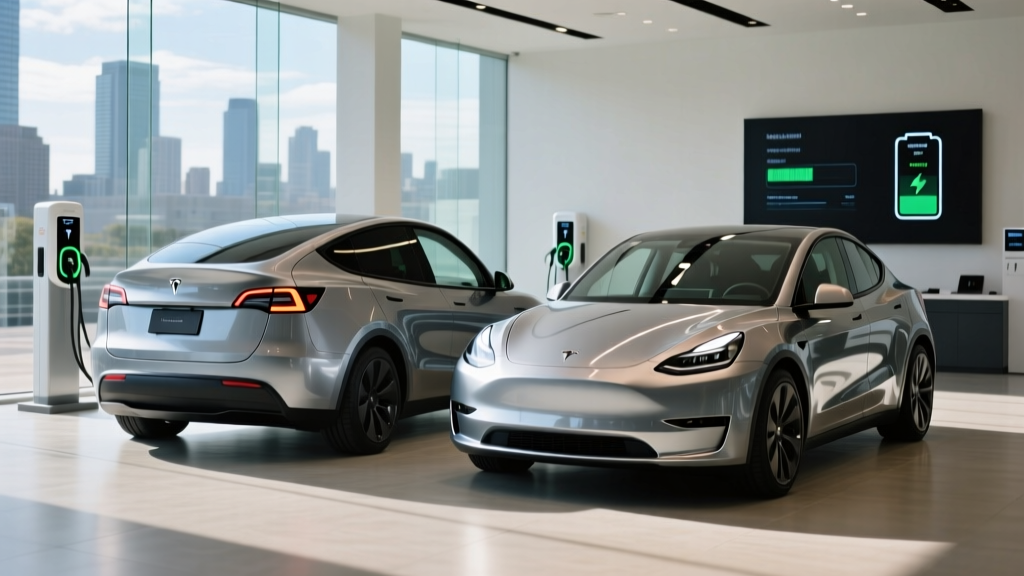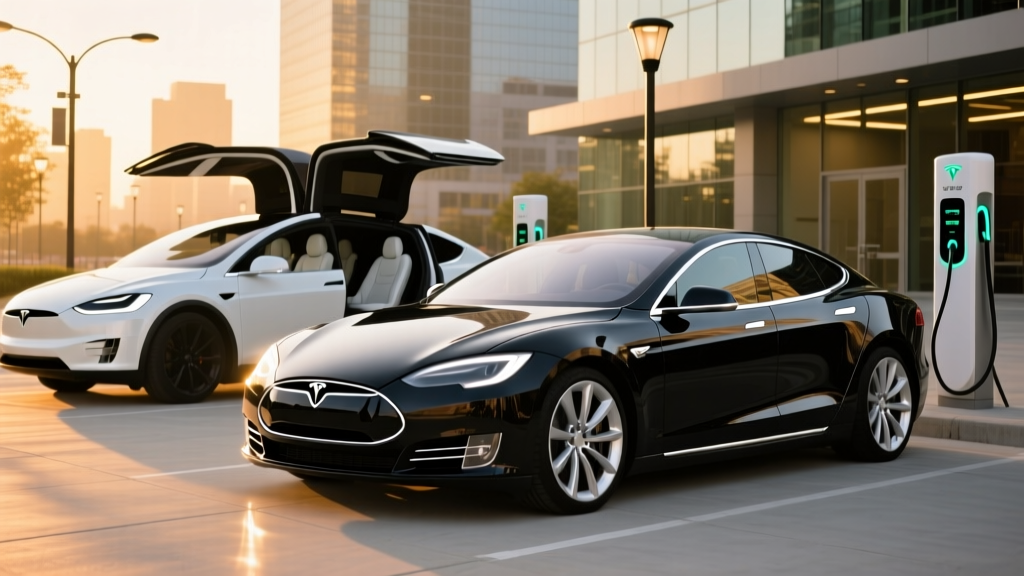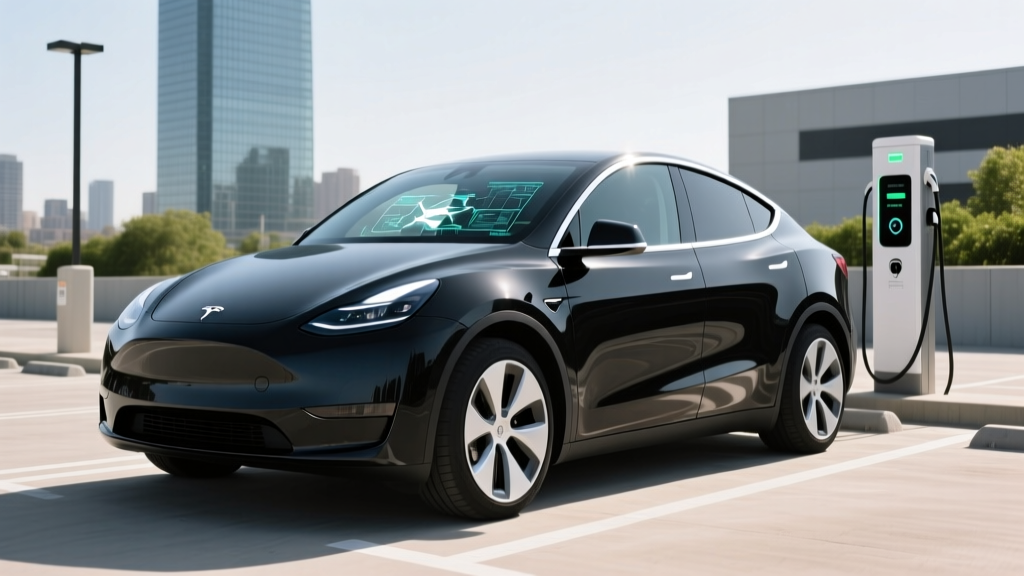
The Tesla Model Y has consistently earned top crash-test scores since its launch, prompting a persistent question among buyers: is the Tesla the safest car on the road? To answer it, we need to look past marketing claims and examine actual crash-test data from NHTSA and IIHS, the structural engineering behind Tesla's battery-skateboard platform, and how active-safety systems like Autopilot factor into real-world collision avoidance. But safety is only one pillar of ownership. This review covers the full picture — range, charging speed, pricing, tax credit eligibility, and how the 2026 Model Y stacks up against rivals like the Hyundai IONIQ 5 and Ford Mustang Mach-E.
Crash-Test Ratings: What the Data Actually Shows
The 2026 Tesla Model Y carries forward the structural advantages that have defined the nameplate. Tesla's skateboard architecture places the heavy battery pack low in the chassis, creating a center of gravity that dramatically reduces rollover risk. The rigid battery enclosure also acts as a structural member, absorbing and distributing crash energy across the floor pan rather than concentrating it at the firewall.
According to NHTSA testing, the Model Y has historically earned a 5-Star Overall Safety Rating across all categories — frontal crash, side crash, and rollover. The rollover risk is typically around 7-8%, among the lowest of any SUV, gas or electric.
The Insurance Institute for Highway Safety (IIHS) has awarded the Model Y its Top Safety Pick+ designation in recent model years when equipped with acceptable headlights — the institute's highest honor. Key categories where the Model Y has excelled include:
- Small overlap front (driver & passenger): Good — the battery structure prevents footwell intrusion
- Moderate overlap front: Good
- Side impact: Good — the B-pillar and rocker panel reinforcement hold the occupant cell
- Roof strength: Good — supports over 4x the vehicle's weight
- Front crash prevention (vehicle-to-vehicle): Superior
2026 Model Y: Range, Efficiency, and Battery Specs
The 2026 Model Y lineup continues with three primary trims, each tuned for a different priority — range, performance, or all-weather capability. Tesla uses a mix of battery chemistries across its fleet, and understanding which pack sits under your floor matters for longevity and charging habits.
| Spec | Long Range RWD | Long Range AWD | Performance |
|---|---|---|---|
| EPA Range | 320 mi | 300 mi | 280 mi |
| Battery (usable) | ~75 kWh, NMC | ~75 kWh, NMC | ~75 kWh, NMC |
| Efficiency | 122 MPGe / 28 kWh/100mi | 117 MPGe / 29 kWh/100mi | 111 MPGe / 30 kWh/100mi |
| 0-60 mph | 5.8 sec | 4.8 sec | 3.5 sec |
| Horsepower | ~346 hp | ~384 hp | ~456 hp |
| Drivetrain | RWD (single motor) | AWD (dual motor) | AWD (dual motor) |
| Base MSRP | $44,990 | $47,990 | $52,490 |
Charging Speed: DC Fast Charging and Home Level 2
Charging speed remains one of the Model Y's strongest competitive advantages, thanks to Tesla's Supercharger network and the vehicle's ability to sustain high charge rates through the middle of the battery's state-of-charge window.
| Charging Level | Power / Rate | Time / Range Added |
|---|---|---|
| Level 1 (120V) | ~1.4 kW | ~3-4 mi/hr |
| Level 2 (240V, 48A) | 11.5 kW | ~37 mi/hr (full charge ~8 hr) |
| DC Fast Charge (peak) | 250 kW peak | 10-80% in ~25 min |
| Sustained DC rate | ~150-170 kW avg (10-80%) | ~175 mi added in 15 min |
Understanding the charge curve: The 250 kW peak only holds between roughly 10-30% state of charge. Above 50%, the rate tapers to ~100 kW, and above 80% it drops further to protect battery health. This is why the 10-80% time (~25 minutes) is the meaningful metric — charging from 80-100% can add another 20+ minutes for diminishing range gains. On road trips, charge to 80% and move on; only charge to 100% at your final destination.
The Model Y uses the NACS (North American Charging Standard) connector natively. With Tesla opening the Supercharger network to non-Tesla EVs, Model Y owners benefit from the largest and most reliable DC fast-charging network in North America — over 6,000 stations and 65,000+ stalls as of 2026.
Pricing, Trims, and Federal Tax Credit Eligibility
The 2026 Model Y's pricing places it in the premium compact electric SUV segment. Federal tax credit eligibility under IRS §30D depends on several factors that change annually, so treat the figures below as a framework rather than a guarantee.
| Trim | MSRP | Est. §30D Credit | Effective Price* |
|---|---|---|---|
| Long Range RWD | $44,990 | Up to $7,500 | ~$37,490 |
| Long Range AWD | $47,990 | Up to $7,500 | ~$40,490 |
| Performance | $52,490 | Up to $7,500 | ~$44,990 |
*Effective price assumes full §30D credit eligibility. Actual credit depends on battery sourcing, buyer income, and MSRP caps. Point-of-sale transfer available at participating dealers.
- MSRP Cap: SUVs must be ≤$80,000 — all Model Y trims qualify
- Buyer Income Cap: Modified AGI ≤$150,000 (single), ≤$300,000 (joint) — verify with your tax professional
- Battery Sourcing: The credit splits into two $3,750 halves — one for critical minerals, one for battery component assembly. Tesla has worked to localize its supply chain, but the exact credit amount varies by production batch and model year. Check the fueleconomy.gov credit lookup for the specific VIN
- Point-of-Sale Transfer: As of 2024+, buyers can transfer the credit to the dealer at purchase, reducing the out-of-pocket price immediately rather than waiting for a tax refund
Interior, Cargo, and Technology
The Model Y's interior remains minimalist by design — a 15.4-inch center touchscreen controls nearly every vehicle function, from climate to glovebox release. There is no traditional instrument cluster; speed and navigation appear on the center display. This approach polarizes buyers: some appreciate the clean aesthetic, others miss physical controls for volume, wipers, and vent direction.
Cargo and passenger dimensions:
- Cargo (rear seats up): 30.2 cu ft
- Cargo (rear seats folded): 72.1 cu ft
- Front trunk (frunk): 4.1 cu ft
- Rear legroom: 41.6 inches
- Front headroom: 41.0 inches
- Seating: 5 standard (7-seat option available on AWD, adds ~$3,000, reduces cargo to 12.8 cu ft with all rows up)
Standout tech features:
- Tesla Supercharger network with automatic routing and preconditioning
- Over-the-air software updates (new features, performance tweaks, UI changes)
- Sentry Mode dashcam recording with phone alerts
- Dog Mode and Camp Mode climate presets
- Tesla app with remote climate, location, and charging control
- Optional FSD (Supervised) — $8,000 one-time or $99/month, still requires full driver attention
Notable drawbacks:
- No physical buttons for common controls — everything routes through the touchscreen
- No Apple CarPlay or Android Auto — Tesla's native infotainment only
- Rear visibility is compromised by the sloping roofline; rely on the backup camera
- Ride quality is firm, especially with the 21-inch wheels — road imperfections transmit clearly
- Panel gaps and paint quality have improved but still trail legacy automaker consistency
How It Compares: Model Y vs. Key Competitors
The compact electric SUV segment is crowded in 2026. Here's how the Model Y Long Range AWD stacks up against two top alternatives:
| Attribute | Tesla Model Y LR AWD | Hyundai IONIQ 5 AWD | Ford Mustang Mach-E AWD |
|---|---|---|---|
| EPA Range | 300 mi | 290 mi | 290 mi |
| DC Fast Charge (peak) | 250 kW | 240 kW (10-80% ~18 min) | 150 kW |
| Cargo (seats up) | 30.2 cu ft | 27.2 cu ft | 29.7 cu ft |
| NHTSA Overall | 5 Stars | 5 Stars | 5 Stars |
| IIHS Rating | TSP+ | TSP+ | TSP+ |
| Base MSRP (AWD) | $47,990 | $50,500 | $48,995 |
- Choose the Model Y if: You prioritize Supercharger network access, cargo versatility, and Tesla's software ecosystem. Safety ratings are top-tier, and the 300-mile AWD range covers most commutes and road trips with one stop.
- Choose the IONIQ 5 if: You want faster 10-80% charging (18 min vs 25 min), physical buttons, Apple CarPlay, and a more distinctive design. V2L capability lets you power external devices.
- Choose the Mach-E if: You prefer a traditional dealer service experience, want BlueCruise hands-free highway driving (on mapped routes), and value Ford's established service network for peace of mind.
Warranty, Battery Longevity, and Ownership Costs
Tesla's warranty structure is competitive with the EV segment, though it lacks the 10-year coverage some legacy brands offer:
- Basic vehicle warranty: 4 years / 50,000 miles
- Battery & drive unit warranty: 8 years / 120,000 miles (Long Range/Performance) — guaranteed to retain ≥70% capacity
- Roadside assistance: 4 years / 50,000 miles
Battery degradation in practice: Tesla's fleet data and third-party analyses (including Recurrent Auto) suggest NMC packs in the Model Y typically lose 8-12% capacity over the first 100,000 miles, with the curve flattening significantly after the initial break-in period. Most Model Y batteries should retain 85-90% State of Health at 100,000 miles under normal use. Out-of-warranty battery replacement costs $12,000-$16,000 depending on the pack — a figure worth noting for high-mileage buyers planning 10+ year ownership.
Insurance costs tend to run 15-25% higher than comparable gas SUVs due to repair complexity and parts pricing. Expect $1,800-$2,600/year depending on your profile and state. Always get a quote before purchasing.
Pros and Cons
- 5-Star NHTSA + IIHS Top Safety Pick+ ratings
- 300+ mile EPA range (Long Range trims)
- Supercharger network: largest, most reliable in the US
- Class-leading cargo space (30.2 cu ft + frunk)
- OTA updates continuously improve the vehicle
- Strong acceleration even in base trims
- No physical controls — everything on the touchscreen
- No Apple CarPlay or Android Auto
- Firm ride quality, especially on 21" wheels
- FSD costs $8,000 extra and is still Level 2 only
- Insurance premiums run higher than segment average
- Panel gap and paint consistency still variable
Who the Model Y Suits Best
Ideal for: Daily commuters with home Level 2 charging who want a practical, safe, tech-forward SUV with road-trip capability. Families who need cargo flexibility (stroller, gear, groceries) without stepping up to a larger vehicle. Tesla ecosystem believers who value OTA updates and the Supercharger network.
Less ideal for: Buyers who want physical buttons and traditional infotainment (CarPlay/Android Auto). Those in rural areas far from Supercharger corridors. Anyone planning 15+ year ownership who is concerned about out-of-warranty battery replacement costs. Buyers who prefer a dealer service experience with loaner cars and in-person relationships.
Frequently Asked Questions
Is the Tesla the safest car you can buy?
The Model Y earns among the highest crash-test ratings of any vehicle — 5 Stars from NHTSA and Top Safety Pick+ from IIHS. Its low center of gravity (from the floor-mounted battery) gives it an exceptionally low rollover risk. However, "safest" is a relative claim. Vehicles like the Genesis Electrified GV70, Volvo EX90, and Mercedes EQS SUV also earn top marks. The Model Y is certainly among the safest, but no single vehicle is definitively "the safest" across every test metric.
What is the real-world range of the 2026 Model Y?
The Long Range RWD is EPA-rated at 320 miles, but real-world highway driving at 70-75 mph typically yields 265-285 miles. In freezing temperatures, expect 220-250 miles. The AWD Long Range (300 EPA) delivers roughly 250-270 miles highway in mild weather. Always plan road-trip charging with a buffer — arrive at chargers with 10-15% remaining.
How fast does the Model Y charge at home and on the road?
At home on a 240V/48A Level 2 circuit, the Model Y charges at 11.5 kW, adding roughly 37 miles of range per hour — a full charge takes about 8 hours overnight. On DC fast charging, the 2026 Model Y peaks at 250 kW on V3 Superchargers, reaching 10-80% in approximately 25 minutes. The rate tapers above 50% SoC, so the average sustained rate is closer to 150-170 kW.
Does the 2026 Model Y qualify for the $7,500 federal tax credit?
All Model Y trims fall under the $80,000 SUV MSRP cap. Eligibility for the full $7,500 credit under IRS §30D depends on your income (≤$150K single / ≤$300K joint), and whether the specific vehicle's battery meets critical-mineral and component-sourcing requirements for the current year. Tesla has localized much of its supply chain, but the exact credit can vary by production batch. Check the VIN-specific lookup on fueleconomy.gov and consult a tax professional before relying on the credit.
Is the Model Y worth buying over the IONIQ 5 or Mach-E?
The Model Y wins on cargo space (30.2 cu ft), Supercharger network access, and software integration. The IONIQ 5 charges faster (10-80% in ~18 minutes) and offers CarPlay and V2L. The Mach-E provides a traditional dealer experience and BlueCruise hands-free driving. If safety ratings, range, and charging infrastructure are your top priorities, the Model Y remains the segment benchmark. If you value charging speed or physical controls, the IONIQ 5 is a compelling alternative.