The L&F Contract Collapse and What It Means for Cybertruck Buyers
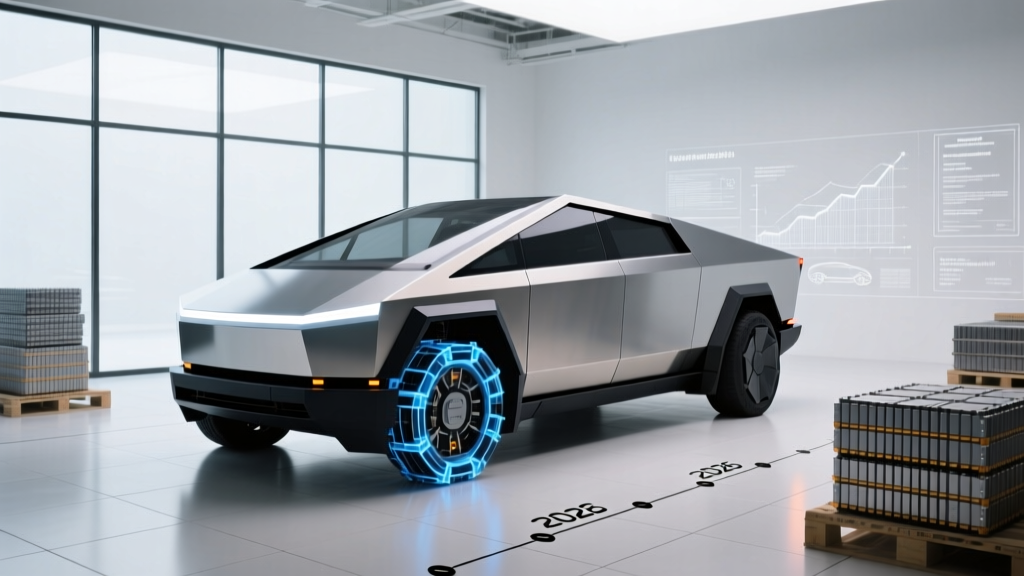
When South Korean cathode materials supplier L&F Co. disclosed that its Tesla contract had been reduced by roughly 99%, it sent shockwaves through EV supply-chain circles. Originally announced as a multi-year, high-volume cathode active material (CAM) supply agreement, the contract's near-total collapse points to one core issue: Cybertruck production ramp-up delays and volume shortfalls that have persisted well into the 2026 model year.
For prospective Cybertruck buyers, the supply-chain drama raises practical questions. Will Tesla honor delivery timelines? Are there battery chemistry implications? And fundamentally — is the 2026 Cybertruck worth ordering given the production turbulence? This review covers the full vehicle profile alongside the L&F situation so you can make an informed decision.
Cathode materials are the single most expensive component in an EV battery cell. L&F primarily manufactures high-nickel NMC (nickel-manganese-cobalt) cathode powders. The original contract was widely interpreted as supplying NMC material for Tesla's 4680 structural battery cells used in the Cybertruck. A 99% reduction suggests Tesla's actual cell demand from this supplier fell from a projected multi-gigawatt-hour commitment to a token volume — consistent with Cybertruck production remaining well below initial targets of 250,000+ units annually.
2026 Tesla Cybertruck: Core Specifications
| Specification | AWD | Cyberbeast |
|---|---|---|
| EPA Range | 340 miles | 320 miles |
| Battery (usable, est.) | ~123 kWh (NMC, 4680 cells) | ~123 kWh (NMC, 4680 cells) |
| Drivetrain | Dual-Motor AWD | Tri-Motor AWD |
| Horsepower | 600 hp | 845 hp |
| 0-60 mph | 4.1 sec | 2.6 sec |
| Max DC Fast Charge | ~250 kW (peak) | ~250 kW (peak) |
| 10-80% DCFC Time | ~28 min | ~28 min |
| Level 2 Home Charge | 11.5 kW (~37 mi/hr) | 11.5 kW (~37 mi/hr) |
| MPGe (combined) | 70 MPGe | 68 MPGe |
| Efficiency | 48 kWh/100 mi | 50 kWh/100 mi |
| Towing Capacity | 11,000 lbs | 11,000 lbs |
| Payload | 2,500 lbs | 2,500 lbs |
| Base MSRP | $79,990 | $99,990 |
Sources: Tesla Cybertruck Design Page, fueleconomy.gov.
Real-World Range: What the EPA Sticker Doesn't Tell You
The Cybertruck's stainless-steel exoskeleton creates aerodynamic drag that punishes highway efficiency more than most EVs. At 70 mph, the angular design generates substantially more turbulence than a teardrop-shaped sedan like the Model S. This means the gap between EPA combined-cycle range and actual highway range is wider here than in most Tesla products.
If your primary use case involves sustained 75-80 mph highway driving in winter conditions — think Montana, Colorado, or the upper Midwest — budget for 230 miles of usable range between charges. For city-heavy commuting with regenerative braking opportunities, you'll get closer to the EPA figure, potentially 310-330 miles in mild weather with moderate speeds.
Charging: 4680 Cells and the Supercharger Network
| Charging Level | Power (kW) | Miles Added per Hour | Notes |
|---|---|---|---|
| Level 1 (120V) | ~1.4 kW | ~3 mi/hr | Emergency/trickle only |
| Level 2 (240V, 48A) | 11.5 kW | ~37 mi/hr | Full overnight charge in ~10 hrs |
| DC Fast (V3 Supercharger) | ~250 kW peak | ~200 mi in 15 min (peak) | Tapers significantly above 60% SoC |
The Cybertruck uses Tesla's 4680-format cells in a structural battery pack. These cells offer improved thermal management compared to the older 2170 format, but the real-world charge curve tells an important story. While peak charging hits roughly 250 kW at a V3 Supercharger, that peak is sustained only between approximately 10-35% state of charge. From 35-60%, power drops to around 150-170 kW. Above 80%, expect charge rates below 50 kW as the battery management system protects cell longevity.
Practical takeaway: a 10-80% session takes approximately 28 minutes under ideal conditions (battery preconditioned via navigation to a Supercharger). If you arrive without preconditioning — say, pulling into a charger after the truck sat in cold weather — add 5-10 minutes as the pack warms to optimal charging temperature.
Home charging on a Level 2 Wall Connector at 48 amps delivers roughly 37 miles of range per hour, meaning a full charge from near-empty takes about 10 hours. For most owners, plugging in nightly and charging to 80% (or 100% for NMC, Tesla recommends 80% for daily use) will be more than adequate.
Performance and Driving Dynamics
The dual-motor AWD Cybertruck delivers 600 horsepower and a 4.1-second 0-60 mph time — brisk for a 6,600+ pound vehicle. The Cyberbeast's tri-motor setup pushes 845 hp and a 2.6-second 0-60 that rivals supercars from a decade ago. Both use steer-by-wire technology with no mechanical connection between the steering wheel and the front wheels — a first for a production vehicle sold in the US at this scale.
Steer-by-wire takes roughly 30 minutes of driving to feel natural. The variable ratio means small steering inputs at highway speed produce minimal wheel movement, while low-speed maneuvering requires less than a full turn lock-to-lock. Some drivers love it; others find the lack of road feedback through the yoke unsettling. Test drive before ordering.
The air suspension provides up to 16 inches of ground clearance in Extract mode and can lower for highway efficiency. Ride quality is firm but controlled — this is a body-on-frame-style truck adapted for EV duty, not a luxury sedan. The stainless-steel panels resist dents but show fingerprints aggressively and can be difficult to repair after collision damage.
Pricing, Tax Credits, and the L&F Supply-Chain Impact
| Trim | Base MSRP | Federal §30D Credit Eligible? | Effective Price (if eligible) |
|---|---|---|---|
| AWD | $79,990 | No (exceeds $80,000 truck cap) | $79,990 |
| Cyberbeast | $99,990 | No (exceeds $80,000 truck cap) | $99,990 |
Here's the critical tax credit reality: under current IRS §30D rules, the Cybertruck is classified as a pickup truck, which carries an $80,000 MSRP cap for credit eligibility. The AWD trim at $79,990 sits just under that threshold — but any factory options, destination charges, or paint upgrades push the total above $80,000 and disqualify it. The Cyberbeast at $99,990 is categorically ineligible.
Additionally, §30D requires the buyer to meet income caps ($300,000 joint / $150,000 single modified adjusted gross income), and the vehicle must satisfy critical-mineral and battery-component sourcing requirements that shift annually. Even the base AWD at exactly $79,990 must clear the battery-sourcing rules for its model year. Consult a tax professional before banking on the credit — eligibility is not guaranteed.
Interior, Cargo, and Livability
The Cybertruck seats five across two rows. Rear legroom measures approximately 38.2 inches — adequate for adults on longer trips, though the upright seatback angle and high floor (due to the structural battery pack) create a knees-up seating position that taller passengers find fatiguing after two hours.
Cargo capacity breaks down as follows:
- Bed (vault): 67 cu ft with the tonneau cover closed; 6-foot bed length
- Front trunk (frunk): ~7 cu ft — fits a charging cable bag and a small cooler
- Sail pillar storage: Lockable compartments behind the rear doors, ~3 cu ft each
- Under-bed storage: Accessible from the rear, useful for tools or recovery gear
The powered tonneau cover is a standout feature — it retracts into the bed wall and supports up to 300 lbs when closed, functioning as a load floor. The 120V and 240V bed outlets (up to 11.5 kW total output via Powershare) let the Cybertruck function as a mobile generator for job sites or camping, running power tools, welders, or even a residential circuit during outages via V2H integration.
The 18.5-inch front touchscreen handles infotainment, climate, and vehicle controls. There are no physical buttons for climate or mirrors — everything routes through the screen, which divides opinion. Apple CarPlay and Android Auto are not supported; Tesla's native interface handles navigation, media, and phone integration through Bluetooth.
Warranty and Long-Term Ownership
Tesla covers the Cybertruck with:
- Basic vehicle warranty: 4 years / 50,000 miles
- Battery and drive unit warranty: 8 years / 120,000 miles (whichever comes first), with a minimum 70% capacity retention guarantee over that period
- Stainless-steel body: Covered under the basic warranty; cosmetic corrosion is excluded
The 4680 NMC battery pack is the most expensive single component. Out-of-warranty replacement costs are not yet well-established for the Cybertruck specifically, but Tesla's structural pack architecture means a full replacement could exceed $20,000-$25,000 based on Model S/X precedent. However, NMC degradation data from Tesla's fleet suggests most packs retain 85-90% capacity at 100,000 miles under normal charging habits (avoiding sustained 100% SoC storage, minimizing DC fast-charging frequency).
Insurance is a known pain point. Cybertruck premiums run 30-60% higher than comparable full-size trucks due to stainless-steel repair complexity, high parts costs, and limited body shop familiarity. Expect $2,800-$4,200 annually depending on your profile and state.
Pros, Cons, and the Verdict
Pros
- 11,000-lb towing capacity with integrated trailer tech
- 240V bed outlet (Powershare) — true job-site utility
- Stainless-steel exoskeleton resists dents and scratches
- Tri-motor Cyberbeast performance is supercar-rivaling
- Access to Tesla Supercharger network (17,000+ stalls in North America)
- Over-the-air updates continue to add features post-purchase
Cons
- Real-world highway range significantly below EPA (270-295 mi vs. 340 mi)
- Steer-by-wire lacks road feedback — polarizing for truck buyers
- No Apple CarPlay or Android Auto
- Insurance premiums 30-60% above segment average
- Rear seat comfort mediocre for long trips
- L&F supply-chain disruption may extend delivery timelines
- Federal tax credit unlikely for most configurations due to MSRP cap
Who Should Buy the Cybertruck?
Buy it if: You need a full-size electric truck for towing or job-site power delivery, you value the Supercharger network for road trips, and you can charge at home. The Powershare 240V outlet and 11,000-lb tow rating make it genuinely useful for contractors and heavy-duty users who also want daily-driver EV economics.
Skip it if: You prioritize maximum real-world range (the Rivian R1T Dual-Motor delivers ~350 miles real-world highway with the Max Pack), you need a comfortable five-seat family hauler for long road trips, or you were counting on the $7,500 federal tax credit to make the math work. The Ford F-150 Lightning (if available used) and Rivian R1T remain strong alternatives with different trade-off profiles.
Frequently Asked Questions
What is the real-world range of the 2026 Cybertruck?
EPA-estimated 340 miles (AWD) or 320 miles (Cyberbeast). Real-world highway driving at 70-75 mph yields approximately 270-295 miles for the AWD and 250-275 miles for the Cyberbeast. Cold weather (below 32°F) can reduce these figures by an additional 10-20%, putting winter highway range at roughly 230-260 miles.
How fast does the Cybertruck charge at home and on the road?
On a Level 2 home charger at 11.5 kW, the Cybertruck gains roughly 37 miles of range per hour, with a full charge taking about 10 hours. At a Tesla V3 Supercharger, peak DC fast-charging reaches ~250 kW, with a 10-80% session taking approximately 28 minutes when the battery is preconditioned. Charging speed tapers substantially above 60% state of charge.
Does the Cybertruck qualify for the $7,500 federal EV tax credit?
Almost certainly not in practical terms. The IRS §30D credit for trucks caps eligibility at $80,000 MSRP. The base AWD at $79,990 technically sits under the cap, but any options, destination fees, or accessories push it over. The Cyberbeast at $99,990 is well above the limit. Even the base model must satisfy critical-mineral and battery-component sourcing requirements. Check IRS guidelines and consult a tax professional.
What caused the L&F Co. contract reduction, and will it affect my order?
L&F Co., a South Korean cathode material supplier, saw its Tesla contract reduced by approximately 99% from original projections. The primary driver appears to be lower-than-projected Cybertruck production volumes, meaning Tesla's demand for NMC cathode material from this specific supplier dropped dramatically. Tesla has likely diversified its cathode sourcing to other suppliers. For buyers with existing orders, delivery timelines may extend — current estimates suggest 4-8 months depending on configuration. Vehicles already produced or in transit are not affected.
Is the Cybertruck worth buying versus the Rivian R1T or Ford F-150 Lightning?
It depends on your priorities. The Cybertruck wins on towing capacity (11,000 lbs vs. the R1T's ~11,000 lbs and the Lightning's ~10,000 lbs), onboard power delivery (240V Powershare), and Supercharger network access. The Rivian R1T (quad-motor) wins on off-road capability, interior refinement, and real-world range with the Max Pack. The F-150 Lightning wins on conventional truck familiarity, dealer service network, and lower starting price (if found used). If job-site utility and Supercharger road-trip infrastructure are paramount, the Cybertruck has a genuine edge. If daily comfort and maximum range matter more, test-drive the R1T first.
How reliable is the steer-by-wire system?
Tesla's steer-by-wire system uses redundant electronic control units and backup power supplies — if the primary system fails, a secondary system maintains steering control. There is no mechanical linkage, so failure modes differ from traditional steering. Long-term reliability data is limited given the system's novelty in US production vehicles. Early owner reports through 2025 have not surfaced widespread failures, but the Cybertruck's production volume remains low enough that statistically significant reliability data will take another 2-3 years to mature.