Quick Verdict: The 2026 Tesla Model Y Juniper Refresh
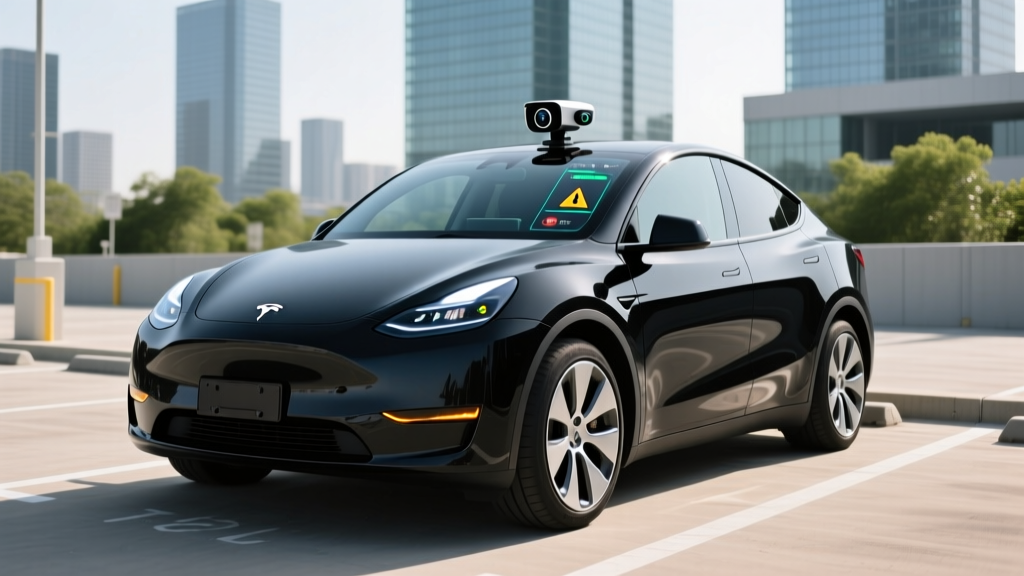
The refreshed "Juniper" Model Y remains Tesla's volume leader and the EV most associated with active crash-avoidance technology. When drivers search for how Tesla avoids crash scenarios, they're usually reacting to viral dashcam clips of Automatic Emergency Braking (AEB) interventions or Autopilot swerves. The reality is more nuanced: the 2026 Model Y pairs class-leading active safety hardware with an SAE Level 2 driver-assist system that demands constant supervision. It's an excellent family crossover with 320 miles of EPA range and blistering DC fast-charge speeds, but buyers need to separate Tesla's genuine engineering achievements from marketing that sometimes blurs the line between driver assistance and autonomy.
This review covers the 2026 Model Y Long Range AWD and Performance trims — the variants most buyers cross-shop — with exact specs, real-world range expectations, charging curves, and a clear-eyed look at what Tesla's crash-avoidance tech can and cannot do.
Range, Battery, and Real-World Efficiency
| Spec | Long Range AWD | Performance |
|---|---|---|
| EPA Range | 320 miles | 298 miles |
| Battery Capacity | ~78 kWh usable (NMC) | ~78 kWh usable (NMC) |
| MPGe (Combined) | 122 MPGe | 111 MPGe |
| Efficiency | 28 kWh/100 mi | 30 kWh/100 mi |
| Drivetrain | Dual-Motor AWD | Dual-Motor AWD |
| 0–60 mph | 4.8 seconds | 3.5 seconds |
| Horsepower | ~384 hp | ~456 hp |
| Battery Warranty | 8 yr / 120,000 mi | 8 yr / 120,000 mi |
The 2026 Model Y continues to use NMC (nickel manganese cobalt) battery chemistry in Long Range and Performance trims. NMC offers higher energy density than LFP, which is why these variants achieve over 300 miles in a relatively compact crossover footprint. However, NMC cells are more sensitive to sustained 100% State of Charge (SoC); Tesla recommends daily charging to 80–90% for battery longevity, reserving 100% for road trips. If you want LFP's tolerance for daily 100% charges, you'd need to look at the Standard Range RWD variant (when available), though it sacrifices roughly 50 miles of range.
According to fueleconomy.gov, the Model Y Long Range's 122 MPGe combined places it among the most efficient AWD electric crossovers on the market, trailing only the Hyundai Ioniq 5 and slightly behind the Kia EV6 in some trims.
Charging Speed: DC Fast, Level 2, and the Supercharger Advantage
| Charging Level | Power | Speed | Notes |
|---|---|---|---|
| Level 1 (120V) | ~1.4 kW | ~4 mi/hr | Emergency/trickle only |
| Level 2 (240V, 48A) | 11.5 kW | ~37 mi/hr | Home Wall Connector; full charge in ~8 hr |
| DC Fast Charge (Peak) | 250 kW | ~162 mi in 15 min | Peak rate, not sustained |
| DC 10–80% | — | ~22 minutes | On V3/V4 Supercharger or equivalent CCS/NACS station |
Tesla's 250 kW peak DC fast-charge rate is among the fastest in the crossover segment, though it's important to understand the charge curve. The Model Y hits peak kW only between roughly 10–30% SoC, then tapers progressively. From 80–100%, charging slows dramatically to protect the NMC cells — expect that final 20% to take nearly as long as the 10–80% session. This is why road-trip strategy focuses on 10–80% hops rather than full charges.
The 2026 Model Y uses the NACS (North American Charging Standard) connector natively. With Tesla opening the Supercharger network to non-Tesla EVs, the network is busier than in prior years, but it remains the most reliable DC fast-charging ecosystem in the U.S. by uptime metrics. At home, Tesla's Wall Connector at 48 amps (11.5 kW) adds roughly 37 miles of range per hour of charging — enough to replenish a full day's commute in under two hours.
One practical note: if your home electrical panel is older or near capacity, a Level 2 installation may require a panel upgrade ($1,000–$3,000) on top of the typical $500–$1,500 for the circuit run and Wall Connector hardware. Always get a quote from a licensed electrician before committing.
How Tesla Avoids Crash Scenarios: Active Safety & ADAS Explained
When people ask how Tesla avoids crash events, they're typically referring to three overlapping systems:
1. Automatic Emergency Braking (AEB)
Standard on every Model Y, AEB uses the forward-facing camera suite (Tesla removed ultrasonic sensors and radar in favor of Tesla Vision, a camera-and-neural-net approach) to detect vehicles, pedestrians, and cyclists. If the system determines a collision is imminent and the driver hasn't reacted, it applies full braking force. Independent testing by the IIHS has consistently rated Tesla's AEB as superior in both vehicle-to-vehicle and vehicle-to-pedestrian scenarios at speeds up to 50 mph.
2. Autopilot (Standard)
Includes Traffic-Aware Cruise Control and Autosteer (lane-centering). Autopilot handles highway lane-keeping well and can mitigate rear-end risk by maintaining following distance, but it occasionally phantom-brakes on overpasses or shadows — a known limitation that Tesla has addressed incrementally via over-the-air updates but not fully eliminated.
3. Full Self-Driving (Supervised) — $8,000 option or $99/mo
FSD adds automatic lane changes, traffic light and stop sign recognition, and city-street navigation. In 2026, FSD (Supervised) has improved markedly in urban environments, but it still makes errors at unprotected left turns, construction zones, and unusual intersections. The "Supervised" label is deliberate: you are the driver. Viral clips of Tesla avoiding a crash often show FSD reacting faster than a distracted human would, but for every saved moment, there are disengagement reports where the system hesitated or misread a scenario.
- It does not replace attentive driving. NHTSA data shows that driver inattention remains a factor in crashes involving Level 2 systems.
- It does not see through heavy rain, fog, or direct sun glare as reliably as a human. Tesla Vision is camera-only — no LiDAR redundancy.
- It does not guarantee crash avoidance. AEB has speed and scenario limitations; it may not prevent all collisions at highway speeds or against crossing traffic.
- FSD (Supervised) does not make the car autonomous. You are legally and physically responsible for every maneuver.
The 2026 Model Y earned the IIHS Top Safety Pick+ designation (when equipped with specific headlights), and NHTSA maintains its 5-star overall safety rating. The structural crashworthiness is genuinely excellent — the low-mounted battery pack creates a stiff floor that resists intrusion, and the frunk acts as a massive crumple zone.
Interior, Cargo, and Technology
The Juniper refresh brought meaningful interior improvements: ventilated front seats, ambient lighting, a rear-seat touchscreen for climate and entertainment, and improved sound insulation. The minimalist cabin remains polarizing — no physical stalks (turn signals are on the steering wheel), no instrument cluster — but the 15.4-inch center touchscreen handles everything with responsive, smartphone-like fluidity.
| Dimension | Measurement |
|---|---|
| Cargo (rear seats up) | 30.2 cu ft |
| Cargo (rear seats folded) | 72.1 cu ft |
| Frunk | 4.1 cu ft |
| Rear Legroom | 41.6 inches |
| Front Headroom | 41.0 inches |
| Seating Capacity | 5 passengers |
Cargo space is competitive with the Ford Mustang Mach-E (29.7 cu ft behind rear seats) and slightly trails the Hyundai Ioniq 5 (32.3 cu ft). The frunk is useful for charging cables and small bags but not large enough for a carry-on. Rear-seat comfort improved with the Juniper update — the seat cushion is longer and the recline angle is more generous, making it viable for adults on longer trips.
Tech highlights include native navigation with real-time Supercharger routing, over-the-air updates that add features quarterly, a built-in dashcam (uses the same camera suite), and Sentry Mode for parked surveillance. Notable drawbacks: no Apple CarPlay or Android Auto (Tesla insists on its own interface), no heads-up display, and the camera-only approach to parking sensors can occasionally misjudge distances compared to ultrasonic-based systems.
Pricing, Tax Credits, and Ownership Cost
| Trim | Base MSRP | Est. After §30D Credit | Notes |
|---|---|---|---|
| Long Range AWD | $48,990 | ~$41,490* | If eligible for full $7,500 |
| Performance | $53,990 | ~$46,490* | If eligible for full $7,500 |
| Long Range + FSD | $56,990 | ~$49,490* | FSD adds $8,000 |
*Federal tax credit eligibility under IRS §30D depends on multiple factors:
- MSRP Cap: SUVs/crossovers must be under $80,000. All Model Y trims qualify.
- Buyer Income Cap: AGI must not exceed $150,000 (single), $225,000 (head of household), or $300,000 (joint). Verify against your tax situation.
- Battery Sourcing: A percentage of critical minerals and battery components must be sourced from the U.S. or FTA partners. Tesla's supply chain has shifted significantly toward compliance, but the exact eligible credit amount ($3,750 or $7,500) can change as sourcing rules tighten annually. Confirm current eligibility on IRS.gov or with a tax professional before purchasing.
- Point-of-Sale Transfer: As of 2024, you can transfer the credit to the dealer at purchase, reducing your out-of-pocket cost immediately rather than waiting for a tax refund.
Insurance costs are a real ownership factor: the Model Y is among the more expensive EVs to insure, with national averages around $2,400–$3,200/year depending on your profile. Tesla Insurance is available in some states and can be competitive, but shop multiple quotes.
Over five years, the Model Y's total cost of ownership benefits from low electricity costs (~$0.13/kWh national average = ~$3.64 per 100 miles vs. ~$12–15 for a comparable gas SUV), minimal maintenance (no oil changes, fewer brake replacements thanks to regen), and strong resale value. Depreciation remains a wildcard — Tesla's frequent price cuts have historically compressed used values, though the Juniper refresh stabilizes this somewhat.
Pros, Cons, and Who Should Buy
- Best-in-class Supercharger network access
- 250 kW DC fast charging with quick 10–80% times (~22 min)
- Top-rated AEB and active crash-avoidance systems
- 320-mile EPA range (Long Range) covers most road trips comfortably
- Excellent performance (3.5s 0–60 on Performance trim)
- Strong over-the-air update cadence
- Spacious cargo area with practical frunk
- No Apple CarPlay / Android Auto
- FSD (Supervised) is expensive and still requires full driver attention
- Camera-only parking sensors can misjudge obstacles
- Higher insurance premiums than many competitors
- NMC battery requires 80–90% daily charge limit for longevity
- Turn signals on steering wheel (no stalk) frustrates some drivers
- Phantom braking on Autopilot not fully resolved
- You road-trip frequently and want the most reliable fast-charging network
- You prioritize active crash-avoidance tech and top safety ratings
- You want performance-crossover acceleration without sacrificing efficiency
- You can charge at home and your daily commute is under 100 miles round-trip
- You want Apple CarPlay/Android Auto or a more traditional interior layout
- You prefer LFP battery chemistry for daily 100% charging tolerance (Ioniq 5 Standard Range)
- You want 800V architecture for even faster DC charging (Ioniq 5, EV6)
- You're sensitive to insurance costs and want a lower premium profile
FAQ
What is the real-world range of the 2026 Tesla Model Y?
The EPA rates the Long Range AWD at 320 miles. In real-world highway driving at 70–75 mph, expect 265–285 miles. In cold weather (below 32°F), plan for 220–250 miles. The Performance trim loses roughly 20–30 miles across all scenarios due to larger wheels and higher rolling resistance.
How fast does the Model Y charge at home and on DC fast chargers?
At home on a Level 2 Wall Connector (11.5 kW / 48A), it adds ~37 miles per hour, fully charging overnight in about 8 hours. On a DC fast charger, it peaks at 250 kW and charges 10–80% in approximately 22 minutes, though the rate tapers significantly above 80%.
Does the 2026 Model Y qualify for the $7,500 federal EV tax credit?
It can, but eligibility depends on your income (AGI caps: $150K single / $300K joint), the vehicle's MSRP (under $80K — all trims qualify), and current battery-sourcing requirements under IRS §30D. The credit amount ($3,750 or $7,500) varies based on critical-mineral and battery-component sourcing percentages, which change annually. Confirm with the IRS or a tax professional before purchasing.
Is Tesla's crash-avoidance technology really better than competitors?
Tesla's AEB consistently earns top marks from IIHS and NHTSA in standardized tests, and the camera suite's object detection is sophisticated. However, "better" depends on the scenario. Toyota Safety Sense and Honda Sensing also perform well in AEB tests, and vehicles with LiDAR or ultrasonic redundancy (like some GM and Mercedes models) may handle edge cases — heavy rain, direct glare — more robustly. Tesla's system is excellent but not infallible.
Is FSD (Supervised) worth $8,000?
For most buyers, no — standard Autopilot handles highway driving well, and FSD's city-street capabilities, while improved, still require constant supervision. The $99/month subscription is a lower-risk way to try it. FSD's value proposition may improve as Tesla advances toward higher SAE levels, but as of 2026, it remains a Level 2 system with real limitations.
How does the Model Y compare to the Hyundai Ioniq 5 and Ford Mustang Mach-E?
The Ioniq 5 offers 800V architecture (faster DC charging at compatible stations), Apple CarPlay, and an available LFP battery. The Mach-E offers a more traditional interior and competitive range. The Model Y wins on Supercharger network access, cargo volume, and efficiency. All three are strong choices — your preference on charging network, interior style, and tech ecosystem should drive the decision.