The Short Answer on Tesla Reliability
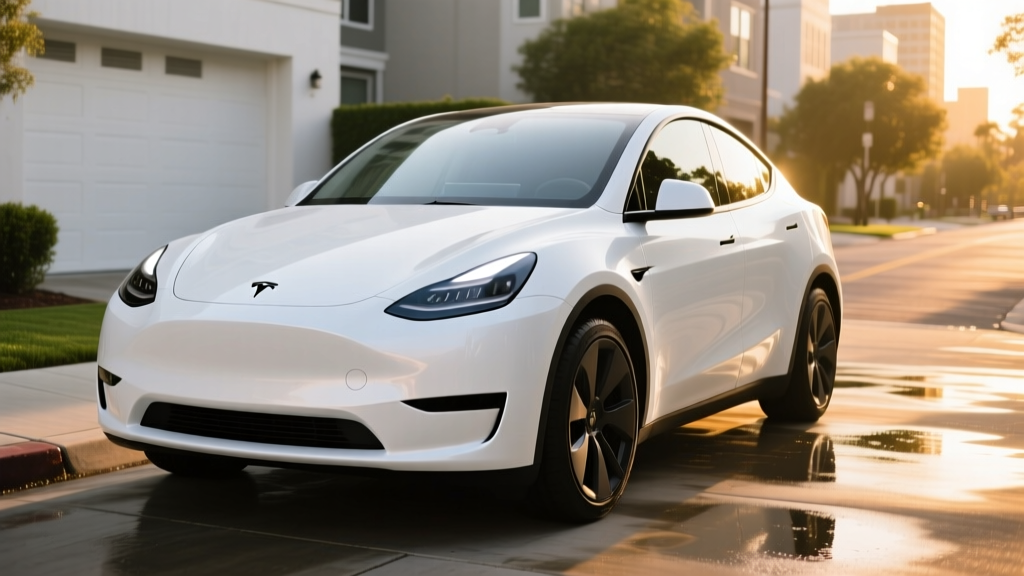
Search forums, owner surveys, and service records, and the answer to "are Tesla's reliable cars?" splits into two truths. The powertrain — battery, motors, and power electronics — has proven remarkably durable across hundreds of thousands of miles. The build quality, interior trim, suspension components, and software stability have historically dragged Tesla's reliability scores down in consumer surveys. For 2026, the refreshed Model Y (internally dubbed "Juniper") addresses several of the most-cited complaints, but the picture remains mixed depending on which metric you prioritize.
This review examines the 2026 Tesla Model Y Long Range AWD — the volume seller — through the lens of real ownership reliability: what breaks, what doesn't, what it costs, and how it stacks up against competitors when the honeymoon ends.
2026 Model Y: The Specs That Matter
| Specification | 2026 Model Y Long Range AWD |
|---|---|
| EPA Range | 320 miles |
| Battery (usable) | ~75 kWh, NMC chemistry |
| Drivetrain | Dual-motor AWD |
| Horsepower | 384 hp (combined) |
| 0–60 mph | 4.8 seconds |
| Peak DC Fast Charge | 250 kW (V3 Supercharger) |
| 10–80% DC Charge Time | ~27 minutes |
| Level 2 Home Charge Rate | 11.5 kW (~44 mi/hr) |
| EPA Efficiency | 117 MPGe combined (29 kWh/100 mi) |
| Cargo Volume | 30.2 cu ft (rear seats up) / 72.1 cu ft (folded) |
| Rear Legroom | 41.6 inches (post-refresh improvement) |
| Base MSRP | $48,990 (incl. destination) |
| Battery Warranty | 8 years / 120,000 miles (≥70% retention) |
A note on the battery: Tesla sources NMC (nickel-manganese-cobalt) cells for the Long Range trim, supplied primarily by Panasonic and LG Energy Solution. The base RWD Model Y uses LFP (lithium iron phosphate) chemistry, which trades energy density for longer cycle life and the ability to charge routinely to 100% without accelerated degradation. If reliability and longevity are your top priorities, the LFP-equipped RWD model deserves serious consideration despite its lower 260-mile EPA range.
Charging Speed: Home and on the Road
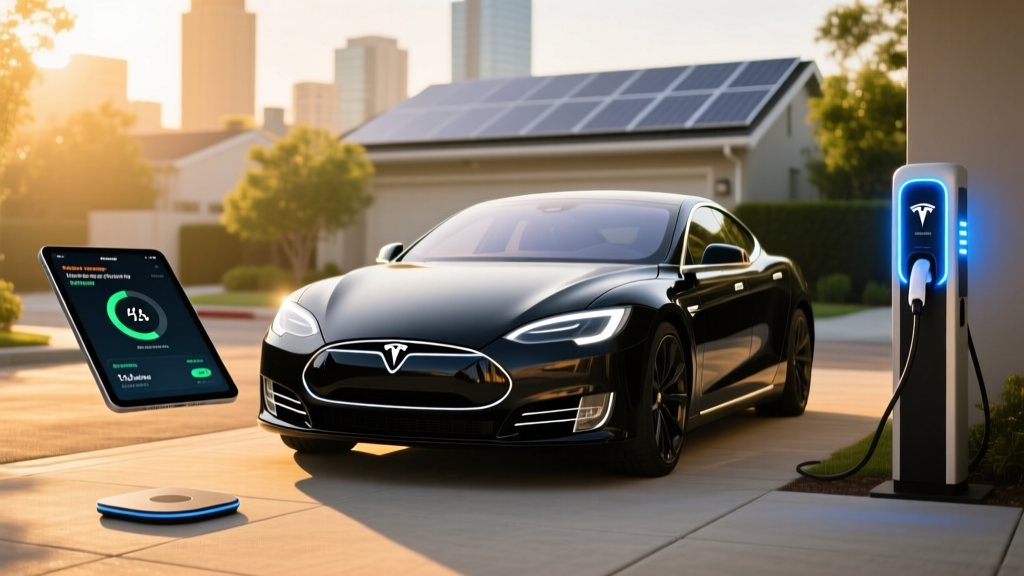
Charging infrastructure remains Tesla's strongest competitive moat. The Supercharger network now exceeds 30,000 stalls in North America, and with NACS becoming the industry standard, Tesla owners no longer hold an exclusive — but they still benefit from the most mature, reliable network available.
| Charging Level | Power (kW) | Speed (miles of range added) | Typical Use Case |
|---|---|---|---|
| Level 1 (120V household) | ~1.4 kW | ~3–4 mi/hr | Emergency / overnight trickle |
| Level 2 (240V home, 48A) | 11.5 kW | ~44 mi/hr | Daily home charging (full overnight) |
| DC Fast (V3 Supercharger) | Up to 250 kW | ~162 mi in 15 min (peak) | Road trips |
| DC Fast (V4 Supercharger) | Up to 350 kW* | Faster curve, limited by vehicle | Newer stations; Model Y caps at ~250 kW |
*V4 Supercharger stalls can deliver up to 350 kW, but the 2026 Model Y's onboard architecture limits intake to approximately 250 kW peak.
The charging curve matters more than the peak number. The Model Y sustains roughly 200+ kW from 10% to about 35% SoC, then progressively tapers. From 80% to 100%, charging slows dramatically — adding that last 20% can take as long as the first 70%. For road trips, the practical strategy is charging to 80% and moving on, which the 27-minute 10–80% time supports well.
At home on a 240V/48A Level 2 circuit (such as a Tesla Wall Connector or equivalent NACS unit), expect a full charge from 20% in roughly 7–8 hours. Installation cost for a dedicated 60A circuit typically runs $800–$2,000 depending on panel proximity and local permitting, according to U.S. Department of Energy guidance.
What Actually Breaks: Reliability Data and Owner Experience
Consumer Reports' Annual Auto Reliability Survey has historically ranked Tesla in the bottom third of brands, largely due to body hardware, paint quality, interior rattles, and suspension noise. J.D. Power's Initial Quality Study has told a similar story. However, these surveys weight cosmetic and fitment issues equally with powertrain failures — and that distinction matters enormously for total ownership cost.
Where Tesla Excels: Powertrain Durability
Tesla's drive units and battery packs have demonstrated exceptional longevity. High-mileage owner reports on Tesla Motors Club and independent fleet data show battery degradation of approximately 10–12% over the first 100,000 miles for NMC packs, with the curve flattening significantly thereafter. Many Model S and Model X vehicles from 2015–2017 have surpassed 200,000 miles on original battery packs with 75–85% remaining capacity. The Model Y, benefiting from the more refined 4680-format and 2170-format cells, is tracking similarly or better in early data.
The permanent-magnet synchronous motors have essentially no wear components — no brushes, no commutators. Drive unit replacement is rare and typically covered under the 8-year/120,000-mile warranty.
Where Tesla Struggles: Build and Trim
The most common reliability complaints cluster around:
- Suspension components: Control arm bushings and ball joints on pre-2025 Model Y vehicles wore prematurely, causing clunking noises over bumps. The Juniper refresh addressed this with revised geometry and supplier changes.
- Paint and panel gaps: Improved at the Austin Gigafactory but still inconsistent compared to legacy automakers. Not a mechanical concern, but a resale-value factor.
- Climate control: Early heat pump failures in 2021–2022 Model Y vehicles caused cabin heating loss in cold weather. Tesla issued service bulletins and redesigned the octovalve assembly. 2026 models carry the updated hardware.
- 12V auxiliary battery: Tesla switched to a lithium-ion 12V battery in late 2022, dramatically reducing the dead-auxiliary-battery complaints that plagued earlier Model Y vehicles with lead-acid units.
- Software glitches: Over-the-air updates occasionally introduce bugs (phantom braking on Autopilot, touchscreen freezes). These are frustrating but typically resolved in subsequent patches without a service visit.
Repair Costs Out of Warranty
This is where reliability gets expensive. Tesla operates a limited service center network, and out-of-warranty repairs carry premium pricing. A drive unit replacement runs $5,000–$8,000. A battery pack replacement — exceedingly rare before 150,000 miles — can cost $12,000–$16,000 at current pricing. Third-party EV shops are emerging but remain scarce in many markets.
Compare this to a Toyota RAV4 Hybrid, where a traction battery replacement runs roughly $3,000–$4,000 and any independent mechanic can service the rest of the vehicle. The reliability question isn't just "will it break?" — it's "what does it cost when it does?"
Pricing, Tax Credits, and the Real Cost of Ownership
| Trim | MSRP | Federal Credit (§30D) | Effective Price* |
|---|---|---|---|
| Model Y RWD (LFP) | $44,990 | Up to $7,500 | ~$37,490 |
| Model Y Long Range AWD | $48,990 | Up to $7,500 | ~$41,490 |
| Model Y Performance | $53,490 | Up to $7,500 | ~$45,990 |
*Effective price assumes full §30D eligibility. Per IRS rules, the buyer must meet income caps ($150K single / $300K joint MAGI), the vehicle MSRP must not exceed $80,000 (SUVs/vans), and battery components and critical minerals must meet domestic-sourcing thresholds that tighten annually. The Model Y currently qualifies, but sourcing requirements evolve — verify eligibility at the point of sale. The credit can be transferred to the dealer as a point-of-sale discount.
Five-Year Ownership Cost Snapshot
Beyond the purchase price, the Model Y Long Range AWD benefits from low operating costs:
- Electricity: At the U.S. average of $0.16/kWh, charging 15,000 miles/year costs approximately $696. Home charging on off-peak rates drops this further.
- Maintenance: No oil changes, no spark plugs, minimal brake wear (regenerative braking). Expect $200–$400/year for cabin air filters, wiper fluid, and tire rotation.
- Insurance: Tesla insurance premiums run 15–30% higher than comparable non-EV SUVs due to repair costs and parts pricing. Average annual premium: $2,200–$2,800 depending on state and driving record.
- Depreciation: Tesla prices have fluctuated significantly. The Model Y retains approximately 55–60% of its value after 5 years/75,000 miles, per Kelley Blue Book data — competitive with the segment but below Toyota.
Tech, Safety, and Driver Assistance
The 2026 Model Y's infotainment runs on a 15.4-inch center touchscreen with Tesla's latest software stack. The interface is responsive and feature-rich — navigation, streaming, gaming, and vehicle controls are all integrated. Apple CarPlay and Android Auto remain unsupported, which is a dealbreaker for some buyers accustomed to phone projection.
Standard Autopilot includes adaptive cruise control and lane-centering. The optional Full Self-Driving (Supervised) package ($8,000 one-time or $99/month) adds automated lane changes, traffic light recognition, and navigate-on-autopilot.
Safety ratings remain strong: the Model Y earned a 5-star overall rating from NHTSA and a Top Safety Pick+ designation from IIHS in prior model years. The structural battery pack contributes to a low center of gravity and excellent rollover resistance.
How It Compares: Model Y vs. Key Rivals
The reliability question only matters in context. Here's how the Model Y Long Range stacks up against the two competitors most buyers cross-shop:
| Attribute | 2026 Tesla Model Y LR AWD | 2026 Hyundai Ioniq 5 Long Range AWD | 2026 Ford Mustang Mach-E Extended Range AWD |
|---|---|---|---|
| EPA Range | 320 mi | 305 mi | 312 mi |
| Battery (kWh) | ~75 NMC | 84 NMC | 91 NMC |
| Peak DC Charge | 250 kW | 240 kW (800V arch) | 150 kW |
| 10–80% Time | ~27 min | ~18 min | ~38 min |
| 0–60 mph | 4.8 sec | 5.1 sec | 5.2 sec |
| Starting MSRP | $48,990 | $50,200 | $47,995 |
| Battery Warranty | 8yr/120K mi | 10yr/100K mi | 8yr/100K mi |
| Reliability Reputation | Mixed (strong PT, weak build) | Above average | Average |
The Ioniq 5's 800-volt architecture delivers faster 10–80% charging and a longer battery warranty (10 years vs. Tesla's 8). The Mach-E trails on charging speed but undercuts on price and offers Apple CarPlay. Where Tesla still wins decisively: the Supercharger network (though now opening to competitors via NACS adapters), software integration, and over-the-air update cadence.
Pros
- Best-in-class Supercharger network access
- Proven powertrain durability at high mileage
- Strong efficiency (29 kWh/100 mi)
- Spacious cargo area (72.1 cu ft max)
- Continuous OTA improvements
- Competitive 0–60 performance
Cons
- Build quality inconsistency (improving but still behind legacy OEMs)
- No Apple CarPlay / Android Auto
- Higher insurance premiums than competitors
- Expensive out-of-warranty repairs
- FSD remains Level 2 despite the name
- Limited third-party service options
Who Should Buy the Model Y — and Who Shouldn't
Buy the Model Y if: You have reliable home charging access, you value the Supercharger network for road trips, you prioritize powertrain longevity and software sophistication over panel-gap perfection, and you live in an area with a Tesla Service Center or mobile ranger coverage.
Look elsewhere if: You want traditional dealership service, you rely on Apple CarPlay, you need guaranteed build consistency, you want a 10-year battery warranty, or you live in a region with no nearby Tesla service infrastructure. The Hyundai Ioniq 5 or Kia EV6 may better serve buyers who prioritize warranty coverage and service accessibility.
Frequently Asked Questions
What is the real-world range of the 2026 Tesla Model Y?
The EPA rates the Long Range AWD at 320 miles. Real-world highway driving in fair conditions yields approximately 275–290 miles. In freezing temperatures with cabin heating, expect 220–245 miles. Preconditioning the battery and using seat heaters instead of cabin heat can recover some of that winter loss.
How fast does the Model Y charge at home and on the road?
At home on a 240V/48A Level 2 circuit, the Model Y charges at 11.5 kW, adding roughly 44 miles of range per hour — enough for a full overnight charge. On a V3 Supercharger, it peaks at 250 kW and charges from 10% to 80% in approximately 27 minutes, though the charging curve tapers significantly above 50% SoC.
Does the 2026 Model Y qualify for the federal EV tax credit?
As of current IRS §30D guidelines, the Model Y qualifies for up to $7,500 in federal tax credits, subject to buyer income limits ($150,000 single / $300,000 joint MAGI), the $80,000 SUV MSRP cap, and battery-component/critical-mineral sourcing requirements. Eligibility can change as sourcing rules tighten — always confirm at the point of sale. The credit can be applied as a point-of-sale discount through the dealer.
Are Teslas expensive to maintain?
Routine maintenance is very cheap — no oil changes, minimal brake wear, and low fluid needs. Expect $200–$400 annually. However, out-of-warranty repairs (drive unit, battery, suspension) are expensive and require Tesla-authorized service, which is less accessible than a traditional dealership network.
How long do Tesla batteries last?
Data from high-mileage owners and fleet operators indicates NMC Tesla batteries degrade roughly 10–12% over the first 100,000 miles, with the rate slowing significantly afterward. Many packs retain 75–85% capacity at 200,000 miles. Tesla's warranty guarantees at least 70% retention over 8 years or 120,000 miles, whichever comes first. LFP batteries (in the RWD model) show even slower degradation and can be charged to 100% daily without harm.
Is the Model Y worth buying over the Hyundai Ioniq 5 or Ford Mach-E?
It depends on your priorities. Choose the Model Y for the Supercharger network, software experience, and proven long-term powertrain durability. Choose the Ioniq 5 for faster charging, a 10-year battery warranty, and stronger build quality. Choose the Mach-E for lower pricing, Apple CarPlay, and Ford's dealer service network. All three are strong vehicles — the right choice depends on your charging access, service expectations, and tech preferences.