Quick Verdict: Is the Model Y a Better Buy After the Latest Price Cuts?
Tesla's 2026 Model Y lineup has seen a meaningful price reduction compared to its 2024 peak, making the best-selling electric SUV in America more accessible than it has been in years. The Long Range AWD now starts at an MSRP of $44,990 before destination and options — a figure that, when paired with the full §30D federal tax credit, brings the effective price down to approximately $37,490 for eligible buyers. The base Rear-Wheel Drive trim has been discontinued for 2026, leaving Long Range and Performance as the two available configurations.
The price cuts are real, but they come with nuance. The Long Range trim lost its previously optional third-row seat, cargo dimensions shifted slightly with the Juniper refresh, and the tax credit eligibility now hinges on updated battery-sourcing and critical-mineral requirements that changed for the 2026 tax year. Here's the full breakdown of what you're getting — and what it actually costs.
Spec Sheet at a Glance
| Specification | Long Range AWD | Performance AWD |
|---|---|---|
| Base MSRP | $44,990 | $51,490 |
| EPA Range | 320 miles | 293 miles |
| Battery (usable) | ~78 kWh (NMC) | ~78 kWh (NMC) |
| Drivetrain | Dual-motor AWD | Dual-motor AWD |
| Horsepower | 384 hp | 456 hp |
| 0–60 mph | 4.8 seconds | 3.5 seconds |
| Peak DC Fast Charge | 250 kW | 250 kW |
| 10–80% DCFC Time | ~27 minutes | ~27 minutes |
| Level 2 Home Charge | 11.5 kW (~44 mi/hr) | 11.5 kW (~44 mi/hr) |
| MPGe (combined) | 111 MPGe | 102 MPGe |
| Efficiency | 30 kWh/100mi | 33 kWh/100mi |
| Cargo (rear seats up) | 30.2 cu ft | 30.2 cu ft |
| Cargo (rear seats down) | 72.1 cu ft | 72.1 cu ft |
| Battery Warranty | 8 yr / 120,000 mi | 8 yr / 120,000 mi |
Sources: EPA / fueleconomy.gov, Tesla spec sheets. Figures reflect 2026 model year.
Real-World Range vs. the EPA Sticker
EPA Long Range: 320 miles | Performance: 293 miles
Expect in real-world highway driving (70–80 mph): ~260–280 miles (Long Range), ~240–255 miles (Performance)
Cold-weather (below 32°F): Plan for 20–30% range reduction, dropping the Long Range to ~225–255 miles depending on cabin heating use and whether the battery is preconditioned.
The Model Y Long Range's 320-mile EPA rating is competitive, but the real-world picture depends heavily on how you drive. At sustained highway speeds above 70 mph, aerodynamic drag pushes consumption up noticeably — the Model Y's crossover profile isn't as slippery as a sedan. In our experience on mixed highway-and-suburban routes at moderate temperatures, expect to see closer to 270–290 miles before needing to charge.
Cold weather is the bigger variable. The Model Y uses a heat pump (standard since 2021), which helps significantly compared to resistive cabin heaters. But lithium-ion chemistry itself becomes less efficient below freezing, and battery preconditioning only partially mitigates this. If you live in the Upper Midwest or Northeast and commute in January, budget for roughly 230 miles of usable range on a full charge and plan your road-trip charging stops accordingly.
The Performance trim sacrifices 27 miles of EPA range for its more aggressive motor tuning, larger 21-inch wheels, and stickier tires. That trade-off is standard in the segment — more grip and power cost electrons.
Charging Speeds: Home, Public, and the Supercharger Network
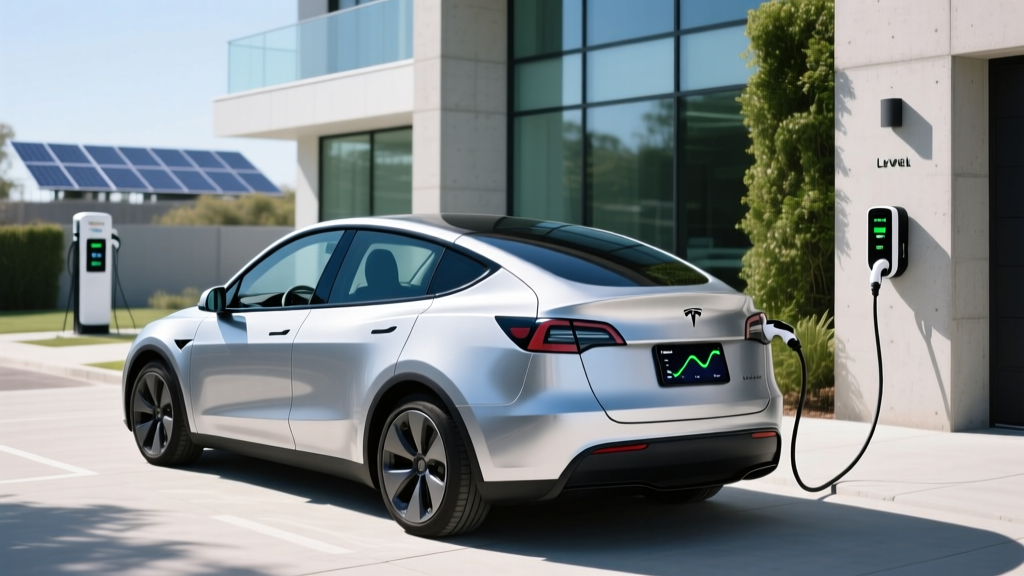
The 2026 Model Y retains a 250 kW peak DC fast-charge rate on V3 Superchargers and compatible third-party CCS/NACS stations (Tesla opened its Supercharger network to non-Tesla EVs, and the NACS connector is now the North American standard). Here's what that looks like in practice:
| Charging Method | Power (kW) | Speed / Time | Typical Use Case |
|---|---|---|---|
| Level 1 (120V household) | ~1.4 kW | ~4–5 miles/hr | Emergency top-up, overnight trickle |
| Level 2 (240V home wall connector) | 11.5 kW | ~44 miles/hr (full charge ~7–8 hrs) | Daily overnight charging |
| Level 2 (public 7.2–19.2 kW) | 7.2–11.5 kW | ~28–44 miles/hr | Workplace, shopping, hotels |
| DC Fast (V3 Supercharger) | Up to 250 kW | 10–80% in ~27 min | Road trips, highway travel |
| DC Fast ( Electrify America / 350 kW capable) | ~150–175 kW sustained | 10–80% in ~32–35 min | Non-Tesla DCFC networks |
Charging-curve reality check: The 250 kW peak rate only holds between roughly 10% and 30% State of Charge (SoC). Above 50%, the rate tapers to around 100–120 kW, and above 80% it drops further to roughly 40–50 kW. This is why the 10–80% metric matters more than peak kW — and why Tesla's navigation system recommends charging to 80% on road trips rather than 100%. A full 0–100% session at a Supercharger takes closer to 55–60 minutes.
For home charging, Tesla's Wall Connector (approximately $450 for the unit) delivers 11.5 kW on a 60-amp circuit, adding roughly 44 miles of range per hour. Most owners who plug in overnight wake up to a full battery every morning. Installation costs for a dedicated 240V/60A circuit typically run $800–$2,000 depending on your electrical panel's capacity and the distance from the panel to the charger location. If your home has a 100-amp main panel, a panel upgrade to 200 amps can add $1,500–$3,000 — consult a licensed electrician for your specific situation.
Pricing Breakdown: MSRP, Options, and the Tax Credit Equation
The 2026 Tesla Model Y price cuts bring the Long Range AWD to $44,990 before the $1,390 destination fee, for a total starting price of $46,380. The Performance trim sits at $51,490 plus destination ($52,880 total). Here's how the math works after incentives:
| Cost Factor | Long Range AWD | Performance AWD |
|---|---|---|
| Base MSRP | $44,990 | $51,490 |
| Destination Fee | $1,390 | $1,390 |
| Paint Upgrade (e.g., Quicksilver) | +$2,000 | +$2,000 |
| Full Self-Driving (Supervised) | +$8,000 (or $99/mo) | +$8,000 (or $99/mo) |
| As-Tested (with paint, no FSD) | $48,380 | $54,880 |
| §30D Federal Tax Credit (max) | –$7,500 | –$7,500 |
| Effective Price After Credit | ~$40,880 | ~$47,380 |
Tax credit eligibility is not automatic. Under the IRS §30D rules for the 2026 tax year, you must meet all of the following to claim the full $7,500:
- MSRP cap: The vehicle's MSRP must not exceed $80,000 for SUVs — both Model Y trims qualify.
- Income cap: Modified adjusted gross income (MAGI) must be ≤ $150,000 (single), $225,000 (head of household), or $300,000 (married filing jointly).
- Battery sourcing: A percentage of critical minerals and battery components must be sourced from the U.S. or free-trade-agreement countries. Tesla has largely met these requirements for U.S.-built Model Y vehicles, but the exact split between the $3,750 critical-mineral half and the $3,750 battery-component half can shift — verify on the IRS qualified vehicles list before purchasing.
- Point-of-sale transfer: As of 2024, you can transfer the credit to the dealer at purchase, reducing your out-of-pocket cost immediately rather than waiting to claim it on your tax return. Tesla supports this at delivery.
Always confirm current eligibility on the fueleconomy.gov tax credit page and consult a tax professional for your personal situation. State and local incentives (such as California's CVRP or Colorado's state credit) may stack on top but vary by jurisdiction.
Performance, Efficiency, and What It's Like to Drive
The Long Range AWD's 384 horsepower and 4.8-second 0–60 time make it genuinely quick for a family crossover. Dual-motor all-wheel drive provides confident traction in rain and light snow, and the instant torque delivery means highway merging and passing require zero planning. The Performance trim's 3.5-second 0–60 is sports-car territory and comes with upgraded brakes, a lowered suspension, and 21-inch Überturbine wheels.
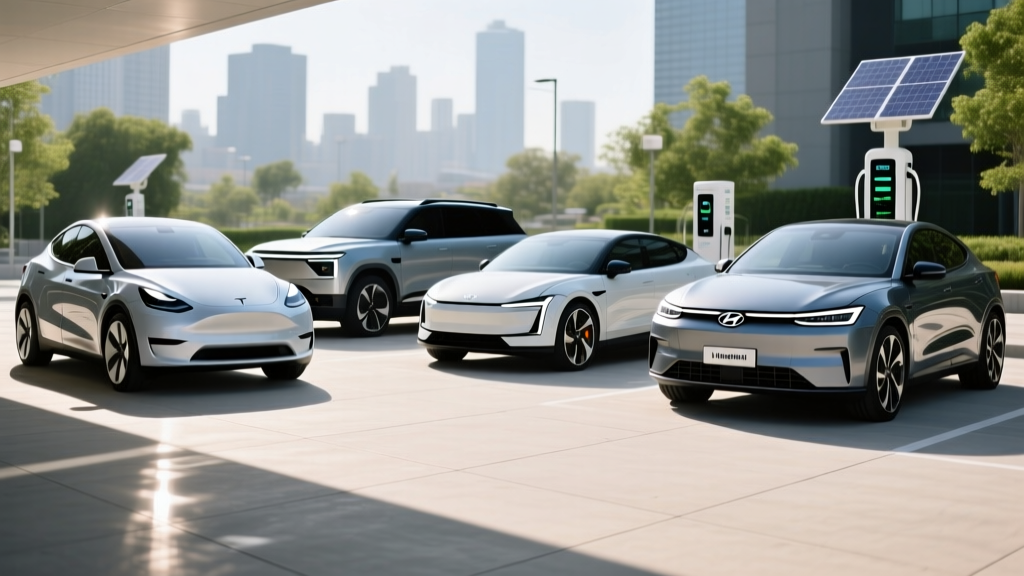
Efficiency is where the Model Y has historically excelled. At 111 MPGe combined (30 kWh/100 miles) for the Long Range, it's one of the most efficient electric SUVs on the market. For context, the Ford Mustang Mach-E Extended Range AWD achieves 101 MPGe combined, and the Hyundai Ioniq 5 AWD sits at 110 MPGe. Tesla's powertrain efficiency — a combination of motor design, thermal management, and low rolling-resistance tires — translates directly into fewer charging stops and lower electricity costs.
Ride quality improved noticeably with the Juniper refresh. The previous generation's firm, sometimes harsh ride has been softened with revised damping and improved sound insulation. Cabin noise at highway speeds is noticeably lower, though the frameless windows still let in more wind noise than a conventional sealed-window design.
Interior, Cargo, and Tech: What's Changed for 2026
The Juniper interior overhaul brought a more refined cabin with ambient lighting, ventilated front seats (standard on both trims), a rear-seat touchscreen for climate and media control, and improved material quality. The minimalist approach remains — there are still no physical buttons for climate or wipers — but the execution is more polished.
Cargo and passenger dimensions:
- Cargo behind rear seats: 30.2 cu ft
- Cargo with rear seats folded: 72.1 cu ft
- Front trunk (frunk): 4.1 cu ft
- Rear legroom: 41.6 inches
- Front headroom: 41.0 inches
The discontinuation of the optional third-row seat for 2026 means the Model Y is strictly a five-passenger vehicle now. If you need three rows, the Kia EV9 or Rivian R1S are the segment alternatives, though both cost significantly more.
Tech highlights:
- 15.4-inch center touchscreen with Tesla's latest UI
- Over-the-air software updates (frequent and substantial)
- Native navigation with real-time Supercharger routing and preconditioning
- Sentry Mode (360° security camera recording)
- Dashcam with front, rear, and side cameras
- Dog Mode, Camp Mode, and Theater Mode
Driver Assistance: Autopilot and FSD Supervised
Both Autopilot (standard) and Full Self-Driving Supervised ($8,000 option) are SAE Level 2 driver-assistance systems. This means the driver must remain fully engaged, hands on or near the wheel, eyes on the road, and ready to take over at any moment. Neither system makes the Model Y a self-driving vehicle. Level 4 driverless operation (no human needed) is currently available only in limited robotaxi services like Waymo in select cities.
Standard Autopilot includes Traffic-Aware Cruise Control and Autosteer (lane-centering on marked highways). It works well on divided highways and reduces fatigue on long drives. FSD Supervised adds automatic lane changes, navigation-guided on/off-ramp handling, traffic-light and stop-sign recognition, and enhanced city-street driving. In 2026, FSD Supervised is noticeably more capable than its 2023 predecessor, but it still requires active supervision and occasionally makes conservative or unexpected decisions in complex urban environments.
Our recommendation: Start with the standard Autopilot. It covers 90% of the driver-assist benefit for $0. Add FSD Supervised only if you regularly drive in complex urban environments and want to evaluate the technology — but understand you're paying for a system that still requires your full attention.
Pros and Cons
- Class-leading Supercharger network access (most reliable DCFC in North America)
- Excellent efficiency (111 MPGe combined, 30 kWh/100mi)
- Strong real-world range (320 EPA / ~270 highway)
- Quick 10–80% charging (~27 min at 250 kW)
- Over-the-air updates add features post-purchase
- Spacious cargo area (72.1 cu ft with seats folded)
- Competitive price after tax credit (~$40,880 effective)
- Standard heat pump for cold-weather efficiency
- No physical buttons — all controls via touchscreen (wipers, climate, glovebox)
- Third-row seat discontinued for 2026
- FSD Supervised costs $8,000 and remains Level 2 (driver-supervised)
- Turn-signal stalk removed (steering-wheel buttons instead)
- 250 kW peak DCFC is no longer class-leading (Hyundai/Kia at 350 kW via 800V)
- Road noise still noticeable at highway speeds vs. luxury competitors
- Service center wait times can be long in some metro areas
Who Should Buy the 2026 Model Y?
- You want the lowest effective price after the $7,500 tax credit (~$40,880)
- You rely on road-trip charging and value Supercharger network reliability
- You commute 30–60 miles daily and can charge at home overnight
- You need a practical five-seat family SUV with strong cargo capacity
- You live in a region with cold winters and want a heat pump as standard
- You want sub-4-second 0–60 acceleration and track-capable handling
- You don't mind sacrificing ~27 miles of range for sportier dynamics
- You value the upgraded brakes and suspension tuning
- You need three rows of seats (see Kia EV9, Rivian R1S)
- You want 800V ultra-fast charging at 350 kW (see Hyundai Ioniq 5, Kia EV6)
- You prefer physical buttons and a traditional dashboard layout
- You want a luxury-badge interior (see BMW iX, Genesis GV60)
Frequently Asked Questions
What is the real-world range of the 2026 Tesla Model Y?
The Long Range AWD carries a 320-mile EPA rating. In real-world highway driving at 70–80 mph, expect approximately 260–280 miles. In cold weather (below 32°F), plan for 225–255 miles depending on cabin heating use and whether the battery is preconditioned. The Performance trim's real-world highway range is approximately 240–255 miles.
How fast does the Model Y charge at home and on DC fast chargers?
At home on a Level 2 Wall Connector (11.5 kW / 240V), the Model Y adds approximately 44 miles of range per hour, reaching a full charge from empty in about 7–8 hours. On a V3 Supercharger (250 kW DC), a 10–80% session takes approximately 27 minutes, though the charge rate tapers significantly above 50% SoC.
How much does the Model Y cost after the federal tax credit?
The Long Range AWD starts at $46,380 including destination. With the full $7,500 §30D credit applied at point of sale, the effective price drops to approximately $38,880 (or ~$40,880 with a $2,000 paint upgrade). Eligibility depends on your income (≤$150K single / ≤$300K joint), the vehicle's MSRP (under the $80K SUV cap), and current battery-sourcing compliance. Always verify on the IRS qualified vehicles list.
Does the 2026 Model Y qualify for the $7,500 federal EV tax credit?
Both the Long Range and Performance trims fall under the $80,000 MSRP cap for SUVs. The U.S.-built Model Y has historically met the critical-mineral and battery-component sourcing requirements, but these thresholds increase annually. Check the IRS qualified clean vehicles list for the specific build date and VIN to confirm eligibility before purchase.
Is the Model Y worth buying vs. the Hyundai Ioniq 5, Ford Mach-E, or Kia EV6?
The Model Y wins on Supercharger network access, efficiency, and cargo volume. The Ioniq 5 and EV6 win on DC fast-charge speed (800V architecture enables 10–80% in ~18 minutes on 350 kW chargers) and interior design with physical controls. The Mach-E offers a more traditional driving feel and BlueCruise hands-free driving on approved highways. If road-trip charging reliability is your top priority, the Model Y's Supercharger advantage remains significant in 2026, though competing networks are improving.
What is the battery warranty on the 2026 Model Y?
Tesla covers the battery and drive unit for 8 years or 120,000 miles (whichever comes first), with a minimum 70% capacity retention guarantee over that period. This is competitive with the segment standard. Independent data from long-term Tesla owners suggests typical degradation of roughly 10–12% over the first 100,000 miles for NMC batteries, with the curve flattening significantly after the initial break-in period.
How much does it cost to charge a Model Y at home vs. buying gas?
At the U.S. average residential electricity rate of ~$0.17/kWh (2025 EIA data), fully charging the Model Y's ~78 kWh battery costs approximately $13.26. That's roughly $0.04–$0.05 per mile. A comparable gas SUV getting 25 MPG at $3.50/gallon costs $0.14 per mile — roughly three times more per mile driven. Over 15,000 miles per year, home charging saves approximately $1,350–$1,500 annually versus gasoline.