The Short Answer on the 2027 Ford EV Truck
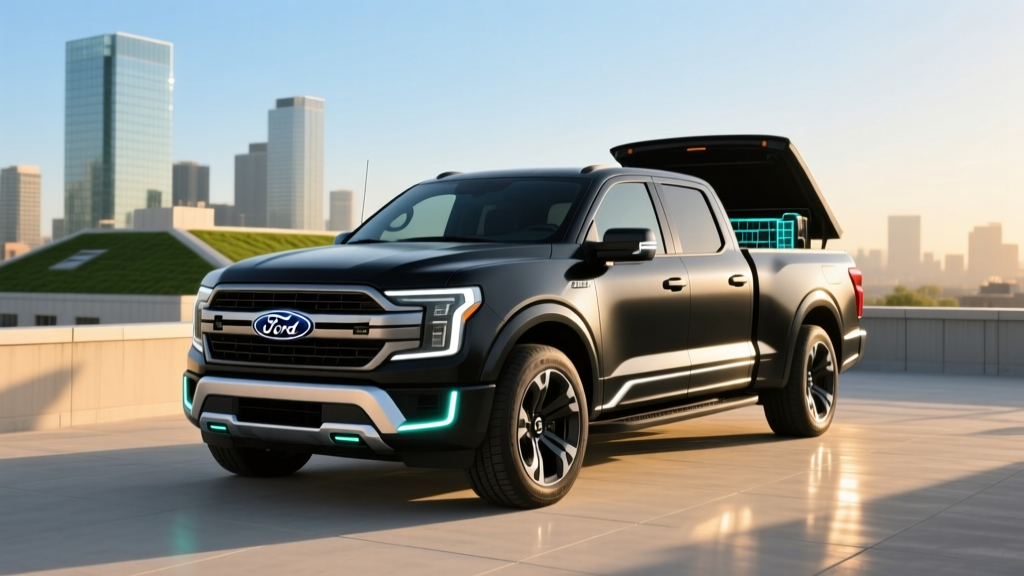
Ford's next-generation electric pickup — expected to debut for the 2027 model year on a dedicated EV platform (not the adapted ICE architecture used by the current F-150 Lightning) — is announced but not yet on sale. Based on Ford's public statements and supplier disclosures through early 2026, the 2027 Ford EV truck targets an EPA-estimated range of 350+ miles on higher trims, DC fast-charging at a peak of ~250 kW (10–80% in roughly 20 minutes), and a starting MSRP in the mid-$50,000s for a base work truck. Ford has confirmed the truck will be built at its new BlueOval City facility in Tennessee. All specs below are preliminary and subject to change before production begins.
Why Ford Is Rebuilding Its EV Truck From Scratch
The current F-150 Lightning, launched for the 2022 model year, shares its basic chassis architecture with the internal-combustion F-150. That decision got Ford to market fast, but it imposed compromises: the battery pack is shaped around a frame designed for a gas engine, limiting usable energy density and packaging efficiency. For the 2027 Ford EV truck, Ford is moving to a dedicated electric platform — what the company internally refers to as its next-generation flexible EV architecture.
The practical benefits for buyers:
- More usable battery capacity in the same or smaller physical footprint, enabling longer range without a massive weight penalty
- Lower production cost through fewer shared-ICE compromises, which Ford has said will help bring pricing closer to gas-truck parity
- Improved interior space — a dedicated skateboard platform allows a flat floor, shorter dash-to-axle ratio, and more cabin and frunk volume
- Faster charging architecture, likely moving to an 800-volt system (up from the Lightning's ~400V), which enables higher peak charge rates without excessive current
Ford CEO Jim Farley has publicly stated that the company's next-gen EVs will be "designed from the ground up as electric" and priced to compete directly with Toyota's hybrid and gas truck lineup. That's a meaningful strategic shift from the Lightning era.
Projected Specs: Range, Battery, Charging, and Performance
Because the 2027 Ford EV truck has not entered production, the following figures are based on Ford's announced targets, supplier reports, and industry analysis. Treat them as preliminary estimates, not final specifications.
| Specification | Projected (Base/Std Range) | Projected (Extended Range) |
|---|---|---|
| EPA Range (est.) | ~280 mi | 350+ mi |
| Battery Capacity (usable, est.) | ~100 kWh | ~130–140 kWh |
| Battery Chemistry | LFP (likely, base) | NMC (likely, ext. range) |
| Peak DC Fast Charge Rate | ~200 kW | ~250 kW |
| 10–80% DC Charge Time (est.) | ~25 min | ~20 min |
| Level 2 AC Charge Rate | 11.5 kW (~19 mi/hr) | 11.5–19.2 kW (~19–32 mi/hr) |
| Horsepower (est.) | ~450 hp | ~580 hp |
| 0–60 mph (est.) | ~5.0 sec | ~4.0 sec |
| Max Towing (est.) | ~8,000 lb | ~10,000+ lb |
| Starting MSRP (est.) | ~$55,000 | ~$65,000+ |
Real-World Range Reality Check
Even if the extended-range model achieves an EPA sticker of 350 miles, expect ~280–310 miles on the highway at 70–75 mph under normal conditions. Towing a 5,000-lb trailer can cut range by 40–50%, dropping effective range to ~175–210 miles. In sub-freezing temperatures (20–30°F), plan for a 15–25% reduction, bringing real-world range to roughly 260–295 miles for the extended pack. These are consistent with observed losses in the current F-150 Lightning and rival EV trucks.
Chemistry Matters: LFP vs. NMC in the 2027 Truck
Ford has signaled it will use LFP (lithium iron phosphate) cells in base, standard-range configurations and NMC (nickel manganese cobalt) in extended-range models. Here's why that matters for your ownership experience:
| Factor | LFP (Base/Std Range) | NMC (Extended Range) |
|---|---|---|
| Energy Density | Lower — heavier for same kWh | Higher — more range per pound |
| Cycle Life | 3,000+ cycles (excellent longevity) | 1,500–2,000 cycles (still very good) |
| Cold-Weather Performance | More range loss in freezing temps | Better cold-weather retention |
| Charging to 100% Regularly | Yes — LFP tolerates full charges well | No — daily charge to 80% recommended |
| Cost | Lower — contributes to cheaper base price | Higher — adds to extended-range premium |
If you plan to keep the truck 8–10 years and charge daily, LFP's cycle-life advantage is meaningful. If you need maximum range and tow frequently, NMC is the better fit.
EV Truck vs. Gas F-150: The Cost Comparison That Matters
The 2027 Ford EV truck will compete directly with the gas F-150 and the F-150 PowerBoost hybrid. Here's how the economics stack up, using projected EV pricing and current gas-truck figures.
| Factor | 2027 Ford EV Truck (Proj.) | 2026 F-150 Gas (XLT 4x4) | 2026 F-150 PowerBoost Hybrid |
|---|---|---|---|
| Base MSRP | ~$55,000 | ~$48,000 | ~$57,000 |
| Federal Tax Credit (§30D) | Up to $7,500 (if eligible) | $0 | $0 |
| Effective Starting Price | ~$47,500 | ~$48,000 | ~$57,000 |
| Fuel/Energy Cost per Mile | ~$0.04–0.06 (home L2) | ~$0.16 (20 MPG, $3.20/gal) | ~$0.13 (24 MPG, $3.20/gal) |
| Annual Fuel (15,000 mi) | ~$600–900 | ~$2,400 | ~$1,950 |
| Maintenance (Annual Avg.) | ~$300–500 | ~$800–1,200 | ~$800–1,200 |
| 5-Year Fuel + Maint. | ~$4,500–$7,000 | ~$16,000–$18,000 | ~$13,500–$15,500 |
The math is clear: even with a higher sticker price, the EV truck's per-mile energy and maintenance savings can close the gap within 3–4 years for a driver covering 15,000 miles annually — especially after accounting for the federal tax credit. But there are conditions, which we'll address below.
Real-World Ownership: What First-Time EV Truck Buyers Must Plan For
Buying an electric truck is not the same as buying a gas truck. Here are the practical ownership factors that will determine whether the 2027 Ford EV truck works for your life.
Home Charging Is Non-Negotiable for Most Owners
Public DC fast charging is improving, but it remains more expensive ($0.30–$0.50/kWh at most networks) and less convenient than home charging. Budget for a Level 2 home charger installation:
| Item | Cost Range |
|---|---|
| Level 2 Charger (48A, hardwired) | $500–$800 |
| Electrician Labor (240V/60A circuit) | $800–$2,500 |
| Electrical Panel Upgrade (if needed, 200A) | $1,500–$3,500 |
| Permit & Inspection | $100–$400 |
| Total (typical, no panel upgrade) | $1,300–$3,300 |
| Total (with panel upgrade) | $2,800–$6,800 |
At 11.5 kW (48A), you'll add roughly 19 miles of range per hour of charging — enough to fully replenish the standard-range pack overnight in about 9 hours. If you opt for a 19.2 kW (80A) charger and the truck supports it, that drops to roughly 5–6 hours.
If you cannot install home charging (apartment, street parking, HOA restrictions), an EV truck becomes significantly less practical. You'll rely on public charging at $0.30–$0.50/kWh, pushing your per-mile cost closer to $0.10–$0.14 — still cheaper than gas but not the dramatic savings home-charging owners enjoy.
Towing and Payload: The Honest Picture
Electric trucks can tow, but towing devastates range. The current F-150 Lightning with the extended-range pack (EPA 320 mi) typically delivers 140–180 miles of real range when towing a 5,000–6,000 lb trailer at highway speeds. The 2027 Ford EV truck's improved efficiency and larger battery should improve this, but physics doesn't change: expect ~50% range reduction under heavy tow.
If you tow more than 5,000 lbs on trips longer than 150 miles regularly, you'll need to plan charging stops carefully. DC fast-charging infrastructure along rural towing routes remains sparse in many regions.
Climate Considerations
If you live in a region with sustained sub-freezing winters (Upper Midwest, Mountain West, Northeast), plan for 15–30% range loss in cold weather. The 2027 truck will almost certainly include a heat pump (standard on the Lightning since 2023), which mitigates cabin-heating energy draw, but battery chemistry itself is less efficient in the cold. Preconditioning the battery while plugged in helps significantly — always precondition before a DC fast-charge session in cold weather.
Federal Tax Credit Eligibility: What Applies to the 2027 Truck
The IRS §30D clean vehicle credit remains the most important financial variable for EV truck buyers. As of 2026, the rules are complex and eligibility is not guaranteed:
- MSRP Cap: Trucks/vans/SUVs must have an MSRP of $80,000 or less to qualify. The base and mid-range 2027 Ford EV truck trims should fall under this cap; a fully loaded extended-range Platinum-equivalent trim may exceed it.
- Buyer Income Cap: Modified adjusted gross income must not exceed $150,000 (single), $225,000 (head of household), or $300,000 (joint).
- Battery Sourcing Requirements: The credit is split into two halves ($3,750 each) — one for critical-minerals sourcing and one for battery-component manufacturing. Both must be met for the full $7,500. Ford's BlueOval battery plants in Tennessee and Kentucky are designed to meet domestic-component requirements, but critical-minerals sourcing depends on supply-chain agreements that may evolve before 2027 production.
- Point-of-Sale Transfer: Eligible buyers can transfer the credit to the dealer at purchase, reducing the purchase price directly rather than waiting for a tax refund.
Important: Tax credit rules are subject to legislative change. Consult a tax professional and check IRS.gov before making a purchase decision based on credit eligibility.
Common Misconceptions About Electric Trucks
| Myth | Fact |
|---|---|
| "EV batteries need replacing every 5 years." | Ford's battery warranty covers 8 years/100,000 miles with a minimum 70% capacity retention. Real-world degradation data from current Lightning owners shows ~5–8% loss over 100,000 miles. Full replacement is rarely needed and costs $15,000–$25,000 if out of warranty. |
| "You can't tow with an EV truck." | You can — the current Lightning tows up to 10,000 lbs. The issue is range under tow, not capability. Plan routes around charging stops. |
| "EV trucks are more expensive to insure." | Sometimes. EV insurance premiums run 10–20% higher on average due to repair costs for battery and structural components. Get quotes before buying. |
| "Charging takes too long for road trips." | At 250 kW peak, the 2027 truck should add ~150–180 miles in 15 minutes. Combined with rest stops and meals, the time penalty on a 500-mile trip is roughly 30–45 minutes total. |
| "The power grid can't handle EV trucks." | Most home Level 2 charging draws 7–11.5 kW — comparable to a central AC unit. Utility time-of-use rates and smart charging manage peak demand effectively. |
Decision Framework: Should You Wait for the 2027 Ford EV Truck?
Choose the 2027 Ford EV Truck (Wait) If:
- You want 350+ miles of range and aren't in a rush — current Lightning tops out at EPA 320 mi
- You value a purpose-built EV platform with better interior packaging and frunk space
- You plan to keep the truck 8+ years and want the latest battery chemistry and thermal management
- You can charge at home and drive under 300 miles daily without towing
- Target price of $55,000–$70,000 fits your budget after tax credits
Buy the Current F-150 Lightning Now If:
- You need an electric truck today — the 2027 model won't arrive in showrooms until late 2026 at the earliest, likely spring 2027
- You can find a dealer-discounted 2025/2026 Lightning with the extended-range pack at a compelling price
- Your daily driving is under 200 miles and the Lightning's EPA 230–320 mi range is sufficient
- You want proven real-world ownership data and reliability history before committing
Consider the F-150 PowerBoost Hybrid If:
- You cannot install home charging and don't want to rely on public infrastructure
- You regularly tow 7,000+ lbs over long distances where EV range loss is prohibitive
- You live in a charging desert (rural areas with limited DC fast-charger access)
- You want the lowest upfront cost and don't drive enough miles for EV fuel savings to offset the premium
Frequently Asked Questions
When will the 2027 Ford EV truck be available to order?
Ford has not announced an exact order-bank date. Industry reporting suggests a reveal in late 2026 with customer deliveries beginning in the first half of 2027. Reservations may open several months before production starts.
Will the 2027 Ford EV truck use NACS or CCS for charging?
Ford adopted the NACS (Tesla-style) connector starting with 2025 model-year EVs. The 2027 truck will almost certainly use NACS natively, giving it direct access to Tesla Supercharger stations (now open to Ford EVs via adapter or native port) as well as growing NACS-equipped networks from Electrify America and others.
What will battery replacement cost if it fails outside warranty?
Based on current EV truck battery pricing trends, a full pack replacement for a 130+ kWh battery could cost $15,000–$25,000 out of warranty by 2027–2030, though prices continue to decline. Ford's 8-year/100,000-mile battery warranty (minimum 70% capacity retention) covers most owners through the highest-degradation period. Module-level repairs (replacing individual battery modules rather than the full pack) may cost significantly less.
How does the 2027 Ford EV truck compare to the Chevy Silverado EV and Ram 1500 REV?
The Chevy Silverado EV (EPA range up to 440 mi on the top 4WT trim, starting ~$55,000 for work truck) currently leads on maximum range. The Ram 1500 REV targets 350 mi with an optional range-extender variant. The 2027 Ford EV truck is expected to be competitive in the 350-mi range bracket while emphasizing lower base pricing and a more space-efficient dedicated platform. Direct comparison will be possible once Ford publishes final EPA-certified figures.
Can I use the 2027 Ford EV truck to power my home during an outage?
The current F-150 Lightning offers Pro Power Onboard with up to 9.6 kW of export capability (V2H/V2L). Ford has indicated vehicle-to-home functionality will carry over to its next-gen trucks, but specific kW output and required home-integration equipment (such as the Ford Charge Station Pro and a compatible transfer switch) have not been confirmed for the 2027 model.