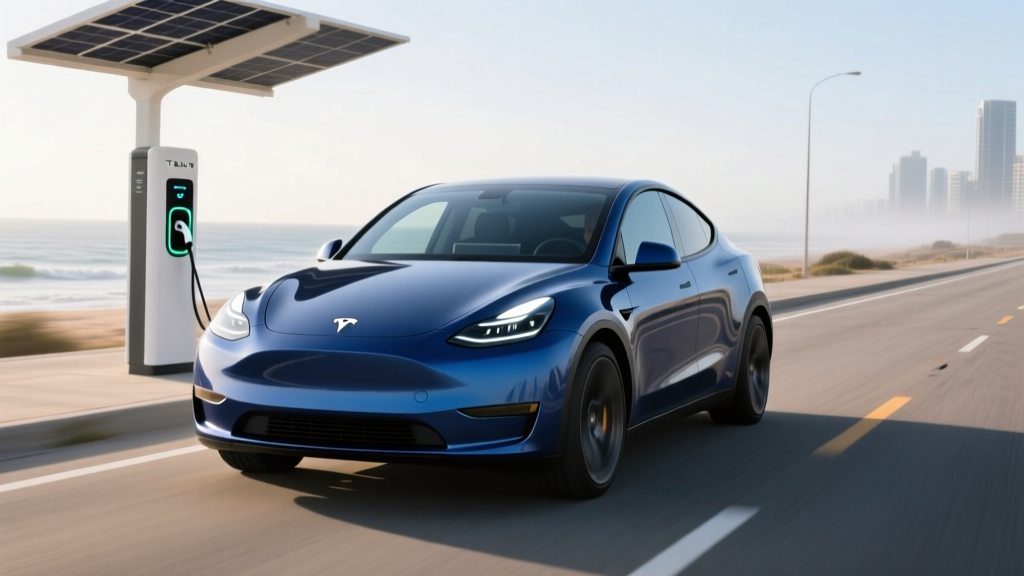
If you've been asking when will Model Y Performance be available in its refreshed "Juniper" form, you're not alone. Tesla began delivering the redesigned Model Y Long Range AWD in early 2025, but the high-output Performance variant has lagged behind — leaving enthusiasts and upgraders checking Tesla's configurator weekly. As of early 2026, Tesla has started limited deliveries of the new Model Y Performance in select markets, with broader U.S. availability expected to ramp through Q1–Q2 2026. Here's everything confirmed, estimated, and worth knowing before you place an order.
Release Timeline: When Can You Actually Order One?
Tesla's rollout of the Juniper-generation Model Y has followed a staggered pattern. The Long Range AWD launched first in U.S. and Asian markets in early 2025, followed by the Standard Range RWD. The Performance variant — historically the last to arrive in a Model Y generation cycle — began appearing in Tesla's international configurators (Australia, parts of Europe) in late 2025, with U.S. deliveries starting in limited batches in January 2026.
As of this writing, Tesla's U.S. configurator lists the Model Y Performance with an estimated delivery window of March–May 2026 for new orders placed today. This timeline has shifted multiple times, so treat it as approximate. Tesla does not publish firm production schedules, and delivery estimates can compress or extend based on Gigafactory Texas output and demand.
Key dates:
- Q1 2025: Refreshed Model Y Long Range AWD deliveries begin (U.S.)
- Mid-2025: Standard Range RWD and Long Range RWD added
- Q4 2025: Model Y Performance appears in Australian/European configurators
- Jan 2026: First U.S. Performance deliveries (limited)
- Q1–Q2 2026: Broader U.S. availability, estimated 4–8 week delivery window
2026 Model Y Performance: Full Specification Breakdown
| Specification | 2026 Tesla Model Y Performance |
|---|---|
| EPA Range (est.) | 303 miles |
| Battery Capacity | ~78.1 kWh usable (NMC chemistry) |
| Drivetrain | Dual-motor AWD |
| Horsepower | ~480 hp (combined, est.) |
| 0–60 mph | 3.5 seconds |
| Top Speed | 155 mph |
| Max DC Fast Charge | 250 kW (peak) |
| 10–80% DCFC Time | ~25 minutes |
| Level 2 Home Charging | 11.5 kW (~44 mi/hr) |
| Efficiency (MPGe) | ~111 MPGe combined (est.) |
| Base MSRP | $52,490 (+$1,390 dest.) |
| Battery Warranty | 8 years / 120,000 miles |
| Basic Warranty | 4 years / 50,000 miles |
Note: Tesla has not published a final EPA certification for the 2026 Model Y Performance as of early 2026. The figures above reflect Tesla's preliminary estimates and are consistent with the prior-generation Performance (303 mi EPA). Check fueleconomy.gov for the official rating once certified.
Charging Speed: DC Fast, Level 2, and the Charge Curve Reality
The 2026 Model Y Performance retains Tesla's proven charging architecture with a peak DC fast-charge rate of 250 kW on V3 Superchargers and compatible third-party CCS/NACS stations. Here's what that actually means in practice:
| Charging Level | Power (kW) | Speed (miles added/hr) | Notes |
|---|---|---|---|
| Level 1 (120V) | ~1.4 kW | ~3–5 mi/hr | Emergency/trickle only |
| Level 2 (240V, 48A) | 11.5 kW | ~44 mi/hr | Full overnight charge in ~7 hrs |
| DC Fast (V3 Supercharger) | 250 kW peak | ~1,000+ mi/hr (peak) | 10–80% in ~25 min |
| DC Fast (V4 Supercharger) | 250 kW peak | ~1,000+ mi/hr (peak) | Same vehicle-side limit |
Understanding the charge curve: The 250 kW peak is achieved only at a low state of charge (roughly 5–25% SoC) with a preconditioned battery. As the battery fills, the charge rate tapers — by 60% SoC you'll see roughly 120–150 kW, and above 80% it drops sharply to ~40–50 kW. This is why Tesla (and we) quote 10–80% times rather than 0–100%. Charging from 80–100% at a DC fast charger can add another 25–30 minutes; plan to unplug at 80% on road trips unless you need the final miles.
The Juniper Model Y uses the NACS (Tesla) connector natively. For non-Tesla chargers with CCS cables, you'll need a NACS-to-CCS adapter (Tesla sells one for ~$175). With the industry's shift to NACS through 2025–2026, native compatibility is expanding.
Pricing, Trims, and Federal Tax Credit Eligibility
The 2026 Tesla Model Y Performance carries a base MSRP of $52,490, plus Tesla's mandatory $1,390 destination fee, for an effective starting price of $53,880. This represents a notable price adjustment from the pre-refresh Performance, which listed at $52,490 before destination in its final 2024 model year.
| Cost Item | Amount |
|---|---|
| Base MSRP | $52,490 |
| Destination Fee | +$1,390 |
| Red Multi-Coat Paint (optional) | +$2,000 |
| FSD (Supervised) Package | +$8,000 |
| As-Tested (w/ paint + FSD) | $63,880 |
| Federal §30D Tax Credit (if eligible) | Up to $7,500 |
| Effective Price After Max Credit | ~$46,380 |
Does the Model Y Performance Qualify for the $7,500 Federal Tax Credit?
The short answer: it depends on your income, and the credit is available as a point-of-sale discount. Under current IRS §30D rules, the Model Y Performance is eligible for the full $7,500 clean vehicle credit, provided you meet all criteria:
- MSRP Cap: SUVs must be under $80,000 MSRP. The Model Y Performance at $52,490 clears this easily.
- Buyer Income Limits (MAGI): $150,000 single / $225,000 head of household / $300,000 married filing jointly. The credit phases out dollar-for-dollar above these thresholds.
- Battery Sourcing: At least 60% of battery component value must be manufactured or assembled in North America, and at least 50% of critical minerals must be sourced from the U.S. or FTA partners. Tesla's U.S.-built Model Y has historically met these thresholds, but exact 2026 compliance depends on supply-chain shifts — verify on fueleconomy.gov before purchasing.
- Point-of-Sale Transfer: As of 2024+, you can transfer the credit to the dealer (Tesla) at purchase, reducing your out-of-pocket cost by $7,500 immediately — no need to wait for tax filing.
- One Credit Per VIN: The credit applies once per vehicle. If you buy used, different rules (§25E) apply.
Important: Tax credit rules are subject to legislative change. Always confirm eligibility with a tax professional and check the IRS's current clean vehicle credit page before finalizing your order.
Performance, Efficiency, and Daily Driving Dynamics
The Model Y Performance exists to answer one question: can a practical family SUV also be genuinely quick? With an estimated 0–60 mph time of 3.5 seconds and roughly 480 combined horsepower from its dual-motor AWD setup, the answer is decisively yes. For context, that 0–60 time matches a Porsche 911 Carrera from two generations ago.
The Juniper refresh brings several driving-dynamic improvements over the pre-2025 Model Y:
- Adaptive damping: New frequency-selective dampers reduce the harsh ride that plagued earlier Model Y variants, particularly over sharp bumps and expansion joints.
- Improved NVH: Acoustic glass (front and rear), additional sound deadening, and redesigned motor mounts reduce cabin noise by an estimated 2–3 dB at highway speeds.
- Regenerative braking: Tesla's one-pedal driving remains well-calibrated, with smooth deceleration to a stop. Regen aggressiveness is not user-adjustable (unlike Hyundai/Kia EVs).
- Steering: Still variable-ratio electric power steering — improved feel over the prior generation, but not as communicative as a BMW iX or Porsche Macan EV.
Efficiency lands at an estimated 111 MPGe combined (roughly 30 kWh/100 mi), which is competitive for a dual-motor performance SUV but trails the Long Range AWD variant (~119 MPGe). Aggressive driving and cold weather will push consumption toward 35–38 kWh/100 mi.
Interior, Cargo, and Tech: The Juniper Upgrades
The Juniper refresh transforms the Model Y interior from spartan to genuinely premium — addressing the most common criticism of the pre-2025 model.
Cargo volume:
- Behind rear seats: 30.2 cu ft
- Rear seats folded: 72.1 cu ft
- Front trunk (frunk): 4.1 cu ft
Passenger space:
- Front legroom: 41.8 inches
- Rear legroom: 40.5 inches (improved with Juniper's recontoured rear seat)
- Front headroom: 40.8 inches
- Rear headroom: 38.4 inches
Tech highlights:
- 15.4-inch center touchscreen with Ryzen-based processor (fast response, smooth map rendering)
- New 8-inch rear-seat entertainment screen (HVAC and media control for rear passengers)
- Ambient lighting strip across the dashboard (a first for Model Y)
- Ventilated front seats (standard on Performance)
- Power-folding second-row seats (new for Juniper)
- Tesla Autopilot standard; Full Self-Driving (Supervised) available as an $8,000 option or $99/month subscription
Model Y Performance vs. Key Competitors
The Performance variant competes in a narrow but growing segment of high-output electric SUVs. Here's how it stacks up against the most relevant rivals available in 2026:
| Metric | Tesla Model Y Perf. | BMW iX M60 | Porsche Macan 4 EV | Ford Mustang Mach-E GT |
|---|---|---|---|---|
| EPA Range | 303 mi | 296 mi | 288 mi | 292 mi |
| 0–60 mph | 3.5s | 3.6s | 3.3s | 3.3s |
| Max DC Charge | 250 kW | 195 kW | 270 kW | 150 kW |
| Starting MSRP | $52,490 | $91,095 | $85,990 | $59,995 |
| Federal Credit | $7,500 | $7,500 | $7,500 | $7,500 |
The Model Y Performance's advantage is clear: it delivers near-supercar acceleration and best-in-class range at a price $30,000–$40,000 below its European competitors. The Mach-E GT is the closest rival on price, but trails in charging speed and range. If build quality, dealer service, or driving refinement are top priorities, the BMW iX and Porsche Macan justify their premiums. If value and efficiency lead your decision, the Model Y Performance is difficult to beat.
Pros and Cons: An Honest Assessment
✓ Pros
- 3.5-second 0–60 at a sub-$55K starting price — unmatched value for performance
- 303-mile EPA range with best-in-class Supercharger network access
- 250 kW DC fast charging with mature, reliable infrastructure
- Juniper refresh finally addresses ride quality and cabin noise
- Over-the-air updates continue to add features post-purchase
- Class-leading cargo space for the segment (72.1 cu ft folded)
- Full $7,500 federal tax credit eligibility (with income/sourcing caveats)
✗ Cons
- No Apple CarPlay or Android Auto — Tesla's UI is the only option
- Turn-signal stalks removed in Juniper; steering-wheel buttons take adjustment
- Service center availability still lags traditional OEMs in many markets
- FSD (Supervised) remains Level 2 despite the $8,000 price tag
- Single-zone rear climate control (rear passengers adjust via screen only)
- Availability remains limited; delivery estimates have shifted multiple times
- Insurance premiums run 15–30% higher than comparable gas SUVs
Who Should Buy the Model Y Performance?
The 2026 Model Y Performance is best suited for:
- Performance-minded families who need rear seats and cargo space but don't want to sacrifice acceleration
- Existing Tesla owners upgrading from a Model 3 or older Model Y who want the latest platform and ride improvements
- Road-trip frequent flyers who benefit from the Supercharger network's reliability and 250 kW charging speeds
- Tax-credit-eligible buyers who can bring the effective price below $47,000 — at that number, the value proposition is exceptional
Consider alternatives if:
- You need towing capacity beyond 3,500 lbs (the Rivian R1S or Ford F-150 Lightning are better choices)
- You want a traditional dealer service experience with loaner cars and nearby service centers
- Apple CarPlay is non-negotiable for your daily workflow
Frequently Asked Questions
When will the Model Y Performance be widely available in the U.S.?
Tesla began limited U.S. deliveries in January 2026. Broader availability is expected through Q1–Q2 2026, with current order-to-delivery windows of approximately 4–8 weeks. Check Tesla.com for the latest estimate, as production timing shifts regularly.
What is the real-world highway range of the Model Y Performance?
While the EPA estimate is 303 miles, sustained highway driving at 70–75 mph typically yields 255–275 miles. In cold weather (below 30°F), expect 215–240 miles due to heating loads and battery chemistry limitations. Preconditioning the battery before departure helps recover some of this loss.
How long does it take to charge the Model Y Performance at home?
With an 11.5 kW Level 2 home charger (48A, 240V), a full charge from 10% to 100% takes approximately 7 hours. Most owners charge overnight and wake to a full battery daily. A standard 120V outlet adds only 3–5 miles per hour — adequate for topping off, not for daily use.
Does the 2026 Model Y Performance qualify for the full $7,500 federal tax credit?
The Model Y Performance is eligible for the full $7,500 §30D credit, if you meet IRS income caps ($150K single / $300K joint) and the vehicle's battery sourcing meets current critical-mineral and component requirements. The credit can be applied as a point-of-sale discount. Verify current eligibility at irs.gov before ordering.
Is the Model Y Performance worth it over the Long Range AWD?
If you prioritize acceleration (3.5s vs 4.8s 0–60), adaptive suspension tuning, ventilated seats, and Track Mode, the Performance justifies its ~$4,000 premium. If you primarily commute and value maximum range over performance, the Long Range AWD (EPA 320+ mi) is the more efficient and cost-effective choice.
What warranty covers the Model Y Performance battery?
Tesla provides an 8-year / 120,000-mile warranty on the battery and drive units, guaranteeing a minimum of 70% capacity retention over that period. The basic vehicle warranty is 4 years / 50,000 miles. This warranty is competitive with BMW (8yr/100K) and exceeds most conventional powertrain warranties.
Sources: Tesla Model Y specifications, fueleconomy.gov, IRS Clean Vehicle Credits, NHTSA. All pricing and specifications reflect the most current data available as of early 2026 and are subject to change by the manufacturer.