Quick Answer: What the Cadillac EV Production Cut in Tennessee Means for You
General Motors temporarily reduced Cadillac EV production at its Spring Hill, Tennessee assembly plant in early 2026, citing slower-than-expected demand for the Cadillac Lyriq and the newly launched Optiq crossover. For buyers, this means longer wait times for custom orders (now 8–14 weeks vs. the prior 4–6 weeks), potential dealer markup on in-stock units, and fewer lease incentive offers. However, it also creates leverage for negotiation on existing inventory and may push GM to sweeten federal §30D tax credit point-of-sale transfers through dealer discounts. If you're shopping a Cadillac EV right now, in-stock units are your best bet — and you should compare total cost of ownership carefully against gas and hybrid alternatives before committing.
Why GM Cut Cadillac EV Production in Tennessee
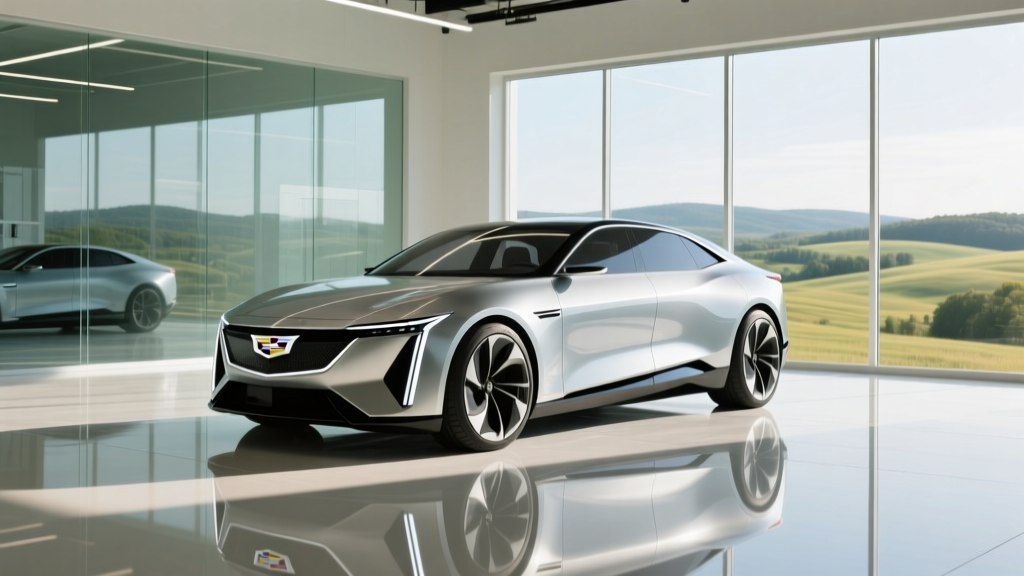
The Spring Hill Manufacturing plant, which GM retooled at a cost of roughly $2 billion to produce vehicles on the Ultium platform, builds the Cadillac Lyriq and the smaller Optiq. In Q1 2026, GM announced a temporary shift reduction — moving from three shifts to two — effectively cutting output by an estimated 30–35%. The reasons are layered:
- Demand softening in the luxury EV segment: The Lyriq, starting at $58,590 for the 2026 Luxury trim, competes against the BMW iX, Audi Q8 e-tron, and Tesla Model X. While the Lyriq earned strong initial reviews, repeat purchase rates and conquest sales from non-GM owners have plateaued.
- Inventory buildup: As of February 2026, dealer lots carried an estimated 65–75 days of Lyriq supply, above the 45-day target for luxury brands.
- Optiq ramp-up overlap: The sub-$50,000 Optiq launched in late 2025, and GM is recalibrating the production mix between the two models.
- Broader EV market recalibration: Across the industry, automakers are adjusting EV output to match actual consumer adoption curves rather than earlier projections.
This isn't a plant closure. Spring Hill continues to build ICE and hybrid Cadillac models alongside EVs, and GM has stated the shift reduction is "temporary" — but "temporary" in auto manufacturing can mean 6–12 months.
Cadillac Lyriq and Optiq: 2026 Specs at a Glance
Before evaluating the buying landscape, here are the numbers that matter for the two Cadillac EVs built in Tennessee:
| Spec | 2026 Cadillac Lyriq (Luxury AWD) | 2026 Cadillac Optiq (Sport FWD) |
|---|---|---|
| EPA Range | 314 miles | 302 miles |
| Real-World Range (highway/cold) | ~250–275 miles | ~240–265 miles |
| Battery Capacity | 102 kWh usable (NMC) | 85 kWh usable (NMC) |
| Peak DC Fast Charge | 190 kW | 150 kW |
| 10–80% DC Charge Time | ~30 minutes | ~34 minutes |
| Level 2 Charge Rate | 19.2 kW (AC) | 11.5 kW (AC) |
| Horsepower | 500 hp | 300 hp |
| 0–60 mph | 4.6 seconds | 6.5 seconds |
| Base MSRP | $58,590 | $47,990 |
| Battery Warranty | 8 years / 100,000 miles | 8 years / 100,000 miles |
| MPGe (combined) | 89 MPGe | 95 MPGe |
Sources: EPA fueleconomy.gov, Cadillac official specs
Real-World Range Reality: The Lyriq's EPA-estimated 314 miles assumes mixed driving at moderate temperatures. On a 75 mph highway run in 35°F weather, expect roughly 230–250 miles before needing a charger. The Optiq's lighter weight helps it hold efficiency better in cold, but its smaller battery means fewer total buffer miles. Plan road trips around 200-mile segments for comfort.
EV vs. Gas vs. Hybrid: Cost Comparison for Cadillac Buyers
Many cross-shoppers are weighing the Lyriq against the Cadillac XT5 (gas) or XT6 (gas), and increasingly against luxury hybrids. Here's how the numbers stack up over 5 years and 75,000 miles:
| Cost Factor | 2026 Lyriq AWD | 2026 XT5 AWD (Gas) | 2026 Lexus RX 350h (Hybrid) |
|---|---|---|---|
| Base MSRP | $58,590 | $49,395 | $53,200 |
| Est. §30D Tax Credit | Up to $7,500* | $0 | $0 |
| Effective Purchase Price | ~$51,090 | $49,395 | $53,200 |
| Fuel/Energy (5 yr / 75k mi) | $5,850 (home L2 avg) | $11,250 (22 mpg, $3.30/gal) | $7,875 (36 mpg, $3.30/gal) |
| Maintenance (5 yr) | ~$1,800 | ~$4,200 | ~$3,600 |
| Insurance (5 yr est.) | ~$12,500 | ~$9,800 | ~$10,200 |
| Est. Depreciation (5 yr) | ~$22,000 | ~$18,500 | ~$19,000 |
| 5-Year Total Cost | ~$93,240 | ~$93,145 | ~$93,875 |
* §30D credit eligibility depends on MSRP caps (vans/SUVs/trucks: $80,000), buyer income limits ($300k joint / $150k single), and battery critical-mineral sourcing. Verify current eligibility on IRS.gov. Point-of-sale transfer is available at participating dealers.
The takeaway: the Lyriq's higher insurance premiums and steeper depreciation nearly erase its fuel and maintenance savings over five years. The tax credit is the swing factor — if you qualify for the full $7,500, the Lyriq comes out slightly ahead. If you don't (due to income caps or battery sourcing changes), the XT5 or a luxury hybrid may cost less to own.
How the Production Cut Affects Your Buying Strategy
Counter-intuitively, a production cut can create both obstacles and opportunities. Here's how to navigate it:
Decision Framework: Buying a Cadillac EV During the Tennessee Production Cut
- IF you need a vehicle within 30 days: Shop existing dealer inventory. With 65–75 days of supply, many dealers have in-stock Lyriqs and are motivated to negotiate. Expect 3–7% below MSRP on 2025 carryover units; 2026 models are firmer at 0–3% below MSRP.
- IF you want a custom order (specific color/trim/options): Expect 8–14 weeks vs. the prior 4–6. Place the order now and lock in the current §30D credit eligibility, as battery sourcing rules can shift mid-year.
- IF you're considering leasing: GM has pulled back some lease incentives due to oversupply. Current Lyriq lease deals average $649/month (36 mo, $4,500 down) — compare this to BMW iX leases at ~$599/month. The Optiq leases for ~$499/month, which is competitive.
- IF you're cross-shopping Tesla or BMW: The production cut signals GM is struggling to match Tesla's pricing power. The Model Y Long Range starts at $47,990 with 320 miles EPA and faster 250 kW Supercharging. The BMW iX xDrive50 starts at $87,250 but offers superior build quality and 324 miles EPA.
- IF you live in a charging desert (rural areas, limited DCFC access): The Lyriq's 190 kW peak charge rate is solid but not class-leading. More critically, GM's Ultium charging network partnership with EVgo and Pilot/Flying J is still expanding. Check PlugShare for DCFC density within 30 miles of your home before committing.
Real-World Ownership Considerations
Beyond the sticker price, here's what first-time Cadillac EV buyers frequently underestimate:
Home Charging Access Is Non-Negotiable
The Lyriq's 19.2 kW Level 2 onboard charger is among the fastest in its class — it can add roughly 52 miles of range per hour on a 240V/80A circuit. But that requires a dedicated 100-amp circuit and a hardwired Level 2 station. Installation costs typically run $1,200–$3,500 depending on panel capacity and conduit length. If your home has a 100-amp main panel, a panel upgrade to 200 amps can add $2,000–$4,000. Without home charging, relying on public DCFC at $0.35–$0.55/kWh raises your per-mile cost from ~$0.05 to ~$0.14, eliminating most of the fuel-cost advantage.
Cold-Weather Range Loss Is Real
NMC batteries, like those in the Lyriq and Optiq, lose roughly 20–30% of range in sustained sub-freezing temperatures. The Lyriq includes a heat pump (standard on 2026 models), which mitigates cabin heating losses but doesn't fully eliminate the cold-weather penalty. If you live in the Upper Midwest or Northeast, plan around 220–240 usable winter miles.
Insurance Costs Run 25–35% Higher
EV insurance premiums are elevated due to higher repair costs (specialized body shops, battery replacement risk, and aluminum-intensive structures). Expect Lyriq insurance to run $2,400–$2,800/year depending on your state and driving record — vs. $1,800–$2,100 for an XT5. Get quotes before purchasing.
Charging Curve Taper Matters on Road Trips
The Lyriq peaks at 190 kW but only between roughly 10–40% State of Charge. Above 60%, the charge rate tapers to ~100 kW, and above 80% it drops to ~50 kW. A realistic 10–80% session takes about 30 minutes, but a 10–95% session takes closer to 50 minutes. Plan your road-trip stops accordingly — charging to 95% is rarely worth the extra 20 minutes at the stall.
Common Misconceptions About Cadillac EVs and the Production Cut
| Myth | Fact |
|---|---|
| "The production cut means Cadillac is discontinuing EVs." | False. GM invested $2 billion in Spring Hill's EV retool and has confirmed the Lyriq and Optiq remain core products. The shift reduction is a demand-response measure, not a strategic retreat. |
| "I won't be able to get parts or service if production slows." | Parts supply is unaffected. GM's Ultium platform shares components across multiple models, and the service network remains fully operational. Battery warranty claims are honored regardless of production volume. |
| "The §30D tax credit is going away because of the production cut." | The §30D credit is governed by IRS rules on battery sourcing, MSRP caps, and buyer income — not by production volumes. However, sourcing requirements tighten periodically, so eligibility can change. Always verify on IRS.gov. |
| "A production cut means dealers will slash prices dramatically." | Some negotiation room exists (3–7% off on 2025 carryovers), but Cadillac is managing supply to avoid fire-sale pricing. Don't expect 15–20% discounts. |
| "The Lyriq charges as fast as a Tesla on Superchargers." | The Lyriq's 190 kW peak is slower than the Tesla Model Y's ~250 kW peak. Tesla Superchargers also tend to have higher uptime (97%+ vs. ~85% for some third-party networks). NACS adapter access to Superchargers helps, but the charge-rate gap remains. |
Should You Buy a Cadillac EV Now or Wait?
The Tennessee production cut creates a specific window of opportunity — but only for the right buyer. Here's the bottom line:
Buy Now If:
- You find an in-stock 2025 or early 2026 Lyriq at 3%+ below MSRP and qualify for the full $7,500 §30D credit.
- You have confirmed home Level 2 charging (or can install it within your budget).
- Your daily commute is under 80 miles round-trip, and you take fewer than four 300+ mile road trips per year.
- You value the Lyriq's 33-inch LED display, Super Cruise Level 2 driver-assist, and cabin refinement over raw efficiency or charge speed.
Wait If:
- You need a custom configuration and can't tolerate a 3–4 month delivery window.
- You live in an area with sparse DCFC infrastructure and no realistic home-charging option.
- You're considering the Optiq and want GM to reintroduce lease incentives (likely in Q3–Q4 2026 if inventory remains high).
- You're weighing a 2027 model-year refresh, which industry analysts expect to include a mild range bump (potentially 330+ miles for the Lyriq) and updated infotainment software.
Frequently Asked Questions
Is the Cadillac Lyriq still being built in Tennessee?
Yes. Spring Hill Manufacturing continues to build the Lyriq and Optiq, but on a reduced two-shift schedule as of early 2026. Production has not stopped, and GM has not announced any permanent cuts.
Will the production cut affect my Lyriq's resale value?
Potentially, but modestly. Reduced production can actually support resale values by limiting new supply. The larger risk to Cadillac EV resale is broader market depreciation trends — luxury EVs currently lose 45–55% of value over 5 years, vs. 35–40% for luxury gas vehicles.
Can I still get the $7,500 federal tax credit on a Cadillac Lyriq?
Eligibility depends on your adjusted gross income (under $300,000 joint / $150,000 single), the vehicle's MSRP (under $80,000 for SUVs), and battery component and critical-mineral sourcing requirements that tighten annually. The Lyriq has qualified for partial or full credit in recent quarters, but always confirm current eligibility on IRS.gov and with your dealer before signing.
Does the Cadillac Lyriq use NACS or CCS for charging?
The 2026 Lyriq ships with a CCS1 port. GM provides a NACS adapter for access to Tesla Supercharger stations. Native NACS ports are expected on the 2027 model year. The adapter supports up to the Lyriq's 190 kW peak rate.
What is Super Cruise, and is it self-driving?
Super Cruise is a SAE Level 2 driver-assistance system. It provides hands-free driving on pre-mapped divided highways (over 750,000 miles of compatible roads in North America), but the driver must remain attentive — a camera monitors your eyes, and the system will disengage if you look away. It is not autonomous driving (Level 4/5). You are legally responsible for the vehicle at all times.
How much does it cost to charge a Lyriq at home vs. public chargers?
At the US average residential electricity rate of ~$0.16/kWh, fully charging the Lyriq's 102 kWh battery costs roughly $16.32, yielding about $0.05 per mile. Public DC fast charging averages $0.35–$0.55/kWh, or $0.11–$0.17 per mile. Home charging is essential for the cost advantage.
For the latest EPA efficiency data, visit fueleconomy.gov. For safety ratings, check NHTSA and IIHS.