Why Tesla's Net Promoter Score Matters for EV Buyers
When shoppers search for "Tesla NPS," they're usually hunting for a signal that cuts through marketing noise: do actual owners recommend their cars? Net Promoter Score (NPS) measures exactly that — the percentage of owners who would recommend a vehicle minus those who wouldn't. For Tesla, this metric has historically been a strong suit, though recent years show it evolving as the EV market matures and competition intensifies.
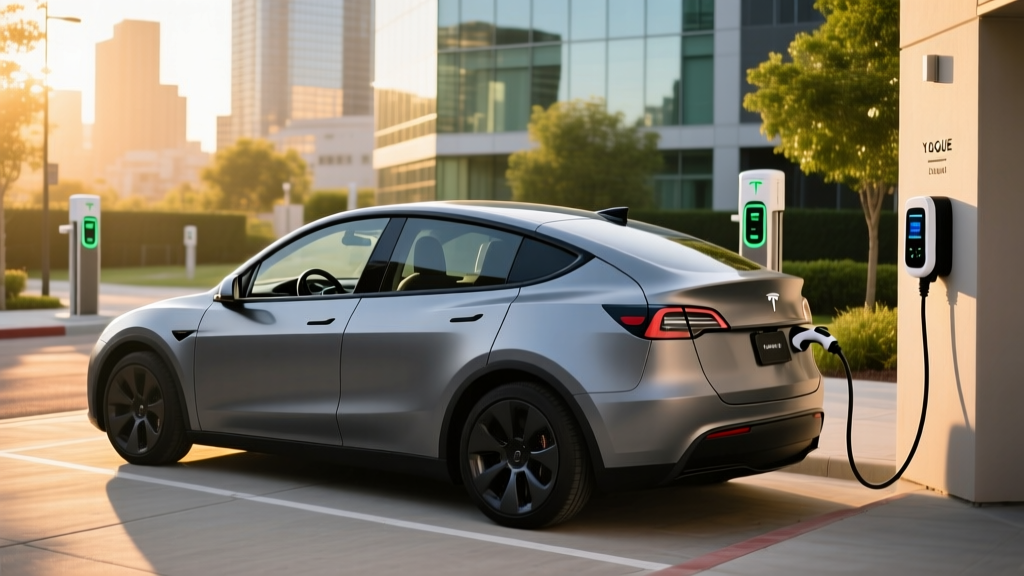
The Tesla Model Y remains the company's highest-volume vehicle and the best-selling EV globally. For 2025-2026, it continues to anchor Tesla's lineup with competitive range, access to the Supercharger network, and over-the-air updates. But does owner enthusiasm match the sales numbers? This review examines the Model Y through the lens of owner satisfaction, real-world performance data, and total cost of ownership — the factors that actually drive NPS scores.
2025-2026 Tesla Model Y: Core Specifications at a Glance
| Spec | Long Range AWD | Performance AWD |
|---|---|---|
| EPA Range | 320 miles | 285 miles |
| Battery (usable) | ~75 kWh (NMC) | ~75 kWh (NMC) |
| Drivetrain | Dual-Motor AWD | Dual-Motor AWD |
| Horsepower | 384 hp | 456 hp |
| 0-60 mph | 4.8 sec | 3.5 sec |
| Top Speed | 125 mph | 155 mph |
| Peak DC Charge Rate | 250 kW | 250 kW |
| 10-80% DCFC Time | ~27 min | ~27 min |
| Level 2 Rate | 11.5 kW (~44 mi/hr) | 11.5 kW (~44 mi/hr) |
| EPA Efficiency | 122 MPGe / 28 kWh/100mi | 111 MPGe / 30 kWh/100mi |
| Cargo (rear seats up) | 30.2 cu ft | 30.2 cu ft |
| Cargo (seats folded) | 72.1 cu ft | 72.1 cu ft |
| Base MSRP | $44,990 | $48,990 |
| Battery Warranty | 8 yr / 120,000 mi | 8 yr / 120,000 mi |
Source: fueleconomy.gov, Tesla specifications. Prices reflect 2025 model year MSRP before destination charges and applicable incentives.
Real-World Range: What the EPA Sticker Doesn't Tell You
Real-World Highway (70 mph, moderate climate): ~260-280 miles
Cold Weather (below 30°F): ~210-240 miles
City/Commuter Driving with Regen: ~300-320 miles
The Model Y Long Range's 320-mile EPA estimate is achievable in mixed suburban driving with liberal regenerative braking. Highway driving at 70+ mph drops efficiency to roughly 280 Wh/mile, cutting range to approximately 265 miles. Cold weather compounds this: lithium-ion cells lose efficiency below freezing, and cabin heating draws significant energy even with Tesla's heat pump system. Expect 20-30% range reduction in sustained sub-30°F conditions.
The Performance trim sacrifices 35 miles of EPA range (285 mi) for its sportier tuning and stickier tires. Real-world highway range typically lands around 235-250 miles. For road-trippers, this means more frequent Supercharger stops — roughly every 200 miles in practice rather than every 250.
Charging Speed: Supercharger Network Advantage
| Charging Level | Power | Rate | Notes |
|---|---|---|---|
| Level 1 (120V) | ~1.4 kW | ~5 mi/hr | Emergency/trickle only |
| Level 2 (240V home) | 11.5 kW | ~44 mi/hr | Full charge in ~8 hours |
| DC Fast (V3 Supercharger) | 250 kW peak | ~175 mi in 15 min | 10-80% in ~27 min |
| DC Fast (V4 Supercharger) | 250 kW peak | ~175 mi in 15 min | Newer stalls, same curve |
| CCS Adapter (third-party DCFC) | Up to 250 kW | Varies by station | Requires $175 Tesla CCS adapter |
Tesla's 250 kW peak charge rate is competitive but not class-leading — the Hyundai Ioniq 5 and Porsche Taycan both sustain higher rates longer. The Model Y's charge curve peaks around 10-20% State of Charge, then tapers progressively: expect ~150 kW at 50% SoC and ~60 kW at 80%. This is typical for NMC chemistry without advanced thermal preconditioning.
The real advantage is network reliability. Tesla Superchargers consistently report 99%+ uptime, while third-party networks like Electrify America and EVgo still struggle with broken stalls and payment friction. For 2025-2026, Tesla has opened select Supercharger stalls to non-Tesla EVs via the NACS standard, but Tesla owners retain priority pricing and seamless plug-and-charge integration.
Home charging on a 48-amp Level 2 circuit (requiring a 60-amp breaker) delivers roughly 44 miles of range per hour. Most owners charge overnight and rarely visit public chargers except on road trips. Installation costs range from $500-$2,000 depending on panel capacity and conduit runs — budget $1,200 as a typical national average.
Pricing, Trims, and Federal Tax Credit Eligibility
| Trim | Base MSRP | After §30D Credit (est.) | Destination | Total Est. |
|---|---|---|---|---|
| Long Range AWD | $44,990 | $37,490 | $1,390 | $38,880 |
| Performance AWD | $48,990 | $41,490 | $1,390 | $42,880 |
Federal tax credit caveat: The $7,500 §30D credit is not automatic. Per IRS guidelines, eligibility requires:
- Buyer AGI below $150,000 (single) / $300,000 (joint)
- Vehicle MSRP below $80,000 (SUVs/vans) — both Model Y trims qualify
- Battery components and critical minerals sourced from US/FTA partners (Tesla's LFP cells from CATL may disqualify certain configurations — verify VIN-specific eligibility at fueleconomy.gov)
- Vehicle assembled in North America (Model Y: Fremont, CA or Austin, TX)
As of 2025, the point-of-sale transfer option allows dealers to apply the credit at purchase rather than waiting for tax filing. However, battery sourcing rules have tightened, and some Model Y configurations with LFP batteries (sourced from China) may not qualify for the full $7,500. Always verify your specific VIN on the DOE's tax credit lookup tool before committing.
Owner Satisfaction: Decoding Tesla's NPS Trajectory
Tesla's Net Promoter Score has historically hovered between 45-55, placing it in the "excellent" range for automotive brands. For context, traditional luxury automakers typically score 20-40, while mass-market brands land in the 10-30 range. Tesla's elevated NPS reflects:
- Supercharger ecosystem: Owners consistently cite reliable, fast charging as the top satisfaction driver
- Over-the-air updates: Feature additions post-purchase (new UI, games, efficiency tweaks) create ongoing value
- Performance-per-dollar: 4.8-second 0-60 in a $45K SUV still outpaces most ICE competitors
- Minimal maintenance: No oil changes, fewer brake replacements (regen saves pads), lower service costs
However, NPS has shown softening since 2022 due to:
- Service center wait times: Rapid fleet growth outpaced service capacity; some owners report 2-4 week waits for collision repair
- Build quality variability: Panel gaps, paint imperfections, and interior rattles still surface in owner forums, though improving year-over-year
- FSD unmet expectations: Full Self-Driving (Supervised) remains a Level 2 driver-assist system despite its name and $8,000-$15,000 price tag, frustrating buyers who expected autonomy
- Increased competition: Rivals like the Hyundai Ioniq 5, Ford Mustang Mach-E, and BMW iX now offer compelling alternatives, raising the bar for fit-and-finish and dealer service
Consumer Reports' 2025 owner satisfaction survey places Tesla in the top 5 brands overall, though reliability rankings remain mid-pack. The Model Y specifically scores well for driving enjoyment and value but loses points for ride comfort and cabin noise relative to luxury competitors.
Pros, Cons, and the Competition
Pros
- Supercharger network reliability (99%+ uptime)
- Class-leading cargo volume (72.1 cu ft)
- Strong efficiency (122 MPGe Long Range)
- Instant OTA updates add features post-purchase
- Competitive 0-60 times for the price
- Heat pump standard (improves cold-weather range)
Cons
- Service center capacity still lags fleet growth
- Ride quality firm; road noise noticeable at highway speed
- No Apple CarPlay / Android Auto
- FSD is Level 2 only — not autonomous despite naming
- Build quality improving but not luxury-grade
- DCFC taper above 50% SoC slower than Ioniq 5/Taycan
Key competitors to cross-shop:
- Hyundai Ioniq 5: Faster 10-80% charging (18 min at 350 kW), more comfortable ride, Apple CarPlay, but smaller Supercharger-equivalent network access
- Ford Mustang Mach-E: Similar range (312 mi Extended Range), NACS access to Superchargers, more traditional interior ergonomics
- BMW iX xDrive50: Superior luxury and quietness, 324 mi range, but $85K+ MSRP (no §30D credit due to price cap)
Who Should Buy the Tesla Model Y?
- You road-trip frequently and want the most reliable DC fast-charging network
- You value cargo space (72.1 cu ft beats most midsize SUVs)
- You want strong performance without a luxury price tag
- You're comfortable with a minimalist, screen-centric interior
- You can charge at home and want to minimize public charging dependency
- You prioritize a plush, quiet ride (consider BMW iX or Mercedes EQB)
- You need Apple CarPlay/Android Auto integration
- You want a traditional dealership service experience
- You expect Full Self-Driving to be truly autonomous (it's not — SAE Level 2 only)
Frequently Asked Questions
What is Tesla's current Net Promoter Score?
Tesla does not publish official NPS figures, but third-party surveys (including Consumer Reports and independent EV owner polls) estimate Tesla's NPS between 45-55 as of 2025. This is high for automotive but has softened from peaks above 60 in 2019-2020 as competition intensifies and service challenges persist.
Does the Model Y qualify for the full $7,500 federal tax credit?
It depends on your specific VIN and buyer income. The Model Y is assembled in the US and falls under the $80,000 SUV MSRP cap, but battery critical-mineral sourcing rules may reduce or eliminate the credit for certain battery packs. Verify eligibility at fueleconomy.gov using your VIN before purchase.
How long does the Model Y battery last?
Tesla warranties the battery for 8 years / 120,000 miles with a minimum 70% capacity retention threshold. Real-world data from high-mileage owners suggests 10-15% degradation at 100,000 miles for NMC packs. LFP packs (in some RWD trims) degrade more slowly but offer less energy density.
Is Tesla's FSD actually self-driving?
No. Full Self-Driving (Supervised) is an SAE Level 2 driver-assist system. It can handle highway lane-keeping, on-ramps, and some city streets, but the driver must remain fully engaged with hands on the wheel and eyes on the road at all times. True autonomous driving (Level 4) is only available via robotaxi services like Waymo in limited geofenced areas.
How does Model Y efficiency compare to gas SUVs?
At 122 MPGe (Long Range), the Model Y uses roughly $0.04-$0.06 per mile on average US electricity rates ($0.16/kWh). A comparable gas SUV getting 25 MPG at $3.50/gallon costs $0.14/mile — a 2-3x fuel cost advantage for Tesla. Over 15,000 annual miles, that's $1,200-$1,500 in annual fuel savings.