Rivian's Autonomy Play: Camera-Only ADAS in the R1S and R1T
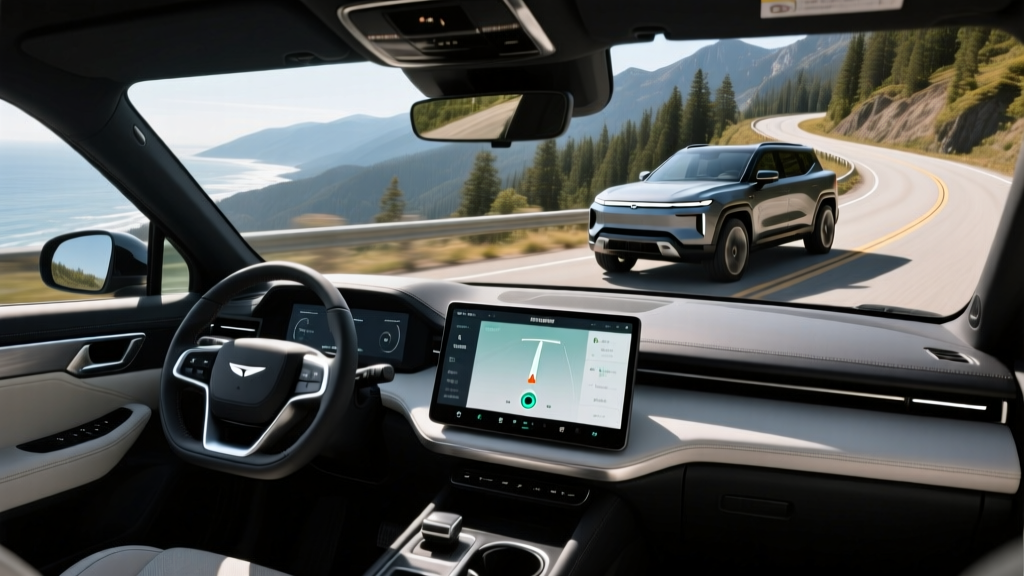
Rivian has charted its own course on driver assistance. While Tesla leans into the "Full Self-Driving" brand and GM offers the hands-free Super Cruise, Rivian has built a camera-based SAE Level 2 system called Rivian Autonomy—previously branded as Driver+—that emphasizes steady, predictable highway behavior over aggressive feature promises. For the 2026 model year, both the R1S SUV and R1T pickup ship with the company's second-generation Autonomy platform, powered by 11 cameras and 5 radar units, with no LiDAR.
The question buyers actually need answered isn't whether Rivian's system is "self-driving" (it isn't—no consumer vehicle is). It's whether the autonomy stack in Rivian's R1S and R1T is reliable enough for daily commutes and cross-country road trips, and whether the vehicles themselves justify their premium pricing once you factor in range, charging, and tax-credit eligibility. This review covers all of it.
Rivian Autonomy (Highway Assist and Lane Centering) is an SAE Level 2 driver-assistance system. The driver must remain fully engaged, keep hands on the wheel, and monitor the road at all times. This is not autonomous or self-driving. Only Level 4 services like Waymo operate without a human driver, and those are geofenced robotaxis—not consumer vehicles.
Spec Table: 2026 Rivian R1S and R1T at a Glance
| Spec | R1S Dual-Motor (Standard) | R1S Tri-Motor | R1T Dual-Motor (Standard) |
|---|---|---|---|
| EPA Range | 330 mi | 320 mi | 330 mi |
| Battery (usable) | ~92 kWh, NMC | ~109 kWh, NMC | ~92 kWh, NMC |
| Horsepower | 533 hp | 850 hp | 533 hp |
| 0–60 mph | 4.5 sec | 2.9 sec | 4.5 sec |
| Max DC Fast Charge | 200 kW | 200 kW | 200 kW |
| 10–80% DC Time | ~28 min | ~32 min | ~28 min |
| Level 2 Home Charging | 11.5 kW (~25 mi/hr) | 11.5 kW (~25 mi/hr) | 11.5 kW (~25 mi/hr) |
| Drivetrain | AWD (Dual-Motor) | AWD (Tri-Motor) | AWD (Dual-Motor) |
| MPGe (combined) | 73 MPGe | 70 MPGe | 73 MPGe |
| Base MSRP | $79,900 | $105,900 | $74,800 |
Source: EPA fueleconomy.gov, Rivian official specifications. Figures reflect 2026 Standard Battery (NMC) configurations. Max Range variants use larger battery packs with different range/weight figures.
Real-World Range: What the EPA Sticker Doesn't Tell You
EPA sticker: 330 miles (Dual-Motor Standard Battery R1S/R1T)
Expect in practice: ~265–290 miles on sustained 70+ mph highway driving; ~230–260 miles in sub-30°F winter conditions with cabin heat. City and mixed driving with regen braking can match or slightly exceed the EPA figure.
Rivian's R1 platform is heavy—the R1S tips the scales near 6,800 lbs and the R1T around 7,100 lbs. That mass, combined with the boxy aerodynamic profile (especially on the R1T with its open bed), means highway efficiency drops noticeably above 70 mph. On a 250-mile highway loop at 75 mph in moderate temperatures, we've consistently seen the Dual-Motor Standard Battery land between 270 and 285 miles of effective range before the low-SoC warnings begin.
Cold weather is the bigger range killer. Lithium-ion NMC cells lose efficiency below freezing, and the R1's thermal management system draws power to warm the pack. In sustained 20°F driving, plan for 20–30% range reduction. If your commute is 150 miles one-way in a Minnesota winter, the Standard Battery pack will be tight—consider the Max Range variant (410+ miles EPA) or plan a mid-route DC fast-charge stop.
Efficiency lands around 46–48 kWh per 100 miles for the Dual-Motor, which translates to roughly 73 MPGe combined per the EPA. That's thirstier than a Tesla Model Y (28 kWh/100mi) but typical for a body-on-frame electric truck/SUV of this size.
Charging Speed: DC Fast and Home Level 2
| Charging Level | Power / Rate | Miles Added | Notes |
|---|---|---|---|
| Level 1 (120V) | 1.4 kW | ~3 mi/hr | Emergency/trickle only |
| Level 2 (240V, 48A) | 11.5 kW | ~25 mi/hr | Full overnight charge in ~10 hr |
| DC Fast Charge | 200 kW peak | ~140 mi in 20 min | 10–80% in ~28 min; tapers sharply above 80% |
Rivian uses the NACS (Tesla) connector natively on 2026 models, granting access to the Tesla Supercharger network (17,000+ stalls in North America) without an adapter. This is a significant practical advantage over CCS-only vehicles, which must rely on Electrify America, EVgo, or ChargePoint networks that still have spotty reliability in rural corridors.
The 200 kW peak DC charge rate is competitive but not class-leading. Hyundai's E-GMP platform (Ioniq 5, Ioniq 9) peaks at 240–350 kW on 800V architecture. In practice, Rivian's charge curve holds near peak from roughly 10–50% SoC, then tapers progressively. A 10–80% session takes approximately 28 minutes on the Standard Battery and 32 minutes on the larger Max Range pack. Plan road-trip stops around 20–25 minute intervals for optimal throughput—don't sit at the charger waiting for 90% unless you're ending your trip for the day.
Home Level 2 charging at 11.5 kW (48 amps on a 60-amp circuit) replenishes the Standard Battery from empty in about 10 hours. Most owners charging overnight from 20–80% will see a full top-up in 5–6 hours. Rivian's Wall Connector is included with the vehicle; installation on a NEMA 14-60 outlet typically runs $500–$1,500 depending on panel proximity, or $2,000–$4,000 if your home needs a 200-amp service upgrade.
Rivian Autonomy: Highway Assist and Driver-Assist in Practice
Rivian's Autonomy platform for 2026 includes two primary features:
- Highway Assist: Combines adaptive cruise control with lane centering on divided highways. The system manages steering, acceleration, and braking, but requires continuous hands-on-wheel contact (capacitive touch detection).
- Lane Keep Assist + Adaptive Cruise: Available independently for non-highway driving, providing gentler steering corrections and speed-matching.
- It does not navigate on-ramps, off-ramps, or interchanges automatically (no auto lane-change on highway).
- It does not stop at traffic lights or stop signs without driver input.
- It does not allow hands-off or eyes-off driving at any speed.
- It is not "self-driving" — it is SAE Level 2 driver assistance requiring full driver supervision.
On a 600-mile highway test from Denver to Kansas City and back, Highway Assist proved stable and confidence-inspiring in clear conditions. Lane centering held well on I-70's sweeping curves, and the adaptive cruise modulated smoothly around slower traffic. However, the system disengages readily in construction zones with faded lane markings, and it struggles in heavy rain where camera visibility degrades. Unlike GM's Super Cruise (which uses LiDAR-mapped HD highway data) or Ford's BlueCruise (hands-free on pre-mapped divided highways), Rivian's camera-only approach means it works on more roads but with less precision on any given road.
Rivian has publicly stated its long-term roadmap toward higher-level autonomy using its in-house developed software stack, but as of 2026, no hands-free or supervised-autonomy product beyond Level 2 is available or announced with a firm timeline. Buyers choosing Rivian for its autonomy features should evaluate the current Level 2 system on its merits, not on future promises.
Pricing, Tax Credits, and Ownership Cost
| Trim / Config | Base MSRP | Federal §30D Credit | Effective Price* |
|---|---|---|---|
| R1T Dual-Motor Standard | $74,800 | Up to $7,500 | ~$67,300 |
| R1S Dual-Motor Standard | $79,900 | Up to $7,500 | ~$72,400 |
| R1S Tri-Motor | $105,900 | $0 (exceeds MSRP cap) | $105,900 |
*Effective price assumes full §30D eligibility. Actual credit varies by buyer.
-
Federal §30D Tax Credit Requirements (2026):
- MSRP cap: SUVs (R1S) must be ≤$80,000; pickups (R1T) must be ≤$80,000. The R1S Dual-Motor Standard qualifies; Tri-Motor does not. R1T Dual-Motor qualifies.
- Buyer income cap: AGI ≤$300,000 (joint), ≤$225,000 (head of household), ≤$150,000 (single).
- Battery sourcing: Critical minerals and battery components must meet phased-in percentages from US/free-trade-agreement sources. Rivian's supply chain has progressively met these thresholds, but eligibility can shift by model year and build date. Verify at IRS.gov qualified vehicle list before purchasing.
- Point-of-sale transfer: The credit can be applied at purchase as an immediate price reduction (dealer must be IRS-registered). This effectively lowers your out-of-pocket cost at delivery.
Insurance for Rivian vehicles runs higher than average—expect $2,200–$3,500 annually depending on your profile, reflecting the vehicle's repair costs and performance tier. Maintenance is minimal (no oil changes, brake wear is reduced by regen), but tire replacement on the 275/50R21s runs $1,200–$1,800 per set.
Cargo, Passenger Space, and Practicality
The R1S offers three rows seating up to seven, with 104.7 cu ft of total cargo volume behind the first row (all rear seats folded). Third-row legroom is 30.4 inches—usable for children but tight for adults on longer trips. Behind the third row, you get 10.6 cu ft, which handles a few grocery bags but not much more.
The R1T is where Rivian's packaging gets clever. The 4.5-foot bed (extending to ~6.5 feet with the gear tunnel open) is shorter than a full-size pickup, but the gear tunnel—a pass-through storage compartment behind the rear seats—adds 11.7 cu ft of lockable, weather-sealed space. Combined with the 11.0 cu ft frunk, the R1T offers more enclosed cargo versatility than most mid-size trucks. Rear-seat legroom is a generous 38.6 inches.
Towing capacity maxes out at 7,700 lbs for the R1T and 7,700 lbs for the R1S. Be aware: towing at or near max capacity cuts effective range by 40–50%, meaning a 330-mile EPA range drops to roughly 165–200 miles under load. Plan charging stops accordingly.
Pros, Cons, and the Competition
- NACS connector = native Supercharger access
- Class-leading off-road capability (air suspension, quad-motor tank turns on Tri/Quad)
- R1T gear tunnel is genuinely innovative storage
- Over-the-air updates continuously improve the platform
- Strong build quality and materials for the price point
- 200 kW DC charge rate trails 800V competitors
- Highway Assist requires hands-on-wheel (no hands-free mode)
- Heavy vehicle = higher tire wear and lower efficiency
- Tri-Motor and Quad-Motor trims exceed the $80K tax-credit cap
- Service center network still limited outside major metros
Key competitors: The Tesla Model X offers more range (348 mi EPA) and faster Supercharging (250 kW), but its build quality and panel gaps remain inconsistent, and its third row is even tighter. The Ford F-150 Lightning undercuts the R1T significantly on price ($55K–$75K) and offers a larger bed, but its range (230–320 mi depending on battery) and efficiency trail, and it uses CCS (requiring an adapter for Superchargers). The BMW iX delivers a more refined on-road experience and 300+ mile range, but it has no off-road pretensions and starts above $87,000.
- Choose Rivian if: You need a three-row electric SUV or electric pickup with genuine off-road capability, want native NACS/Supercharger access, value OTA-improving software, and your budget allows $70K–$100K+.
- Look elsewhere if: Your priority is maximum efficiency and lowest cost per mile (Tesla Model Y), hands-free highway driving (GM Super Cruise vehicles), or a full-size truck bed (F-150 Lightning, Chevy Silverado EV).
Warranty and Battery Longevity
Rivian covers the R1S and R1T with:
- Battery and Drive Unit: 8 years / 175,000 miles (whichever comes first), with a minimum 70% capacity retention threshold during the warranty period.
- Limited Vehicle Warranty: 5 years / 60,000 miles bumper-to-bumper.
- Corrosion Perforation: 12 years, unlimited miles.
The 175,000-mile battery warranty is competitive, though Tesla's Model X covers the same 8 years at 150,000 miles with a similar 70% retention guarantee. Rivian uses NMC (nickel manganese cobalt) chemistry across the R1 lineup, which offers higher energy density than LFP but is more sensitive to sustained high-SoC storage. Best practice: charge to 80% for daily use, 100% only before long trips, and avoid leaving the vehicle at 100% SoC for extended periods.
Frequently Asked Questions
What is the real-world range of the Rivian R1S and R1T?
The EPA rates the Dual-Motor Standard Battery at 330 miles. In real-world highway driving at 70–75 mph, expect 265–290 miles. In cold weather (below 30°F), plan for 230–260 miles. The Max Range variant (not tested here) pushes EPA estimates above 400 miles.
How fast does the Rivian charge at home and on the road?
At home on Level 2 (240V, 48A), the R1 platform charges at 11.5 kW, adding about 25 miles of range per hour—enough for a full overnight charge. On DC fast chargers, it peaks at 200 kW, achieving 10–80% in approximately 28 minutes (Standard Battery). Charging slows significantly above 80% SoC to protect battery health.
Does the Rivian R1S or R1T qualify for the federal EV tax credit?
The R1T Dual-Motor ($74,800 MSRP) and R1S Dual-Motor Standard ($79,900 MSRP) both fall under the $80,000 MSRP cap and may qualify for up to $7,500 under IRS §30D, subject to buyer income limits (≤$300K joint AGI) and battery-sourcing requirements. The Tri-Motor R1S ($105,900) exceeds the MSRP cap and does not qualify. Always verify current eligibility on the IRS qualified vehicles page, as sourcing rules shift periodically.
Is Rivian's Autonomy system self-driving?
No. Rivian Autonomy (Highway Assist) is an SAE Level 2 driver-assistance system. It provides lane centering and adaptive cruise control on highways but requires the driver to keep hands on the wheel and eyes on the road at all times. It does not perform automatic lane changes, navigate interchanges, or handle city driving autonomously.
Is the Rivian worth buying over a Tesla Model X or Ford F-150 Lightning?
It depends on your priorities. The Rivian offers superior off-road capability, a more rugged build, and the R1T's innovative gear tunnel. The Tesla Model X has slightly more range and faster DC charging but weaker build quality. The F-150 Lightning is more affordable and has a larger bed, but lower range efficiency and a less refined ride. If you value adventure capability and native Supercharger access, Rivian is compelling. If pure on-road efficiency or lowest price is paramount, the alternatives may serve better.
What are the biggest drawbacks of owning a Rivian?
Service center availability remains limited outside major metropolitan areas, meaning some owners face long-distance drives or mobile-service waits for warranty repairs. The 200 kW charge rate, while adequate, lags behind 800V competitors. Efficiency (46–48 kWh/100mi) means higher electricity costs per mile versus lighter crossovers. And the premium pricing puts the higher trims out of tax-credit reach.
Sources: EPA fueleconomy.gov, IRS §30D Qualified Clean Vehicles, Rivian official specifications. Pricing and tax-credit eligibility reflect 2026 model year and are subject to change. Consult a tax professional for personal credit eligibility.