The 2026 Tesla Model Y remains the benchmark compact electric SUV, and Tesla's current lease offer has become a gateway for buyers wary of long-term battery ownership. With a refreshed design, improved efficiency, and access to the largest DC fast-charging network in North America, the Model Y continues to dominate the segment. But does leasing make financial sense versus buying, and what are the real-world numbers behind the EPA sticker?
This profile breaks down every spec that matters — from exact range and charging speeds to federal tax credit mechanics — so you can evaluate the Tesla Model Y lease offer with data, not marketing.
2026 Tesla Model Y: Core Specifications at a Glance
| Spec | Long Range RWD | Long Range AWD | Performance |
|---|---|---|---|
| EPA Range | 320 mi | 305 mi | 285 mi |
| Battery Capacity | 60 kWh usable (LFP) | 75 kWh usable (NMC) | 75 kWh usable (NMC) |
| Peak DC Fast Charge | 170 kW | 250 kW | 250 kW |
| 10–80% DCFC Time | ~28 min | ~22 min | ~22 min |
| Level 2 Home Charge | 11.5 kW (~44 mi/hr) | 11.5 kW (~44 mi/hr) | 11.5 kW (~44 mi/hr) |
| 0–60 mph | 6.5 sec | 4.8 sec | 3.5 sec |
| Horsepower | 295 hp | 384 hp | 456 hp |
| Drivetrain | RWD | Dual-Motor AWD | Dual-Motor AWD |
| MPGe (combined) | 123 MPGe | 116 MPGe | 111 MPGe |
| Efficiency | 27 kWh/100mi | 29 kWh/100mi | 30 kWh/100mi |
| Base MSRP | $44,990 | $47,990 | $52,990 |
| Cargo (rear seats up) | 30.2 cu ft | ||
| Cargo (rear seats folded) | 72.1 cu ft | ||
| Rear Legroom | 38.7 in | ||
| Battery Warranty | 8 yr / 100,000 mi | 8 yr / 120,000 mi | |
Real-World Range: What the EPA Sticker Doesn't Tell You
The LFP (lithium iron phosphate) battery in the RWD model is less energy-dense than the NMC (nickel manganese cobalt) pack in AWD trims, which is why range is slightly lower despite similar vehicle weight. However, LFP chemistry tolerates frequent 100% charging without accelerated degradation — a practical advantage for daily commuters who want maximum range every morning.
The NMC-equipped Long Range AWD and Performance trims sacrifice some efficiency for dual-motor traction and faster acceleration. Tesla recommends charging NMC batteries to 80% for daily use and reserving 100% for road trips, which effectively narrows the usable daily range gap between trims.
Charging Speed: DC Fast, Level 2, and the Supercharger Advantage
Charging speed remains a decisive factor for road-trip viability. The Model Y's NACS connector provides native access to over 20,000 Tesla Superchargers across North America, and the opening of the Supercharger network to other brands has not diminished availability for Tesla owners.
| Charging Level | Power / Rate | Miles Added per Hour | Notes |
|---|---|---|---|
| Level 1 (120V household) | ~1.4 kW | ~4–5 mi/hr | Emergency / overnight trickle only |
| Level 2 (240V home, 48A) | 11.5 kW | ~44 mi/hr | Full charge in ~6–7 hours |
| DC Fast (RWD LFP) | 170 kW peak | ~180 mi in 15 min | 10–80% in ~28 min |
| DC Fast (AWD/Perf NMC) | 250 kW peak | ~200 mi in 15 min | 10–80% in ~22 min |
The charge curve matters as much as the peak rate. The 250 kW peak on NMC trims sustains only up to roughly 35–40% state of charge, then tapers progressively. From 80–100%, charging slows dramatically to protect the battery — adding the final 20% can take as long as the initial 70%. For road trips, plan stops around the 10–80% window to minimize time at the charger.
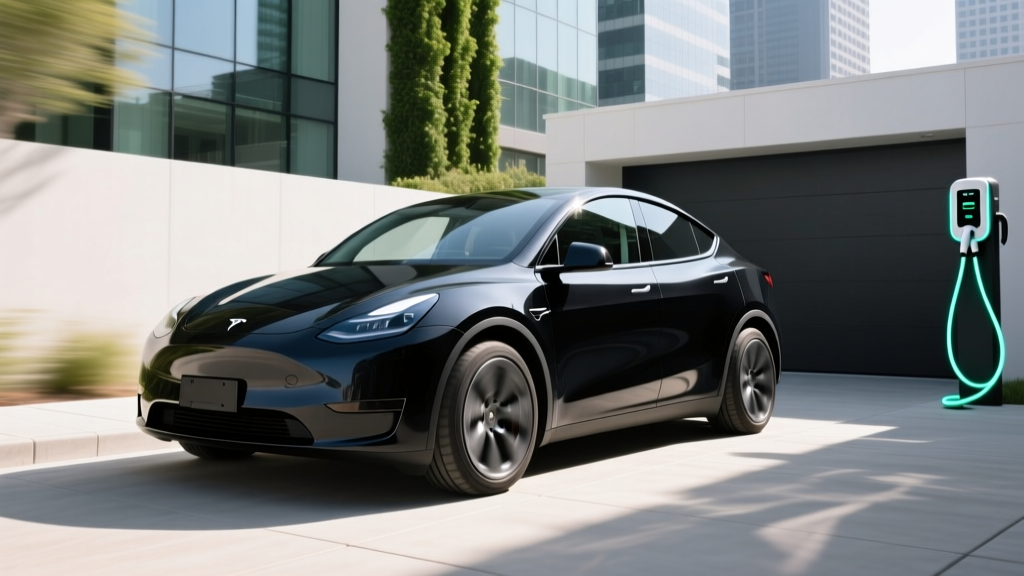
Home Level 2 charging with a Tesla Wall Connector on a 60-amp circuit (48 amps continuous) adds approximately 44 miles of range per hour. Most owners charging overnight from 20–80% wake to a full daily allocation. Installation costs for a 240V/60A circuit typically range from $800 to $2,500 depending on panel proximity and local permitting, according to industry electrician estimates. Always consult a licensed electrician for your specific panel capacity.
Performance and Driving Dynamics
Even the base RWD trim delivers 295 hp and a 6.5-second 0–60 mph time — quicker than most gas-powered compact SUVs. The dual-motor AWD variants add traction confidence in rain and snow, with the Performance trim's 3.5-second sprint placing it in sports-car territory.
Tesla's regenerative braking is strong enough to enable one-pedal driving in most conditions, reducing brake wear significantly. The heat pump (standard on all trims since 2021) improves cold-weather efficiency by scavenging waste heat from the powertrain rather than relying solely on resistive cabin heating.
Ride quality in the refreshed Model Y has improved over earlier generations, with revised suspension tuning that absorbs road imperfections more effectively. Cabin noise remains low at highway speeds, and the low center of gravity from the under-floor battery pack keeps body roll well-controlled through corners.
Interior, Cargo, and Technology
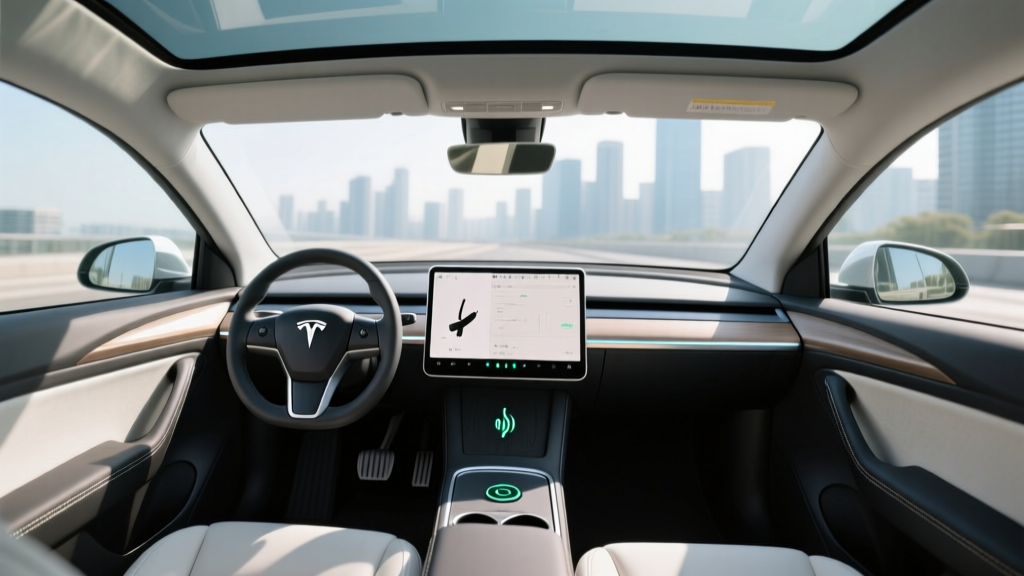
The minimalist cabin centers on a 15.4-inch touchscreen handling navigation, media, climate, and vehicle settings. Physical controls are limited — even the glovebox opens via the screen. Build quality has improved substantially, with tighter panel gaps and upgraded materials compared to early Fremont-built vehicles.
Cargo capacity is a strong suit: 30.2 cubic feet behind the rear seats and 72.1 cubic feet with them folded, competitive with the best in the segment. The front trunk (frunk) adds approximately 4.1 cubic feet for charging cables or a small bag. Rear legroom measures 38.7 inches, adequate for adults on longer trips.
Standard tech features include:
- Over-the-air software updates adding new features post-purchase
- Tesla app with remote climate preconditioning, location tracking, and Sentry Mode camera access
- Sentry Mode dashcam recording when parked
- Dashcam and trip recording with front, rear, and side cameras
- Native navigation with real-time Supercharger routing and availability
Driver Assistance: Autopilot and FSD Supervised
Standard Autopilot includes Traffic-Aware Cruise Control and Autosteer (lane-centering on marked highways). The optional FSD (Supervised) package adds automatic lane changes, traffic light and stop sign recognition, and Navigate on Autopilot for highway on/off-ramp routing. As of 2026, FSD Supervised still requires active driver supervision and does not operate as a Level 3 or Level 4 system.
Pricing, the Tesla Lease Offer, and Federal Tax Credit Eligibility
Tesla's lease offer for the 2026 Model Y typically starts around $399/month for 36 months with $4,500 due at signing on the Long Range RWD, though exact terms fluctuate monthly and vary by region. Leasing eliminates battery-degradation risk and allows easier upgrading at term-end, but you forfeit equity buildup and may face mileage penalties (commonly 10,000–12,000 miles/year).
Buying outright preserves access to the federal EV tax credit, which leasing customers generally cannot claim directly — the credit goes to the lessor (Tesla), who may or may not pass savings through as a capitalized-cost reduction. Always ask whether the lease offer reflects the credit being applied.
| Trim | Base MSRP | Est. After §30D Credit | MSRP Cap Eligible? |
|---|---|---|---|
| Long Range RWD | $44,990 | ~$37,490 | Yes (under $80K SUV cap) |
| Long Range AWD | $47,990 | ~$40,490 | Yes |
| Performance | $52,990 | ~$45,490 | Yes |
- Vehicle MSRP Cap: SUVs must be under $80,000 — all Model Y trims qualify.
- Buyer Income Cap: Modified AGI must not exceed $150,000 (single), $225,000 (head of household), or $300,000 (joint filers). Per IRS §30D guidelines.
- Battery Sourcing: The $7,500 credit splits into $3,750 for critical-minerals sourcing and $3,750 for battery-component assembly. Sourcing requirements tighten annually; confirm current-year eligibility on the IRS qualified-vehicles list before purchase.
- Point-of-Sale Transfer: Buyers can transfer the credit to the dealer at purchase, reducing the sale price directly rather than waiting for a tax refund.
Consult a tax professional to verify personal eligibility. Rules and qualified-vehicle lists update frequently.
Pros, Cons, and Who the Model Y Suits Best
Pros
- Access to Tesla Supercharger network — the most reliable and extensive DC fast-charging system in North America
- Strong real-world efficiency (27–30 kWh/100mi) keeps per-mile electricity cost low
- Over-the-air updates continuously add features
- Excellent cargo volume (72.1 cu ft max) for the footprint
- LFP battery in RWD trim allows daily 100% charging without degradation concern
- Strong resale value relative to non-Tesla EVs
Cons
- Minimalist interior lacks physical buttons — all climate/media via touchscreen
- Ride can feel firm on rough pavement despite improvements
- FSD (Supervised) costs $8,000 extra and remains Level 2 only
- No Apple CarPlay or Android Auto — Tesla's native infotainment only
- Insurance premiums run 15–30% higher than comparable gas SUVs in most states
- Lease terms often cap annual mileage below typical commuter needs
Best for: Daily commuters with home charging access, small families needing versatile cargo space, and road-trippers who value Supercharger network reliability. The RWD trim suits warm-climate commuters prioritizing low cost per mile; AWD trims suit colder regions and those who drive frequently in inclement weather.
Consider alternatives if: You prefer traditional controls, need third-row seating, or want Apple CarPlay integration. The Hyundai Ioniq 5, Ford Mustang Mach-E, and Kia EV6 offer competitive range with more conventional interiors.
Frequently Asked Questions
What is the real-world range of the 2026 Tesla Model Y?
The EPA rates the Long Range RWD at 320 miles, but real-world mixed driving yields 280–300 miles. Highway driving at 75 mph drops this to 250–270 miles, and freezing temperatures can reduce range to 200–230 miles.
How fast does the Model Y charge at home and on the road?
On a home Level 2 charger (11.5 kW), it adds about 44 miles of range per hour, fully charging overnight. DC fast charging peaks at 170 kW (RWD) or 250 kW (AWD/Performance), achieving 10–80% in 22–28 minutes.
Does the Tesla Model Y qualify for the federal EV tax credit?
All trims fall under the $80,000 SUV MSRP cap. Buyer income must not exceed IRS thresholds ($150K single / $300K joint). Battery-sourcing requirements determine whether you receive the full $7,500 or a partial $3,750 credit. Check the current IRS qualified vehicle list before purchasing.
Is the Tesla lease offer better than buying?
Leasing eliminates battery-degradation risk and lowers monthly payments, but you forfeit direct access to the §30D tax credit (the lessor claims it) and build no equity. If you drive more than 10,000–12,000 miles annually, buying usually makes more financial sense — especially with the credit applied at point of sale.
Is the Model Y worth it versus the Hyundai Ioniq 5 or Ford Mustang Mach-E?
The Model Y wins on Supercharger network access, efficiency, and software ecosystem. The Ioniq 5 offers faster 800V charging architecture and a more conventional interior. The Mach-E provides a more engaging driving feel and Apple CarPlay. Test-drive all three and compare real-world charging access in your region before deciding.
How long does the Model Y battery last?
Tesla warranties the LFP battery (RWD) for 8 years/100,000 miles and the NMC battery (AWD/Performance) for 8 years/120,000 miles, guaranteeing at least 70% capacity retention. Real-world data from high-mileage owners shows typical degradation of 10–15% over 100,000 miles, with the battery rarely requiring full replacement under normal use.