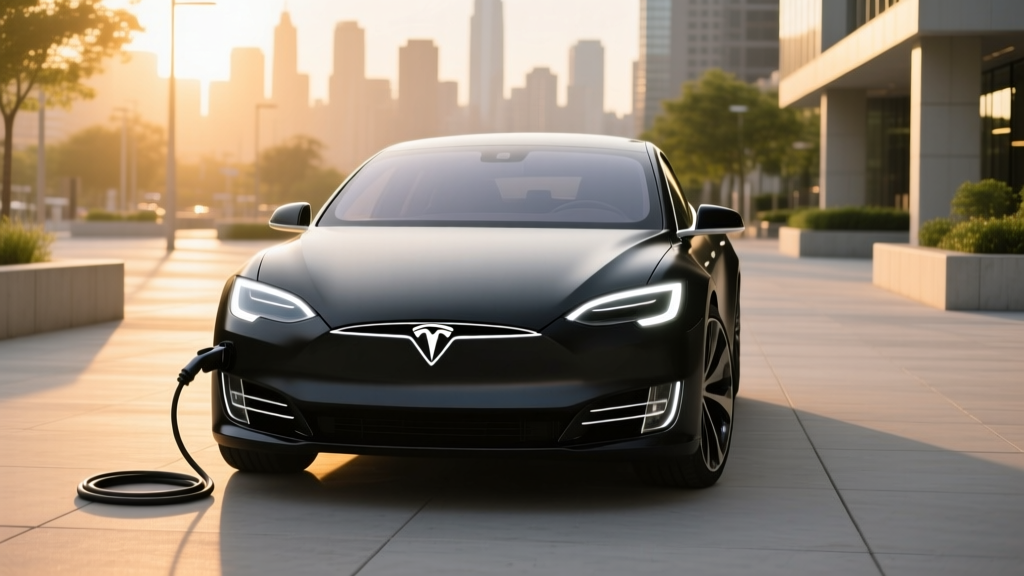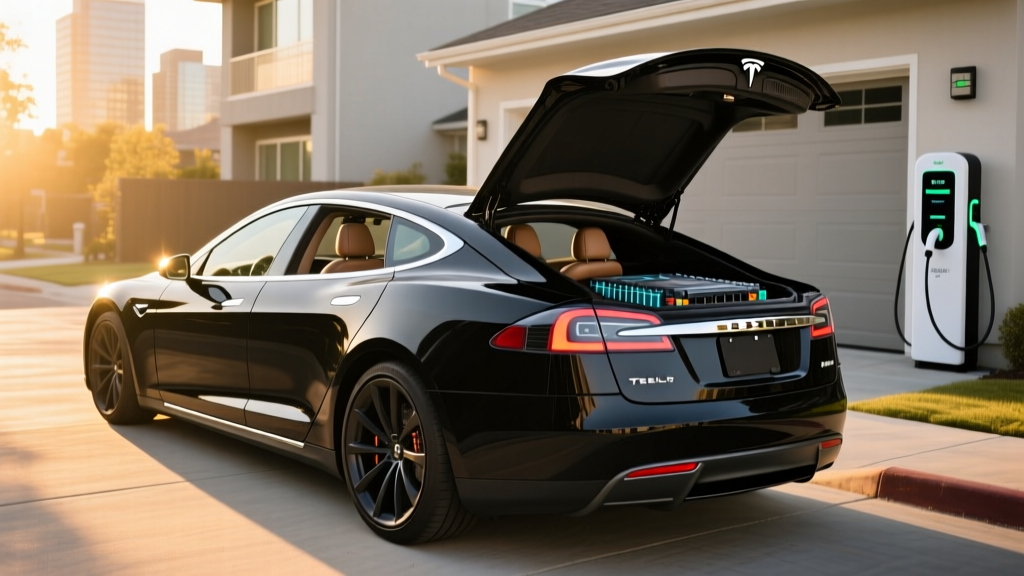
The 2016 Tesla Model S P90D occupies a fascinating space in the used EV market. It represents the peak of Tesla's first-generation flagship sedan — a dual-motor, all-wheel-drive performance sedan that could embarrass supercars off the line while seating five adults and their luggage. A decade later, prospective used-EV buyers are asking the right questions: How much range does a 10-year-old battery actually deliver? What does maintenance look like? And does a P90D still make financial sense against modern alternatives?
This review breaks down the 2016 Model S P90D with 2026 ownership realities: aged-battery performance, Supercharger compatibility, out-of-warranty repair risk, and where it fits in today's used-EV landscape.
The EPA rated the 2016 Model S P90D at 253 miles (combined). With a 10-year-old NMC battery, expect 180–220 miles of real-world range depending on degradation, driving style, and climate. Highway driving at 75+ mph drops this to roughly 170–200 miles, and cold weather (below 32°F) can cut range an additional 20–30%, yielding as little as 130–160 miles in harsh winter conditions.
2016 Tesla Model S P90D Specifications at a Glance
| Specification | Value |
|---|---|
| EPA Range (new) | 253 miles |
| Real-World Range (aged battery, 2026) | 180–220 miles |
| Battery Capacity | 90 kWh (usable ~85.5 kWh when new) |
| Battery Chemistry | NMC (Nickel Manganese Cobalt) |
| Drivetrain | Dual-Motor AWD |
| Horsepower | ~532 hp (combined, with Ludicrous) |
| 0–60 mph | 2.8 seconds (Ludicrous mode) |
| Top Speed | 155 mph |
| EPA Efficiency | 93 MPGe combined (36 kWh/100 mi) |
| Max DC Fast Charge | ~120 kW (V2 Supercharger) |
| 10–80% DC Charge Time | ~45 minutes |
| Level 2 Home Charging | Up to 11.5 kW (48A) / ~34 mi/hr |
| Cargo Volume | 26.3 cu ft (rear) + 5.3 cu ft (frunk) = 31.6 cu ft |
| Rear Legroom | 35.4 inches |
| Curb Weight | ~4,940 lbs |
| Original MSRP (2016) | ~$119,200 (P90D w/ Ludicrous) |
| Used Price Range (2026) | $22,000–$35,000 |
| Battery Warranty (original) | 8 years / Unlimited miles (expired) |
Battery Health and Degradation: What 10 Years Does to a 90 kWh Pack
The P90D's 90 kWh NMC (Nickel Manganese Cobalt) battery pack was one of Tesla's largest at the time, offering a meaningful buffer over the 85 kWh variant. NMC chemistry provides high energy density — critical for fitting 253 miles of range into a sedan platform — but it is more susceptible to calendar degradation than the LFP (Lithium Iron Phosphate) chemistry Tesla later adopted in standard-range models.
Based on aggregated owner data and third-party battery analyses, a 2016 Model S battery in 2026 typically retains 75–88% of its original capacity, depending on charging habits and climate exposure. Vehicles that were regularly charged to 100% and exposed to hot climates (Arizona, Texas, Southern California) tend to sit at the lower end, around 75–80% state of health (SoH). Garage-kept examples charged primarily to 80% or below often retain 85–88%.
That translates to practical range: a pack at 80% SoH yields roughly 200 miles under ideal conditions. At 75%, you're looking at closer to 185–190 miles EPA-equivalent. This is the single most important variable when evaluating a used P90D — always request a battery health reading from the vehicle's service menu or a third-party diagnostic before purchase.
A full battery replacement from Tesla currently runs $15,000–$22,000 for a Model S, though refurbished packs from independent EV shops may be available for $10,000–$14,000. This is a critical cost to factor into your purchase decision — a P90D at $25,000 with a degraded battery is effectively a $40,000 car.
Charging Speed and Infrastructure Compatibility
The 2016 P90D uses Tesla's proprietary connector (pre-NACS standardization) and charges on Tesla's Supercharger network, which remains the most reliable DC fast-charging ecosystem in the US. However, charging speeds reflect 2016 hardware limitations.
| Charging Level | Power | Speed (miles/hr) | Notes |
|---|---|---|---|
| Level 1 (120V outlet) | ~1.4 kW | ~3–4 mi/hr | Emergency/trickle only; impractical for daily use |
| Level 2 (240V, 48A) | 11.5 kW | ~34 mi/hr | Home Wall Connector or equivalent; full charge in ~8 hours |
| Level 2 (240V, 40A) | 9.6 kW | ~29 mi/hr | Common public Level 2 stations |
| DC Fast (Tesla V2 Supercharger) | ~120 kW peak | ~200 mi/hr (peak) | 10–80% in ~45 min; tapers significantly above 80% |
| DC Fast (Tesla V3/V4 Supercharger) | Limited to ~120 kW | ~200 mi/hr (peak) | P90D cannot utilize 250 kW V3 speeds due to older battery architecture |
The P90D's charge curve is notably different from modern EVs. It peaks around 120 kW only at low state of charge (below 30%) and tapers progressively. From 50% to 80%, expect sustained rates closer to 60–80 kW. This means a typical 10–80% session takes roughly 45 minutes — acceptable for road trips but noticeably slower than a modern Model 3 or Hyundai Ioniq 5, which can complete the same session in 18–25 minutes.
CCS compatibility: The 2016 P90D does not natively support CCS connectors. Tesla offers a CCS adapter retrofit for older Model S vehicles, but availability and compatibility should be confirmed directly with Tesla service for your specific VIN. Without the retrofit, you're limited to Tesla Superchargers and Tesla Destination Chargers — a robust network, but one that excludes Electrify America, EVgo CCS stalls, and other non-Tesla infrastructure.
Performance: Ludicrous Mode Still Impresses in 2026
The P90D's party trick remains its acceleration. With Ludicrous mode engaged, the dual-motor AWD powertrain delivers 2.8 seconds to 60 mph — a figure that still rivals or beats most new performance cars on sale today. The combined output of approximately 532 horsepower (front motor ~259 hp, rear motor ~503 hp, with total system output limited by battery discharge rate) provides relentless passing power at any speed.
Even with a degraded battery, acceleration performance holds up reasonably well. Battery degradation primarily impacts energy capacity (range), not peak discharge power — so a P90D at 80% SoH will still hit 60 mph in roughly 3.0 seconds, losing only a few tenths. This is a meaningful distinction from internal-combustion performance cars, where engine wear directly reduces power output.
The air suspension provides adjustable ride height and a compliant ride, though 10-year-old air struts are a known maintenance item. Budget $1,500–$3,000 per corner for replacement if they've never been serviced. The hydraulic power steering (unique to pre-2018 Model S) feels heavier than modern electric racks but provides good road feel.
Interior, Technology, and Daily Livability
The 2016 Model S interior reflects its era — a 17-inch center touchscreen dominated the dash and controlled nearly every vehicle function. By 2026 standards, the screen resolution and processing speed show their age. The Media Control Unit (MCU) in 2016 models is the MCU1, which is noticeably slower than the MCU2 (introduced in 2018) and lacks modern features like Netflix/YouTube streaming and an updated navigation engine. Tesla offered an MCU2 upgrade for ~$1,500–$2,000; check whether the vehicle you're considering has received it.
Cargo space remains a strong suit: 26.3 cubic feet behind the rear seats plus a 5.3-cubic-foot frunk (front trunk) gives the Model S genuine road-trip hauling ability. With the rear seats folded (60/40 split), cargo volume expands to 58.1 cu ft — enough for furniture or camping gear. Rear legroom at 35.4 inches is adequate for adults but tighter than the BMW 5 Series or Mercedes E-Class it competes with on dimensions.
Autopilot hardware: The 2016 P90D straddles a critical transition. Vehicles built before October 2016 have Hardware 1 (HW1) Autopilot, which supports basic adaptive cruise and lane-keeping but cannot run Full Self-Driving (FSD). Vehicles built from late October 2016 onward have Hardware 2 (HW2), which Tesla later upgraded via software to support FSD capabilities. Confirm the hardware revision before purchase — it significantly affects both functionality and resale value.
Tesla Autopilot and FSD (Supervised) are SAE Level 2 driver-assistance systems. The driver must remain fully engaged, with hands on the wheel and eyes on the road, at all times. These systems do not make the vehicle autonomous. Autopilot and FSD can make errors, fail to detect obstacles, and require immediate driver intervention. Treat them as convenience features, not self-driving capability.
Pricing, Tax Credits, and Ownership Costs
The 2016 Model S P90D originally carried an MSRP of approximately $119,200 when equipped with Ludicrous mode, premium interior, and autopilot. A decade of depreciation has brought used examples into a dramatically different price bracket.
| Cost Factor | Amount |
|---|---|
| Original MSRP (2016, P90D w/ Ludicrous) | ~$119,200 |
| Used Price Range (2026 market) | $22,000–$35,000 |
| Federal Used EV Tax Credit (§25E) | Up to $4,000 (30% of sale price, max $4,000) |
| Price After Max Credit | As low as ~$18,000–$31,000 |
| Estimated Annual Insurance | $2,200–$3,800 |
| Estimated Annual Maintenance | $800–$2,000 |
| Battery Replacement Reserve (recommended) | $15,000–$22,000 |
Tax credit details: Because the 2016 P90D is now exclusively a used vehicle, it is not eligible for the §30D new clean vehicle credit (up to $7,500). Instead, buyers may qualify for the §25E used clean vehicle credit, which provides 30% of the sale price up to a maximum of $4,000. Eligibility requirements include:
- Sale price must be $25,000 or less (this is a hard cap — vehicles priced above $25,000 do not qualify)
- Buyer income limits: $75,000 (single), $112,500 (head of household), $150,000 (joint filers) — based on modified AGI
- Vehicle must be purchased from a licensed dealer (private-party sales do not qualify)
- Vehicle must be at least two model years old (the 2016 P90D easily satisfies this)
- Buyer can only claim the used EV credit once every three years
Given the $25,000 sale-price cap, only lower-mileage, higher-degradation, or cosmetically challenged P90D examples will qualify for the §25E credit. Most well-maintained P90Ds priced at $28,000–$35,000 will exceed the threshold. Always verify current rules at IRS.gov before relying on credit eligibility.
Warranty status: The original 8-year/unlimited-mile battery and drive unit warranty has expired for all 2016 Model S vehicles as of 2024. You are purchasing this car entirely out of warranty unless you negotiate a third-party extended warranty at the time of sale. Budget accordingly — a drive unit failure costs $5,000–$8,000, and a battery failure costs $15,000–$22,000.
Pros and Cons of the 2016 Model S P90D in 2026
- Supercar-level acceleration (2.8s 0–60) at a used-economy-car price
- Access to Tesla Supercharger network — the most reliable DC charging infrastructure in the US
- Generous cargo space (31.6 cu ft total) with frunk and fold-flat rear seats
- Air suspension provides adjustable ride height and comfortable highway cruising
- Over-the-air software updates continue to add features years after purchase
- Strong depreciation curve means you absorb far less value loss than the original owner
- Battery degradation reduces range to 180–220 miles — marginal for road trips
- DC fast charging capped at ~120 kW — significantly slower than modern EVs
- All major warranties expired; out-of-pocket repair costs can be severe
- MCU1 infotainment is slow and dated unless upgraded to MCU2
- Air suspension and drive unit are expensive failure points on 10-year-old examples
- Insurance premiums remain high relative to the vehicle's market value
- No CCS adapter compatibility without Tesla retrofit (limits non-Supercharger charging)
Who Should Buy the 2016 Model S P90D?
The P90D makes the most sense for a specific buyer profile: someone who wants a performance-oriented daily driver and occasional road-tripper, has access to home Level 2 charging, can absorb out-of-warranty repair risk, and values acceleration and cargo space over cutting-edge range or efficiency.
Good fit:
- Enthusiasts who want supercar acceleration at a fraction of a supercar's cost
- Commuters with a round trip under 150 miles and reliable home charging
- Families needing sedan practicality with occasional cargo-hauling needs
- Buyers with a $5,000–$10,000 maintenance reserve for potential repairs
Poor fit:
- High-mileage commuters exceeding 200 miles/day
- Buyers in extreme cold climates where winter range drops below 140 miles
- Anyone without access to home or workplace Level 2 charging
- Buyers seeking a worry-free, warranty-backed ownership experience
Choose the P90D if: You prioritize acceleration, Supercharger access, and cargo space, your daily driving stays under 150 miles, you have a maintenance reserve, and you can find a well-maintained example under $28,000.
Look elsewhere if: You need reliable 250+ mile range, want modern charging speeds, prefer warranty coverage, or drive in extreme cold regularly. Consider a used 2021+ Model 3 Long Range, a 2022+ Hyundai Ioniq 5, or a newer Model S Plaid if budget allows.
Frequently Asked Questions
What is the real-world range of a 2016 Tesla Model S P90D in 2026?
Expect 180–220 miles in mixed driving with a typical aged battery (75–88% SoH). Highway driving at 75+ mph reduces this to 170–200 miles. Cold weather below freezing can drop range an additional 20–30%, yielding 130–160 miles in harsh winters. Always check the specific vehicle's battery health before purchase.
How fast does the 2016 P90D charge at home and on road trips?
At home on a Level 2 (240V, 48A) Tesla Wall Connector, the P90D charges at up to 11.5 kW, adding roughly 34 miles of range per hour — a full charge takes about 8 hours. On DC fast chargers, it peaks at approximately 120 kW on V2 Superchargers, with a 10–80% session taking roughly 45 minutes. It cannot utilize the faster 250 kW V3/V4 Supercharger speeds due to its older battery architecture.
Does the 2016 Tesla Model S P90D qualify for any federal tax credit?
It does not qualify for the §30D new vehicle credit (up to $7,500), as it is no longer sold new. It may qualify for the §25E used clean vehicle credit (up to $4,000), but only if the dealer sale price is $25,000 or less and the buyer meets income limits ($75K single / $150K joint). Most well-maintained P90Ds are priced above the $25K cap. Verify current rules at IRS.gov.
Is the 2016 P90D worth buying vs. newer used EVs?
It depends on priorities. The P90D offers unmatched performance-per-dollar (2.8s 0–60 for ~$25K–$35K), Supercharger access, and strong cargo capacity. However, a used 2021 Model 3 Long Range (~$25K–$30K) delivers 330+ miles of real-world range, faster charging, modern MCU2 infotainment, and may still carry partial warranty. A 2022 Hyundai Ioniq 5 (~$27K–$33K) offers 250+ miles, 235 kW DC fast charging, and warranty coverage. The P90D wins on raw performance and space; it loses on range, charging speed, and ownership risk.
What are the most expensive repairs on a 2016 Model S P90D?
The highest-cost failure points are: battery pack replacement ($15,000–$22,000), rear drive unit ($5,000–$8,000), air suspension struts ($1,500–$3,000 per corner), and MCU1 screen failure ($1,500–$2,500 for repair or upgrade). The 12V lead-acid battery should be replaced proactively every 3–4 years (~$300–$500). Door handles and window regulators are also known wear items.
Can I charge a 2016 P90D at non-Tesla charging stations?
Not natively. The 2016 P90D uses Tesla's proprietary connector and does not support CCS without a Tesla-approved retrofit adapter. Without the adapter, you're limited to Tesla Superchargers and Tesla Destination Chargers. Tesla has opened portions of its Supercharger network to non-Tesla EVs, but older Tesla vehicles still cannot use CCS-based public chargers (Electrify America, EVgo CCS stalls) without the retrofit. Confirm adapter compatibility with Tesla Service for your specific VIN.
What should I inspect before buying a used 2016 P90D?
Prioritize these checks: (1) Battery SoH via the service menu or third-party scan tool — below 78% is a negotiation point. (2) Air suspension — cycle through all height settings and listen for compressor strain. (3) Drive unit whine — unusual noise under acceleration may indicate impending failure. (4) MCU1 screen responsiveness — yellowing, dead zones, or slow boot times suggest needed replacement. (5) Service history — confirm whether the battery coolant has been flushed and whether any drive unit replacements were performed under warranty. A pre-purchase inspection at a Tesla Service Center or qualified independent EV shop ($200–$400) is strongly recommended.