Tesla Model Y July Lease Deals: What Buyers Need to Know in 2026
With the refreshed Juniper-generation Tesla Model Y now well into its first full model year, July 2026 lease offers are drawing serious attention from EV shoppers weighing a premium electric crossover against rising competition from Hyundai, Ford, and BMW. Tesla's leasing structure has shifted repeatedly over the past 18 months, and understanding the real numbers — not just the advertised monthly payment — is essential before signing.
This review dissects the 2026 Model Y's specs, real-world range, charging behavior, federal tax credit interaction with leasing, and how current July deals stack up against buying outright or choosing a rival. All figures reflect the latest 2026 Long Range AWD and Performance trims available in the U.S. market.
2026 Model Y Core Specifications at a Glance
| Spec | Long Range AWD | Performance AWD |
|---|---|---|
| EPA Range | 320 miles | 295 miles |
| Battery (usable) | ~78 kWh (NMC) | ~78 kWh (NMC) |
| Drivetrain | Dual-motor AWD | Dual-motor AWD |
| Horsepower | ~384 hp | ~456 hp |
| 0–60 mph | 4.8 sec | 3.5 sec |
| Max DC Fast Charge | 250 kW (peak) | 250 kW (peak) |
| 10–80% DC Time | ~25 min | ~25 min |
| Level 2 Home Rate | 11.5 kW (~44 mi/hr) | 11.5 kW (~44 mi/hr) |
| MPGe (combined) | 122 MPGe | 111 MPGe |
| Efficiency | 28 kWh/100 mi | 30 kWh/100 mi |
| Cargo (rear seats up) | 30.2 cu ft | 30.2 cu ft |
| Cargo (seats folded) | 72.0 cu ft | 72.0 cu ft |
| Rear Legroom | 38.2 in | 38.2 in |
| Battery Warranty | 8 yr / 120,000 mi | 8 yr / 120,000 mi |
| Base MSRP | $46,630 | $52,130 |
Sources: EPA fueleconomy.gov, Tesla.com 2026 spec sheets.
Real-World Range: What the EPA Number Doesn't Tell You
Tesla's NMC (nickel manganese cobalt) battery chemistry in the Long Range and Performance trims delivers strong energy density, which is why the 320-mile figure is achievable with a ~78 kWh usable pack. However, NMC cells are more sensitive to extreme temperatures than LFP (lithium iron phosphate) chemistry. In cold-weather testing, the Model Y's heat pump helps mitigate range loss compared to earlier generations, but a 15–25% reduction in winter is typical for drivers in northern climates.
City driving with frequent regenerative braking opportunities can actually push efficiency above the EPA combined rating — some owners report 330+ miles equivalent in stop-and-go commuting at moderate speeds. Highway efficiency is the real penalty zone for any EV, and the Model Y's aerodynamic crossover profile helps but doesn't eliminate the physics of 75-mph air resistance.
If your commute is under 60 miles round-trip with home charging, range is essentially a non-issue regardless of trim. For road-trip-heavy buyers, the 320-mile Long Range provides comfortable 200-mile legs between Supercharger stops while keeping a safety buffer.
Charging Speed: Supercharger Network and Home Setup
The 2026 Model Y retains Tesla's NACS (North American Charging Standard) connector natively, which now gives it access to the broadest fast-charging network in the U.S. — including Tesla Superchargers and the growing number of third-party stations equipped with NACS cables or adapters. Non-Tesla EVs are increasingly gaining Supercharger access via NACS adoption, but Model Y owners still benefit from seamless plug-and-charge integration without adapters.
| Charging Level | Power (kW) | Miles Added per Hour | Typical Use Case |
|---|---|---|---|
| Level 1 (120V) | ~1.4 kW | ~4–5 mi/hr | Emergency / trickle top-off |
| Level 2 (240V, 48A) | 11.5 kW | ~44 mi/hr | Home daily charging (full overnight) |
| DC Fast (V3 Supercharger) | 250 kW peak | ~1,000+ mi/hr (peak) | Road trips, 10–80% in ~25 min |
Charging curve reality: The 250 kW peak rate applies only between roughly 10–30% state of charge. Above 50%, the rate tapers to approximately 100–120 kW, and above 80% it drops sharply to protect battery longevity. A 10–80% session at a V3 Supercharger takes about 25 minutes; an 80–100% top-off can add another 20+ minutes. Plan road-trip stops around the 10–80% sweet spot.
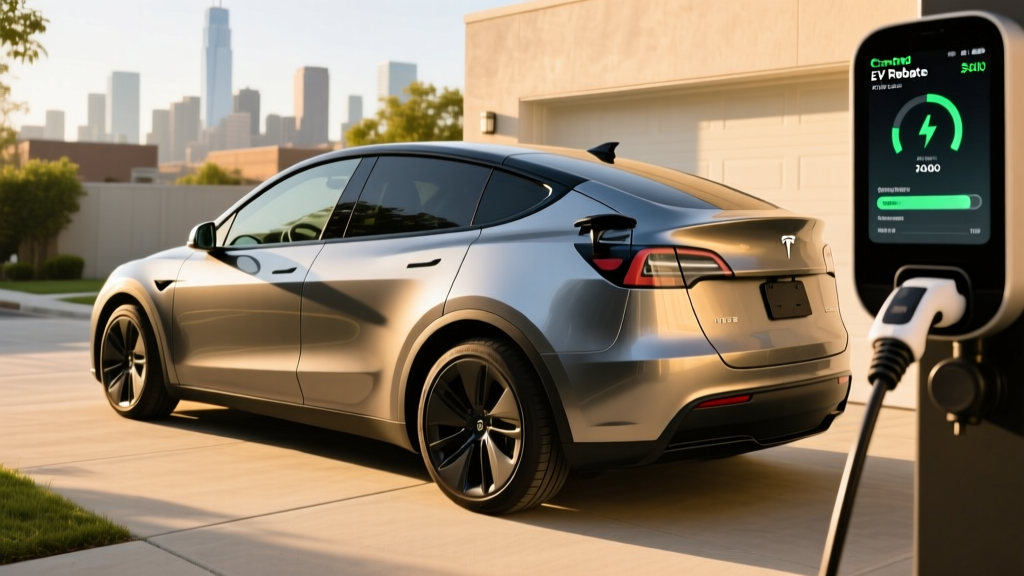
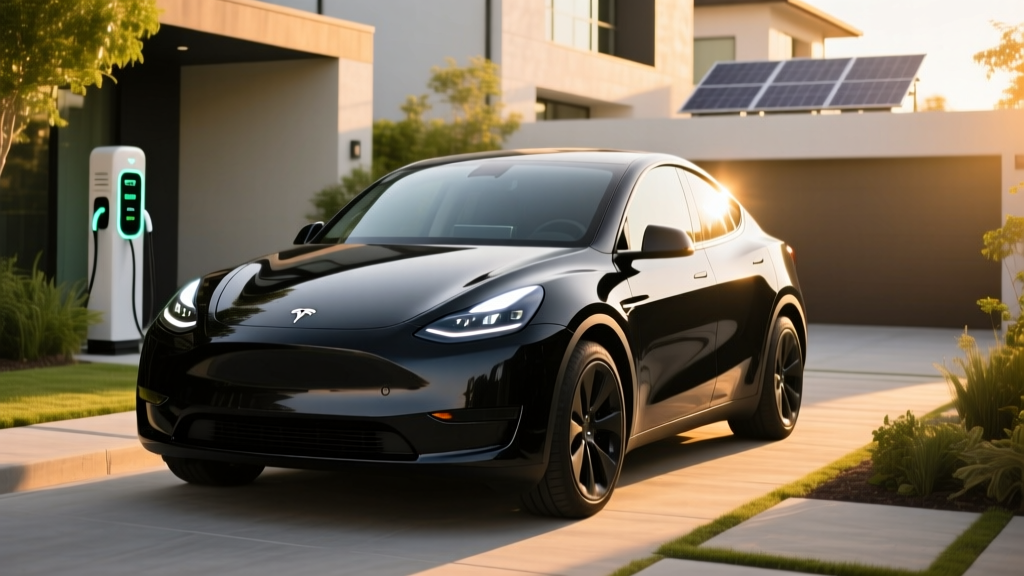
For home Level 2 charging, Tesla's Wall Connector ($420) on a 60-amp circuit delivers the full 11.5 kW / 48A, replenishing the battery at roughly 44 miles of range per hour. A full 0–100% charge takes about 7–8 hours — easily handled overnight. Installation costs for a dedicated 240V/60A circuit typically range from $800 to $2,000 depending on panel proximity and local permit requirements, per licensed electrician estimates. Homes with older 100-amp electrical panels may need a panel upgrade ($1,500–$3,000+) before adding a dedicated EV circuit.
July 2026 Lease Pricing and Federal Tax Credit Interaction
Tesla's lease offers fluctuate based on residual values, money factors, and regional demand. As of July 2026, advertised Model Y Long Range AWD leases have been spotted in the $399–$499/month range for 36-month terms with 10,000–12,000 annual miles, depending on down payment (typically $3,500–$5,500 at signing). Performance trims command a $60–$100/month premium.
However, the critical question for lessees is how the federal EV tax credit (§30D) applies.
- MSRP Cap: SUVs/crossovers must be under $80,000 MSRP. All Model Y trims qualify.
- Buyer Income Cap: AGI must not exceed $150,000 (single), $225,000 (head of household), or $300,000 (joint). Check IRS §30D guidelines.
- Battery Sourcing: Critical minerals and battery component requirements phase in stricter thresholds annually. Tesla's supply chain has progressively met these, but verify current-year eligibility at purchase/lease signing.
- Lease Loophole (Commercial Credit §45W): When you lease, the leasing company (lessor) technically claims the credit. Many pass it through as a capitalized-cost reduction (lowering your monthly payment), but this is not guaranteed — confirm with the dealer/lessor before signing.
- Point-of-Sale Transfer: For purchases, the credit can be applied at the point of sale as an immediate price reduction. For leases, the mechanism differs and depends on lessor policy.
| Trim | Base MSRP | Est. After §30D Credit (Purchase) | Typical July Lease (36 mo) |
|---|---|---|---|
| Long Range AWD | $46,630 | ~$39,130* | $399–$499/mo ($3,500–$5,500 due) |
| Performance AWD | $52,130 | ~$44,630* | $479–$599/mo ($3,500–$5,500 due) |
*Assumes full $7,500 credit eligibility. Actual credit amount depends on battery sourcing compliance and buyer income. Consult a tax professional for personal eligibility.
The lease-vs-buy math depends heavily on your mileage needs and how long you plan to keep the vehicle. Leasing caps typically run 10,000–15,000 miles/year; excess mileage charges on Tesla leases tend to run $0.20–$0.25/mile. If you drive more than 15,000 miles annually, purchasing and capturing the full §30D credit as a point-of-sale reduction is almost always the better financial move.
Technology, Driver Assistance, and Interior
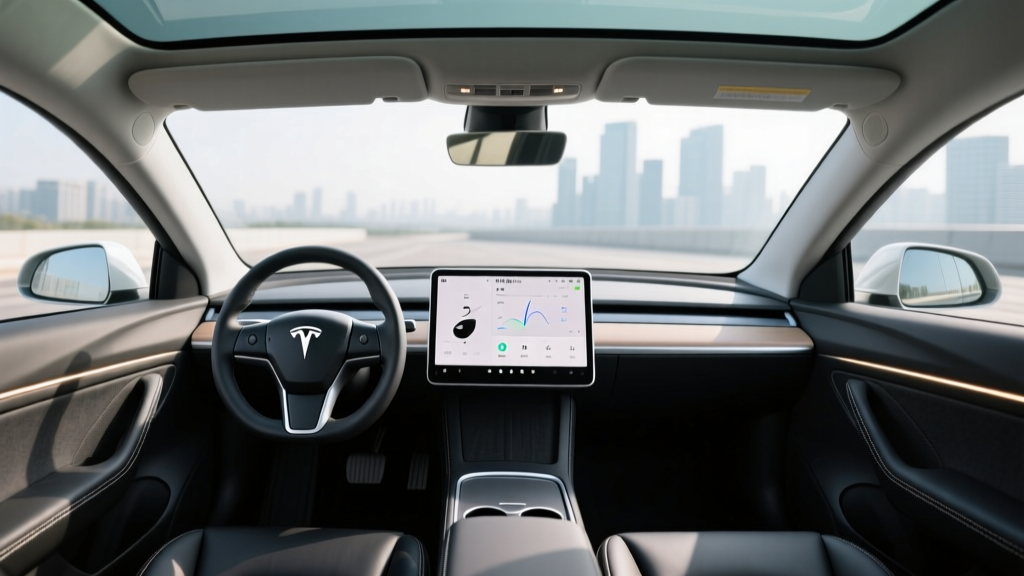
The Juniper refresh brought meaningful interior upgrades to the Model Y: ventilated front seats, ambient lighting, a rear-seat touchscreen, power-folding second-row seats, and improved cabin insulation that noticeably reduces road noise at highway speeds. The 15.4-inch front touchscreen remains the central interface for navigation, media, climate, and vehicle controls — no physical instrument cluster or HUD is offered.
Autopilot and FSD (Supervised): Every Model Y ships with Basic Autopilot (lane-centering + adaptive cruise). The $8,000 Full Self-Driving (Supervised) upgrade adds automated lane changes, Navigate on Autopilot, traffic light/stop sign recognition, and the controversial city-streets capability.
Infotainment strengths include native Spotify, Netflix/YouTube (while parked), over-the-air updates that add features post-purchase, and Tesla's navigation with real-time Supercharger routing and battery preconditioning. The lack of Apple CarPlay and Android Auto remains a dealbreaker for some buyers accustomed to phone-projection interfaces.
The frunk (front trunk) adds roughly 4.1 cu ft of storage, useful for charging cables or groceries. Total cargo space of 72.0 cu ft with seats folded competes favorably with the Hyundai Ioniq 5 (56.2 cu ft max) and slots between the Ford Mustang Mach-E and the larger Rivian R1S.
How the Model Y Stacks Up Against Key Competitors
| Attribute | Tesla Model Y LR | Hyundai Ioniq 5 Long Range | Ford Mustang Mach-E ER AWD |
|---|---|---|---|
| EPA Range | 320 mi | 310 mi | 290 mi |
| Max DC Charge | 250 kW | 240 kW (CCS/NACS) | 150 kW |
| 10–80% Time | ~25 min | ~18 min | ~38 min |
| Base MSRP | $46,630 | $46,900 | $48,995 |
| Native NACS | Yes | 2025+ models | 2025+ models |
| Apple CarPlay | No | Yes | Yes |
| Cargo (max) | 72.0 cu ft | 56.2 cu ft | 59.7 cu ft |
| IIHS Rating | Top Safety Pick+ | Top Safety Pick+ | Top Safety Pick |
Safety data via IIHS. Specs from manufacturer 2026 model-year data.
The Model Y's strongest competitive advantages remain the Supercharger network integration, cargo volume, and efficiency (28 kWh/100 mi is class-leading). The Ioniq 5 counters with a faster 10–80% charge time thanks to its 800V architecture, Apple CarPlay support, and a more conventional interior layout. The Mach-E offers a sportier driving feel but trails significantly on charging speed — a meaningful gap for frequent road-trippers.
Pros, Cons, and Who Should Consider the July Lease
- Class-leading 320-mile EPA range (Long Range)
- Best-in-class efficiency at 28 kWh/100 mi
- Seamless Supercharger network access (native NACS)
- Spacious 72.0 cu ft cargo area
- Strong OTA update track record
- IIHS Top Safety Pick+ rating
- Qualifies for §30D credit (subject to rules)
- No Apple CarPlay / Android Auto
- All controls through touchscreen — no physical buttons
- FSD costs $8,000 extra and remains Level 2 only
- DC peak rate tapers significantly above 50% SoC
- Lease mileage caps may penalize high-mileage drivers
- No spare tire — tire repair kit only
- Insurance premiums run 15–30% above segment average
Who This EV Suits Best
Ideal for: Commuters with home charging access, families needing versatile cargo space, tech-forward buyers who want OTA improvements, and road-trippers who value Supercharger density. The Long Range AWD at ~$39,130 after the federal credit is one of the most efficient long-range electric crossovers available.
Consider alternatives if: You need Apple CarPlay, prefer physical controls, drive over 15,000 miles/year (buy rather than lease), live in an area with limited Supercharger coverage and rely on CCS networks, or want the fastest possible 10–80% DC charging (Ioniq 5's 800V system wins here).
Frequently Asked Questions
What is the real-world range of the 2026 Tesla Model Y?
The Long Range AWD carries a 320-mile EPA estimate. In real-world mixed driving at moderate temperatures, expect 280–300 miles. Sustained highway driving at 70+ mph typically yields 270–290 miles. In sub-30°F winter conditions, plan for 230–260 miles. The Performance trim's 295-mile EPA figure delivers roughly 250–270 miles in moderate conditions.
How fast does the Model Y charge at home and on DC fast chargers?
On a Level 2 home charger (240V, 48A), the Model Y charges at 11.5 kW, adding roughly 44 miles of range per hour — a full charge takes about 7–8 hours. On a V3 Supercharger, it peaks at 250 kW and charges from 10–80% in approximately 25 minutes, though the rate tapers significantly above 50% state of charge.
How much does the Model Y cost after federal tax credits?
The Long Range AWD starts at $46,630 MSRP. With the full $7,500 §30D federal tax credit (subject to income caps, battery sourcing requirements, and MSRP limits), the effective price drops to approximately $39,130. The Performance trim at $52,130 would be roughly $44,630 after credit. Always verify current eligibility on IRS.gov and consult a tax professional.
Does the Model Y qualify for the federal EV tax credit in 2026?
The Model Y's MSRP falls well under the $80,000 SUV cap, making it potentially eligible. However, full $7,500 credit depends on: (1) buyer AGI within limits ($150K single / $300K joint), (2) battery critical-mineral and component sourcing meeting 2026 phase-in thresholds, and (3) proper documentation at point of sale or through the lease lessor. Tesla's U.S. battery sourcing has generally complied, but confirm at time of purchase.
Is leasing the Model Y in July 2026 better than buying?
Leasing makes sense if you drive under 12,000 miles/year, want lower monthly payments, prefer swapping vehicles every 3 years, and the lessor passes through the tax credit as a cap-cost reduction. Buying is better if you exceed 15,000 miles/year, want to capture the full §30D credit directly as a point-of-sale reduction, and plan to keep the vehicle 5+ years to amortize the higher upfront cost.
Is the Model Y worth it over the Hyundai Ioniq 5 or Ford Mach-E?
Choose the Model Y if you prioritize maximum range (320 mi), cargo volume (72.0 cu ft), Supercharger network access, and efficiency. Choose the Ioniq 5 if faster 10–80% DC charging (18 min), Apple CarPlay, and 800V architecture matter more. Choose the Mach-E if you want a sportier driving dynamic and don't mind slower DC charging. All three are strong; the decision comes down to your specific use case and charging access.