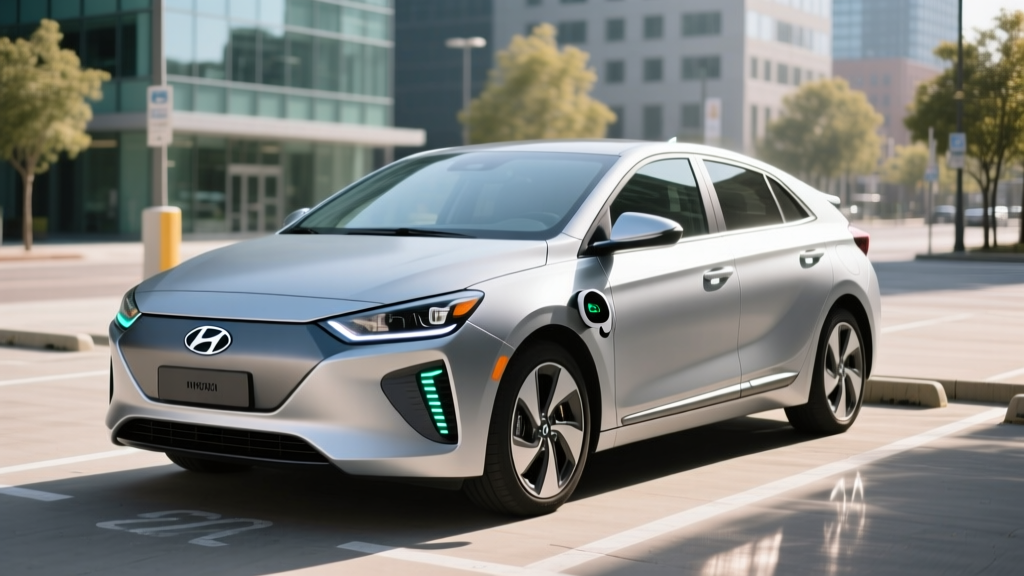
The 2020 Hyundai Ioniq Electric occupies a curious space in the used EV market. Originally launched with a modest 124-mile range, Hyundai's 2020 refresh nearly doubled the battery capacity, pushing the EPA estimate to 170 miles. For budget-conscious shoppers in 2026, it represents one of the most affordable entry points into electric ownership — especially when the used-EV tax credit applies. But does a 170-mile range hold up for modern commuting? We break down the real numbers.
2020 Hyundai Ioniq Electric: Core Specifications
| Specification | Value |
|---|---|
| EPA Range | 170 miles |
| Battery Capacity (Usable) | 38.3 kWh (NMC lithium-ion polymer) |
| Efficiency | 133 MPGe combined / 25 kWh/100 mi |
| Max DC Fast Charge | ~50 kW (CCS1) |
| 10–80% DC Fast Charge | ~54 minutes |
| Level 2 Home Charge Rate | 7.2 kW (onboard charger) |
| Level 2 Full Charge Time | ~6 hours (0–100%) |
| Motor Output | 134 hp / 218 lb-ft torque |
| Drivetrain | FWD (single motor) |
| 0–60 mph | ~9.7 seconds |
| Cargo Volume (rear seats up) | 23.0 cu ft |
| Cargo Volume (rear seats folded) | 55.0 cu ft |
| Original Base MSRP | $33,045 (SE trim) |
| Battery Warranty (original) | 8 years / 100,000 miles |
Real-World Range: What 170 EPA Miles Actually Means
Real-World Expectation: 140–155 miles highway (70+ mph); 160–175 miles city/regenerative driving; 110–130 miles in sustained sub-30°F cold weather.
The 2020 Ioniq Electric's 38.3 kWh battery (NMC chemistry) delivers strong city efficiency thanks to aggressive regenerative braking and a relatively light 3,340-lb curb weight. On fueleconomy.gov, the combined rating of 133 MPGe places it among the most efficient EVs of its era — ahead of the contemporary Nissan Leaf Plus and competitive with the Chevy Bolt EV.
However, highway driving exposes the Ioniq's aerodynamic compromises and single-speed reduction gear. Sustained 70–75 mph travel typically yields 3.5–3.8 miles per kWh, translating to roughly 140–155 miles before the buffer warning. Cold weather is the bigger penalty: NMC chemistry in the Ioniq lacks a dedicated battery heat pump, so sub-freezing temperatures can slash range by 25–35%. If your commute includes 40 miles of highway in January, plan around 120 usable miles of range.
For context, the Ioniq's efficiency of 25 kWh/100 miles is excellent — meaning every mile costs roughly 3–4 cents at average US electricity rates. That's a fraction of what even a 40-MPG gas car costs per mile.
Charging Speeds: DC Fast, Level 2, and Level 1
| Charging Level | Power (kW) | Speed (miles of range/hr) | Notes |
|---|---|---|---|
| Level 1 (120V household) | ~1.4 kW | ~5 mi/hr | Emergency/trickle only; ~24 hr for full charge |
| Level 2 (240V home/public) | 7.2 kW | ~25 mi/hr | Full charge in ~6 hours; 7.2 kW onboard charger |
| DC Fast Charge (CCS1) | ~50 kW peak | ~170 mi/hr (peak) | 10–80% in ~54 min; tapers significantly above 80% |
The Ioniq Electric's charging profile is its most notable limitation for road-trippers. The ~50 kW DC fast-charge peak (via CCS1 connector) was middling in 2020 and feels dated in 2026, when competitors like the Chevy Bolt EUV and newer Hyundai Ioniq 5 accept 150–240 kW. On a 50 kW charger, a 10–80% session takes approximately 54 minutes — functional for a lunch stop, but you'll feel the wait compared to 18-minute sessions in 800V vehicles.
The charge curve tapers noticeably above 60% state of charge (SoC), dropping to roughly 30 kW by 75% and further to under 15 kW past 85%. If you're relying on DC fast charging, plan to unplug around 80% rather than waiting for a full top-off.
For home charging, the 7.2 kW onboard charger is solid. A Level 2 home station (240V, 32A) will fully replenish the battery overnight in about 6 hours. Most Ioniq owners will rarely need DC fast charging if they have reliable Level 2 access at home or work.
Performance and Driving Impressions
The 134-hp, 218-lb-ft front-mounted motor delivers instant torque that makes the Ioniq feel quicker around town than its 9.7-second 0–60 time suggests. City merging and stoplight acceleration are confident. Highway passing, however, requires planning — the motor runs out of breath above 55 mph, and the FWD layout can struggle for traction in wet conditions under hard throttle.
Ride quality is a strength. The multi-link rear suspension (a rarity in this segment) absorbs bumps with composure that outclasses the torsion-beam setups in the Nissan Leaf and Chevy Bolt. Cabin noise is well-managed, and the low center of gravity from the floor-mounted battery keeps body roll minimal through corners.
The paddle-shift-mounted regenerative braking system offers three levels of regen intensity, plus a "one-pedal" mode at the maximum setting that allows near-complete stops without touching the brake pedal. It's not as seamless as Nissan's e-Pedal, but it's effective once you learn the modulation.
Interior, Tech, and Cargo Practicality
The 2020 Ioniq Electric received Hyundai's updated 8-inch touchscreen infotainment system with standard Apple CarPlay and Android Auto — a meaningful upgrade over the 7-inch unit in earlier model years. The interface is logical if not flashy, with physical knobs for volume and tuning that beat the touch-only panels in some competitors.
Hyundai SmartSense driver assists come standard across all trims: forward collision-avoidance assist, lane keeping assist, driver attention warning, and high beam assist. The Limited trim adds adaptive cruise control with stop-and-go capability and blind-spot collision warning. Note: these are SAE Level 2 driver-assistance features — you must keep your hands on the wheel and eyes on the road at all times. This is not autonomous driving.
Cargo space is generous for the hatchback form factor: 23.0 cubic feet behind the rear seats expands to 55.0 cubic feet with the 60/40 split rear bench folded. That's enough for a week's groceries or two full-size suitcases. Rear legroom measures 35.7 inches — adequate for adults on shorter trips, though taller passengers will find the sloping roofline limits headroom.
Pricing, Trims, and Federal Tax Credit Eligibility
| Trim | Original MSRP (2020) | Typical Used Price (2026 est.) |
|---|---|---|
| SE | $33,045 | $14,000–$17,000 |
| SEL | $35,045 | $15,500–$18,500 |
| Limited | $38,395 | $17,000–$21,000 |
As a used vehicle in 2026, the 2020 Ioniq Electric is eligible for the IRS §25E Previously Owned Clean Vehicle Credit — not the §30D new-vehicle credit. Under §25E, qualifying buyers can receive up to $4,000 (or 30% of the sale price, whichever is less) when purchasing from a licensed dealer.
Key eligibility requirements per IRS guidelines:
- Income cap: Modified AGI must not exceed $75,000 (single), $112,500 (head of household), or $150,000 (joint)
- Sale price cap: Vehicle must sell for $25,000 or less
- Vehicle age: Must be at least 2 model years old (the 2020 Ioniq qualifies)
- Dealer requirement: Must be purchased from a licensed dealer (private sales excluded)
- Battery capacity: Must have at least 7 kWh (the Ioniq's 38.3 kWh qualifies)
- One-time use: Buyer can only claim this credit once every 3 years
At typical 2026 used prices of $14,000–$21,000, the Ioniq clears the $25,000 sale-price cap comfortably. A $16,000 purchase could yield up to $4,000 back (30% of $16,000 = $4,800, capped at $4,000), bringing the effective cost to around $12,000. That makes it one of the cheapest ways into a modern, liquid-cooled EV with a strong warranty. Consult a tax professional to confirm your personal eligibility.
Pros and Cons
- Class-leading efficiency at 133 MPGe combined
- Strong value on used market with §25E credit eligibility
- 8-year/100,000-mile battery warranty (partially remaining)
- Comfortable ride via multi-link rear suspension
- Standard Hyundai SmartSense safety suite
- Generous 23 cu ft hatchback cargo area
- 170-mile EPA range limits road-trip utility
- ~50 kW DC fast charge is slow by 2026 standards
- No battery heat pump — significant cold-weather range loss
- Modest 134 hp; highway passing requires planning
- Discontinued after 2021 — limited long-term parts support
- Rear headroom compromised by sloping roofline
Who Should Buy the 2020 Hyundai Ioniq Electric?
Look elsewhere if: You need 250+ miles of range for road trips, you live in a region with harsh winters and no garage charging, you need to regularly carry four adults, or you want DC fast charging that keeps pace with modern road-trip expectations. Consider the used Chevy Bolt EV (259-mile range) or Hyundai Kona Electric (258-mile range) instead.
2020 Hyundai Ioniq Electric FAQ
What is the real-world range of the 2020 Hyundai Ioniq Electric?
The EPA rates it at 170 miles combined. In real-world driving, expect 140–155 miles at highway speeds (70+ mph), 160–175 miles in city driving with regenerative braking, and as low as 110–130 miles in sustained sub-freezing temperatures. The lack of a battery heat pump makes cold-weather range loss more pronounced than in EVs with active thermal preconditioning.
How fast does the 2020 Ioniq Electric charge?
On a DC fast charger (CCS1), it peaks at approximately 50 kW, reaching 10–80% in roughly 54 minutes. At home on a Level 2 (240V) charger, the 7.2 kW onboard charger delivers about 25 miles of range per hour, with a full 0–100% charge taking around 6 hours. Level 1 (120V) trickle charging adds about 5 miles per hour.
Does the 2020 Hyundai Ioniq qualify for a federal tax credit?
Not the §30D new-vehicle credit — it's a used car. However, it qualifies for the §25E Previously Owned Clean Vehicle Credit of up to $4,000 if you buy from a licensed dealer for $25,000 or less and your income falls under IRS caps ($75K single / $150K joint). The vehicle's 38.3 kWh battery exceeds the 7 kWh minimum. Always verify current rules at IRS.gov and consult a tax professional.
Is the 2020 Ioniq Electric worth buying vs. the Chevy Bolt EV or Nissan Leaf Plus?
It depends on your priorities. The Ioniq wins on efficiency (133 MPGe vs. the Bolt's 118 MPGe) and ride quality. The Chevy Bolt EV wins decisively on range (259 miles EPA) and DC fast-charge capability (55 kW peak, but a larger battery means more total miles added). The Nissan Leaf Plus (226 miles EPA) uses a CHAdeMO connector — a growing liability as CCS and NACS dominate US public charging networks. If range is your top concern, the Bolt is the stronger used buy. If efficiency and low running costs matter most, the Ioniq edges ahead.
How long will the 2020 Ioniq Electric's battery last?
Hyundai's original battery warranty covers 8 years/100,000 miles against capacity loss below 70% of original. For a 2020 model, that warranty extends through 2028 or 100,000 miles — meaning most examples still carry partial coverage. NMC chemistry in Hyundai's liquid-cooled pack has shown strong longevity in fleet data, with typical degradation of 8–12% over the first 5 years / 60,000 miles. If buying used, request a battery state-of-health (SoH) readout from a Hyundai dealer before purchase.
Can I road-trip in the 2020 Hyundai Ioniq Electric?
Technically yes, but it requires patience and planning. With 170 miles of range and a 54-minute 10–80% DC fast charge, you'll stop every 2–2.5 hours on the highway and spend nearly an hour charging. Compare that to a 250-mile-range EV with 150 kW charging that adds 180 miles in 20 minutes. The Ioniq is best suited as a commuter with occasional 150-mile day trips, not cross-country travel.