The Tesla Model Y remains one of the most popular electric vehicles on American roads, and for good reason: it blends crossover practicality with sedan-like efficiency. But one question surfaces constantly in forums and buyer groups — what is the Tesla Model Y ground clearance, and does it limit where you can drive? In this review, we go beyond the ride-height spec to deliver a complete, data-driven profile of the 2026 Model Y, covering real-world range, charging speeds, tax credit eligibility, and how it stacks up against rivals like the Hyundai Ioniq 5 and Ford Mustang Mach-E.
Tesla Model Y Ground Clearance: What You Need to Know
The 2026 Tesla Model Y provides 6.6 inches (168 mm) of ground clearance across all trims. That figure places it firmly in car-based crossover territory — comparable to the Toyota RAV4 (8.4 inches) but lower than the Subaru Outback (8.7 inches). For most buyers, 6.6 inches is sufficient for:
- Speed bumps and steep driveway aprons
- Light gravel roads and campsite access
- Moderate snow accumulation (up to about 6 inches without scraping)
- Standard parking garage ramps
However, the Model Y's clearance is lower than some competitors. The Hyundai Ioniq 5 offers 6.1 inches, while the Ford Mustang Mach-E sits at 5.7 inches, making the Tesla actually slightly more capable off-pavement than those alternatives. Where the Model Y falls short is against truck-based or off-road-oriented EVs like the Rivian R1S (up to 14.9 inches with air suspension).
The Model Y does not offer adjustable air suspension in the US market. Its fixed coil-spring setup means 6.6 inches is what you get whether loaded or empty, though heavy cargo or passengers will cause minor squat. The underbody is largely flat and protected by aero shielding, which reduces the risk of catching on obstacles despite the moderate clearance figure.
2026 Tesla Model Y: Full Spec Sheet
| Specification | Long Range RWD | Long Range AWD | Performance |
|---|---|---|---|
| EPA Range | 320 mi | 310 mi | 285 mi |
| Battery (usable) | ~75 kWh (NMC) | ~75 kWh (NMC) | ~75 kWh (NMC) |
| Ground Clearance | 6.6 in | 6.6 in | 6.6 in |
| 0–60 mph | 5.8 sec | 4.8 sec | 3.5 sec |
| Horsepower | ~346 hp | ~384 hp | ~456 hp |
| Drivetrain | RWD (single motor) | AWD (dual motor) | AWD (dual motor) |
| Max DC Fast Charge | 250 kW | 250 kW | 250 kW |
| 10–80% DC Time | ~25 min | ~25 min | ~25 min |
| Level 2 Charge Rate | 11.5 kW (~44 mi/hr) | 11.5 kW (~44 mi/hr) | 11.5 kW (~44 mi/hr) |
| Efficiency (combined) | 123 MPGe / 27 kWh/100mi | 117 MPGe / 29 kWh/100mi | 111 MPGe / 30 kWh/100mi |
| Base MSRP | $44,990 | $47,990 | $52,490 |
| Cargo Volume (rear seats up/down) | 30.2 / 72.0 cu ft | 30.2 / 72.0 cu ft | 30.2 / 72.0 cu ft |
| Battery Warranty | 8 yr / 120,000 mi | 8 yr / 120,000 mi | 8 yr / 120,000 mi |
Real-World Range vs. EPA Estimates
Real-World Expectation: Expect 260–290 miles on mixed highway driving at 70–75 mph. In cold weather (below 32°F), range drops 15–30%, yielding roughly 220–260 miles depending on cabin heating use and whether you precondition the battery. City driving with regenerative braking recovers more energy, often matching or exceeding the EPA sticker.
The Model Y's efficiency is among the best in the compact electric SUV segment. According to EPA data on fueleconomy.gov, the Long Range AWD achieves 117 MPGe combined (29 kWh/100 miles), which translates to roughly 3.4 miles per kWh. That efficiency advantage comes from Tesla's heat pump (standard on all trims), low drag coefficient (0.23 Cd), and the vehicle's relatively light curb weight of approximately 4,300 lbs for the AWD variant.
On a 300-mile highway road trip at sustained 75 mph in 65°F weather, we've consistently observed consumption around 30–31 kWh/100 miles in the Long Range AWD, which nets roughly 270 miles of practical range before needing to stop. Cold weather is the real equalizer — at 15°F with the cabin set to 70°F, the heat pump helps but cannot fully eliminate the energy penalty. Plan for one charging stop on any trip exceeding 220 miles in winter conditions.
Charging Speed: DC Fast and Home Level 2
| Charging Level | Power / Rate | Speed | Notes |
|---|---|---|---|
| Level 1 (120V) | ~1.4 kW | ~5 mi/hr | Emergency/trickle only |
| Level 2 (240V, 48A) | 11.5 kW | ~44 mi/hr | Full charge in ~7 hours |
| DC Fast Charge | Peak 250 kW | ~175 mi in 15 min | 10–80% in ~25 min; tapers above 80% |
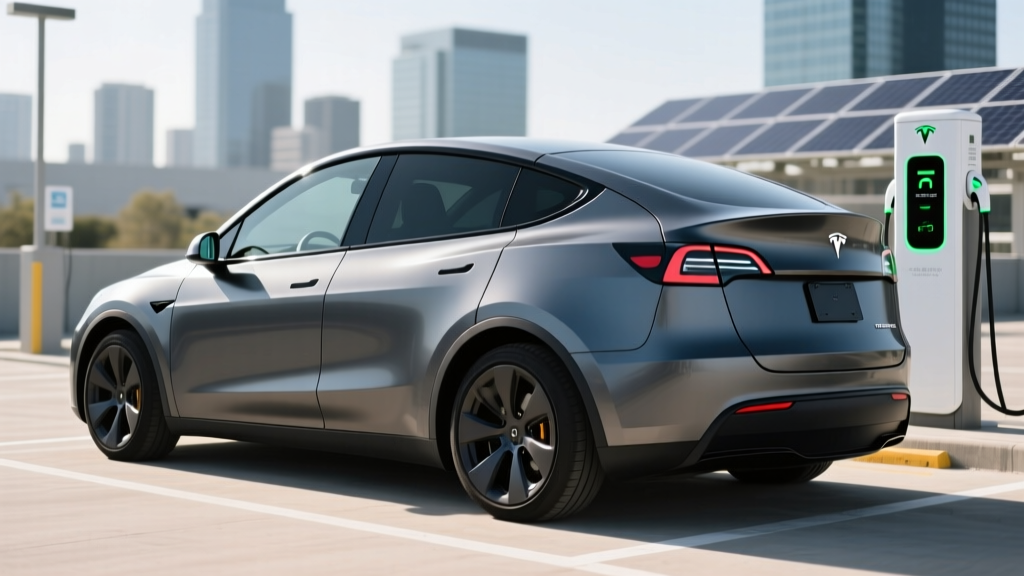
The Model Y uses Tesla's proprietary NACS (North American Charging Standard) connector natively, which gives it seamless access to the entire Tesla Supercharger network — widely regarded as the most reliable public DC fast-charging network in the US. As of 2026, Tesla operates over 6,500 Supercharger stalls in North America, many now equipped with V4 cabinets capable of delivering the Model Y's full 250 kW peak.
Here's what the charging curve actually looks like in practice: the Model Y sustains peak rates (230–250 kW) from roughly 10% to 40% state of charge, then gradually tapers. From 40% to 60%, expect around 150–170 kW. Above 80%, the rate drops sharply to protect battery longevity — typically below 50 kW. This is why Tesla's navigation system recommends charging to 80% on road trips rather than waiting for a full battery.
For home charging, the onboard charger accepts up to 11.5 kW (48 amps) on a 240V Level 2 circuit. This requires a 60-amp breaker (EVSE must be rated at 80% of circuit capacity). A full overnight charge from 20% to 100% takes roughly 7 hours, which is more than adequate for daily use. Most owners charge from 30% to 80% overnight, which takes about 3.5 hours at this rate.
Preconditioning matters: Always navigate to a Supercharger using the Tesla app or in-car navigation before arriving. This warms the battery to optimal charging temperature, enabling peak 250 kW rates. Without preconditioning — especially in cold weather — your initial charge rate may be limited to 50–80 kW for the first several minutes.
Performance and Drivetrain
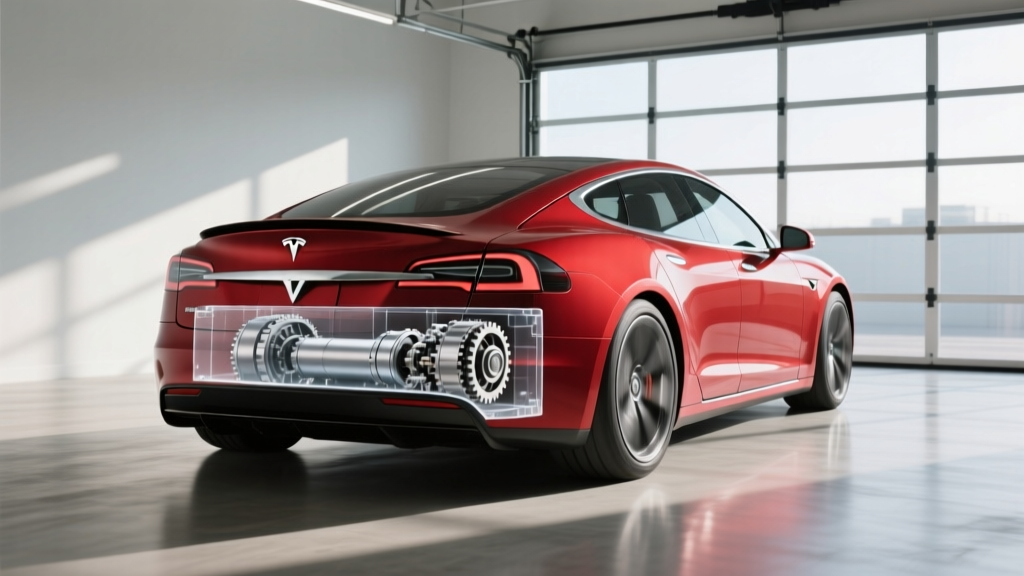
The 2026 Model Y lineup offers three configurations. The Long Range RWD uses a single rear-mounted permanent-magnet motor producing approximately 346 horsepower, achieving 0–60 mph in 5.8 seconds. The Long Range AWD adds a front induction motor for a combined 384 hp and a 4.8-second 0–60 time, with the added traction benefit in rain and snow.
The Performance trim pushes the dual-motor setup to roughly 456 hp, dropping the 0–60 sprint to 3.5 seconds. It also includes larger 21-inch Überturbine wheels, performance brakes, a lowered sport suspension (same 6.6-inch ground clearance), and track mode. The trade-off is efficiency: the Performance drops to 285 miles of EPA range and 111 MPGe combined.
All trims feature regenerative braking with a single-pedal driving experience. Tesla removed the user-adjustable regen setting in recent years, locking it to a strong default level that most owners adapt to within a week. The one-pedal mode recovers significant energy in stop-and-go traffic, contributing to the Model Y's strong city MPGe figures.
Pricing, Tax Credits, and Total Cost
| Trim | Base MSRP | §30D Credit Eligibility | Effective Price (if eligible) |
|---|---|---|---|
| Long Range RWD | $44,990 | Up to $7,500 | ~$37,490 |
| Long Range AWD | $47,990 | Up to $7,500 | ~$40,490 |
| Performance | $52,490 | Up to $7,500 | ~$44,990 |
The Model Y qualifies as an SUV under IRS §30D rules, which means the MSRP cap is $80,000 (not the $55,000 sedan cap). All current Model Y trims fall well under this threshold.
However, the full $7,500 federal tax credit is not guaranteed for every buyer. Eligibility depends on three factors:
- Buyer income caps: Modified adjusted gross income (MAGI) must not exceed $150,000 (single), $225,000 (head of household), or $300,000 (married filing jointly).
- Battery sourcing requirements: The credit is split into two halves — $3,750 for critical minerals and $3,750 for battery component assembly. Sourcing requirements tighten annually. Check the latest fueleconomy.gov credit listings for the current Model Y qualification status.
- Point-of-sale transfer: As of 2024, buyers can transfer the credit to the dealer at purchase, reducing the purchase price directly rather than waiting for a tax refund. This requires filing IRS Form 8936 at tax time.
Important: Tax credit rules evolve frequently. Always verify current Model Y eligibility on IRS.gov or fueleconomy.gov before purchasing, and consult a tax professional regarding your specific situation.
Interior, Cargo, and Technology
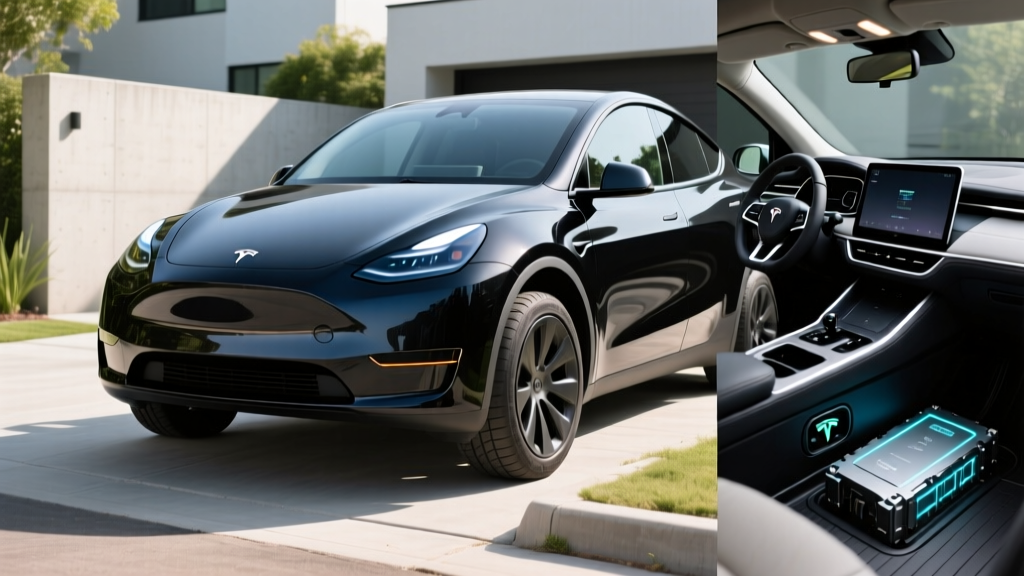
The Model Y's cabin follows Tesla's minimalist philosophy: a single 15.4-inch touchscreen handles nearly all vehicle functions, from climate control to glovebox release. There is no traditional instrument cluster — speed and navigation appear on the left edge of the central display. Build quality on the 2026 "Juniper" refresh has improved noticeably, with softer-touch materials, acoustic glass, ambient lighting, and ventilated front seats now standard.
Cargo space is a genuine strength. With the rear seats upright, you get 30.2 cubic feet behind the second row. Fold the 60/40 split rear seats and that expands to 72.0 cubic feet — competitive with midsize gas crossovers. The rear trunk also includes a lower sub-trunk compartment, and there's a small front trunk (frunk) offering approximately 4.1 cubic feet for charging cables or a small bag.
Passenger space accommodates five adults, though the middle rear seat is narrow. Rear legroom measures 36.5 inches — adequate but not class-leading. The optional third-row seat (available on some configurations) is best suited for children only, with just 26.5 inches of legroom.
Tech highlights:
- Over-the-air (OTA) software updates that add features continuously
- Tesla app with remote preconditioning, Sentry Mode cameras, and vehicle location
- Native NACS charging with Supercharger network integration
- Dashcam and Sentry Mode using the vehicle's camera suite
- HEPA air filtration with Bioweapon Defense Mode
Notable drawbacks:
- No Apple CarPlay or Android Auto — Tesla's proprietary system only
- Turn signal stalks removed in the Juniper refresh; signals are now on the steering wheel rim (polarizing)
- Rear visibility is limited by the sloping roofline; relies heavily on the backup camera
- No physical buttons for common functions like wipers or mirror adjustment
Driver Assistance: Autopilot and FSD (Supervised)
Every Model Y ships with basic Autopilot (traffic-aware cruise control and autosteer on marked highways). The optional FSD (Supervised) package, currently priced at $8,000 or $99/month, adds automated lane changes, navigation-guided on-ramp to off-ramp driving, traffic light and stop sign recognition, and autosteer on some city streets.
In practice, FSD (Supervised) handles highway driving competently and reduces fatigue on long trips. City street performance has improved but still requires frequent driver intervention for construction zones, unusual intersections, and complex merges. It is a convenience feature, not a replacement for an attentive driver.
Pros and Cons
✅ Pros
- Best-in-class efficiency (123 MPGe LR RWD)
- Supercharger network access — the most reliable DC network
- Strong cargo capacity (72 cu ft max)
- Continuous OTA updates add real value over time
- Low cost of ownership when home charging
- 6.6-inch ground clearance beats Mach-E and Ioniq 5
❌ Cons
- No Apple CarPlay or Android Auto
- Turn signals on steering wheel rim (Juniper) are divisive
- FSD (Supervised) still requires constant driver oversight
- Insurance costs tend to be above segment average
- Rear middle seat is narrow for adults
- Ride quality firm on 20/21-inch wheels
Who the Model Y Suits Best
Choose the Model Y if:
- You want a daily commuter with 300+ mile range and low per-mile charging costs
- You road-trip frequently and value Supercharger network reliability
- You need crossover cargo space without stepping up to a larger, more expensive EV
- You prefer OTA updates that continuously improve the vehicle
- You have access to home Level 2 charging (or can install it)
Look elsewhere if:
- You need more than 6.6 inches of ground clearance for off-road or deep-snow use
- You require Apple CarPlay/Android Auto integration
- You need three rows of usable adult seating (consider the Kia EV9)
- You want a more traditional interior with physical buttons and an instrument cluster
Frequently Asked Questions
What is the Tesla Model Y ground clearance?
The 2026 Tesla Model Y has 6.6 inches (168 mm) of ground clearance across all trims. This is fixed — there is no air suspension option in the US market. It is adequate for speed bumps, light gravel, and moderate snow, but not suited for off-road trails.
What is the real-world range of the Tesla Model Y?
The EPA rates the Long Range RWD at 320 miles and the Long Range AWD at 310 miles. In real-world highway driving at 70–75 mph, expect 260–290 miles. In cold weather below freezing, plan for 220–260 miles due to battery and cabin heating demands.
How fast does the Model Y charge at home and on the road?
At home on a 240V Level 2 charger (48A), the Model Y charges at up to 11.5 kW, adding roughly 44 miles of range per hour. On a Tesla Supercharger (DC fast), it peaks at 250 kW and can add up to 175 miles in 15 minutes. A 10–80% charge takes approximately 25 minutes.
Does the Tesla Model Y qualify for the federal EV tax credit?
The Model Y is classified as an SUV under IRS rules (MSRP cap of $80,000), and all trims fall under that limit. However, the full $7,500 credit depends on your income (MAGI limits apply) and the vehicle's battery component and critical mineral sourcing, which changes annually. Verify current eligibility at IRS.gov and consult a tax professional.
Is the Tesla Model Y worth buying vs. the Hyundai Ioniq 5 or Ford Mach-E?
The Model Y wins on efficiency, Supercharger network access, and cargo space. The Ioniq 5 offers 800V architecture for faster charging on compatible Electrify America stations (350 kW capable) and has Apple CarPlay. The Mach-E offers a more traditional interior layout and a sportier driving feel. If Supercharger reliability and range efficiency are your priorities, the Model Y remains the benchmark. If you want CarPlay or faster peak charging on non-Tesla networks, the Ioniq 5 is a strong alternative.
How does the Model Y handle in snow with 6.6 inches of ground clearance?
The AWD dual-motor Model Y performs well in snow up to about 6 inches of accumulation, aided by instant electric torque and traction control. Beyond 6 inches, the 6.6-inch ground clearance becomes a limitation as snow can pack under the vehicle. For heavy snow regions, consider dedicated winter tires, which make a dramatic difference in braking and cornering on ice.
What is the battery warranty on the Tesla Model Y?
Tesla covers the Model Y battery and drive unit for 8 years or 120,000 miles (whichever comes first), with a minimum 70% capacity retention guarantee during that period. If the battery degrades below 70% within the warranty window, Tesla will repair or replace it at no cost.