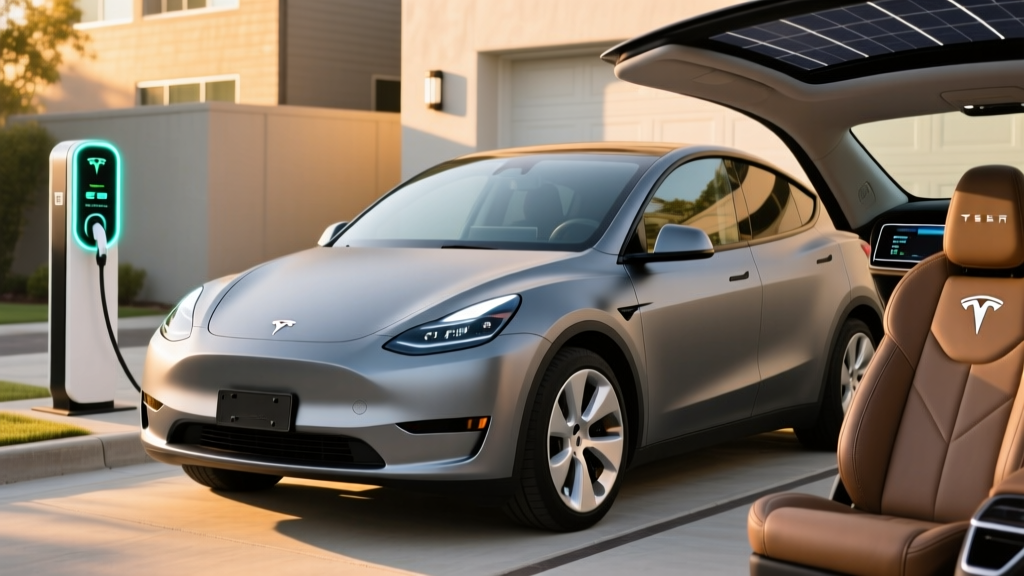
The Tesla Model Y has long been the benchmark for the electric crossover segment. For the 2026 model year, Tesla has implemented a significant mid-cycle refresh known internally (and among enthusiasts) by the codename "E41" or "Project Juniper." This update brings revised styling, a modernized interior, and critical tweaks to the powertrain and battery management systems.
As buyers weigh the refreshed Model Y against growing competition from the Hyundai Ioniq 5 and Ford Mustang Mach-E, understanding the exact implications of the E41 changes is vital. Below, we analyze the real-world range, charging capabilities, and ownership economics of the 2026 Tesla Model Y.
2026 Tesla Model Y: Core Specifications & E41 Updates
The E41 refresh focuses heavily on efficiency and cabin comfort. While the exterior now features a sleeker, Cybertruck-inspired light bar and a more aerodynamic front fascia, the most important changes are under the skin. Tesla has refined the thermal management system and introduced new wheel/tire aero-covers that contribute to a higher EPA range rating.
| Spec Category | Long Range AWD (E41) | Performance (E41) |
|---|---|---|
| EPA Est. Range | 320 miles | 295 miles |
| Battery Capacity | ~79 kWh (NMC) | ~79 kWh (NMC) |
| Drivetrain | Dual Motor AWD | Dual Motor AWD |
| 0-60 mph | 4.8 seconds | 3.5 seconds |
| Peak DC Charge Rate | 250 kW | 250 kW |
| Top Speed | 125 mph | 155 mph |
| Cargo Volume | 72 cu ft (max) | 72 cu ft (max) |
Range and Efficiency: Real-World Expectations
The official EPA estimated range for the 2026 Model Y Long Range is 320 miles. However, Tesla's efficiency is highly dependent on driving style and environmental conditions. The E41 update includes an improved heat pump, which helps mitigate range loss in cold weather, a traditional weak point for EVs.
Efficiency is rated at roughly 28 kWh/100 miles for the Long Range trim. This remains one of the most efficient figures in the class, allowing the Model Y to extract more miles per kilowatt-hour than most rivals.
Charging Speed & Infrastructure
Tesla's Supercharger network remains a primary advantage, though the opening of the network to other brands has increased congestion at some popular corridors. The E41 Model Y maintains a peak DC fast-charge rate of 250 kW.
- DC Fast Charging: 10–80% in approximately 22 minutes (at a V3 or V4 Supercharger).
- Level 2 Home Charging: 11.5 kW (48 amps) adds roughly 44 miles of range per hour.
- Connector: Native NACS; no adapter required for Superchargers.
One notable E41 change is the refinement of the battery preconditioning algorithm. When navigating to a charger, the car now warms the battery more aggressively, ensuring you hit that 250 kW peak almost immediately upon arrival.
Interior, Tech, and the "E41" Cabin Updates
The most visible E41 changes are found inside. Tesla has finally addressed the "sparse" complaints of previous years by adding ambient lighting, ventilated front seats, and a secondary 8-inch touchscreen for rear passengers. The suspension has also been retuned with new frequency-selective dampers to improve ride quality over rough pavement.
Smart Driving & Safety
The Model Y continues to use Tesla's "Autopilot" hardware. It is essential to remember that these are SAE Level 2 driver-assistance systems; the driver must remain engaged and hands-on (or eyes-on, depending on the software version) at all times. While Full Self-Driving (Supervised) is available as an add-on, it does not make the vehicle autonomous.
Pricing and Tax Credit Eligibility (2026)
Pricing for the 2026 Model Y has been adjusted to reflect the added content from the E41 refresh. The federal tax credit situation remains complex under IRS §30D rules.
| Trim | Base MSRP | Est. Federal Credit | Effective Price |
|---|---|---|---|
| Long Range AWD | $48,990 | $7,500 (if eligible) | $41,490 |
| Performance | $53,990 | $7,500 (if eligible) | $46,490 |
Eligibility Warning: To qualify for the full $7,500 credit, buyers must meet income caps ($150k single / $300k joint) and the vehicle must meet critical mineral and battery component sourcing requirements. As of 2026, the point-of-sale transfer is available, allowing the credit to be applied as a down payment reduction. Always consult a tax professional or the IRS official guidance before purchasing.
Is the Refreshed Model Y Still the Best Choice?
The E41 refresh keeps the Model Y at the top of the segment for efficiency and charging convenience. However, competitors like the Hyundai Ioniq 5 offer 800-volt architecture for faster 10-80% charging (under 18 minutes) and more physical interior controls.
Pros
- Class-leading efficiency (kWh/100mi)
- Access to the Supercharger network (native NACS)
- Massive cargo capacity and frunk storage
- Refined E41 suspension and cabin quietness
Cons
- Reliance on touchscreen for all vehicle controls
- No rear wiper (a long-standing Model Y omission)
- Price point has crept up with the refresh
Ownership & Warranty
Tesla provides a 4-year/50,000-mile basic warranty and an 8-year/120,000-mile warranty on the battery and drive units. Real-world data suggests Tesla's NMC batteries degrade roughly 10% over the first 100,000 miles, which is well within the warranty threshold of 70% capacity retention.
Frequently Asked Questions
What is the "E41" or "Juniper" Model Y?
It is the internal codename for the 2025–2026 mid-cycle refresh that includes new styling, a redesigned interior, and updated thermal management for better range and charging.
Does the 2026 Model Y qualify for the $7,500 tax credit?
It currently qualifies, but eligibility depends on your taxable income and the specific battery sourcing requirements in place at the time of delivery. Check the IRS website for the most current list of eligible vehicles.
How fast can I charge at home?
Using a Tesla Wall Connector or any 48-amp Level 2 charger on a 240V circuit, you can add about 44 miles of range per hour, easily refilling the battery overnight.
Is the Model Y good for road trips?
Yes. With 320 miles of range and the ability to add 200 miles in 15 minutes at a Supercharger, it remains the most practical EV for long-distance travel in the US.