The Quick Answer
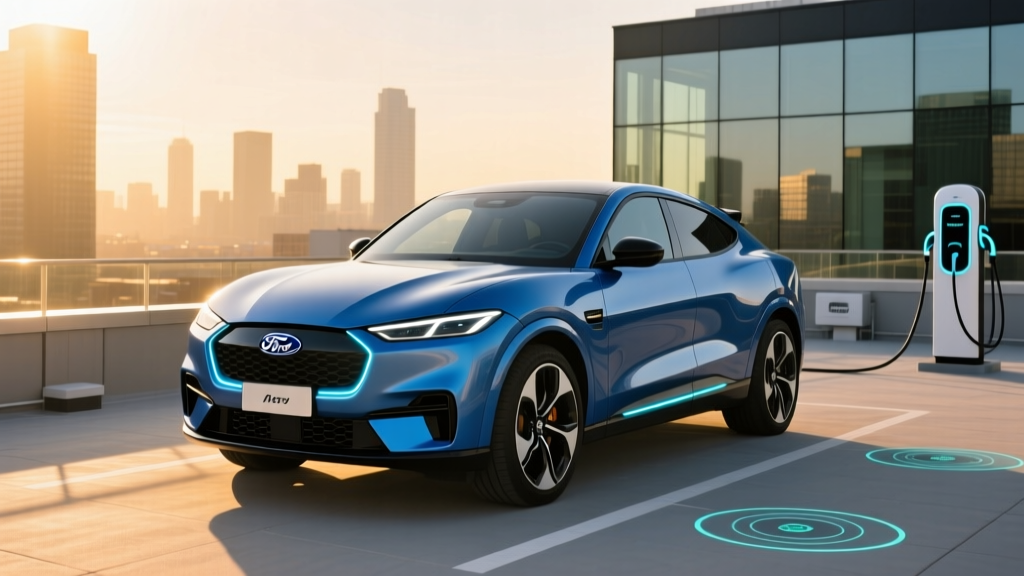
There is no non-electric Ford Mustang SUV. Every SUV wearing the Mustang nameplate is the Ford Mustang Mach-E, which is fully electric. Ford does not offer a gas, hybrid, or plug-in hybrid version of the Mustang Mach-E. If you want a Mustang-branded SUV, you are choosing a battery-electric vehicle. If you want a Ford SUV with a gas or hybrid powertrain, you are looking at the Ford Edge, Ford Bronco Sport, or Ford Explorer — none of which carry the Mustang name.
Why Buyers Search "Ford Mustang SUV Non-Electric"
The confusion is understandable. Ford attached the Mustang badge to an all-electric crossover in late 2020, and the move was controversial among Mustang enthusiasts. Many shoppers assume Ford must offer a gas-powered variant alongside the electric one, the way it sells both a gas F-150 and the electric F-150 Lightning. It does not.
The Mustang nameplate on a two-door coupe and convertible still uses a 5.0L V8 (the S650 generation). But on a four-door crossover SUV, "Mustang" means the Mach-E, and the Mach-E is a battery electric vehicle (BEV) with no internal combustion engine, no gas tank, and no tailpipe.
For 2026, the Mustang Mach-E lineup continues with multiple trims, two battery sizes, and rear-wheel or all-wheel drive. Let's look at what you actually get, what it costs, and whether it makes sense if you were hoping for a gas option.
2026 Mustang Mach-E: Full Spec Breakdown
| Spec | Standard Range (RWD) | Extended Range (RWD) | Extended Range (AWD) | GT |
|---|---|---|---|---|
| EPA Range | 250 mi | 320 mi | 290 mi | 280 mi |
| Usable Battery | ~72 kWh (LFP) | ~91 kWh (NMC) | ~91 kWh (NMC) | ~91 kWh (NMC) |
| Horsepower | 266 hp | 290 hp | 346 hp | 480 hp |
| 0–60 mph | 6.3 sec | 5.8 sec | 5.1 sec | 3.5 sec |
| Peak DC Fast Charge | 135 kW | 150 kW | 150 kW | 150 kW |
| 10–80% DC Charge | ~33 min | ~36 min | ~36 min | ~36 min |
| Level 2 Home Charge (kW) | 10.5 kW | 10.5 kW | 10.5 kW | 10.5 kW |
| Starting MSRP | $42,995 | $48,495 | $51,495 | $62,995 |
| Battery Warranty | 8 years / 100,000 miles (≥70% capacity retention) | |||
Real-World Range Reality
EPA numbers assume a mixed driving cycle at moderate temperatures. Expect the Extended Range RWD to deliver ~260–280 miles in sustained highway driving at 70+ mph, and ~200–230 miles in freezing temperatures (below 32°F). The LFP Standard Range battery handles daily commuting well but loses more range proportionally in extreme cold because LFP chemistry has higher internal resistance at low temperatures.
Mach-E vs. Gas Ford SUVs: Cost and Capability Comparison
If you were looking for a "non-electric" Mustang SUV, you probably want something in the Ford midsize crossover space. Here is how the Mach-E stacks up against the closest gas-powered Ford alternatives.
| Attribute | 2026 Mustang Mach-E (ER RWD) | 2026 Ford Edge (AWD, 2.0T) | 2026 Ford Bronco Sport (2.0T) |
|---|---|---|---|
| Powertrain | BEV | Gas turbo | Gas turbo |
| Starting MSRP | $48,495 | $40,500 | $33,500 |
| EPA Efficiency | 101 MPGe combined | 24 MPG combined | 26 MPG combined |
| Fuel/Energy Cost per Mile | ~$0.045 (home L2) | ~$0.14 (gas) | ~$0.13 (gas) |
| Annual Fuel Cost (12k mi) | ~$540 | ~$1,680 | ~$1,560 |
| 5-Year Fuel Savings vs. Gas | +$5,700 to +$6,200 | — | — |
| 0–60 mph | 5.8 sec | 7.5 sec | 7.8 sec |
| Cargo (rear seats up) | 29.7 cu ft | 39.2 cu ft | 32.5 cu ft |
| Maintenance (5-yr est.) | ~$1,800 | ~$3,500 | ~$3,200 |
The Mach-E costs roughly $8,000–$15,000 more upfront than a comparably equipped gas Ford SUV. However, the DOE's fuel cost calculator shows electricity at national-average residential rates (~$0.16/kWh) yields roughly a $0.04–$0.05 per-mile cost, compared to $0.13–$0.14 per mile for gas at $3.30/gallon. Over five years and 60,000 miles, that gap closes the purchase price difference substantially, especially when you factor in lower maintenance (no oil changes, fewer brake replacements due to regenerative braking, no transmission fluid).
Total Cost of Ownership: 5-Year Breakdown
| Cost Category | Mach-E ER RWD | Ford Edge AWD 2.0T |
|---|---|---|
| Purchase Price (MSRP) | $48,495 | $40,500 |
| Federal Tax Credit (§30D) | Up to $7,500* | $0 |
| Effective Purchase Price | ~$40,995 | $40,500 |
| Home Charger Install (Level 2) | $800–$2,000 | $0 |
| Energy/Fuel (5 yr, 60k mi) | $2,700 | $8,400 |
| Maintenance (5 yr) | $1,800 | $3,500 |
| Insurance (5 yr avg.) | $9,500 | $7,200 |
| Estimated Depreciation (5 yr) | $22,000 | $18,000 |
| 5-Year Total | ~$75,995 | ~$77,600 |
*The §30D federal EV tax credit is subject to IRS eligibility rules: buyer income caps ($150k single / $300k joint), vehicle MSRP caps ($55k for cars, $80k for SUVs/trucks — the Mach-E qualifies as an SUV), and critical-mineral/battery-sourcing requirements. The credit can be transferred to the dealer at point of sale for an instant price reduction. Always confirm eligibility with a tax professional before purchase.
The numbers are close, but the Mach-E wins on operating costs. The main risk is depreciation, which has been volatile for EVs — residual values depend heavily on battery health perception and new-model competition. EV insurance also tends to run 15–25% higher than gas equivalents due to repair complexity and parts cost.
First-Time EV Buyer: What You Actually Need to Know
Home Charging Is the Backbone
If you have a garage or driveway where you can install a Level 2 charger (240V, 40–48 amp circuit), the Mach-E adds roughly 30–35 miles of range per hour of charging. A full overnight charge from 20% to 80% takes about 5–6 hours on a 10.5 kW onboard charger. This is the experience that makes EV ownership effortless for most people: plug in at night, wake up with 200+ miles.
If you rely solely on public charging, the calculus changes. The Mach-E's peak DC fast-charge rate of 150 kW is mid-pack — competitive with the Hyundai Ioniq 5's 240 kW peak it is not. A 10–80% session takes roughly 36 minutes at a capable 150+ kW charger. That's fine for road trips but becomes a grind if it's your daily routine.
Charging Infrastructure Reality
Ford Mach-E buyers gained access to Tesla Supercharger stations via a Ford-provided NACS adapter starting in 2024. The 2026 Mach-E comes with a native NACS charge port. This dramatically expands fast-charging options, as the Supercharger network is the most reliable DC network in the U.S. Outside the Supercharger network, Electrify America and EVgo provide supplementary coverage, though uptime and connector reliability remain inconsistent in some markets.
Cold Weather and Range Loss
Battery chemistry matters in winter. The Extended Range trims use NMC (nickel manganese cobalt) cells, which lose roughly 25–35% of range in sustained sub-freezing temperatures. The Standard Range uses LFP (lithium iron phosphate), which can lose 30–40%. The Mach-E includes a battery preconditioning system that warms the pack when you navigate to a DC charger, which helps charging speed in cold weather — but it does not eliminate range loss during driving.
Tax Credit Nuance
Not every Mach-E buyer qualifies for the full $7,500. The credit has two halves: $3,750 for critical-mineral sourcing and $3,750 for battery-component manufacturing. Ford has worked to shift sourcing to compliant suppliers, but the exact credit amount can change mid-year as supply chains shift. Check the DOE's qualifying vehicle list before purchasing.
Common Misconceptions About the Mach-E
| Myth | Fact |
|---|---|
| "There's a gas version of the Mustang SUV" | Every Mustang Mach-E is fully electric. No gas or hybrid variant exists. |
| "The battery will need replacing in 5 years" | Ford warranties the battery for 8 years/100,000 miles at ≥70% capacity. Industry data shows modern NMC packs retaining 85–90% capacity at 100k miles under normal use. |
| "It can't take road trips" | With 280–320 miles of EPA range and NACS Supercharger access, the Mach-E handles road trips with 20–30 minute charge stops every 3–4 hours. |
| "EVs cost more to own long-term" | Higher purchase price is offset by fuel savings (~$1,100/yr), lower maintenance (~$340/yr), and potential tax credits. Break-even typically occurs at year 3–5. |
| "The Mach-E isn't a real Mustang" | Debatable on heritage grounds, but the GT trim does 0–60 in 3.5 seconds with 480 hp — faster than a 2024 Mustang GT coupe. The performance is real. |
Decision Framework: Should You Buy the Mach-E or Look Elsewhere?
Buy the Mustang Mach-E If:
- You can install a Level 2 home charger (garage or driveway with 240V access)
- Your daily commute is under 80 miles round-trip (the Standard Range covers this easily)
- You want a sporty-driving crossover with Mustang-badged performance
- You qualify for the §30D credit (income under $150k single / $300k joint)
- You value Supercharger network access for road trips
Look at a Gas or Hybrid Ford SUV If:
- You live in an apartment or condo with no charging access and no workplace charging
- You regularly tow more than 1,500 lbs (the Mach-E is rated for only 1,500 lbs; the Explorer Hybrid tows 5,000 lbs)
- You drive in extreme cold (–20°F or below) for extended stretches where range loss becomes operationally limiting
- You need maximum cargo space (the Edge offers 39+ cu ft vs. the Mach-E's 29.7 cu ft)
- Your budget is strictly under $35,000 and you cannot wait for the cost-equation to balance
Frequently Asked Questions
Does Ford make a gas-powered Mustang SUV?
No. The Mustang Mach-E is Ford's only Mustang-badged SUV, and it is exclusively electric. The traditional Mustang coupe and convertible are still gas-powered (5.0L V8 or 2.3L turbo), but they are not SUVs.
Can I get the Mach-E as a hybrid or plug-in hybrid?
No. Ford has not announced any hybrid or PHEV variant of the Mach-E. If you want a Ford PHEV SUV, the Ford Escape PHEV offers 37 miles of electric-only range and 42 MPG combined as a gas-electric hybrid, starting around $39,000.
How much does it cost to charge the Mach-E at home?
At the national average residential electricity rate of ~$0.16/kWh, fully charging the 91 kWh Extended Range battery from empty costs roughly $14.50. A typical daily top-up from 30% to 80% (about 46 kWh) costs around $7.40. This compares to roughly $55–$65 for a tank of gas in the Edge.
Is the Mach-E eligible for the $7,500 federal tax credit?
The Mach-E qualifies as an SUV under IRS rules (MSRP cap: $80,000), and its pricing falls within limits. However, eligibility depends on your income (under $150k single / $300k joint modified AGI), the vehicle's battery-sourcing compliance, and whether you have available tax liability. The credit can be applied as a point-of-sale discount through the dealer. Verify current sourcing compliance on the DOE's qualifying list before purchasing.
What happens if the battery degrades significantly?
Ford covers the high-voltage battery for 8 years or 100,000 miles against falling below 70% of original capacity. Replacement cost out of warranty ranges from $15,000 to $20,000 depending on the pack size, but industry-wide data from sources like Recurrent Auto shows that most modern EV batteries retain 85–92% capacity at 100,000 miles under normal charging habits. Avoiding habitual DC fast charging above 80% and not storing the vehicle at 100% SoC in hot weather helps longevity.
Is the Mach-E good for road trips?
With native NACS access to Tesla Superchargers (the largest reliable DC network in the U.S.) and 280–320 miles of real-world range, the Mach-E is a capable road-trip vehicle. Expect to stop for 20–30 minutes every 3–4 hours of highway driving. Preconditioning and route planning via the FordPass app or in-car navigation makes this manageable, though it still requires more planning than a gas fill-up.