Quick Verdict: The Benchmark Compact Electric SUV
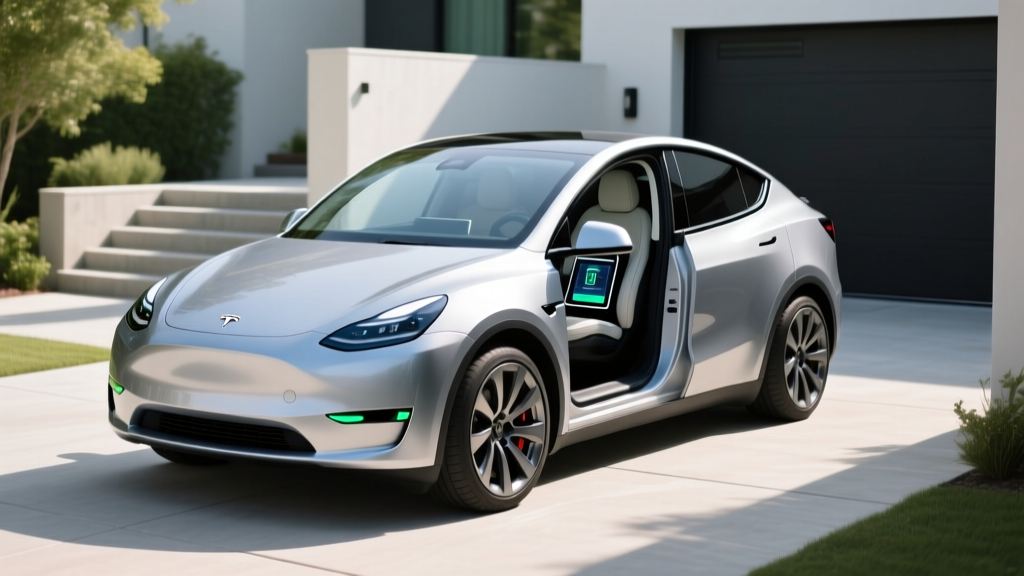
The Tesla Model Y remains the compact electric SUV to beat in 2026, balancing everyday usability with class-leading charging infrastructure access. For buyers researching the Tesla Model Y curb weight and official specifications, the numbers tell a story of efficiency engineering: at roughly 4,398 lbs for the Long Range AWD, Tesla has kept mass low enough to extract strong range from a ~75 kWh battery while still delivering practical cargo space and brisk acceleration. This review breaks down every official figure you need — from EPA range and real-world expectations to DC fast-charging curves and §30D tax credit eligibility — so you can make a data-driven purchase decision.
Official Tesla Model Y Curb Weight & Key Specifications
Understanding curb weight matters for EV buyers because it directly affects tire wear, braking distances, efficiency, and even shipping/towing logistics. Below is the official spec sheet for the 2026 Tesla Model Y lineup.
| Specification | Long Range AWD | Performance AWD | Rear-Wheel Drive (RWD) |
|---|---|---|---|
| Curb Weight | ~4,398 lbs | ~4,416 lbs | ~4,230 lbs |
| EPA Range | 320 miles | 293 miles | 310 miles |
| Battery (Usable) | ~75 kWh (NMC) | ~75 kWh (NMC) | ~60 kWh (LFP) |
| Drivetrain | Dual Motor AWD | Dual Motor AWD | Single Motor RWD |
| Horsepower | ~384 hp | ~456 hp | ~295 hp |
| 0–60 mph | 4.8 sec | 3.5 sec | 6.6 sec |
| Top Speed | 125 mph | 155 mph | 135 mph |
| Peak DC Charge Rate | 250 kW | 250 kW | 170 kW |
| 10–80% DCFC Time | ~27 min | ~27 min | ~32 min |
| Level 2 Rate | 11.5 kW (~44 mi/hr) | 11.5 kW (~44 mi/hr) | 7.6 kW (~30 mi/hr) |
| MPGe (Combined) | 117 MPGe | 106 MPGe | 123 MPGe |
| Base MSRP | $46,630 | $51,630 | $39,990 |
| Battery Warranty | 8 yr / 120,000 mi | 8 yr / 120,000 mi | 8 yr / 100,000 mi |
Sources: fueleconomy.gov, Tesla official specifications. Curb weights reflect manufacturer-published estimates and may vary slightly by option package.
Real-World Range vs. EPA Estimates
Long Range AWD: EPA 320 miles → Expect ~265–285 miles highway (70–75 mph), ~230–250 miles in cold weather (below 32°F).
Performance AWD: EPA 293 miles → Expect ~240–260 miles highway, ~200–220 miles cold.
RWD: EPA 310 miles → Expect ~255–275 miles highway, ~210–230 miles cold.
City driving with regenerative braking often meets or exceeds EPA numbers. Highway speed, headwinds, elevation gain, and cabin heating are the primary range reducers.
Tesla's thermal management system — including a heat pump across all trims — mitigates cold-weather losses better than many competitors, but physics still applies. On a 75°F day at 65 mph on flat terrain, you can approach the EPA sticker. At 80 mph in winter with seat heaters and cabin warmth, plan for 70–75% of rated range and charge accordingly. The RWD model's LFP battery chemistry also allows routine 100% charging without degradation concerns, effectively closing the usable-range gap with the larger NMC pack in daily driving.
Charging Speed: DC Fast Charging & Home Level 2
Charging speed is where the Model Y's Supercharger network access becomes a decisive advantage. Here is what to expect at each charging tier:
| Charging Level | Power (kW) | Miles Added per Hour | Notes |
|---|---|---|---|
| Level 1 (120V household) | ~1.4 kW | ~4–5 mi/hr | Emergency/trickle only |
| Level 2 (240V home, 48A) | 11.5 kW | ~44 mi/hr | Full overnight charge (~7–8 hrs) |
| Level 2 (240V, 32A Mobile Connector) | 7.6 kW | ~30 mi/hr | Standard NEMA 14-50 outlet |
| DC Fast (Tesla Supercharger V3/V4) | Up to 250 kW | ~1,000+ mi/hr (peak) | 10–80% in ~27 min (Long Range) |
| DC Fast (CCS adapter, third-party) | Up to 250 kW | Varies by station | Requires NACS-to-CCS adapter for non-Tesla networks |
Charging curve reality: The Long Range and Performance models peak at 250 kW only between roughly 10–30% State of Charge. From 30–60%, expect ~150–180 kW sustained; from 60–80%, the rate tapers to ~70–90 kW. This means the advertised 10–80% time of ~27 minutes assumes battery preconditioning (automatic when navigating to a Supercharger) and optimal ambient temperatures. Without preconditioning in cold weather, initial charge rates can be halved until the battery warms.
The RWD trim's LFP battery caps at ~170 kW DC, meaning a 10–80% session takes closer to 32 minutes. However, LFP's tolerance for daily 100% charging means you can arrive at a Supercharger at 5% and leave at 100% without battery-health guilt — a practical advantage for apartment dwellers who rely on public charging.
Performance, Efficiency & Driving Dynamics
At ~4,398 lbs curb weight, the Model Y Long Range is lighter than many electric SUV competitors (the Ford Mustang Mach-E Extended Range AWD weighs ~4,920 lbs; the Hyundai Ioniq 5 AWD ~4,700 lbs). This mass discipline contributes to the Model Y's strong efficiency rating of 117 MPGe combined (28 kWh/100 mi) for the Long Range and an even more impressive 123 MPGe (27 kWh/100 mi) for the RWD.
The dual-motor AWD system provides confident all-weather traction, with torque vectoring that feels planted in rain and light snow. The Performance trim's 3.5-second 0–60 time places it in sports-car territory, though the standard Long Range's 4.8 seconds is more than adequate for highway merging and passing. Ride quality has improved with the 2025 refresh, with revised damper tuning that absorbs sharp pavement impacts better than earlier model years, though the sport-oriented suspension still transmits more road texture than a comfort-focused competitor like the Ioniq 5.
Pricing, Trims & Federal Tax Credit Eligibility
| Trim | Base MSRP | Destination Fee | Est. §30D Credit | Effective Price (before state incentives) |
|---|---|---|---|---|
| RWD | $39,990 | $1,390 | Up to $7,500* | ~$33,880 |
| Long Range AWD | $46,630 | $1,390 | Up to $7,500* | ~$40,520 |
| Performance AWD | $51,630 | $1,390 | Up to $7,500* | ~$45,520 |
*Federal §30D credit eligibility is not guaranteed. As of 2026, the credit requires: buyer AGI below $150K single / $300K joint; vehicle MSRP under $80,000 (SUVs); compliant battery critical-mineral sourcing and North American final assembly; and the vehicle must be new and purchased for personal use. The credit can now be transferred to the dealer at point of sale as an instant discount. Always verify current eligibility at irs.gov and consult a tax professional.
All Model Y trims fall well under the $80,000 MSRP cap for SUVs, and Tesla assembles the vehicle in Austin, Texas, satisfying the final-assembly requirement. Battery sourcing compliance has been a moving target — Tesla has progressively shifted supply chains to meet critical-mineral thresholds, but buyers should confirm the specific VIN's eligibility via the IRS VIN-search tool or Tesla's point-of-sale credit confirmation at delivery.
Cargo Space, Interior & Technology
The Model Y's packaging efficiency is one of its strongest selling points. Despite a sloping roofline, cargo volume measures 30.2 cu ft behind the second row and 72.1 cu ft with seats folded — competitive with midsize SUVs. A rear sub-trunk adds additional hidden storage, and the front trunk (frunk) holds ~4.1 cu ft, useful for charging cables and groceries.
Interior dimensions provide 41.8 inches of front legroom and 37.4 inches rear — adequate for adults on longer trips, though the rear seat cushion sits relatively low. The minimalist cabin centers on a 15.4-inch touchscreen that handles navigation, media, climate, and vehicle settings. No physical instrument cluster exists; speed and range display on the main screen.
Standout tech features:
- Tesla Supercharger network: 60,000+ global fast chargers with native navigation integration and automatic preconditioning
- Over-the-air updates: continuous feature additions, efficiency tweaks, and UI improvements
- Sentry Mode & Dashcam: integrated multi-camera recording with USB storage
- Autopilot standard: adaptive cruise + lane centering (SAE Level 2)
- Full Self-Driving (Supervised) option: $8,000 or $99/mo — enhanced lane changes, city-street navigation, parking assist (still SAE Level 2, driver must supervise at all times)
- Heat pump standard across all trims for efficient cabin heating
- Vehicle-to-load (V2L) not natively supported; Powershare feature availability varies by model year
Pros, Cons & Who Should Buy
- Best-in-class Supercharger network reliability
- Strong efficiency (117–123 MPGe) keeps charging costs low
- Practical cargo space (72 cu ft max) for the segment
- OTA updates continuously add features
- Competitive pricing after §30D credit
- Heat pump standard for cold-climate efficiency
- Minimalist interior lacks physical buttons and climate vents
- No Apple CarPlay or Android Auto
- Firm ride quality on larger wheel options
- Rear visibility limited by sloping roofline
- FSD subscription cost adds up; remains Level 2
- No native V2L / bidirectional charging
Who the Model Y suits best:
- Commuters & daily drivers: Home Level 2 charging makes daily driving effortless; efficiency keeps costs under $0.05/mile in most markets
- Small families: Adequate rear-seat space for two car seats; cargo handles strollers and groceries
- Road-trippers: Supercharger density and route-planning integration make long-distance travel the most seamless in the EV segment
- Tech-forward buyers: OTA updates, app integration, and software-defined features appeal to those who value continuous improvement
Look elsewhere if: You prioritize plush ride comfort, need three rows, want Apple CarPlay, or require V2L capability for camping or backup power.
How It Compares: Model Y vs. Key Rivals
The compact electric SUV segment is crowded in 2026. Here is how the Model Y Long Range stacks up:
| Attribute | Tesla Model Y LR AWD | Ford Mustang Mach-E ER AWD | Hyundai Ioniq 5 AWD | Kia EV6 GT-Line AWD |
|---|---|---|---|---|
| EPA Range | 320 mi | 290 mi | 290 mi | 282 mi |
| Peak DC Charge | 250 kW | 150 kW | 235 kW | 235 kW |
| 10–80% DCFC | ~27 min | ~40 min | ~18 min | ~18 min |
| Cargo (max) | 72.1 cu ft | 59.6 cu ft | 59.3 cu ft | 50.2 cu ft |
| Base MSRP | $46,630 | $48,995 | $49,950 | $52,400 |
| Charging Network | Tesla Supercharger (native) | NACS (Supercharger access) | CCS → NACS adapter | CCS → NACS adapter |
The Model Y's advantages are clear: highest range, largest cargo area, and native Supercharger access. The Ioniq 5 and EV6 counter with faster peak charging speeds (800V architecture enables 10–80% in ~18 minutes) and more traditional interior ergonomics. The Mach-E offers a more engaging driving feel but trails on range and charging speed.
Frequently Asked Questions
What is the official curb weight of the 2026 Tesla Model Y?
The Tesla Model Y Long Range AWD has an official curb weight of approximately 4,398 lbs. The Performance AWD is ~4,416 lbs, and the lighter RWD variant comes in at ~4,230 lbs. These figures make the Model Y one of the lighter vehicles in its segment, contributing to its efficiency advantage.
What is the real-world range of the Tesla Model Y?
Real-world range depends heavily on driving conditions. For the Long Range AWD (EPA 320 mi), expect ~265–285 miles on the highway at 70–75 mph in moderate temperatures, and ~230–250 miles in cold weather (below 32°F) with cabin heating. City driving with regenerative braking can match or exceed the EPA estimate. The RWD model's LFP battery allows routine 100% charging, which narrows the practical range gap in daily use.
How fast does the Model Y charge at home and on the road?
On a home Level 2 charger (240V, 48A), the Long Range and Performance models charge at 11.5 kW, adding roughly 44 miles of range per hour — a full 10–100% session takes about 7–8 hours overnight. On a Tesla Supercharger V3/V4, peak rate is 250 kW, with a 10–80% session taking approximately 27 minutes (with battery preconditioning). The RWD model charges at 7.6 kW Level 2 (~30 mi/hr) and peaks at ~170 kW DC fast charging.
Does the Tesla Model Y qualify for the $7,500 federal EV tax credit?
All 2026 Model Y trims are potentially eligible for the full $7,500 §30D federal tax credit, subject to buyer income limits ($150K single / $300K joint AGI), compliant battery sourcing for critical minerals, and the vehicle's MSRP staying under the $80,000 SUV cap — which all trims do. The credit can be applied as a point-of-sale discount at delivery. Always verify your specific eligibility at irs.gov and consult a tax professional, as sourcing rules can shift with supply-chain changes.
Is the Tesla Model Y worth buying over competitors in 2026?
The Model Y is the strongest choice if you prioritize range, cargo space, and charging-network convenience. The Supercharger ecosystem remains the most reliable and well-integrated fast-charging experience available. However, if you value faster peak charging (Ioniq 5/EV6 at ~18 min 10–80%), a more traditional interior with physical controls, or need Apple CarPlay, the Hyundai/Kia twins and Ford Mach-E are compelling alternatives. Test-drive both before deciding.
What is the battery warranty on the Tesla Model Y?
The Long Range and Performance AWD models carry an 8-year/120,000-mile battery and drive unit warranty, with Tesla guaranteeing minimum 70% capacity retention over that period. The RWD model's warranty is 8 years/100,000 miles. In practice, Tesla's NMC and LFP packs have shown strong longevity data, with typical degradation of ~10–12% over the first 100,000 miles based on fleet data.